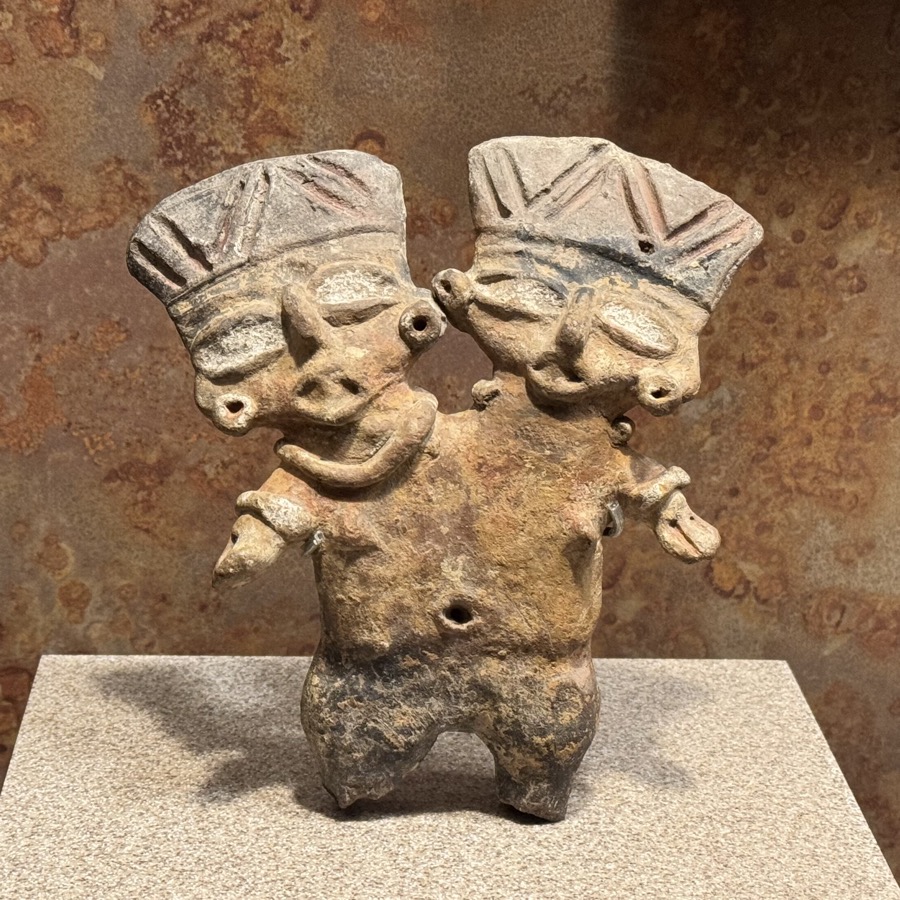
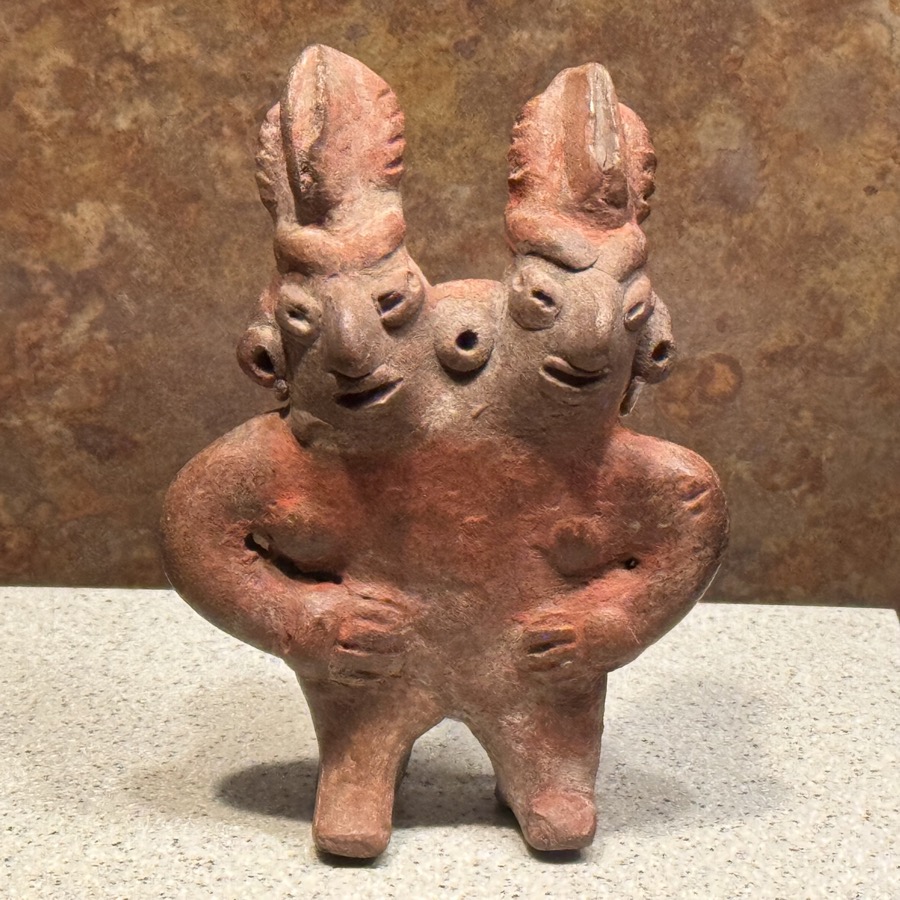
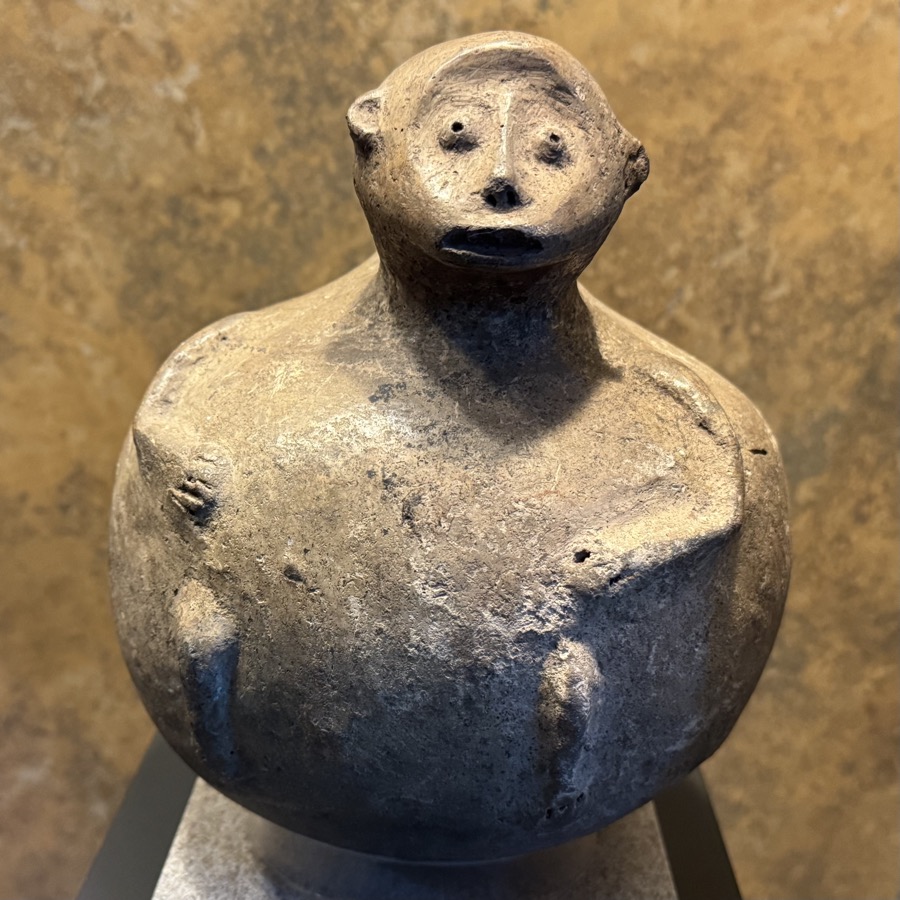
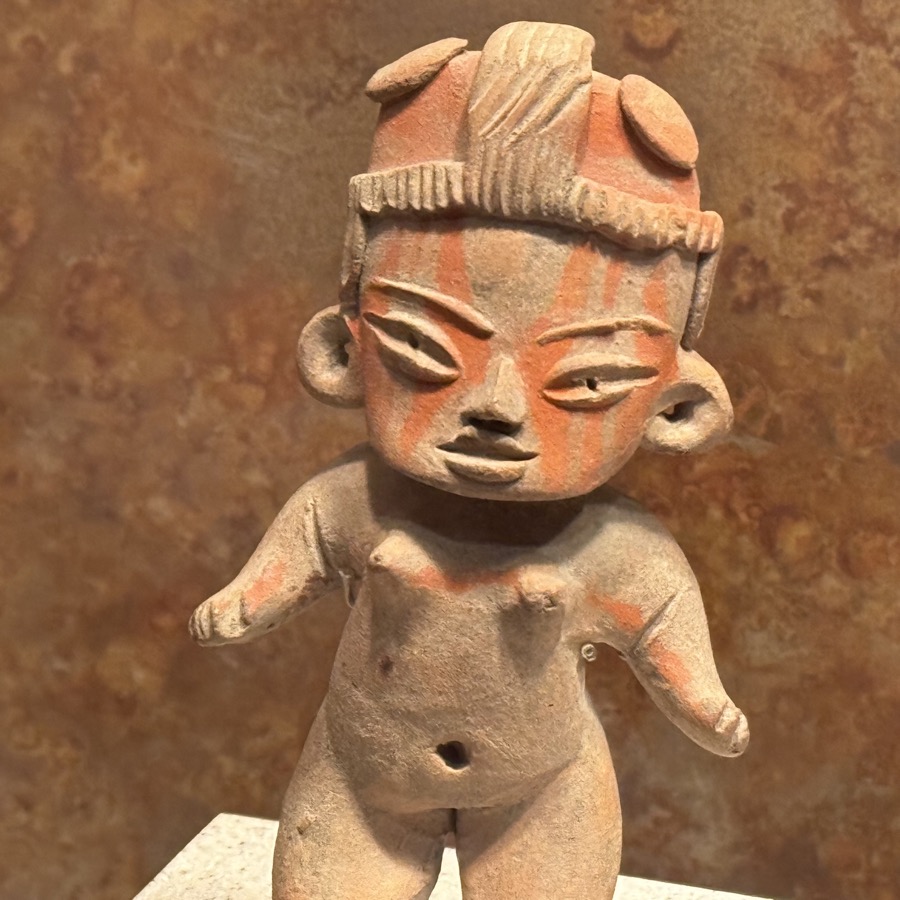
Now we were ready to immerse ourselves in Florida nature. Completely flat, sea level environment with lakes, swamps, canals and small forests, mangroves along the coast. Early April was good time to visit, not too hot and still good for outdoor activities. It was somewhat different for us mode of travel: driving from site to site and walking on short trails (at best).
We drove all day to Big Cypress National Preserve, stopped for quick chat at Welcome Center and parked at Monument Lake Campground. Very few visitors, good spots to choose from, so we decided to stay two nights to have more time to look around. Camping under watchful eyes of resident alligators not a bear for change. We were assured alligators stay in water and do not venture far from shore to mess-up your tent or steal food. Still we stayed healthy distance from them.
We managed few stops at wildlife viewing spots in the evening: boardwalk at Welcome Center, HP Williams Wayside Park, Kirby Storter Roadside Park and viewpoint at Oasis Visitor Center. Yes, we were counting alligators.
Two alligators
Nathaniel P. Reed Visitor Center
H.P. Williams Wayside Park
Five alligators
Kirby Storter Boardwalk
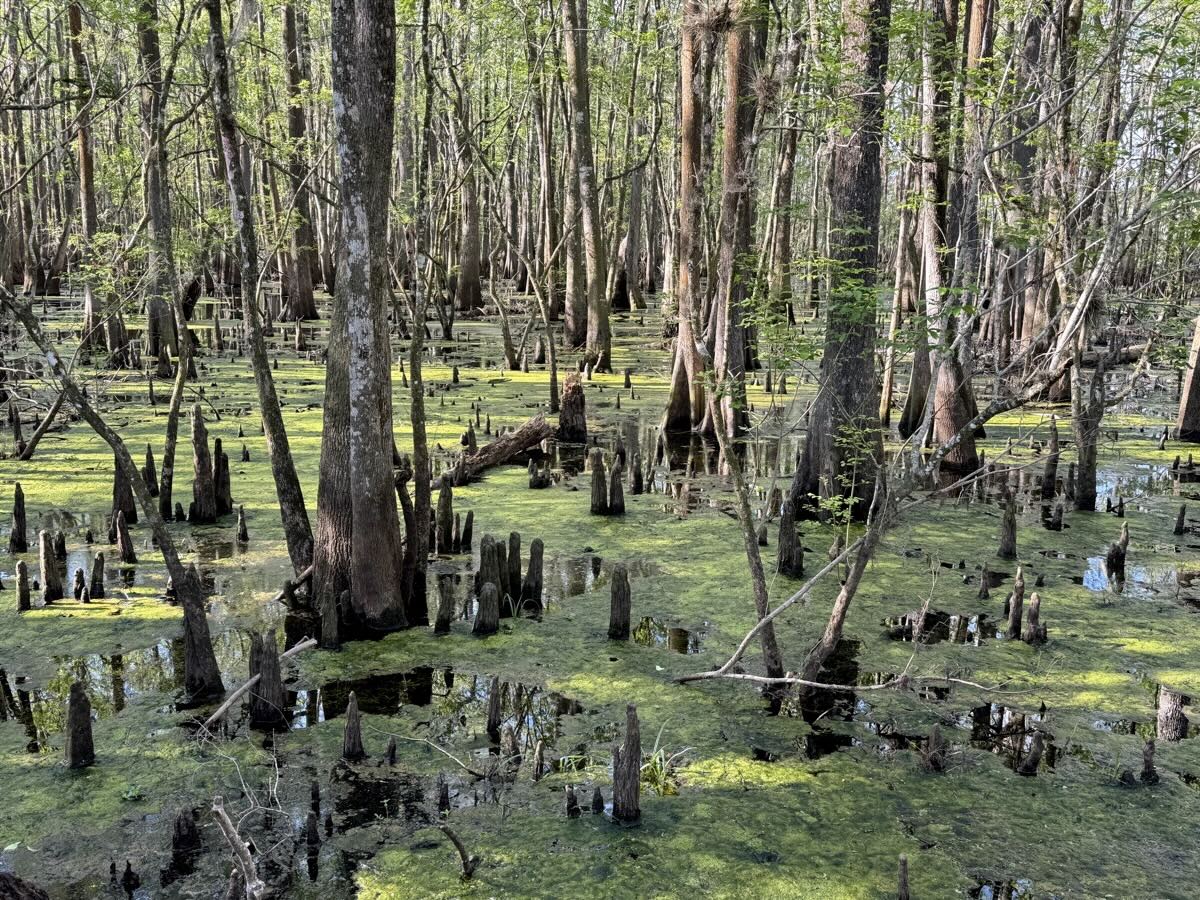
Bald cypresses
Oasis Visitor Center Boardwalk
…
…
Brown anole
Day 9.
Morning was all fogg on Monument Lake, but it burned-off rather quickly and we were not in big hurry as our Ten Thousand Islands Boat Tour (1.5 hr, Everglades National Park Adventures) out of Everglades City was at 1 PM.
Morning at Monument Lake
Our neighbor
Our camp
We had time for short mangrove boardwalk stroll before boarding the boat. Our park guide for the tour provided a lot of good information about Everglades. We started with brown pelicans, two bald eagles in mangroves at water’s edge and osprey nest just out of Everglades City. We crossed National Park border (running across water) and spent an hour circling around in just small area of vast expanse of water and sandbar islands covered with mangroves (black, red, white). Larger trees grow only on islands elevated by a few feet where signs of past inhabitation have been also found. We spent time watching playful (mating season) bottlenose dolphins. Late lunch/dinner at Triad Seafood Market & Cafe and we had time left for rest and shower at our camp.
Everglades City boardwalk
Everglades City from boat
Osprey nest
Everglades National Park…
…water…
…mangrove islands
Bottlenose dolphins
…
Fried seafood dinner at Triad Seafood Market & Cafe
Day 10.
Loop Road in Big Cypress Preserve is a destination on its own – slow driving on gravel and stopping at openings in lush vegetation (often near bridges) with water/swamp to find birds and alligators. Old canals along the road created perfect habitat within easy camera reach. If there is water there are birds or gators there, or both. Hard not to become a bird-watcher. It is not just wading birds, but also black vultures, wood storks and woodpeckers. Stands of cypresses and bromelias hanging from trees. Stopped for two short walks too (Gator Hook Trail and Tree Snail Hammock Trail). Wildlife!
Stop and go on Loop Road
Gator Hook Trail
…
American white ibis, Roseate spoonbill
Anhinga, Great egret
Red-bellied woodpecker
Alligator
Cypresses
…
Shark Valley in Everglades NP is a somewhat different experience – walk on paved trail along canal and boardwalk through wetland where birds act “domesticated”, more wary of alligators lurking in water that people walking just a few meters away. Great egret jn the clip is running away from gator not us and anhinga got out of water too. Rental bikes were available but slow walking was better for bird watching.
Great egret and Anhinga
We ended the day at Long Pine Key Campground in Everglades National Park (recommended). So many good spots to chose from.
Shark Valley wetlands
Canal along Shark Valley Loop Road
Bobcat Boardwalk
…
Great egret
Great blue heron
Standoff
Anhinga
Long Pine Key Campground
Day 11.
Started the day with Gumbo Limbo (“tourist tree” with red peeling bark) and anhinga Trails. Nesting anhinga colony, many other birds, turtles and of course alligators – this time they were talking (bellowing).
Anhinga Trail
…
River of Grass
Gumbo Limbo Trail
…
Zebra Longwing – state butterfly of Florida
Changing tune we stopped at Nike Missile Site HM-69, museum on rocket launch site from the sixties with some hardware on display. As we were heading out to spend afternoon in Biscayne National Park, we stopped at small market and bought some quality tropical fruits (very pricey and not grown in Florida). There are many ornamental plant and tree (palm) nurseries around Homestead. At Biscayne we had only little time for Jeffry Walk and snorkeling from shore (Joanna). We skipped boat snorkeling tour because of high winds – they were not going to the reef and visibility was poor.
Nike Missile Site HM-69
Palm Nursery in Homestead
Jeffry Walk
Thanks to patient, but successful shopping at Publix in Homestead we were set for exquisite camping dinner: snow crab clusters (steamed at the store) and black tip shark (cooked by Piotr). All under watchful eye of resident cardinal. Short after dark walk around Long Pine Key Campground.
Campsite #56 resident Cardinal
Snow crab clusters
Piotr’s shark after dark
After dark
Day 12.
Paddling in Paradise: 3-hour ranger-guided kayaking on Florida Bay was our planned highlight of the day, but it was cancelled due to strong wind. Instead we spent all day driving around and checking-out different nature spots: 3-in-1 Hiking Trail/Long Pine Key, Pinelands Trail, Pine Glades Lake/Long Pine Key Trail, Pa-Hay-Okee road (boardwalk and lookout tower were closed for renovation) then very nice Mahogany Hammock Trail, Nine Mile Trailhead viewpoint ending with West Lake Boardwalk Trail. We moved to Flamingo Campground (recommended) for two nights.
Landscape around here is not just swamps and low “shrubs”, but also stands of cypresses, pines, palms, gumbo limbo and mahogany. At Pa-Hay-Okee, we spent an hour watching huge number and variety of wading birds concentrated in small area of wetlands well visible from the road.
Bald Cypresses
Slash Pines
Gumbo Limbo
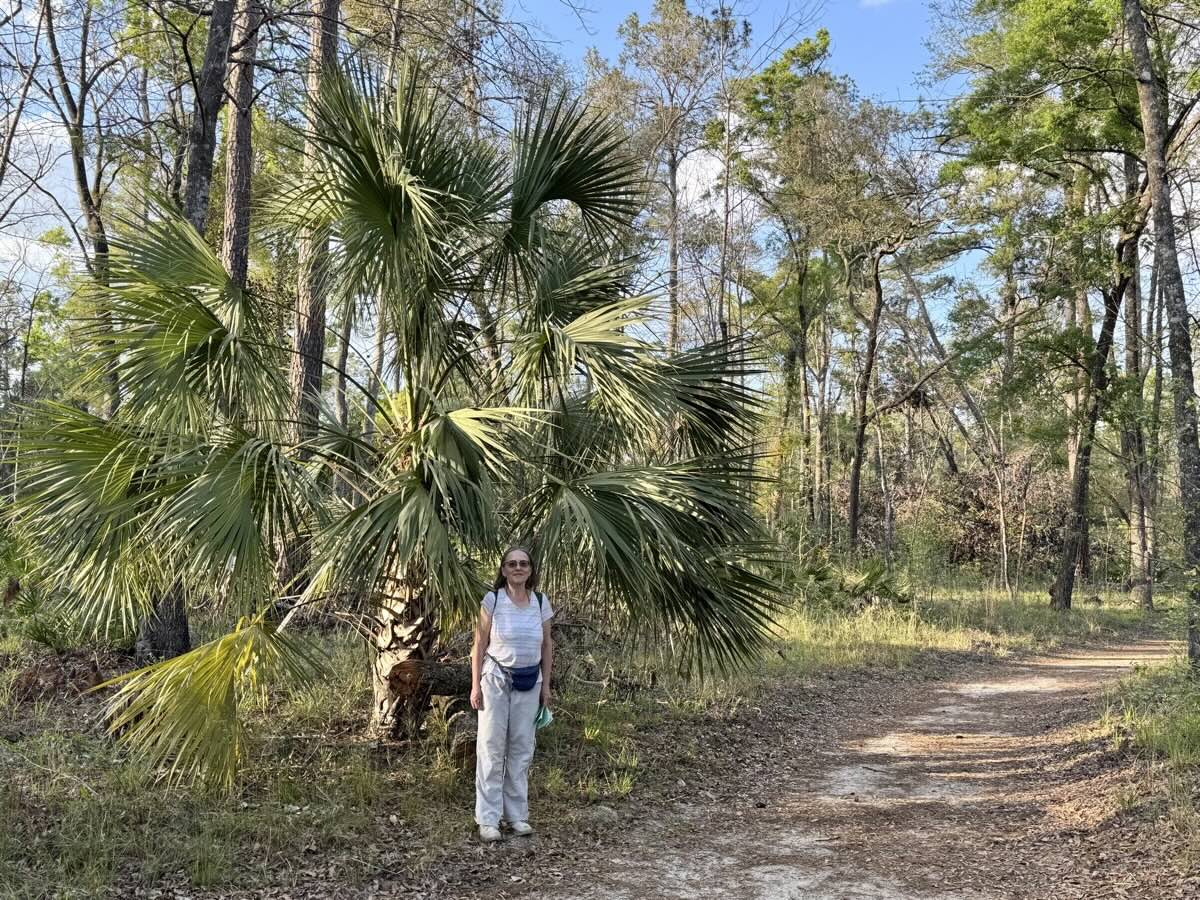
Sabal Palm
Mahogany
Spanish moss
Pinelands Trail
Long Pine Key Trail
Pine Glades Lake
Pa-Hay-Okee, small swamp packed with birds
Mahogany Hammock Trail
West Lake Boardwalk
Day 13.
Our hopes for kayaking were dashed again as strong wind persisted. To spend some time on water we signed-up for afternoon Backcountry Boat Tour with Flamingo Adventures. We had time for morning nature walk with volunteer ranger talking mostly about birds: osprey nest with chicks at Flamingo Marina, Great crested flycatcher (flying around too fast to capture on film) e.t.c.
Waiting for the boat we had time to look for crocodile(s) frequently visiting marina. Wilderness Waterway (canal) is now dammed to prevent salt water flooding wetlands: alligators (fresh water only) stay inland, crocodiles (sea water tolerant) stay mostly on the sea side.
Our boat tour: Wilderness Waterway to Coot Lake and Tarpon Creek (11 miles round trip) with small group and good interpretative guide was relaxing. We were learning about efforts to reverse some of the nature-damaging developments of the past (building canals, draining wetlands). And we got to watch crocodile practicing (probably) nest building as egg-laying season was approaching.
Crocodile practising nest building
Crocodile at Flamingo Marina
Wilderness Waterway
Bromelia
Red mangrove
Oysters growing on mangrove roots
Tarpon Creek-Whitewater Bay
We had time for a short walk along the coast behind Visitor Center (following adult ospreys supervising training flight of their offspring), a bit longer walk on Snake Bight Tram Trail (3,7 mi) and stop at Mrazek Pond Viewpoint to look for Tricolor herons.
Ospreys near Flamingo Amphitheatre
Snake Bight Tram Trail
…
Mrazek Pond, Tricolor herons
Flamingo Visitor Center
Flamingo Campground
We visited Guy Bradley Visitor Center at Flamingo (recommended) several times during our stay in the area to arrange tours, talk to rangers, use fast wifi internet and on couple of occasions to cool-off midday. Many activities were already winding down for the season due to approaching heat. Both campgrounds were very good and mostly empty. No problem with last minute reservations. Slow nature of Big Cypress and Everglades visit, not so much driving and hiking, gave us plenty of time for bird- and reptile-watching.
We started the trip several days late and worried about hot weather and all manatees moving out to sea.
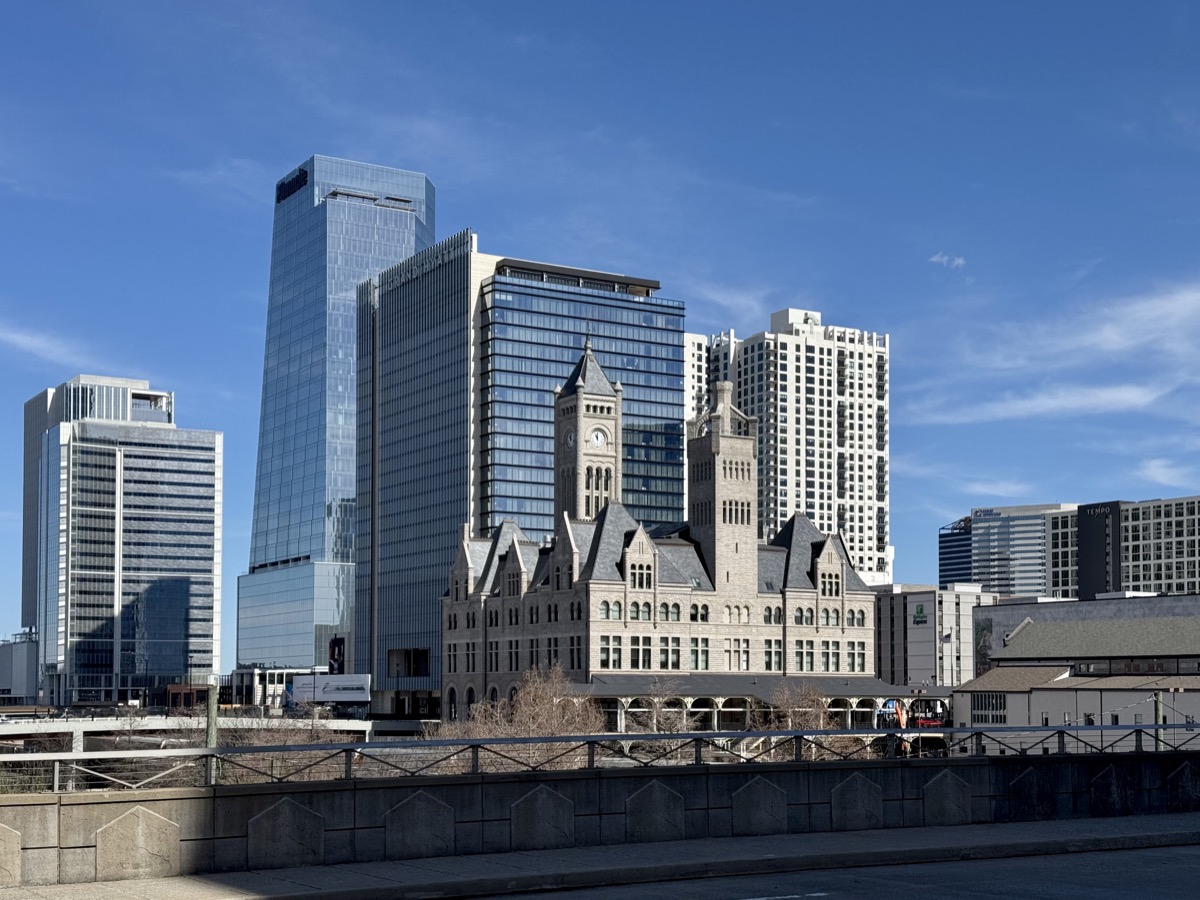
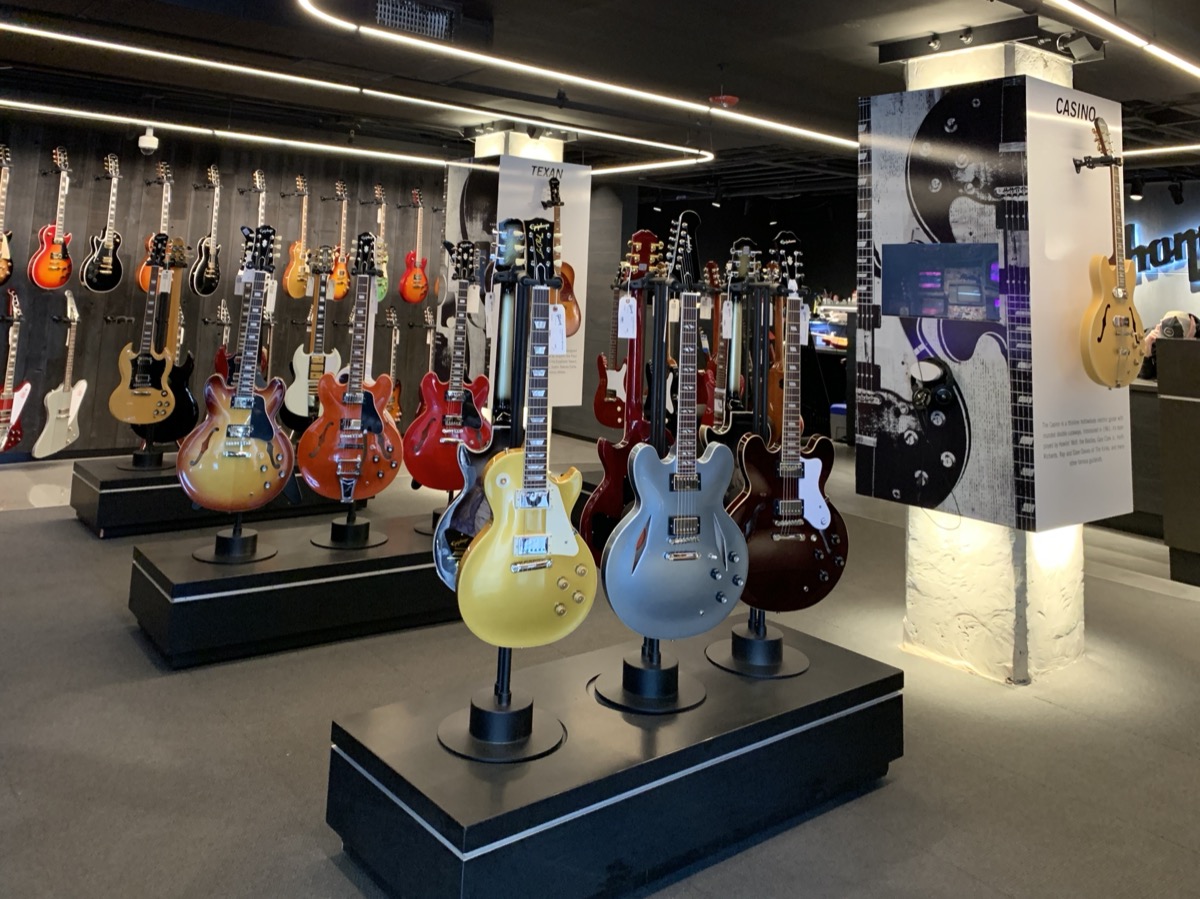
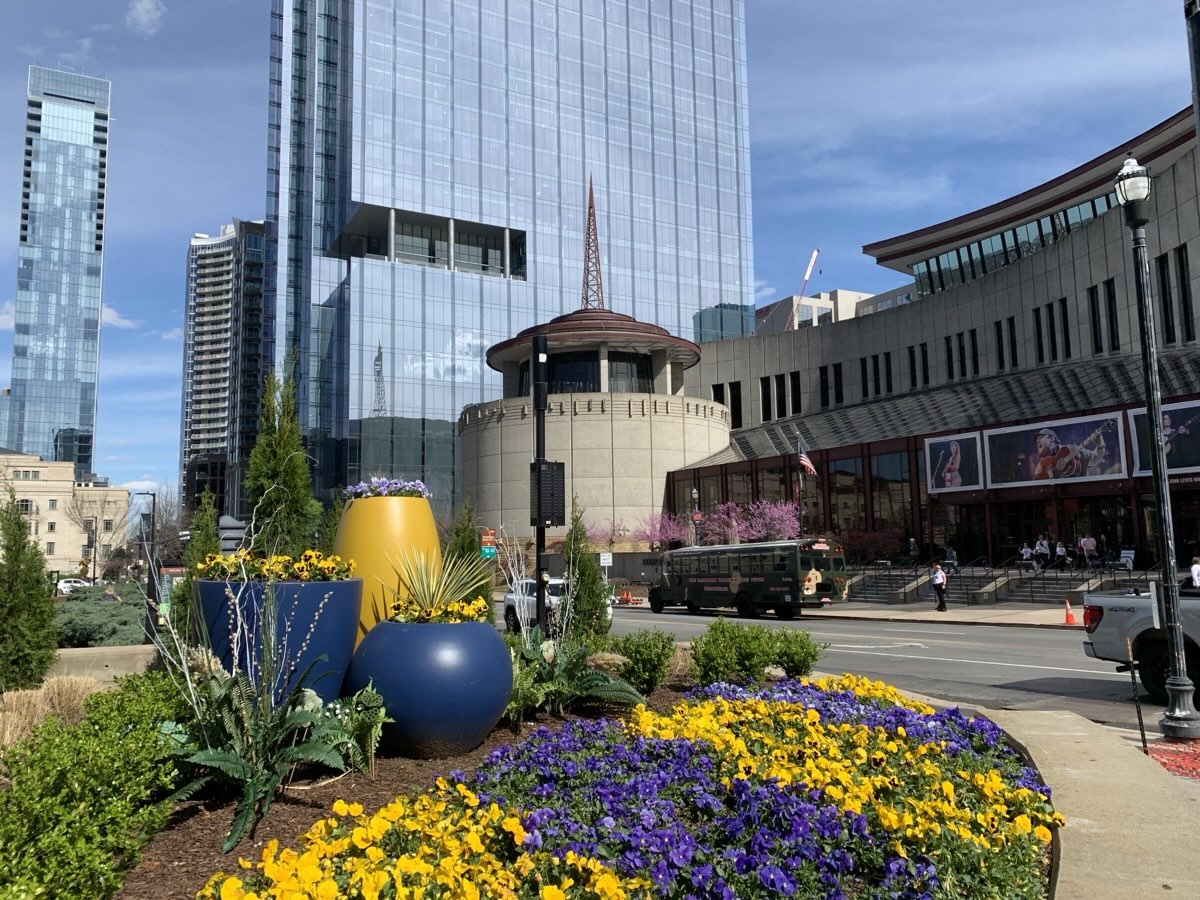
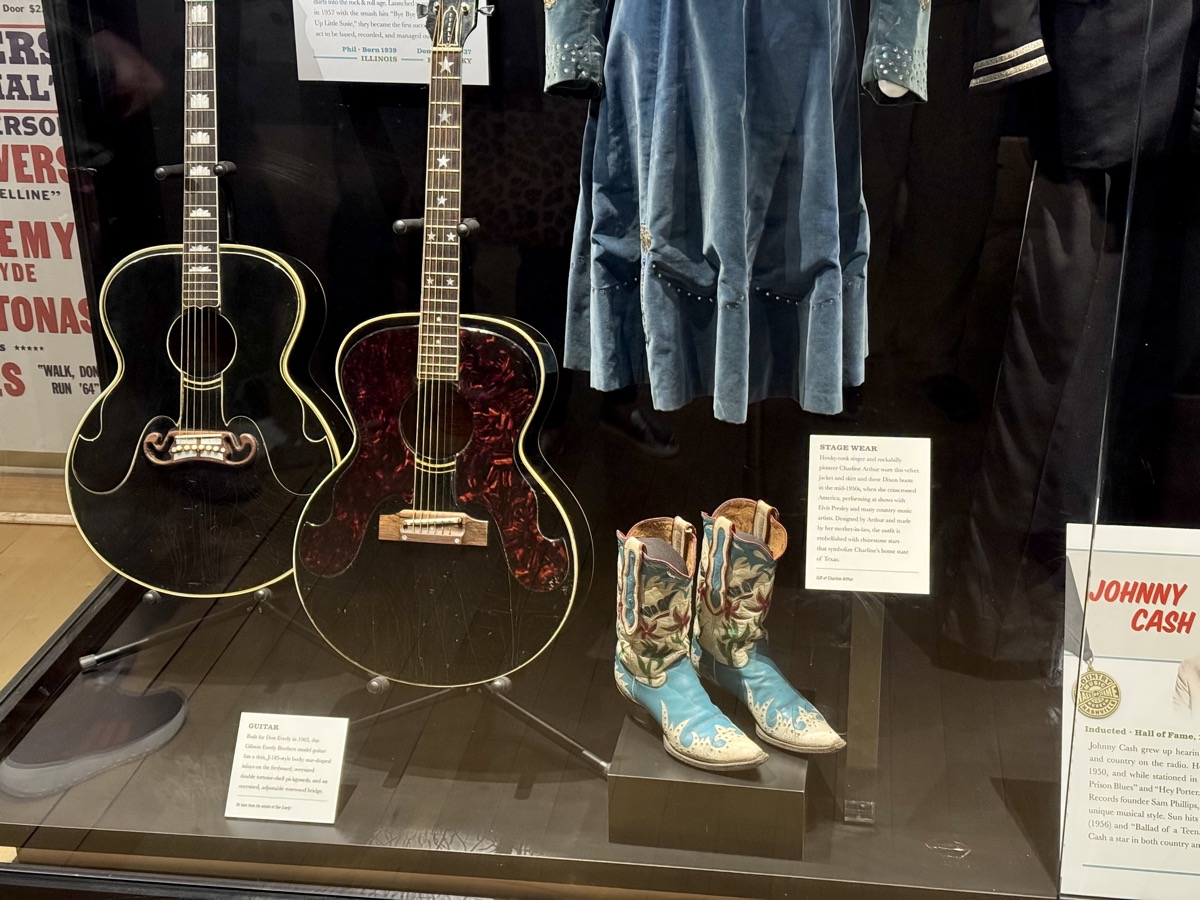
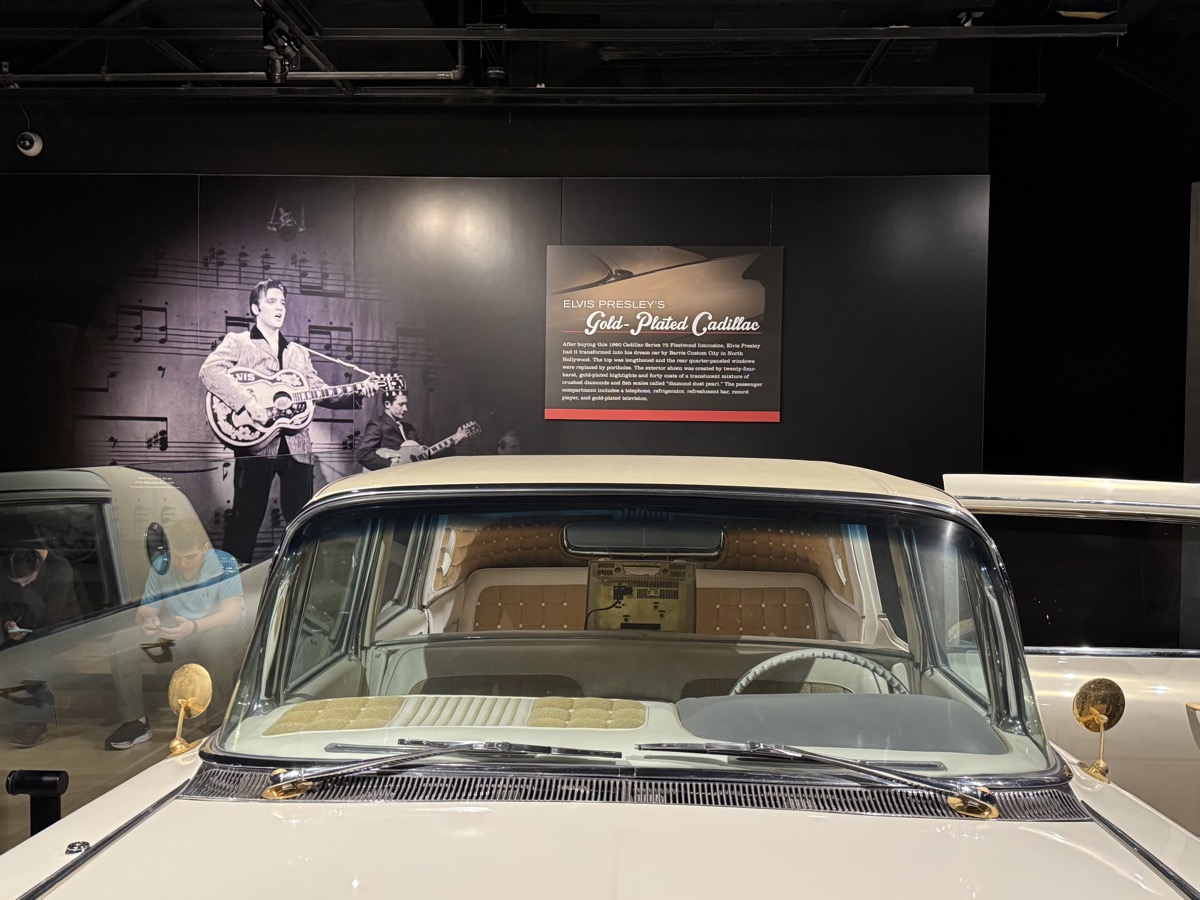
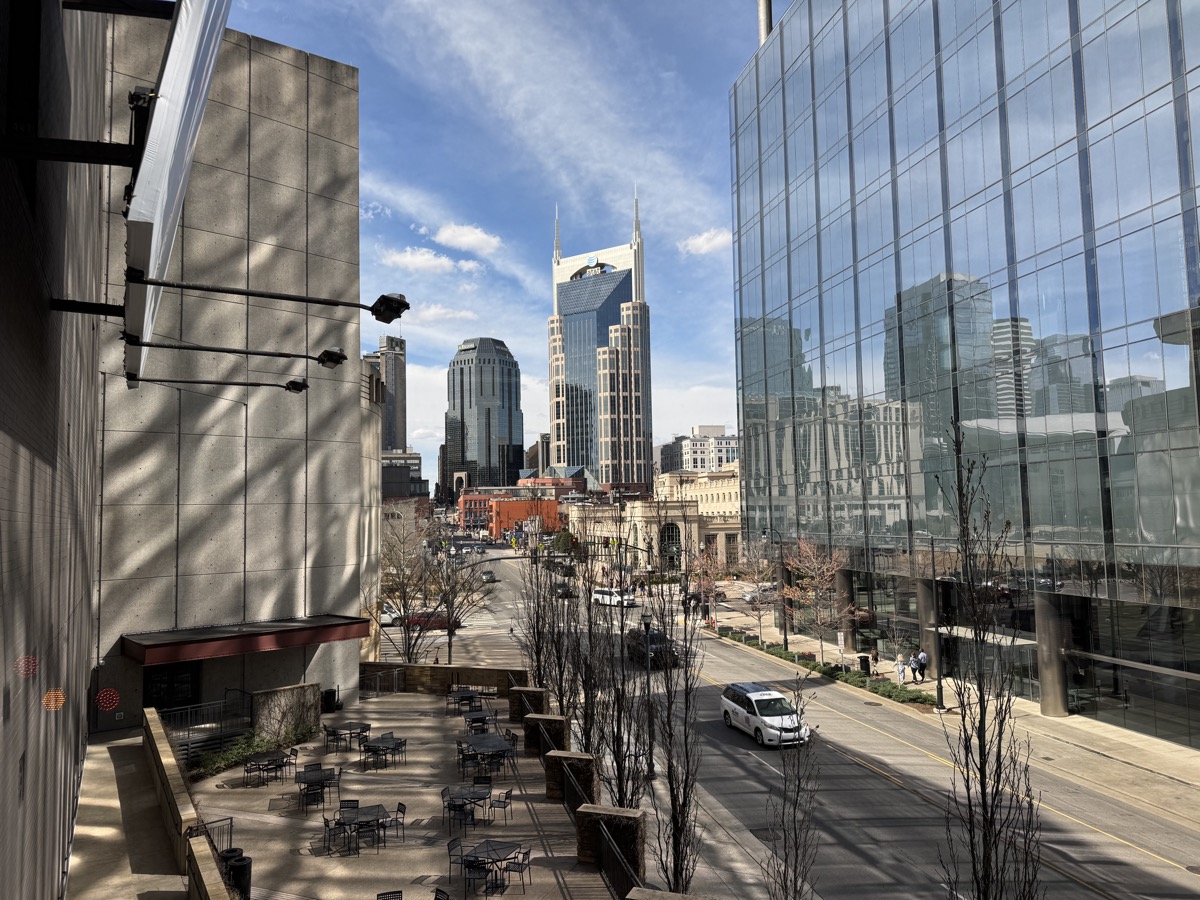
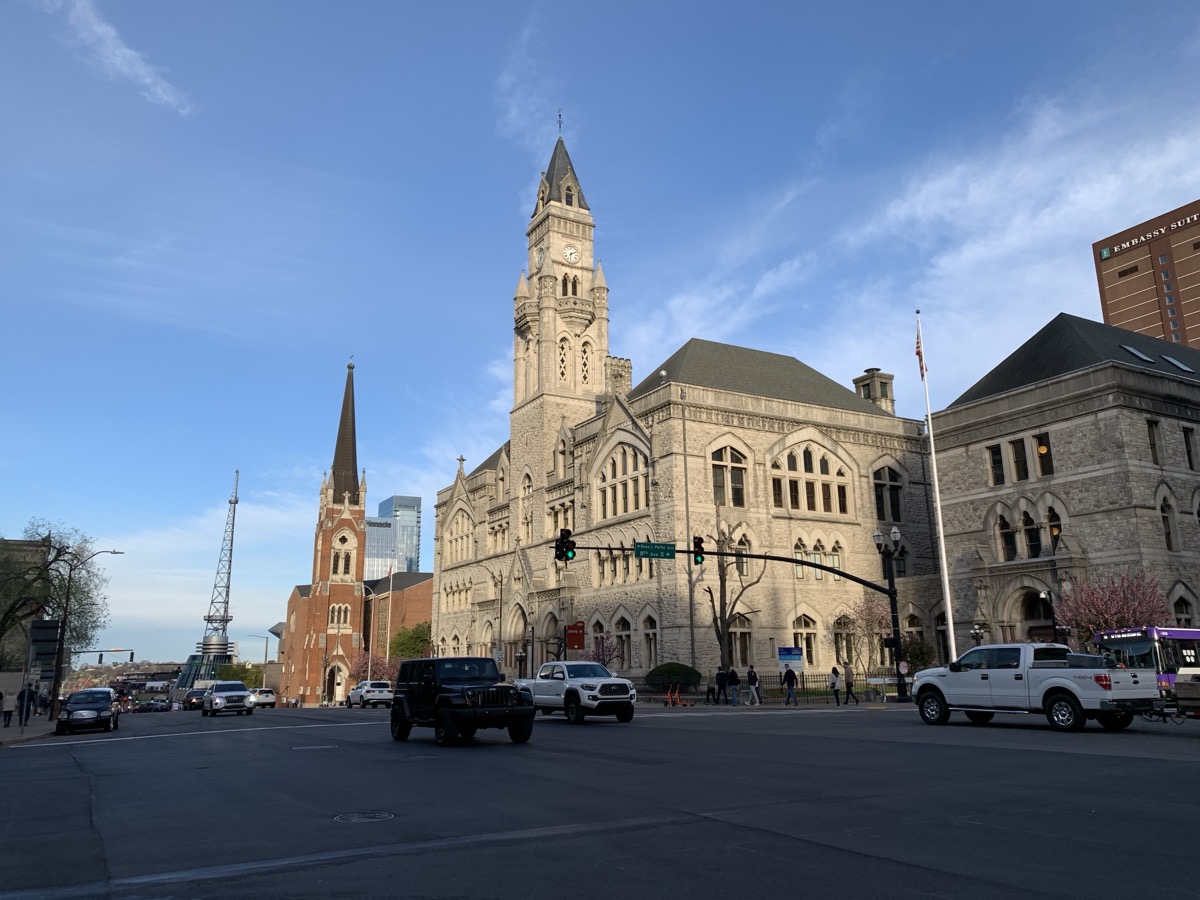
First day was just fast driving to Nashville. We checked-in to old college (Scarritt) residence hall converted to hotel/airbnb. It has good location in Music Row neighborhood, still walking distance to downtown. We spent the following day walking around, first to RCA Studio B which unfortunately was only accessible for tours from different location – we just walked there. We stopped at Gibson Garage (guitar center). After first take at Country Music Hall of Fame and Museum we took shuttle to RCA Studio B for a short tour and back. We then spent more time at the museum. Even though it is not our favorite music, we felt connection to the artists. Nashville was full of tourist but not crowded, very clean and nice to walk in perfect spring weather.
Scarritt Bennett Center
The Union Station Nashville Yards
Gibson Garage
Country Music Hall of Fame and Museum
…memorabilia…
…
4th Ave S, Nashville
Tennessee State Capitol, Nashville
Custom House, Broadway
Days 3-4.
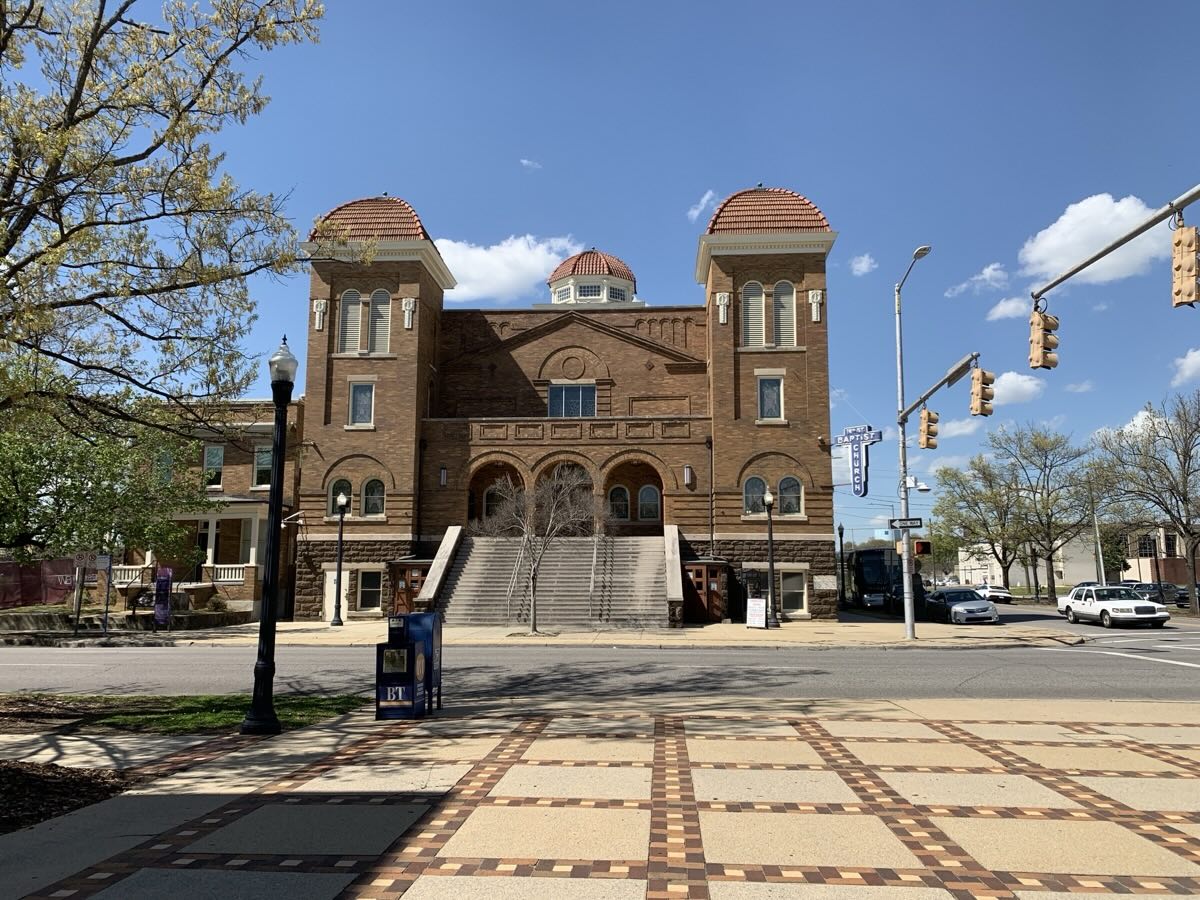
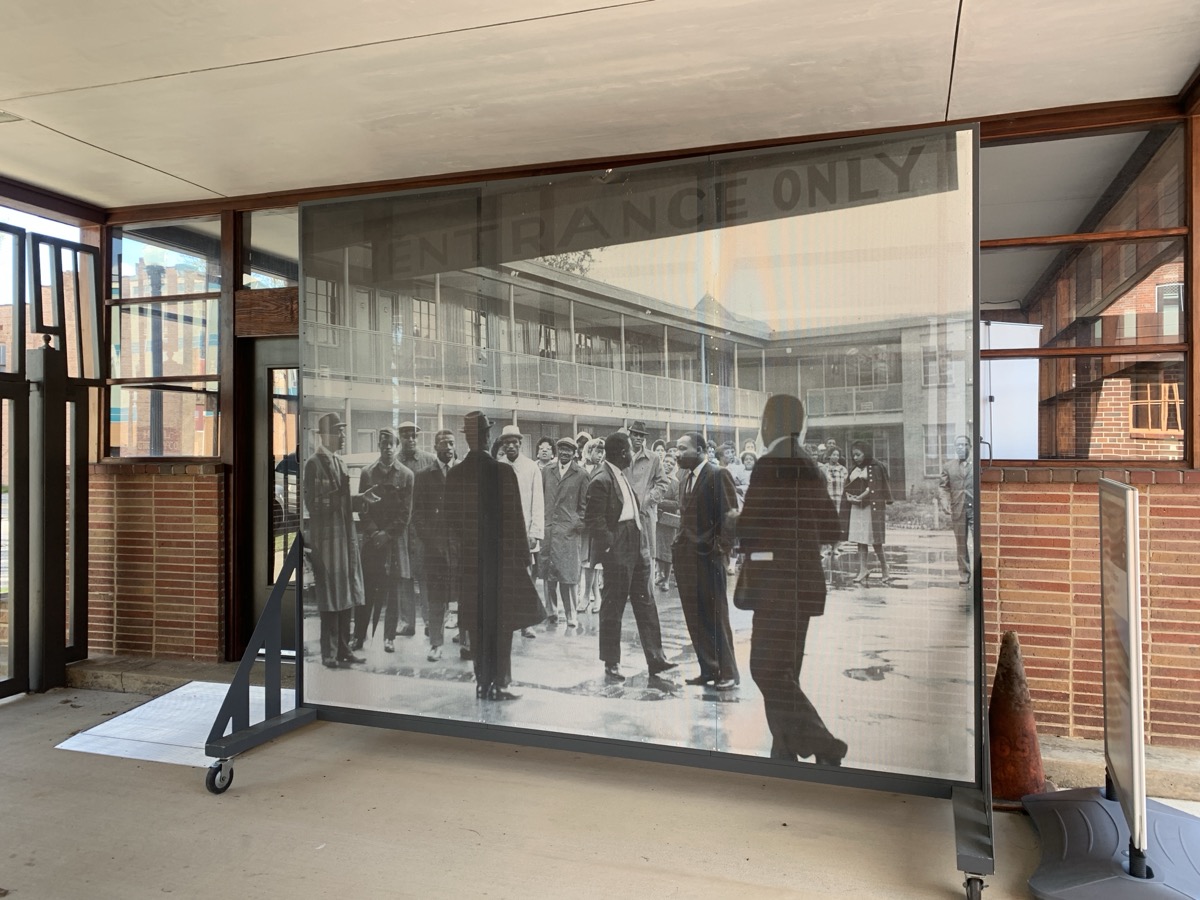
Civil rights history in Alabama. We stopped in Birmingham at Sixteenth Street Baptist Church, visited Birmingham Civil Rights Institute (museum) learning details about not so distant past, and walked in Kelly Ingram Park, stopped for coffee at Alicia’s Coffee in A.G. Gaston Motel.
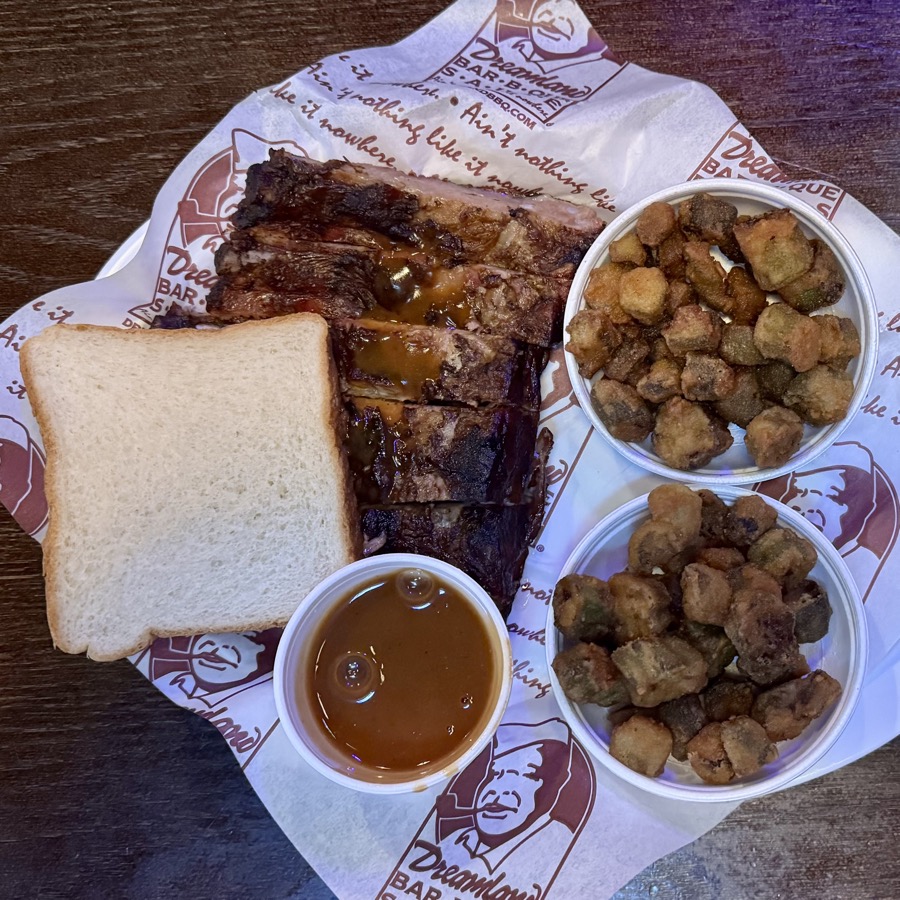
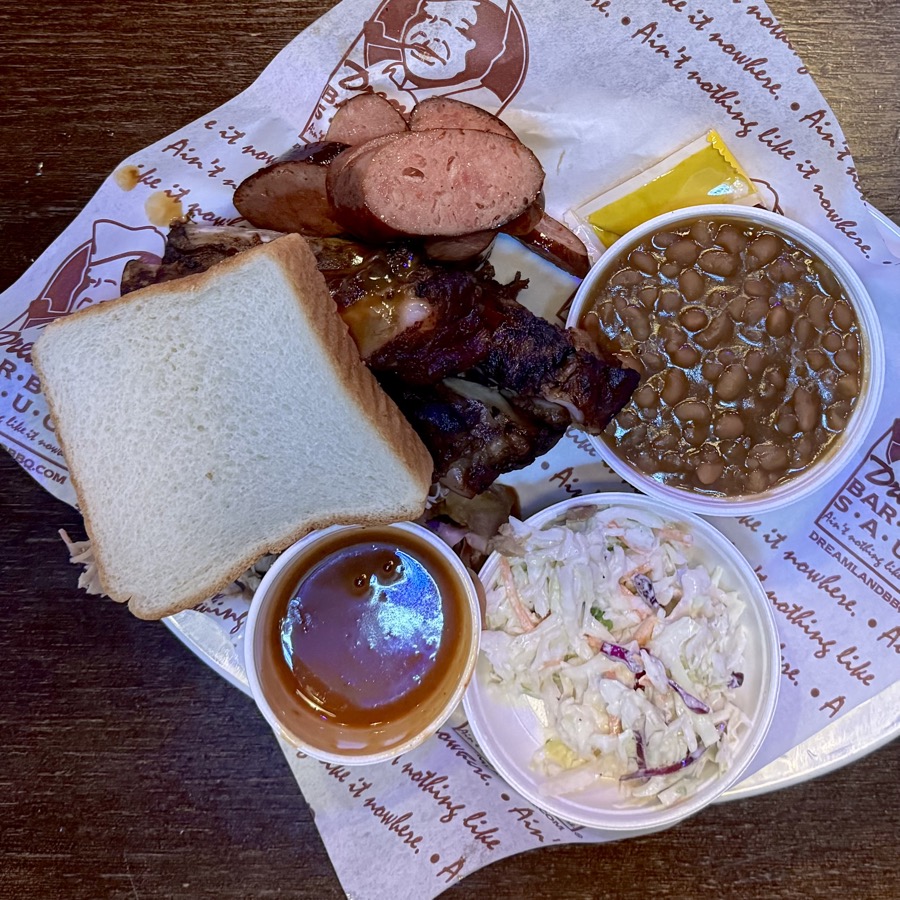
We arrived in Montgomery in late afternoon, found our airbnb and made it to Dreamland BBQ (recommended) for dinner. Very tasty.
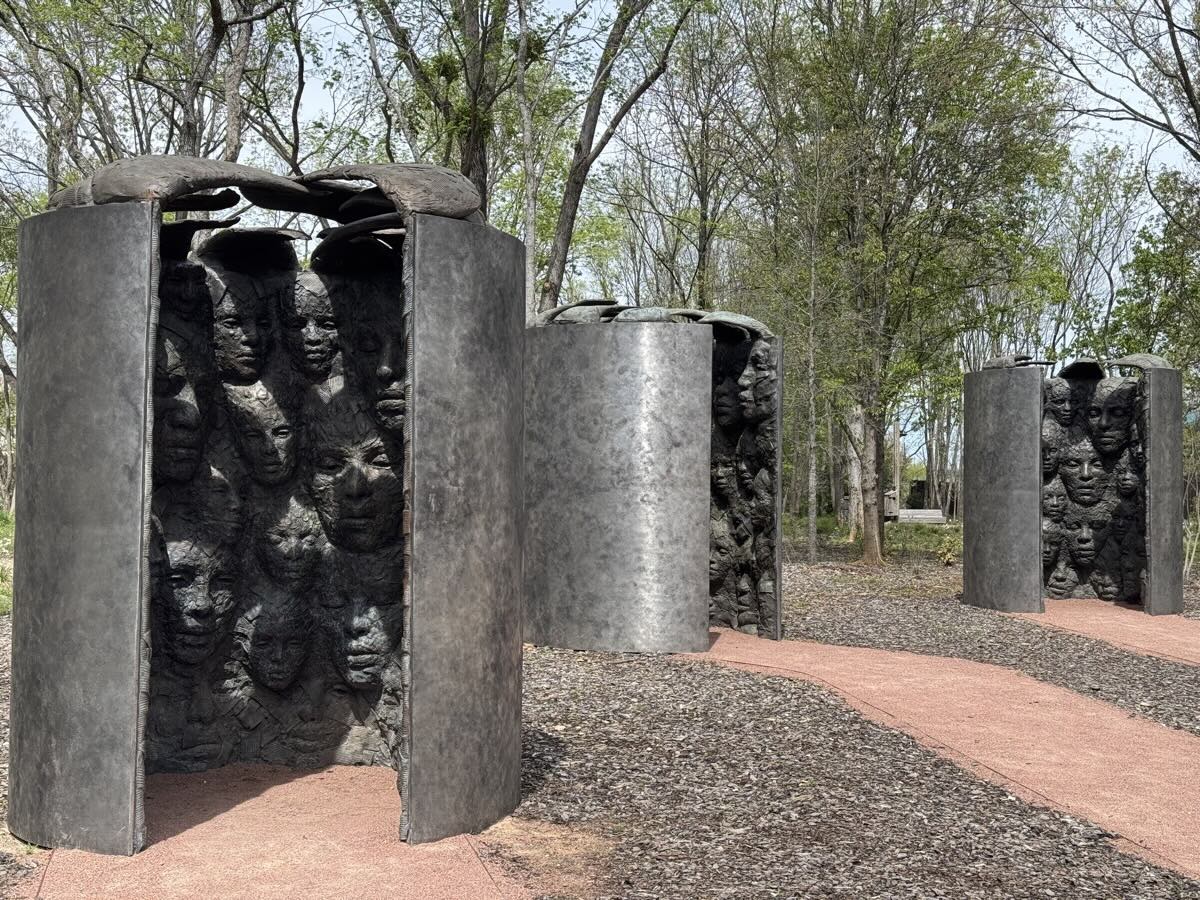
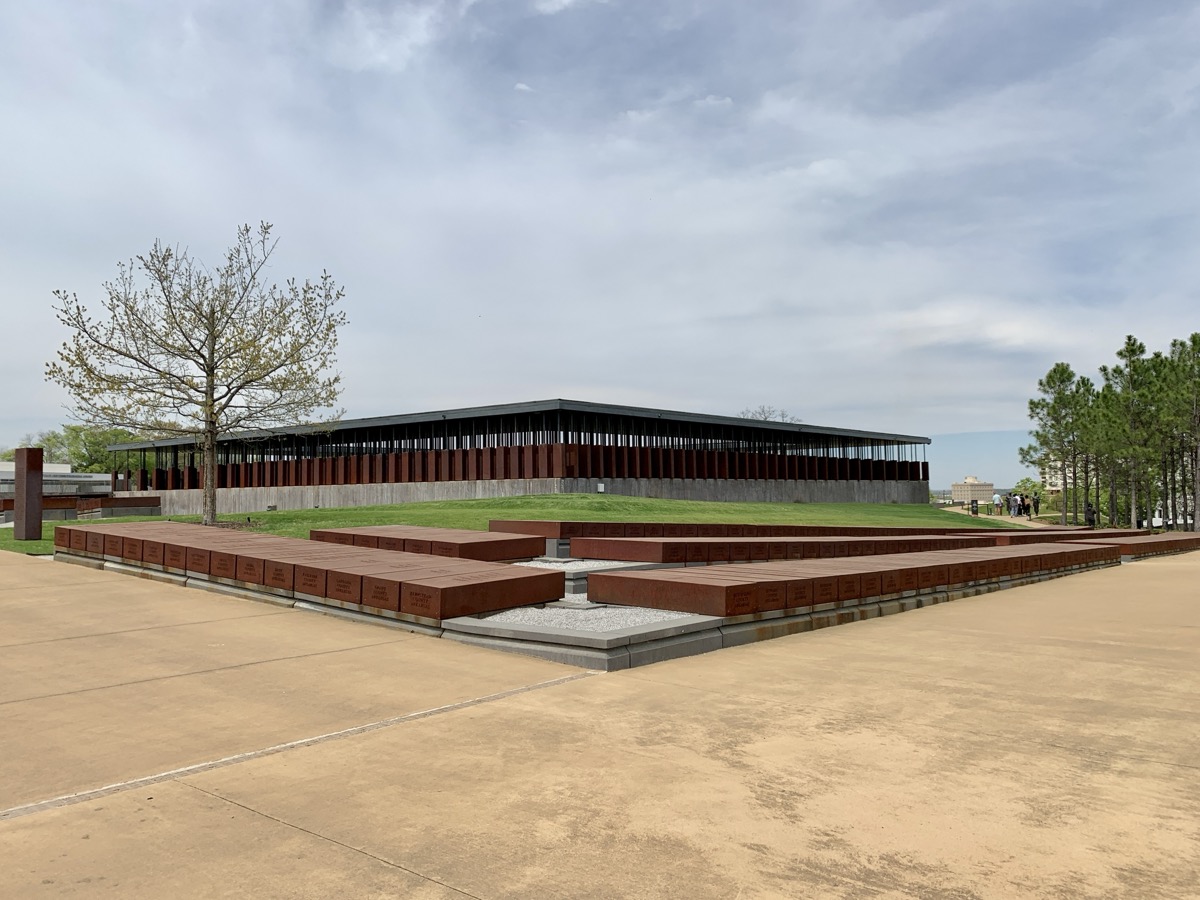
Next day we spent several hours visiting Legacy Museum, Freedom Monument Sculpture Park and National Memorial for Peace and Justice. Important for us reminder of history we learned from afar.
16th St Baptist Church, Birmingham
A.G. Gaston Motel, Birmingham
Freedom Monument Sculpture Park, Montgomery
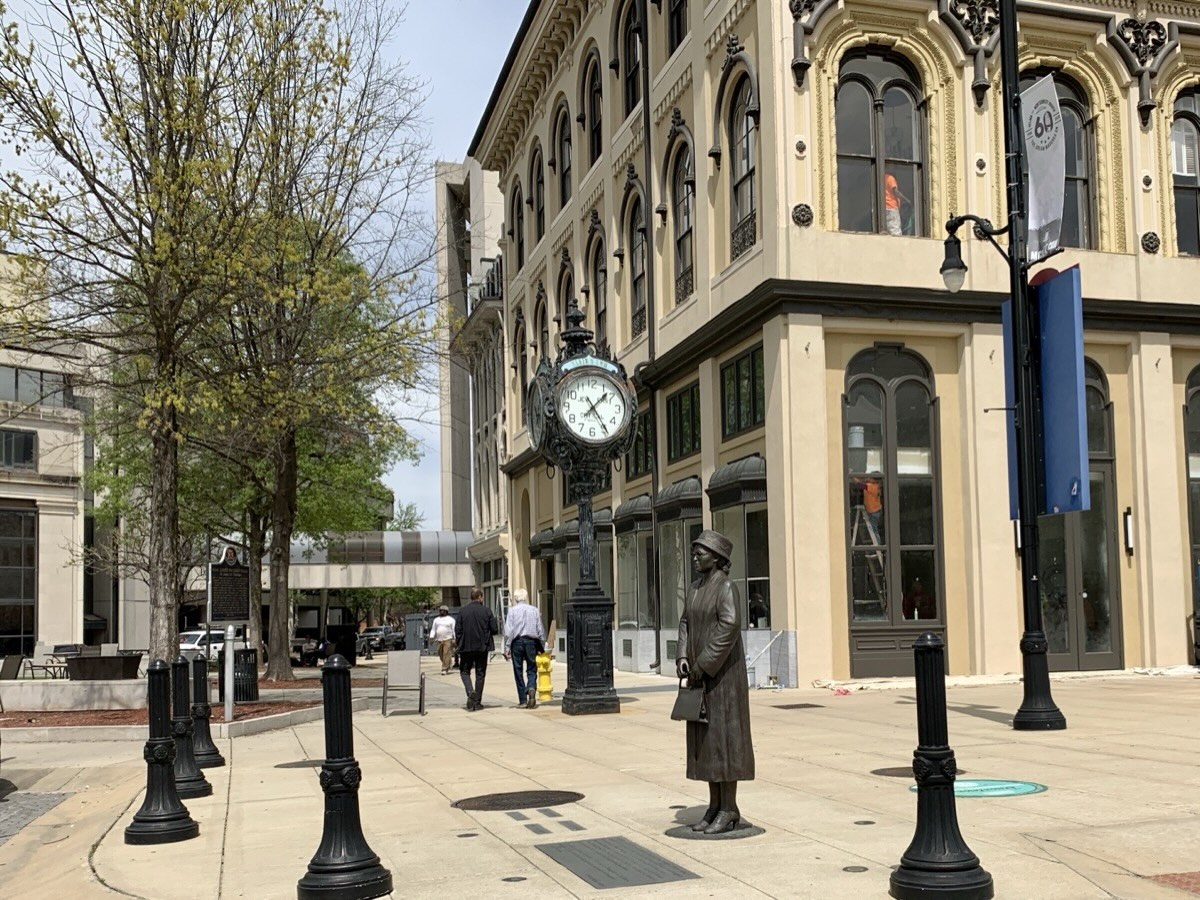
Rosa Parks Bus Stop
National Memorial for Peace and Justice
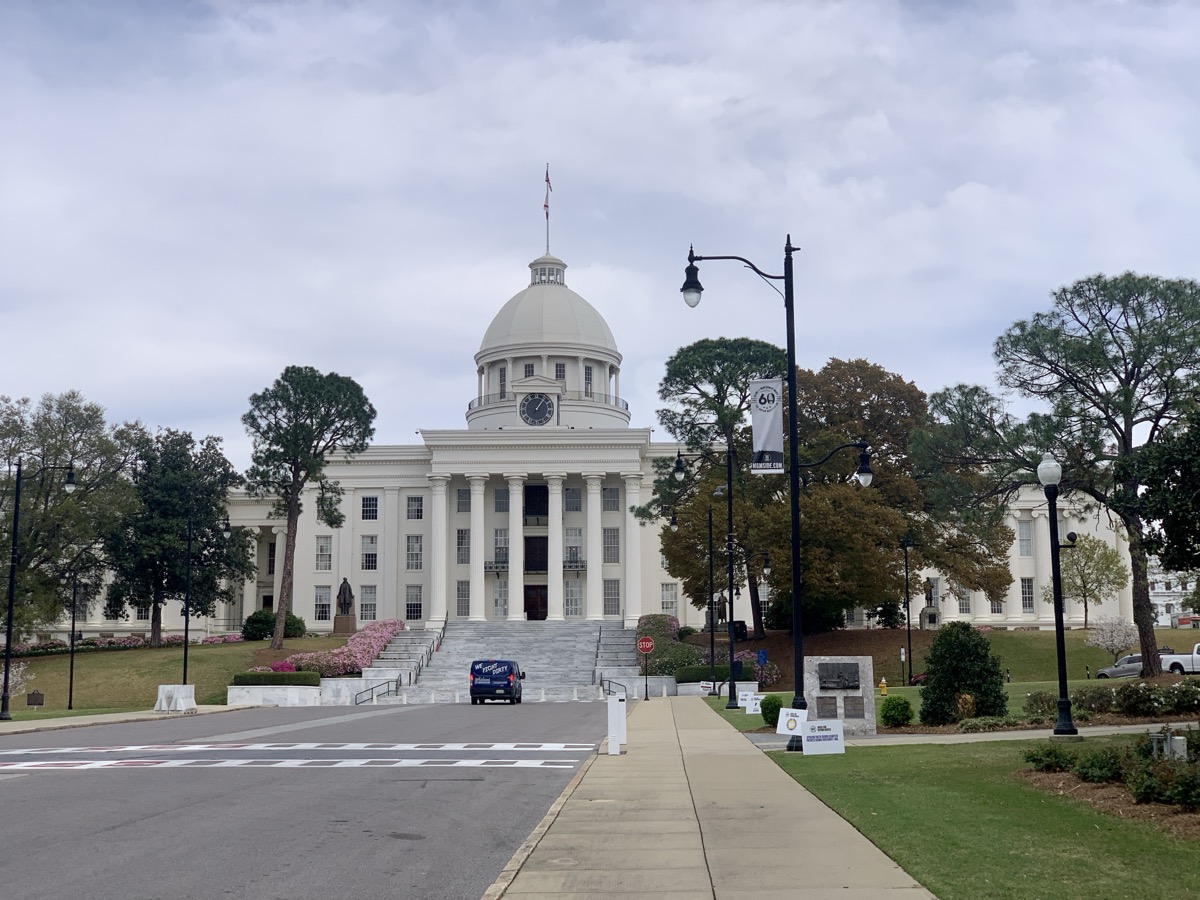
Alabama State Capitol, Montgomery
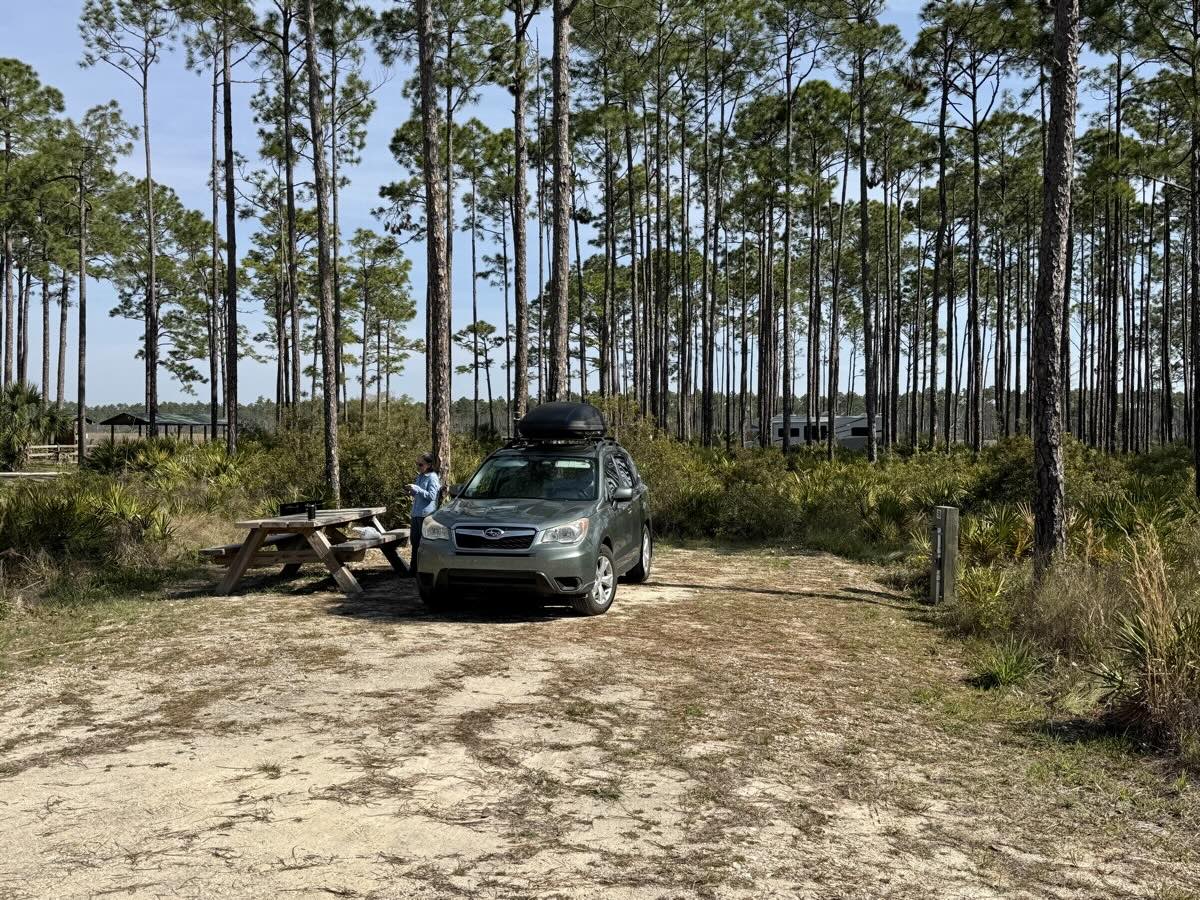
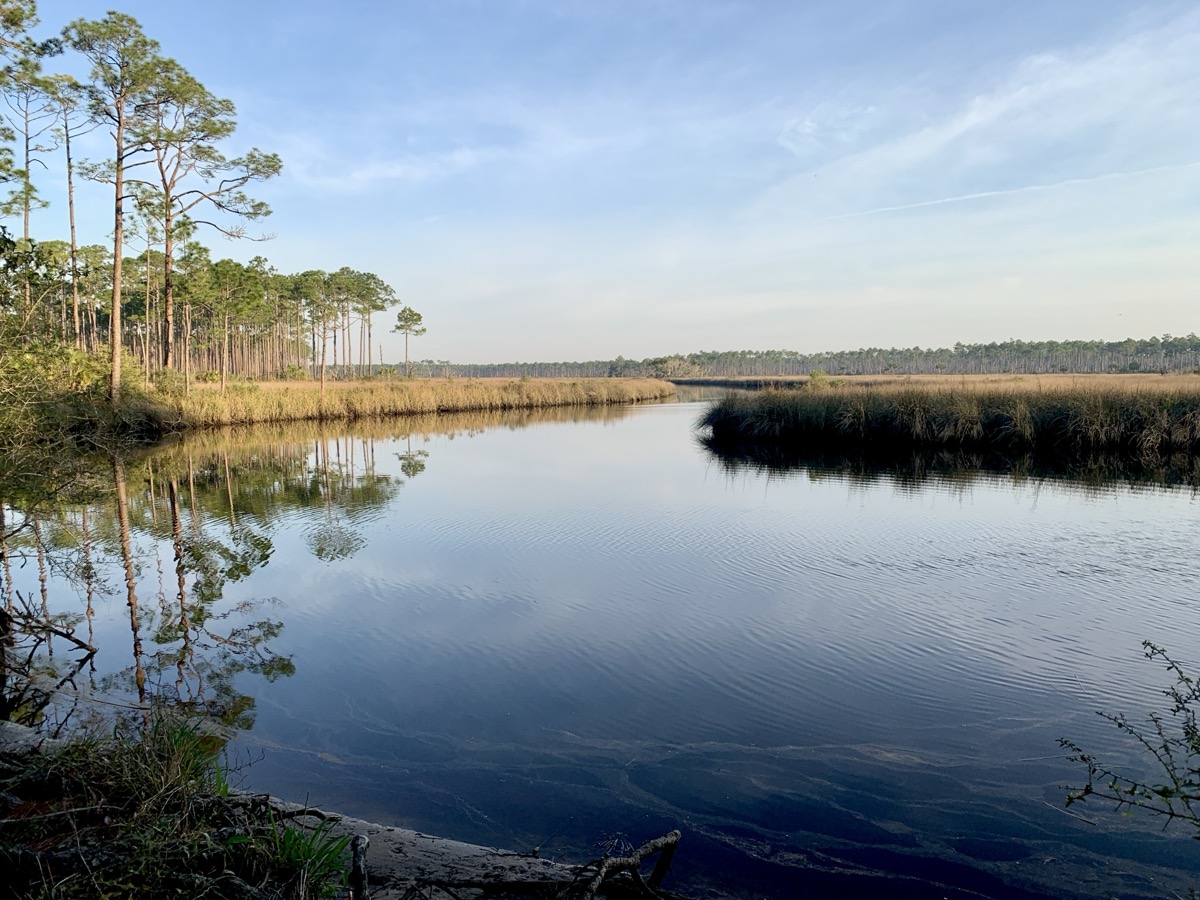
In the afternoon we drove across Apalachicola National Forest in north Florida where we stayed at nice and quiet Tate’s Hell State Forest Cash Creek Campground.
Day 5.
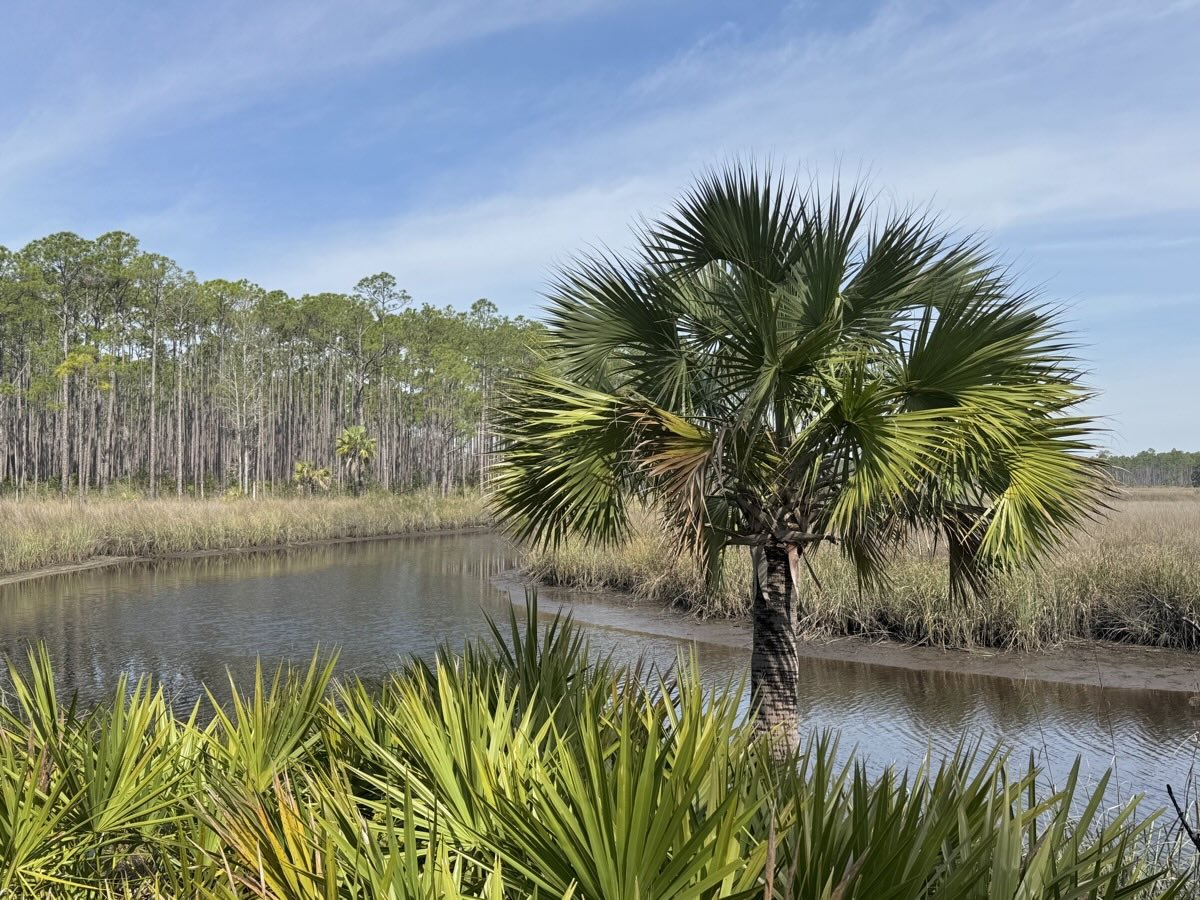
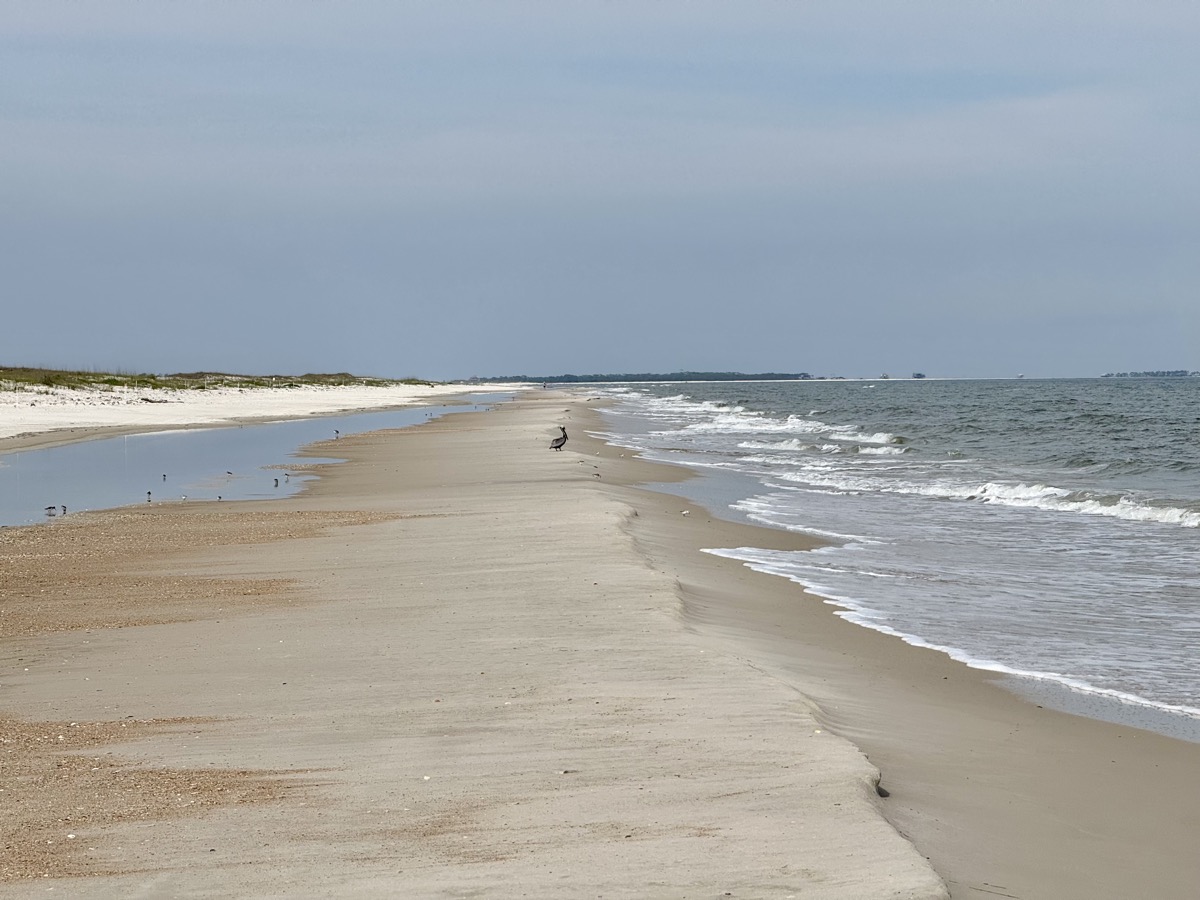
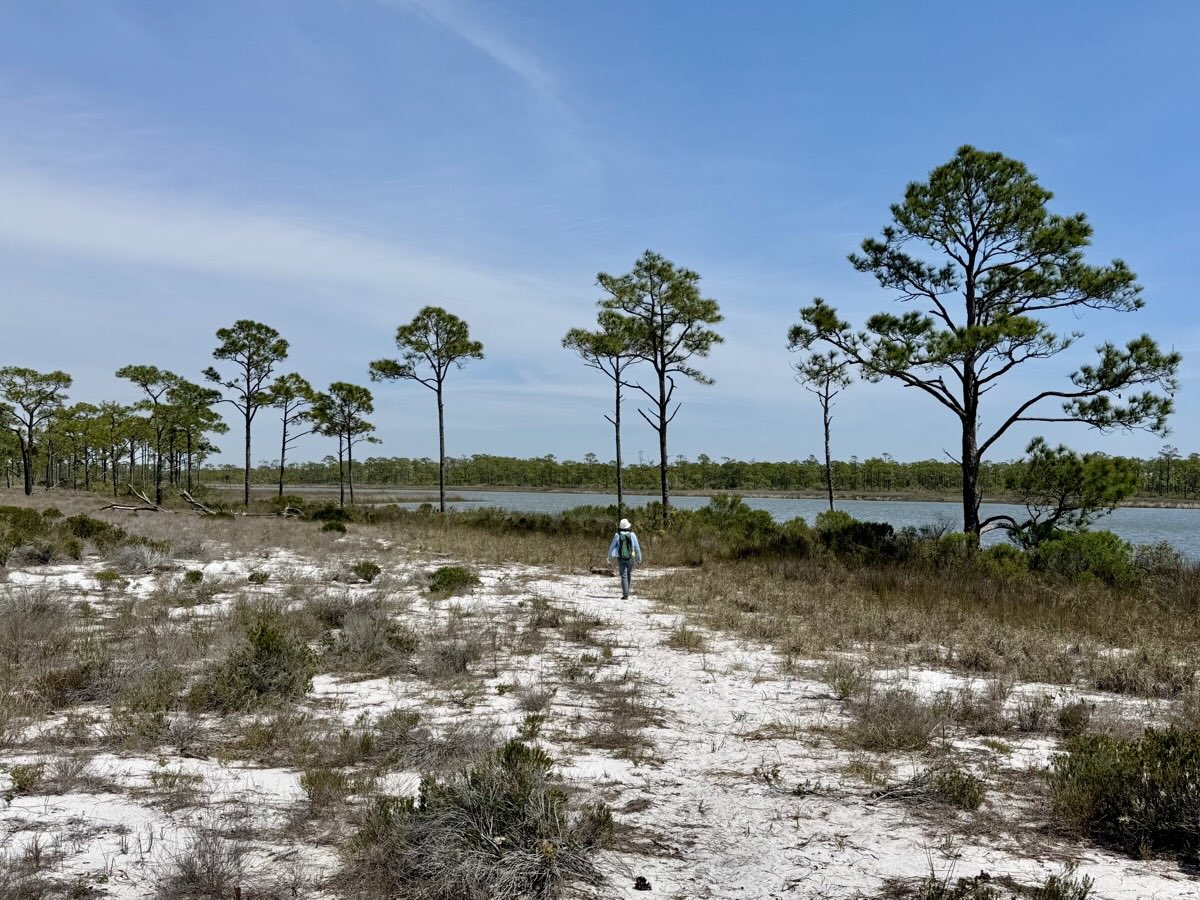
After short, morning walk along Crash Creek in pine flatwoods with palmettos, we spent the rest of the day walking on dunes and beaches of St George Island, and on Gap Point Trail. Island had very relaxed vacation feel, state park with long beaches and woodlands was almost empty – still low season.
Settled at Magnolia 1 Campground in Manatee Springs State Park and immediately went for a walk to look for manatees (no luck that evening). Here it was high season, campground was full and neighbors very loud, but springs were not very crowded and trails empty.
Tate’s Hell State Forest Cash Creek Campground
Crash Creek…
…
St George Island State Park
Gap Point Trail
Gap Point
St George Island
St George Island
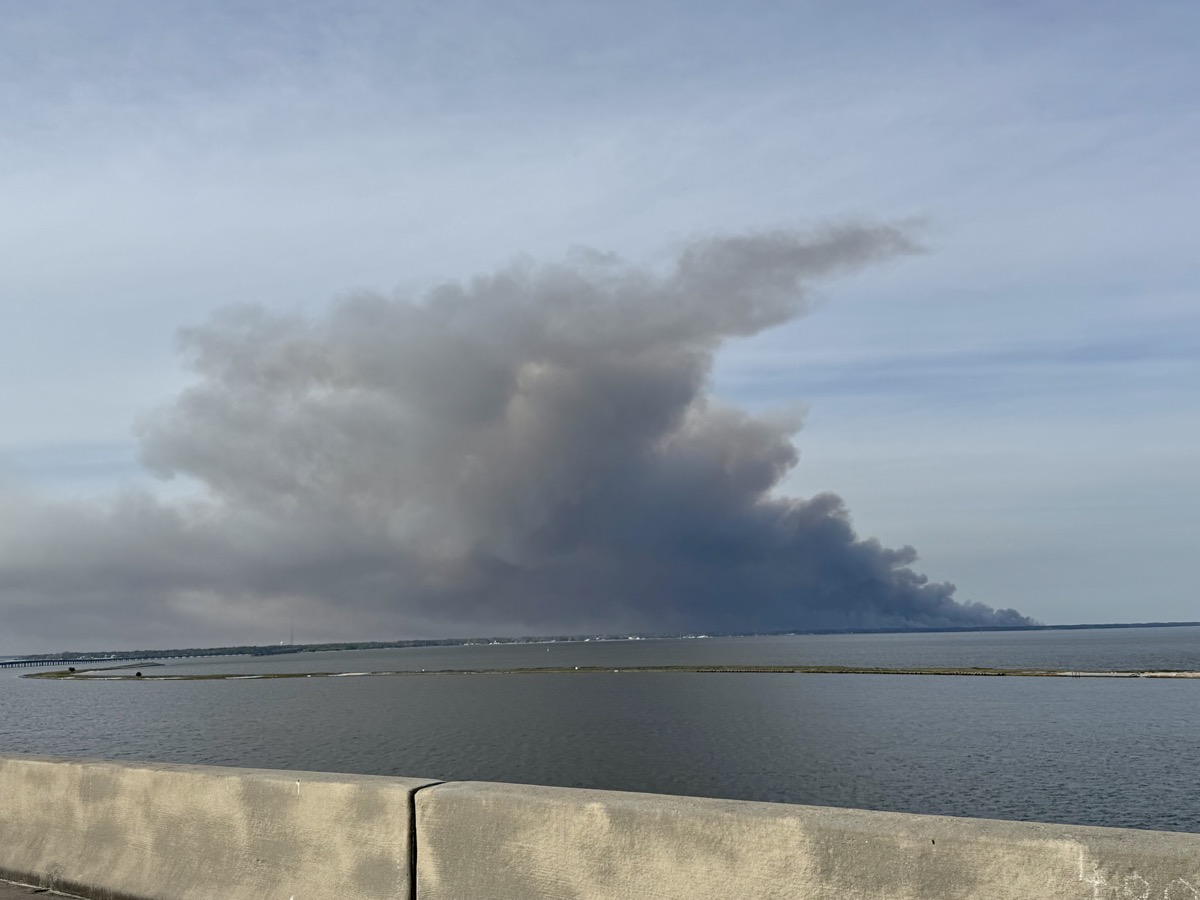
Wild fire in Apalachicola National Forest
Day 6.
It was time to find manatees – we were lucky and spotted three in spring’s channel: one swimming with a small baby, and separately another one sleeping/floating. We saw manatees before, but clear spring water make them much more visible then in sea lagoons.
Manatee
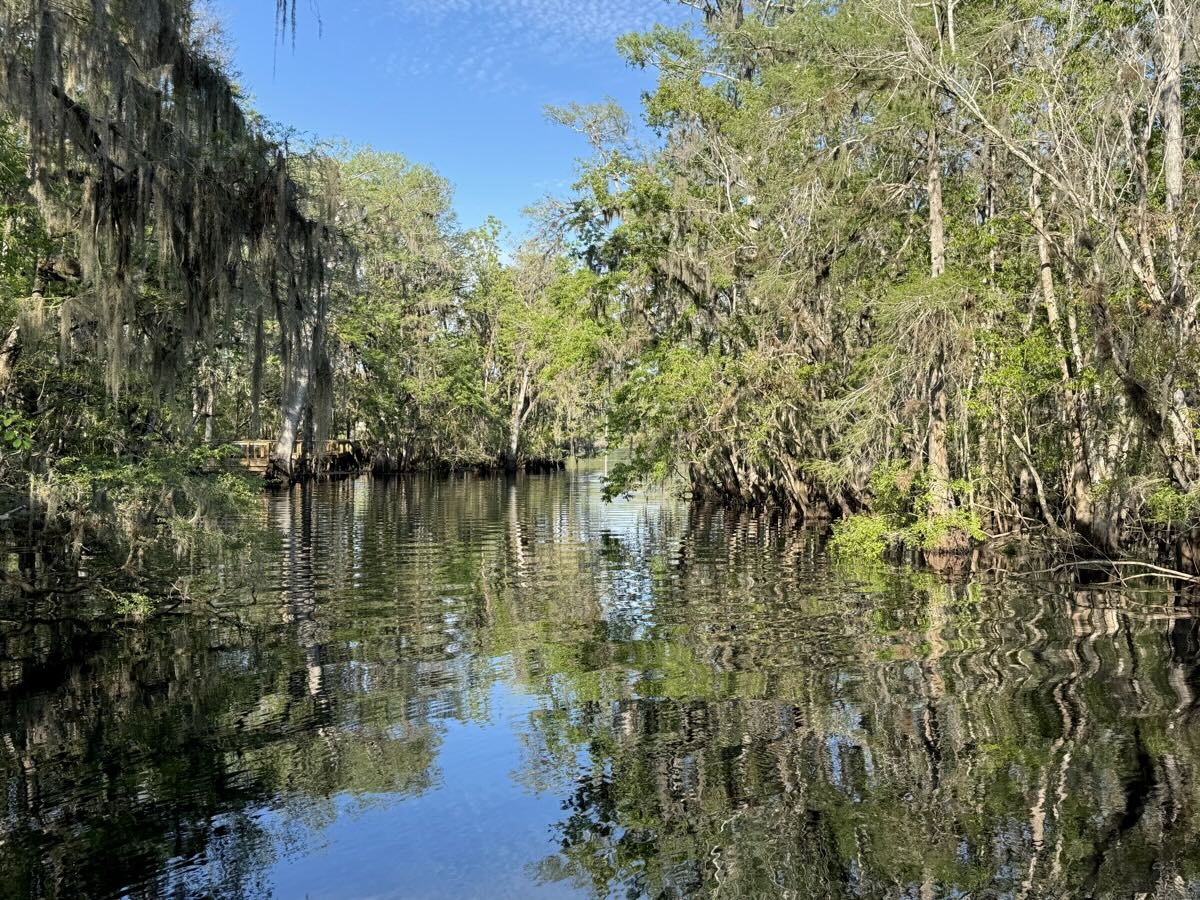
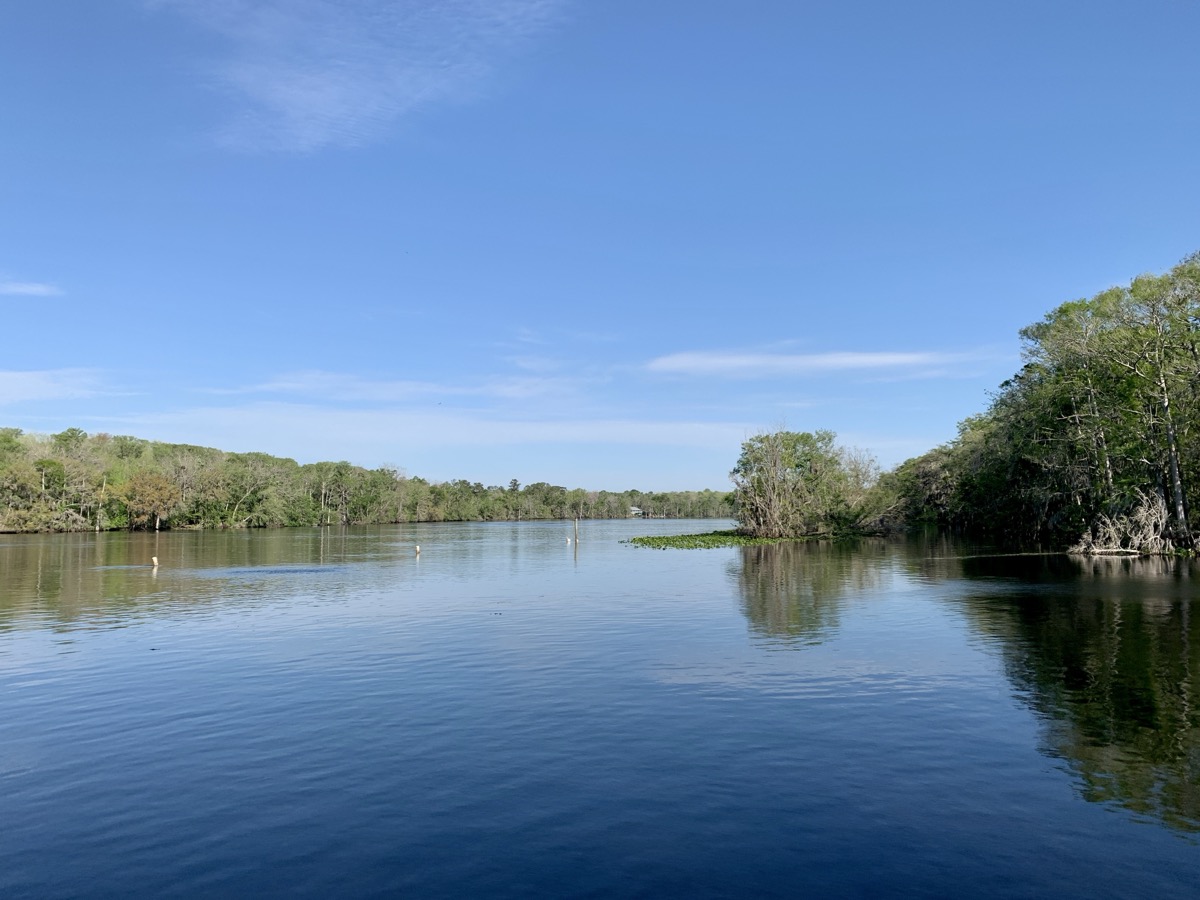
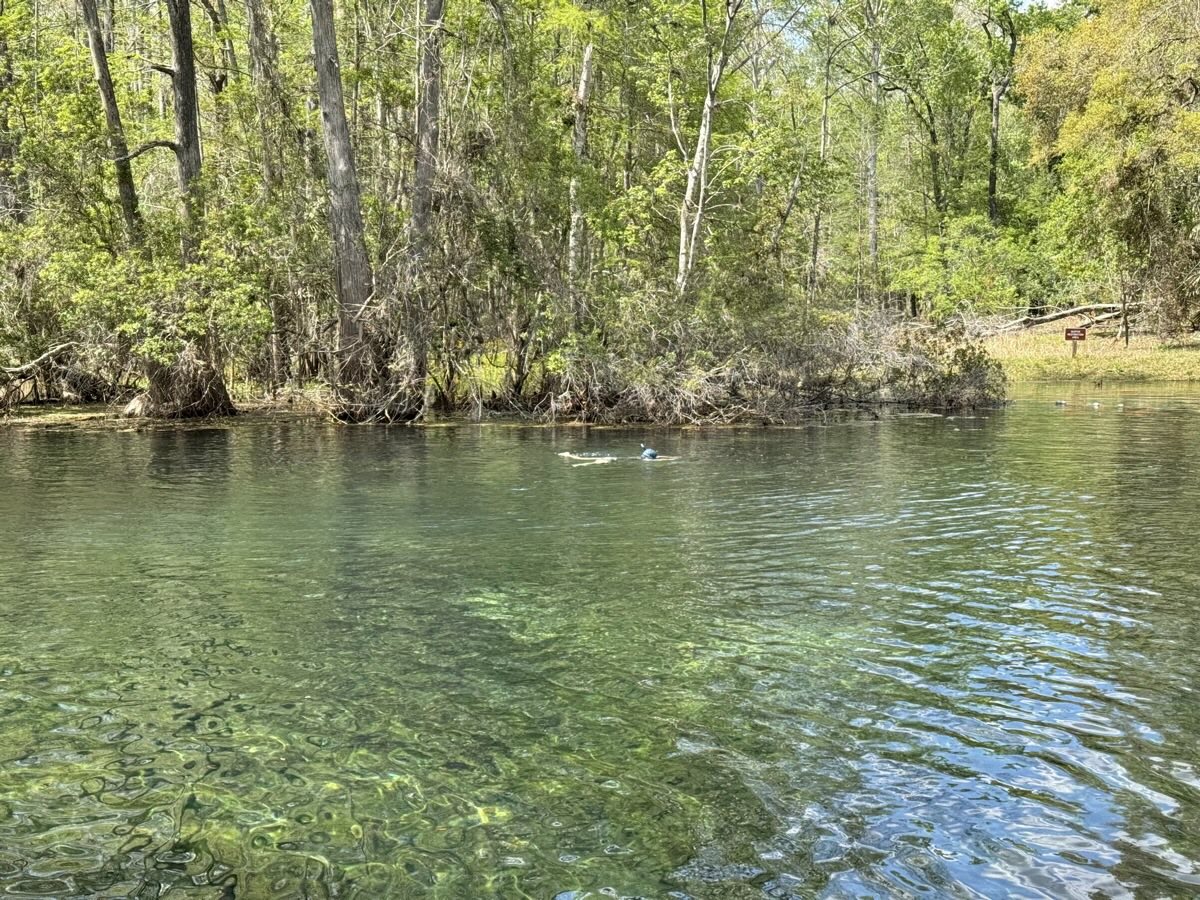
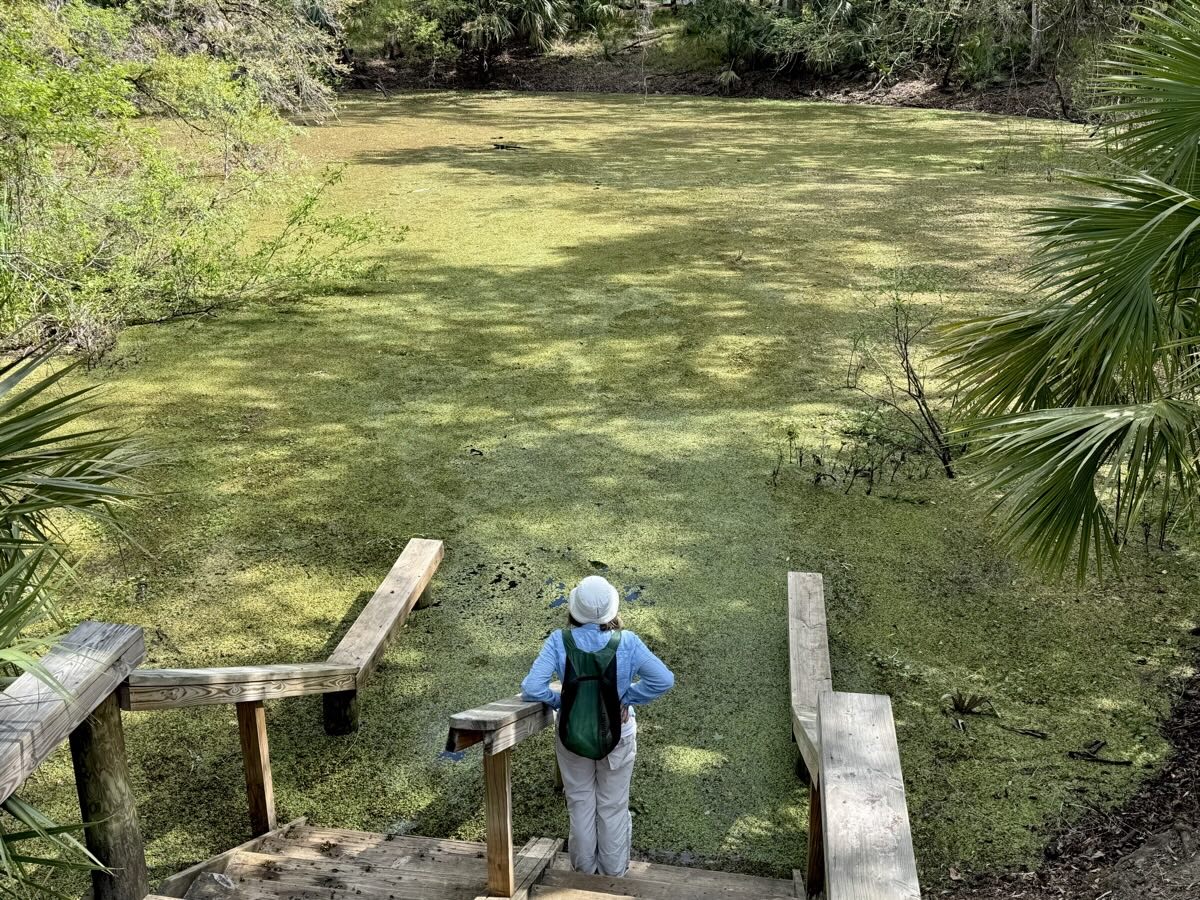
We walked around in loops all day, along water’s edge, on boardwalks, through wetlands and forest. We had time for swimming and snorkeling in the spring. Springs are beautiful with very clear water, surrounded by swamps with cypresses, tupelos, Spanish moss and alligators. In the evening we walked in woodlands and saw barred owl at twilight.
Manatee Springs State Park
Cypress swamp
Manatees
Suwannee River
…
Manatee Springs Trail
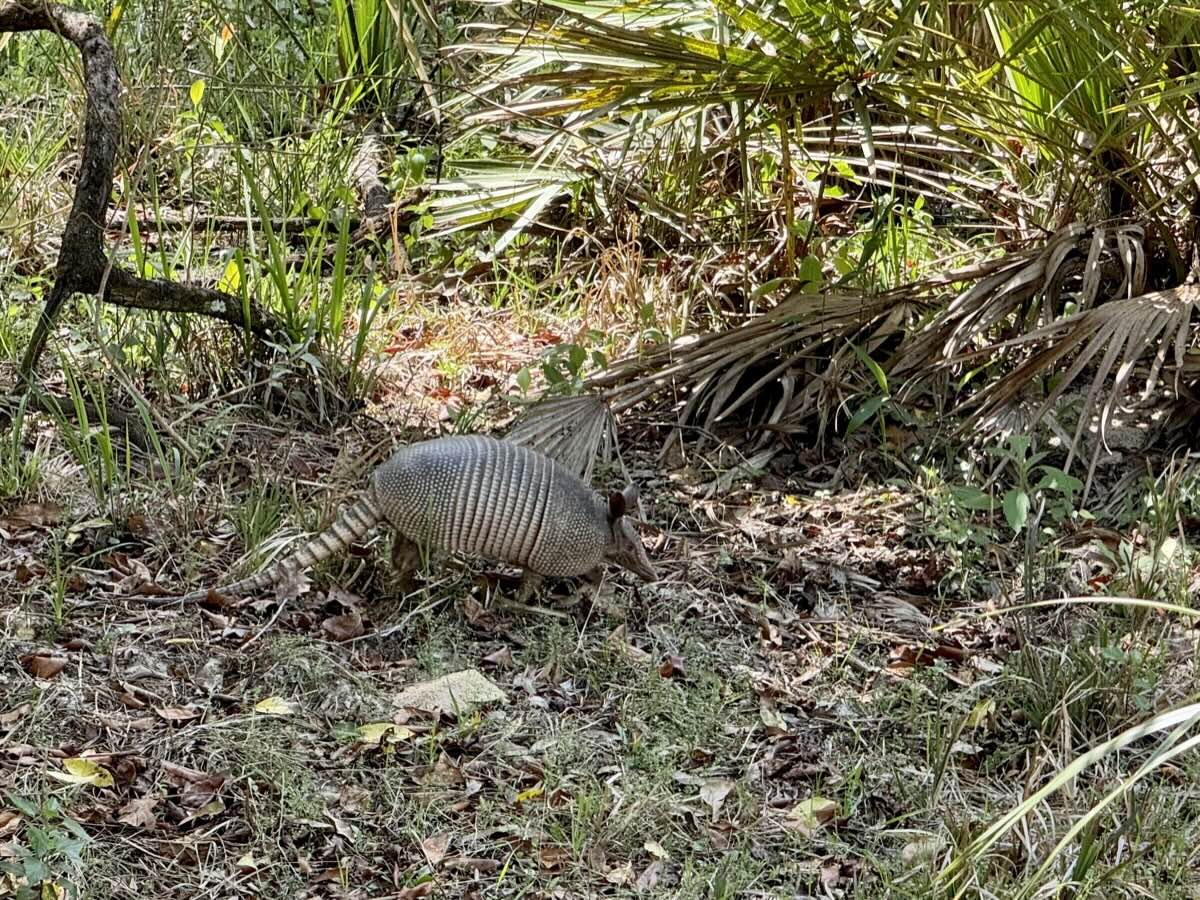
Armadillo
Snorkeling in Manatee Spring
Catfish Hotel (diving cave)
Day 7.
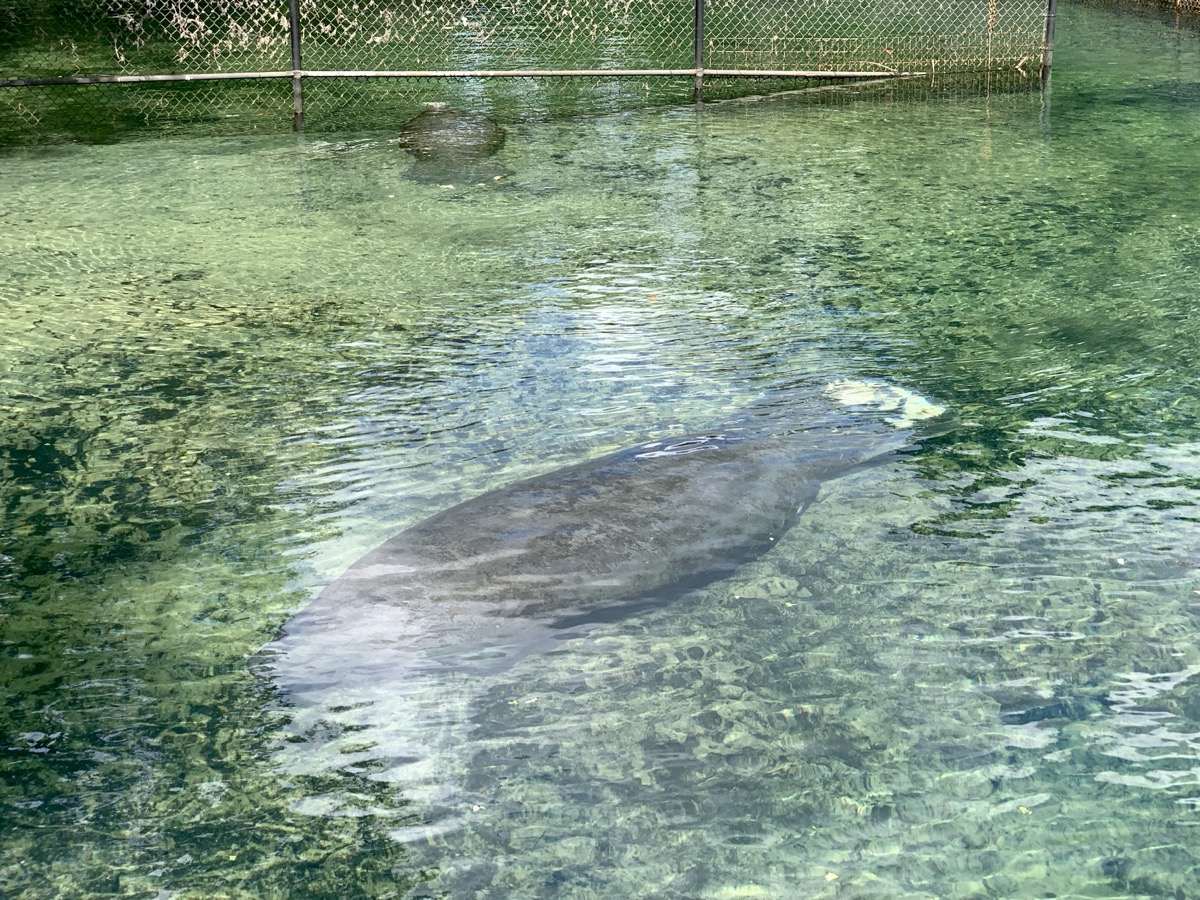
We started with another walk to the springs and we continued to Crystal River looking for water activity and place to swim – too crowded/noisy vacation spot, disappointing beach, so we decided to visit Homosassa Springs Wildlife State Park. It is refuge for rescued Florida animals (we are not great enthusiasts of zoo-type set-ups, but the walk was educational). They had 3 or 4 manatees in large enclosure, one possibly ready for release. We could see up close how huge they are. One more attempt to find swimming beach ended with just a walk at Sunset Beach in Tarpon Spring.
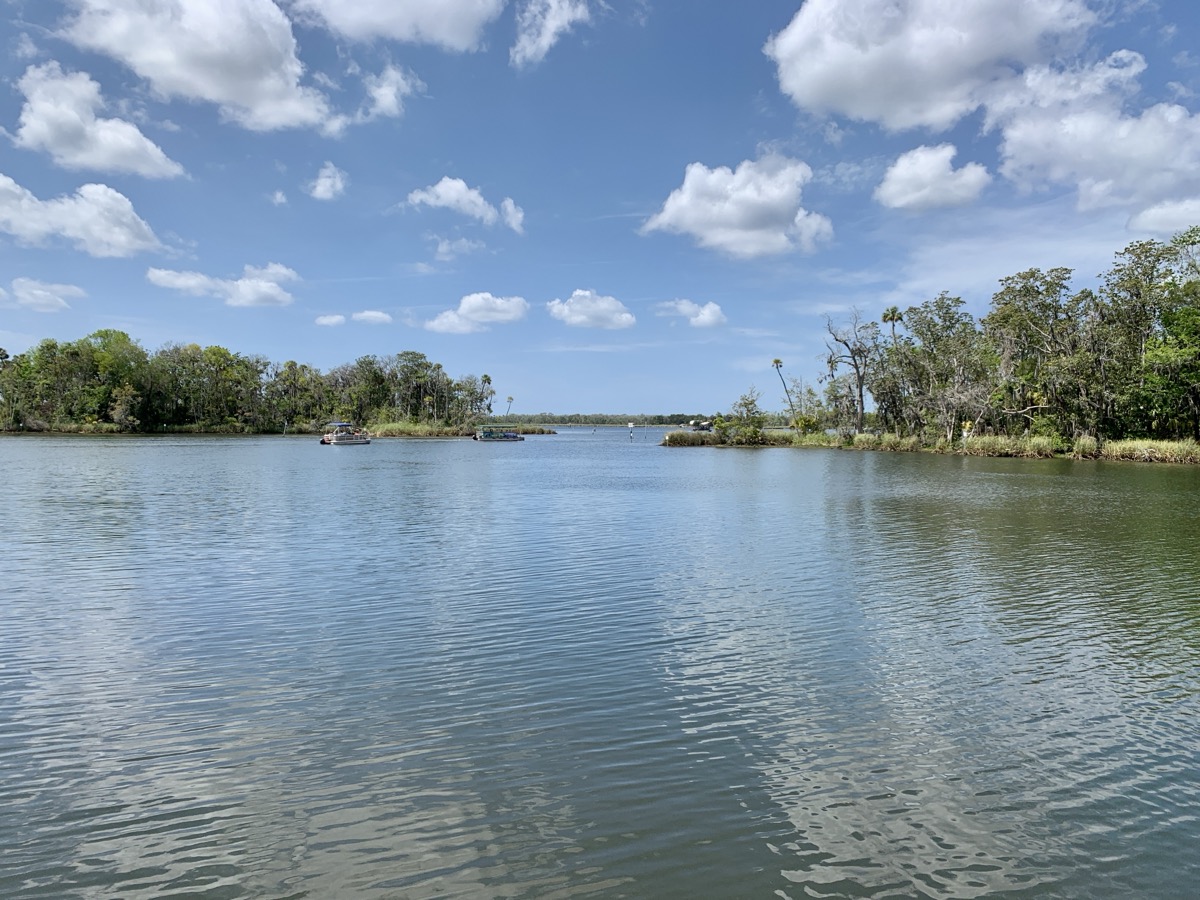
Kings Bay, Crystal River
Manatees at Homosassa Springs Wildlife State Park
Sunset Beach, Tarpon Spring
We had good dinner at nearby H’ours Creole Smokehouse (second take on southern food) and stayed at Tarpon Springs Quality Inn & Suites.
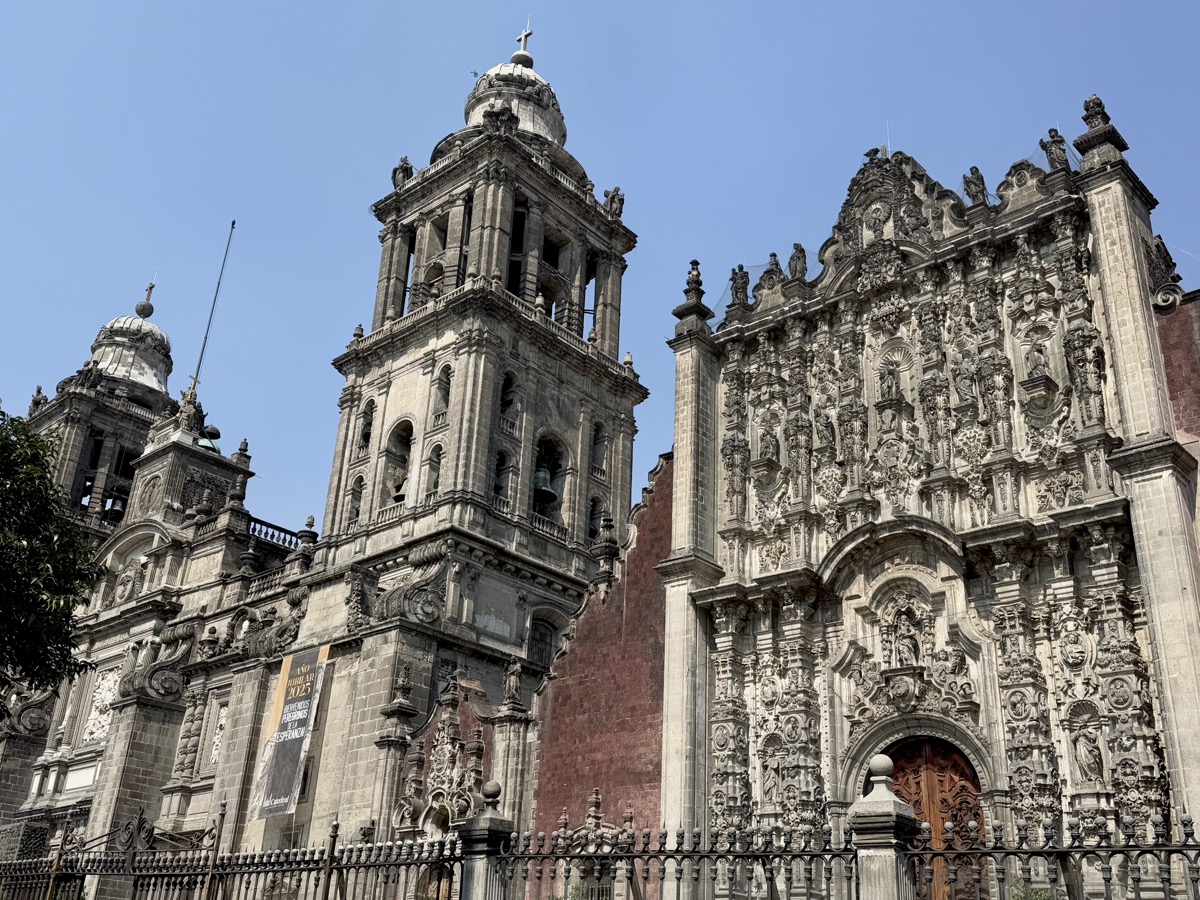
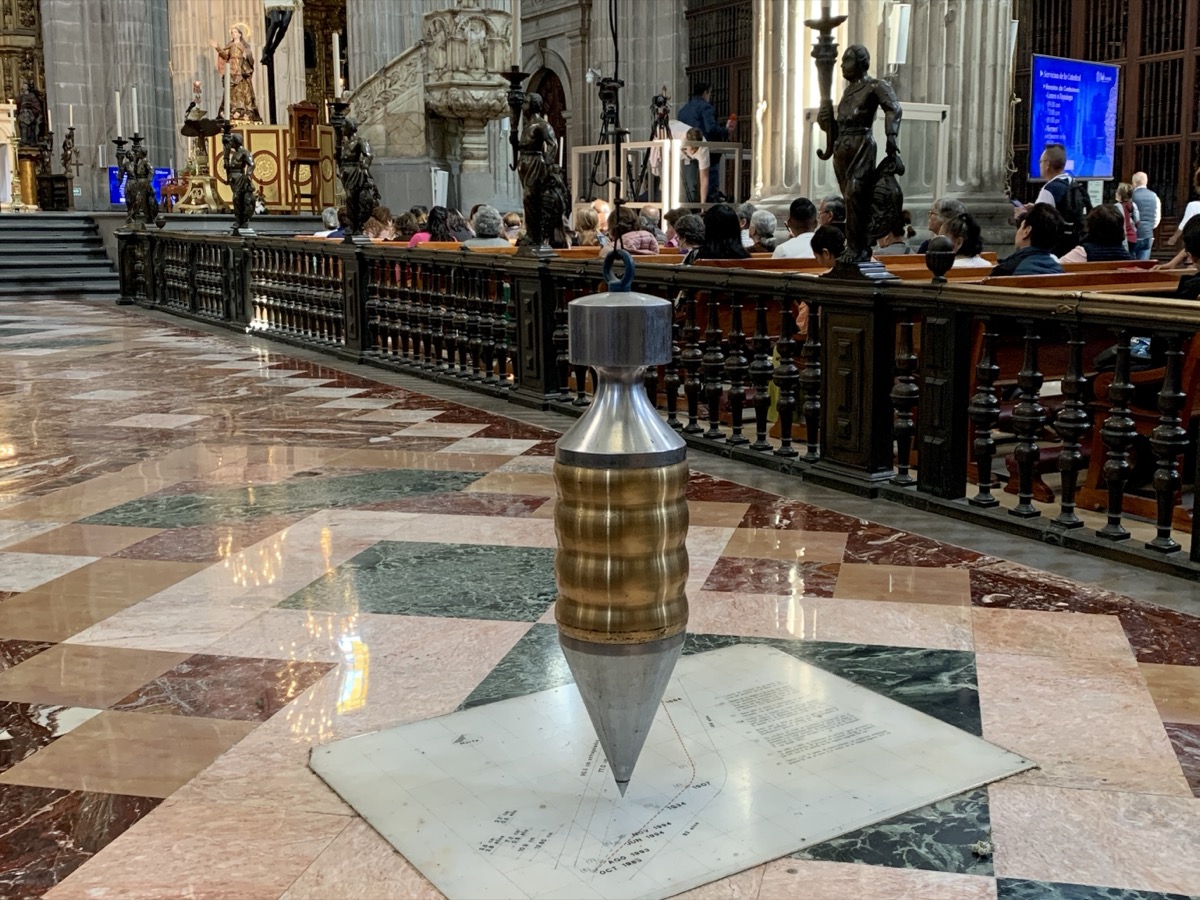
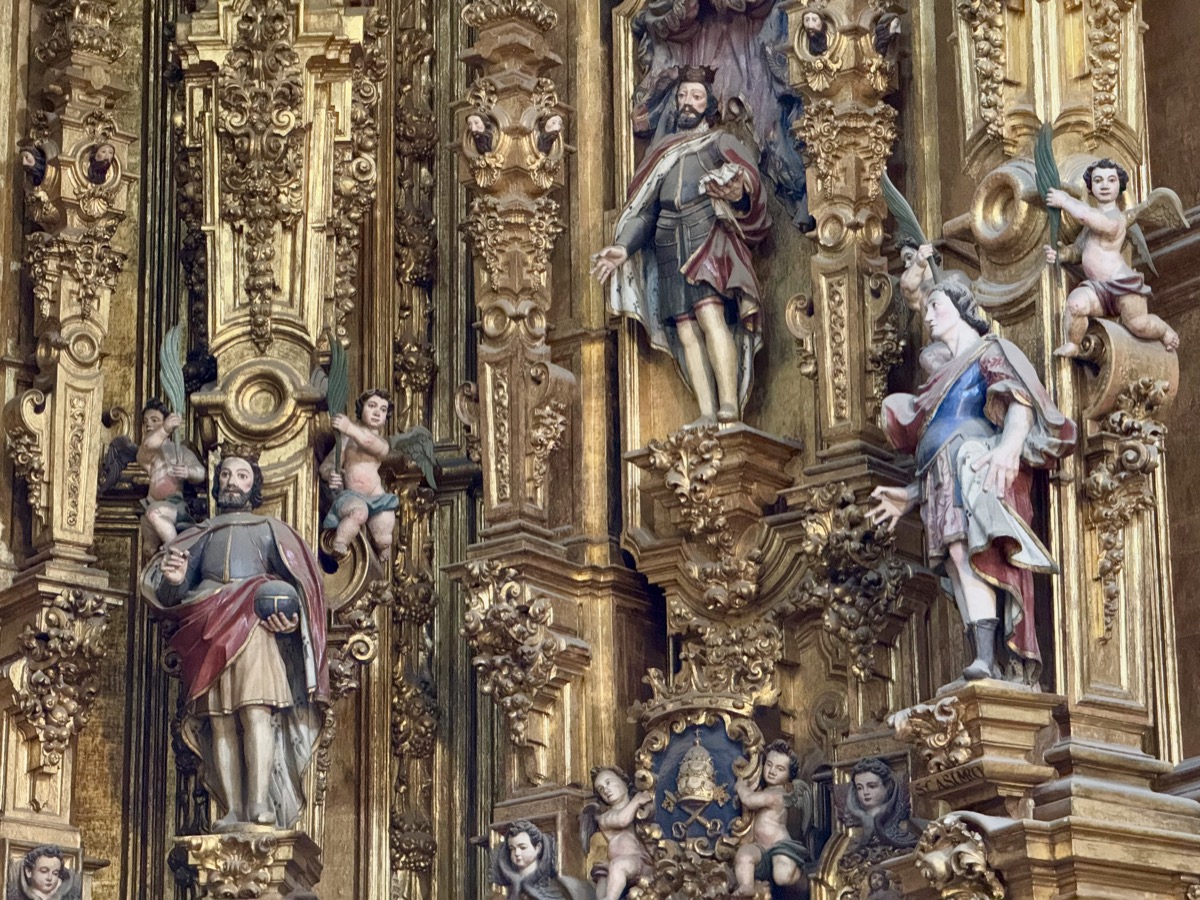
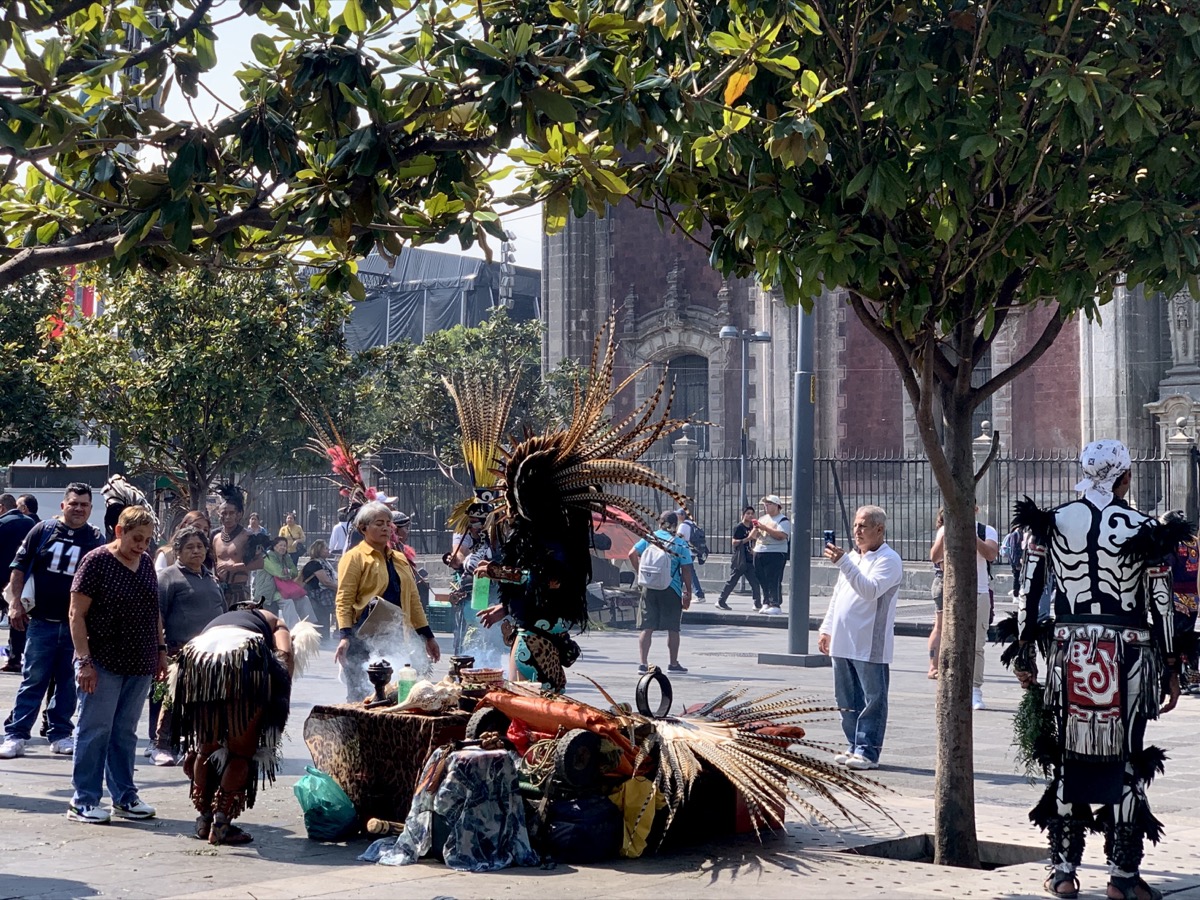
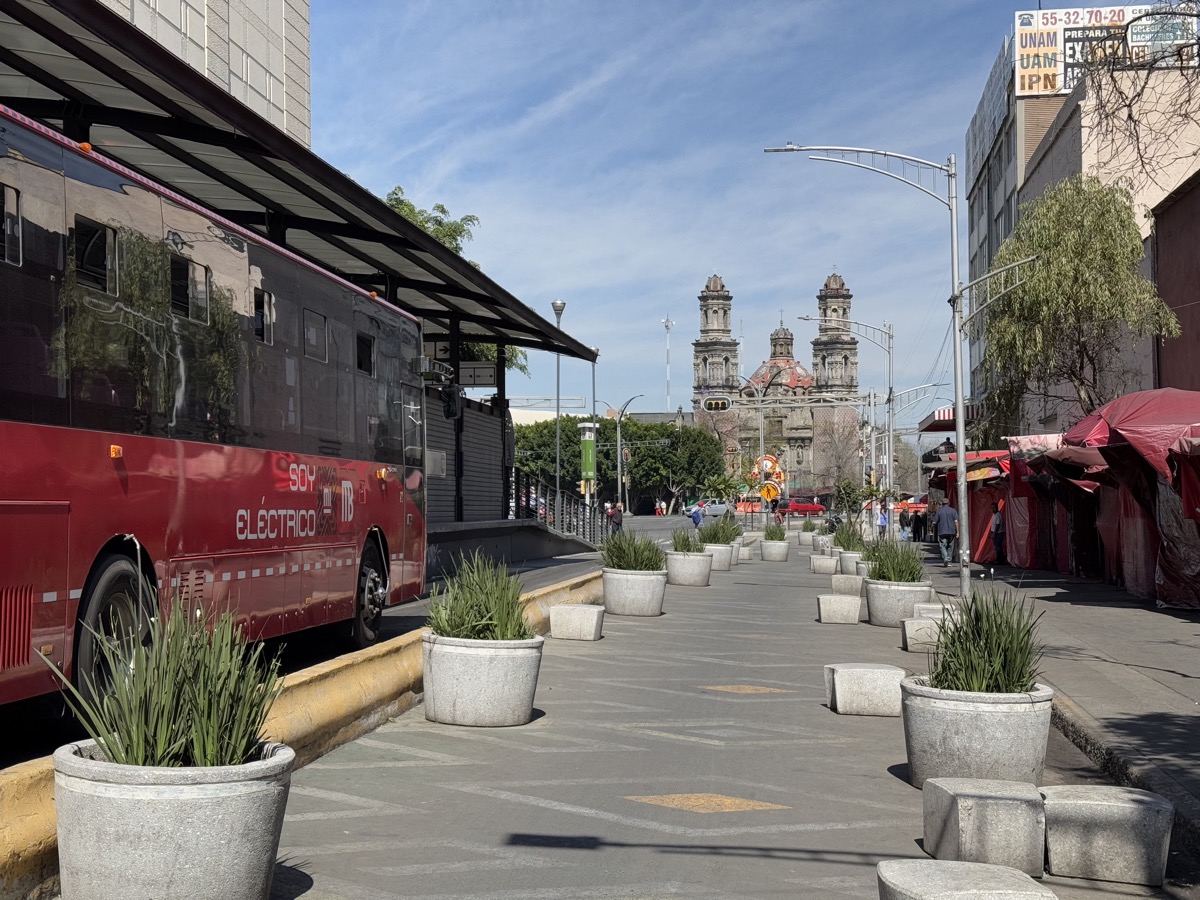
After we walked over to Cuauhtémoc station, we discovered the metro line was closed. Joanna was disappointed because she looked for and chose apartment close to metro. We walked to Balderas (next stop) and took Metro 1 and then Metro 2 to Catedral Metropolitana. First experience with public transportation – very good, frequent, efficient, but information often lacking, navigating the system requires fluency in moving with local crowd, as we learned during our visit. Part of huge Zócalo (main square) was fenced off for a future event. Cathedral, also huge, built over centuries in different styles using some material from pre-Hispanic temples, quite impressive outside and inside. Towers are leaning like many heavy buildings built on ancient lake island. Later, we searched for entrance to Palacio National, as it was open to public on that day, but we circled it in wrong direction and (free) tickets were gone already for the day.
Catedral Metropolitana
Recording tower tilting from vertical
Baroque
Zócalo
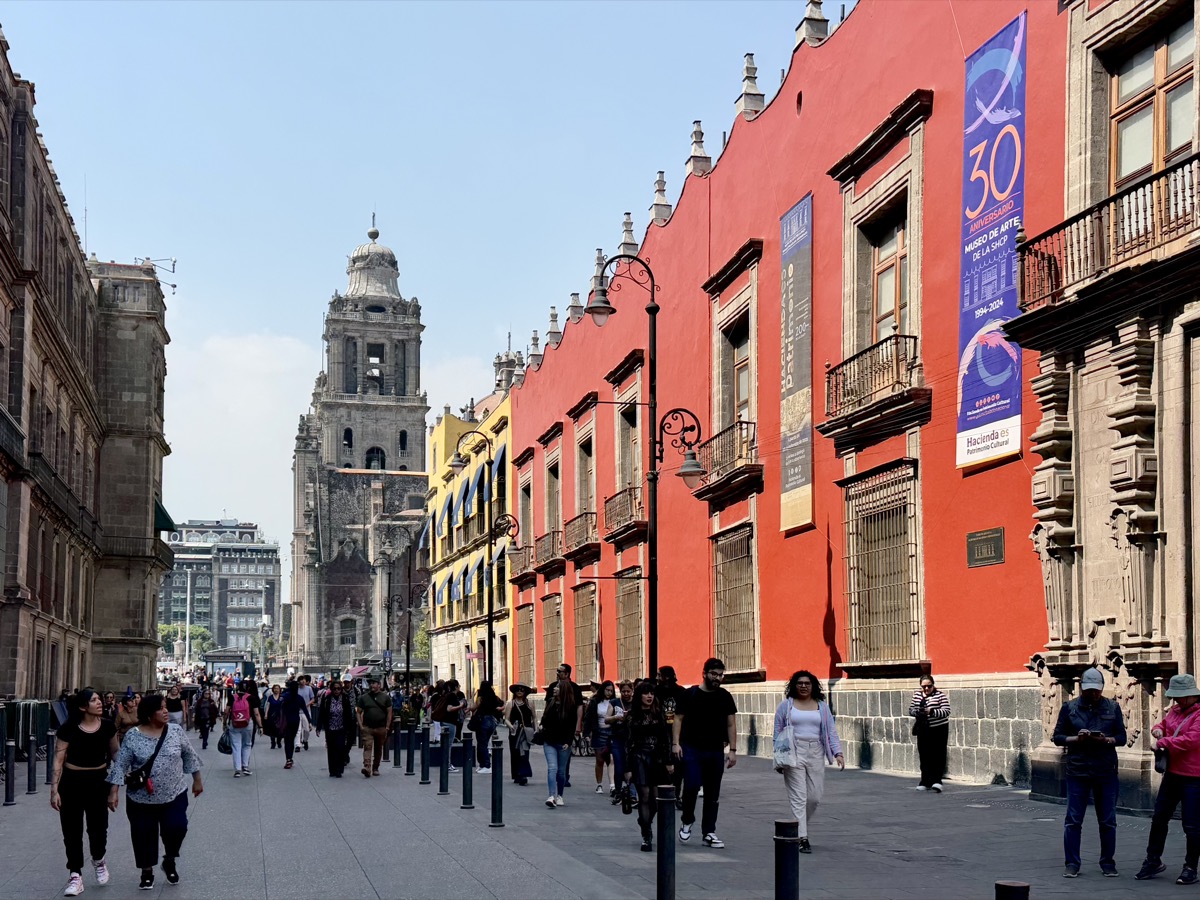
Calle Moneda to Zócalo and Catedral
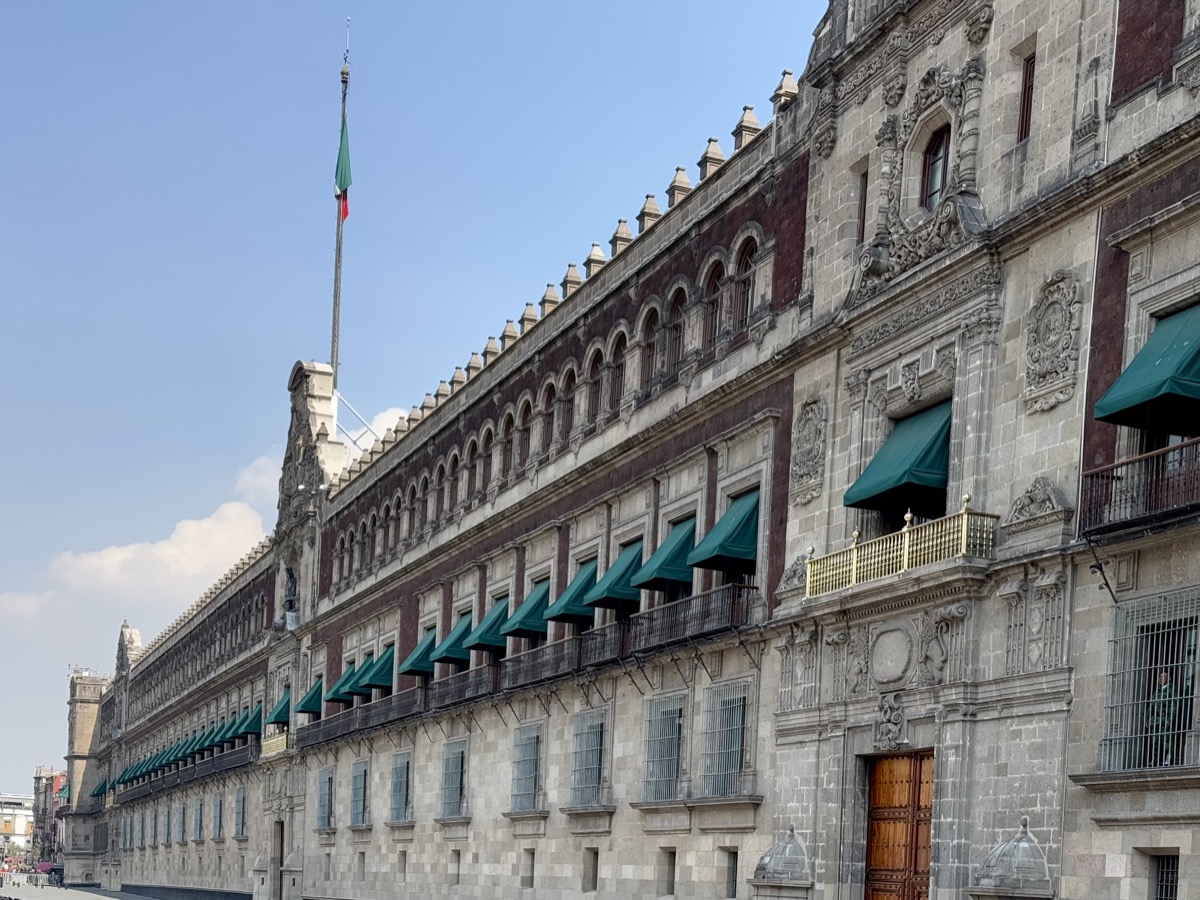
Palacio National
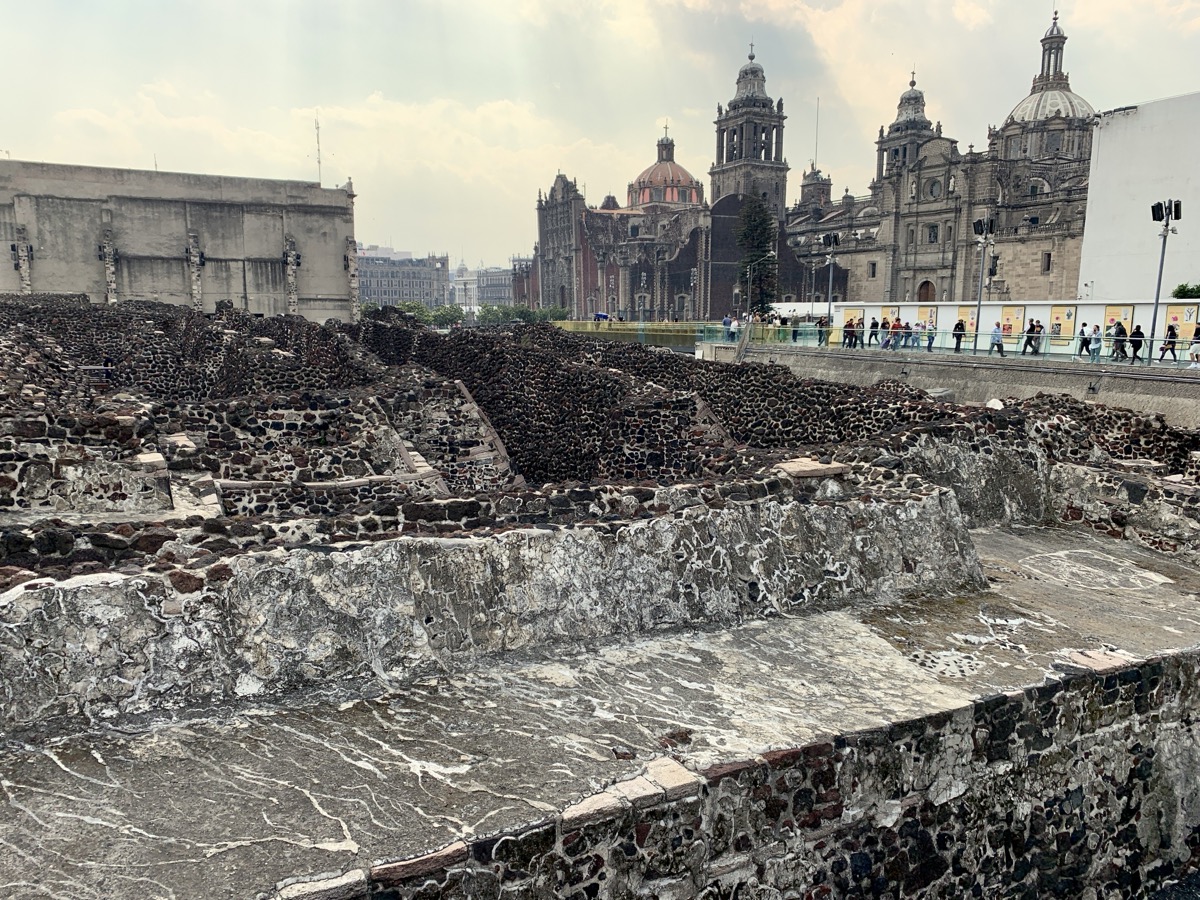
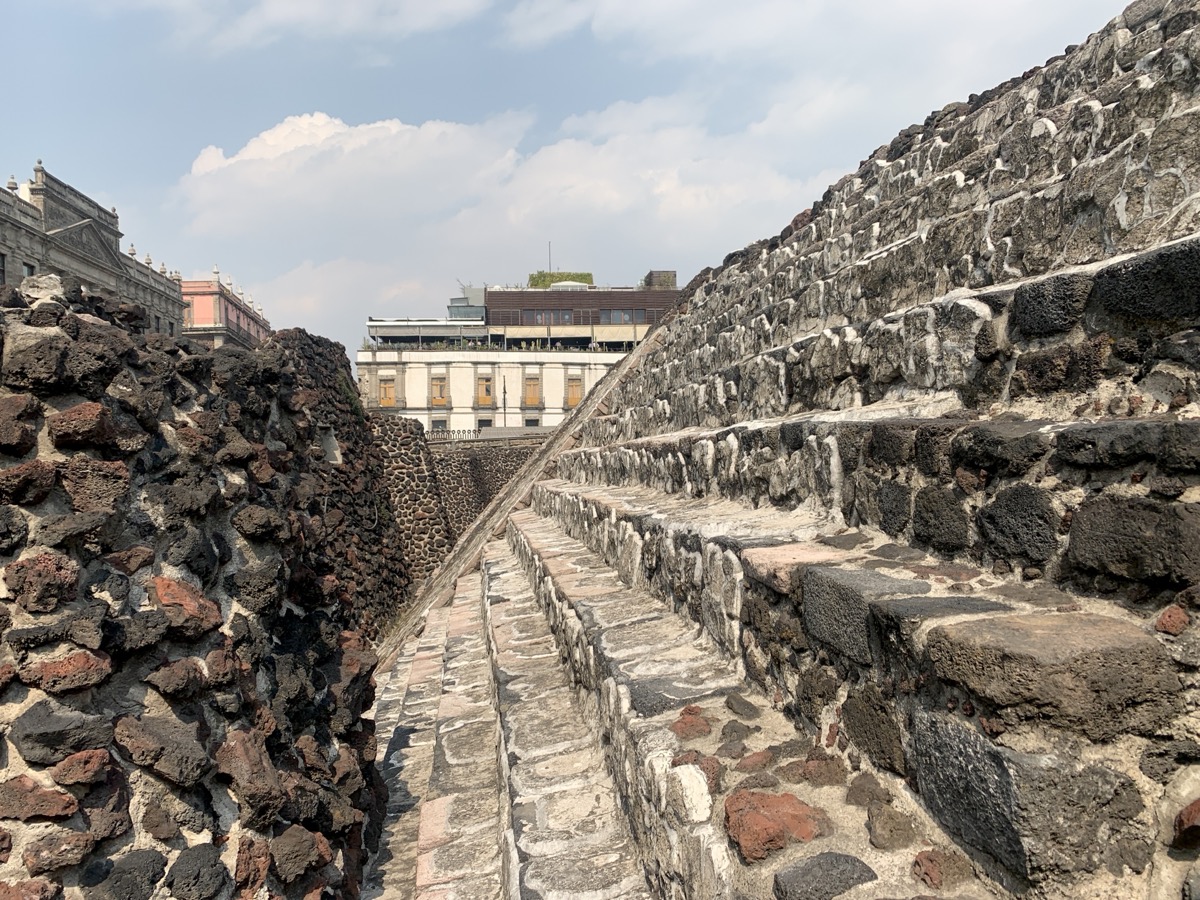
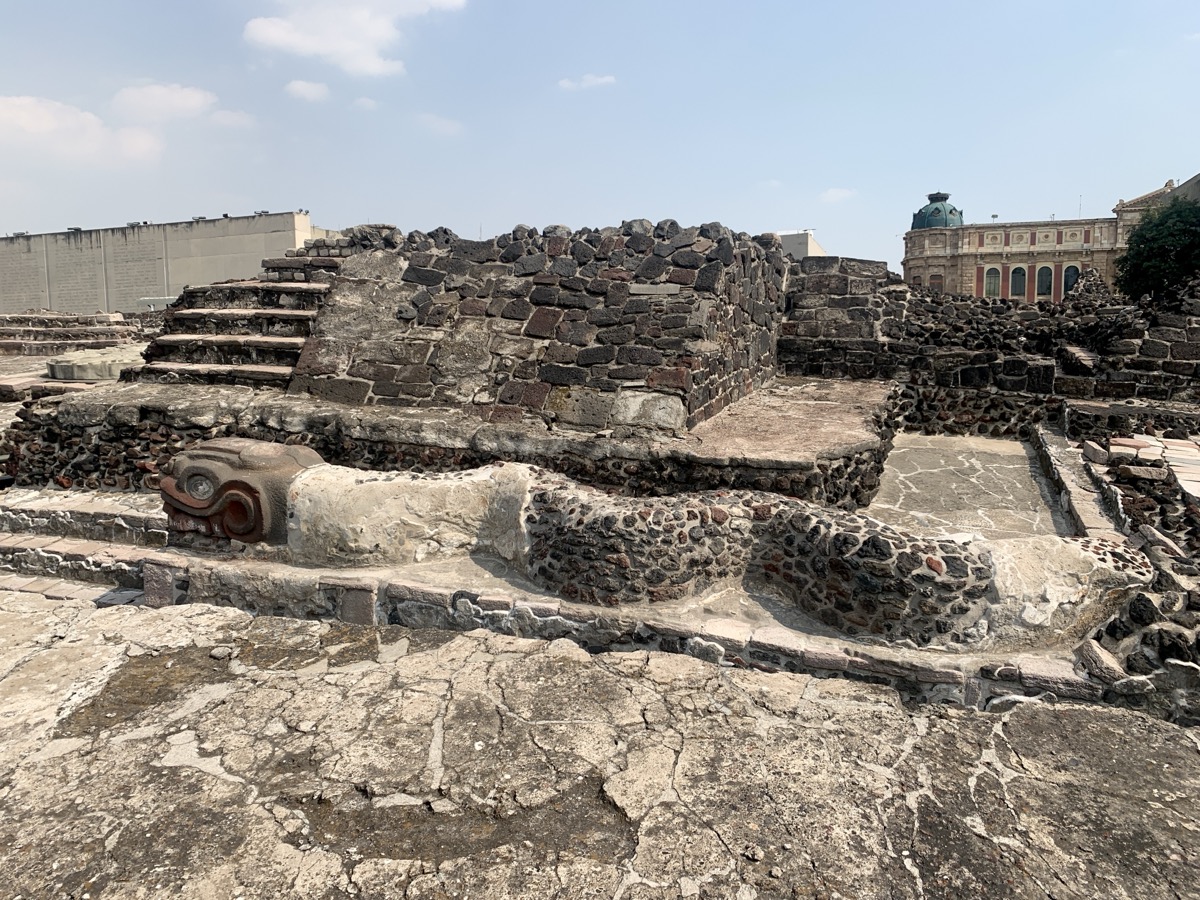
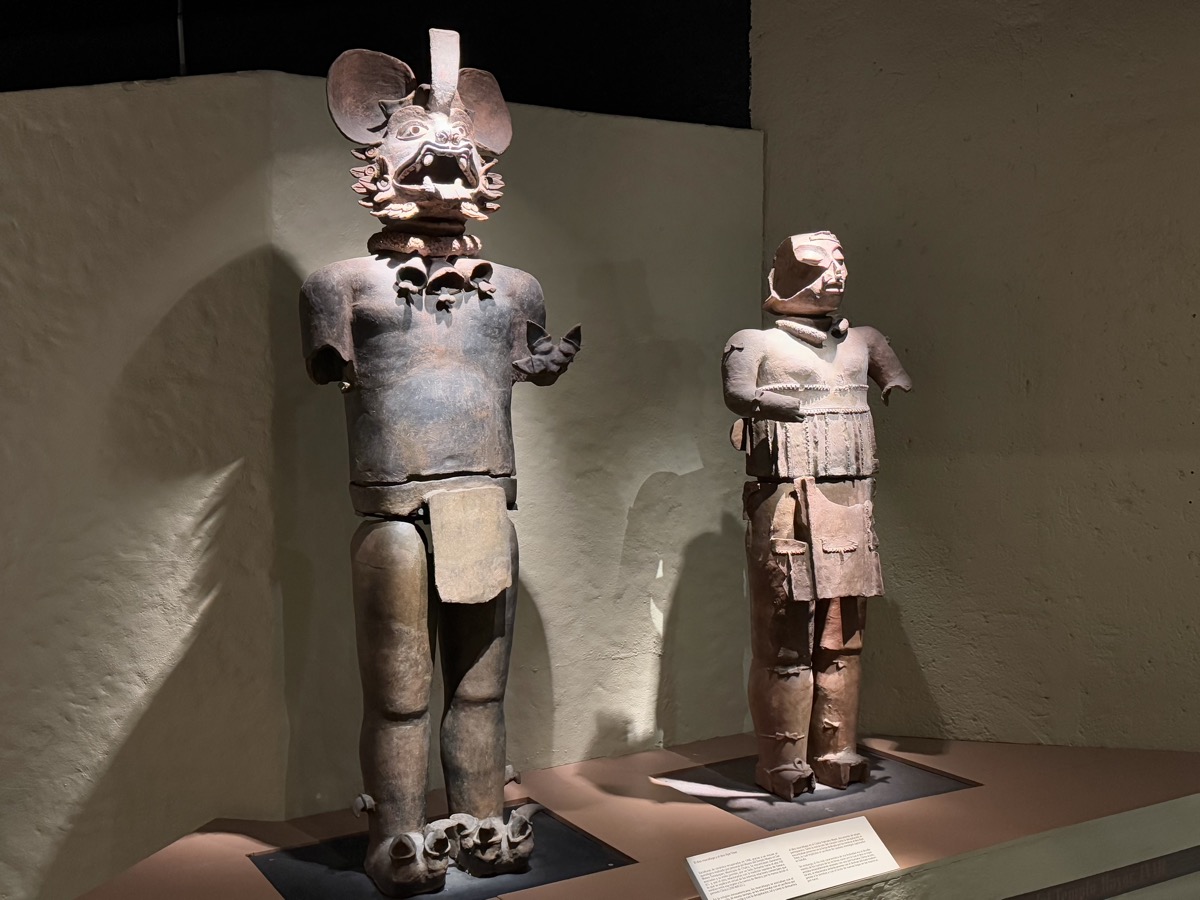
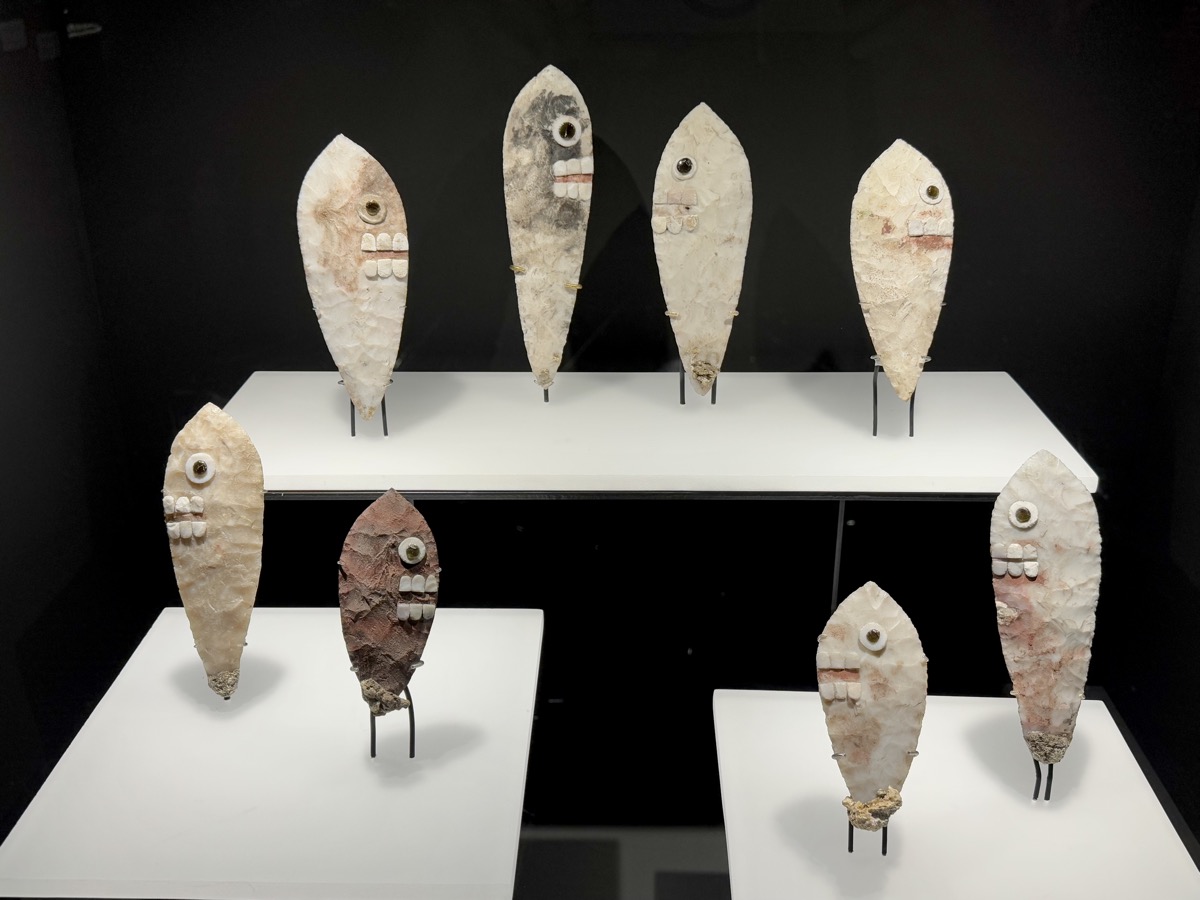
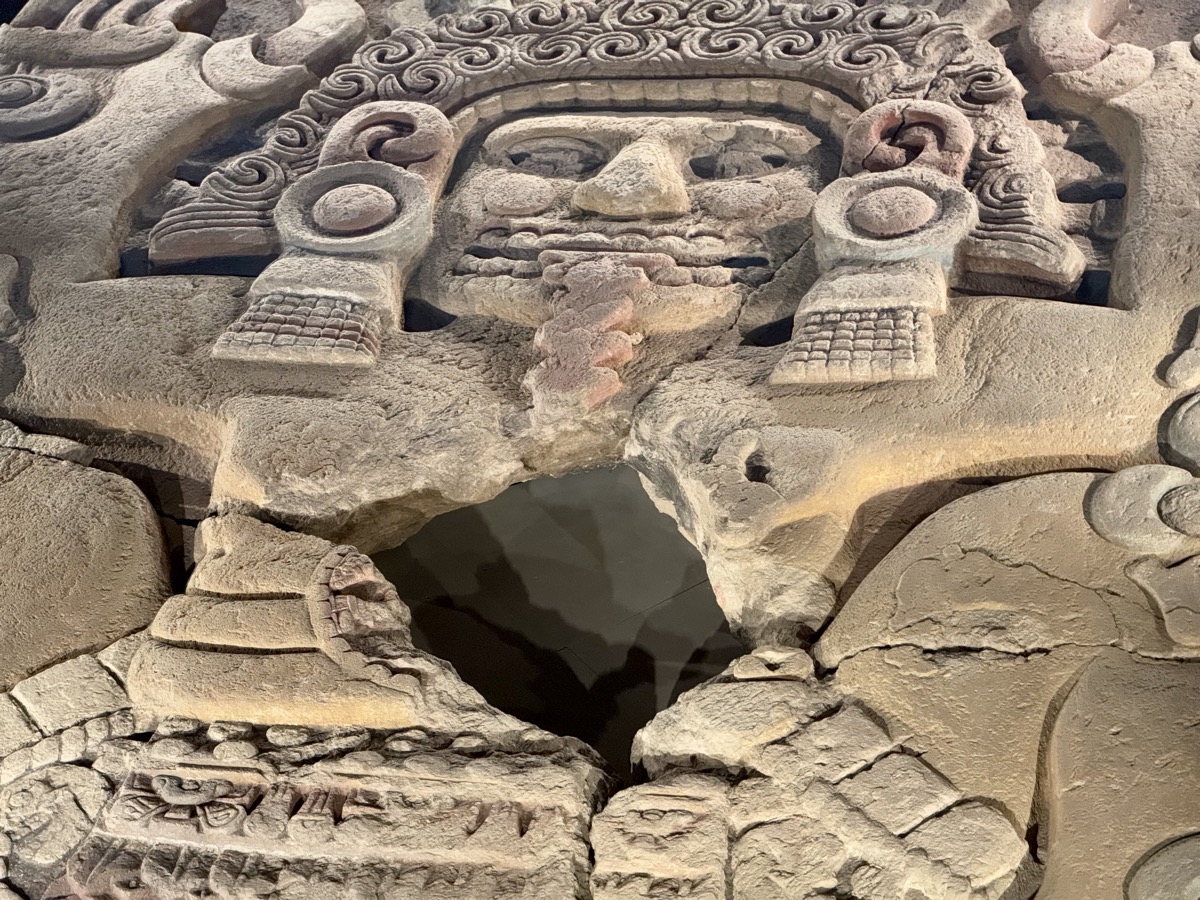
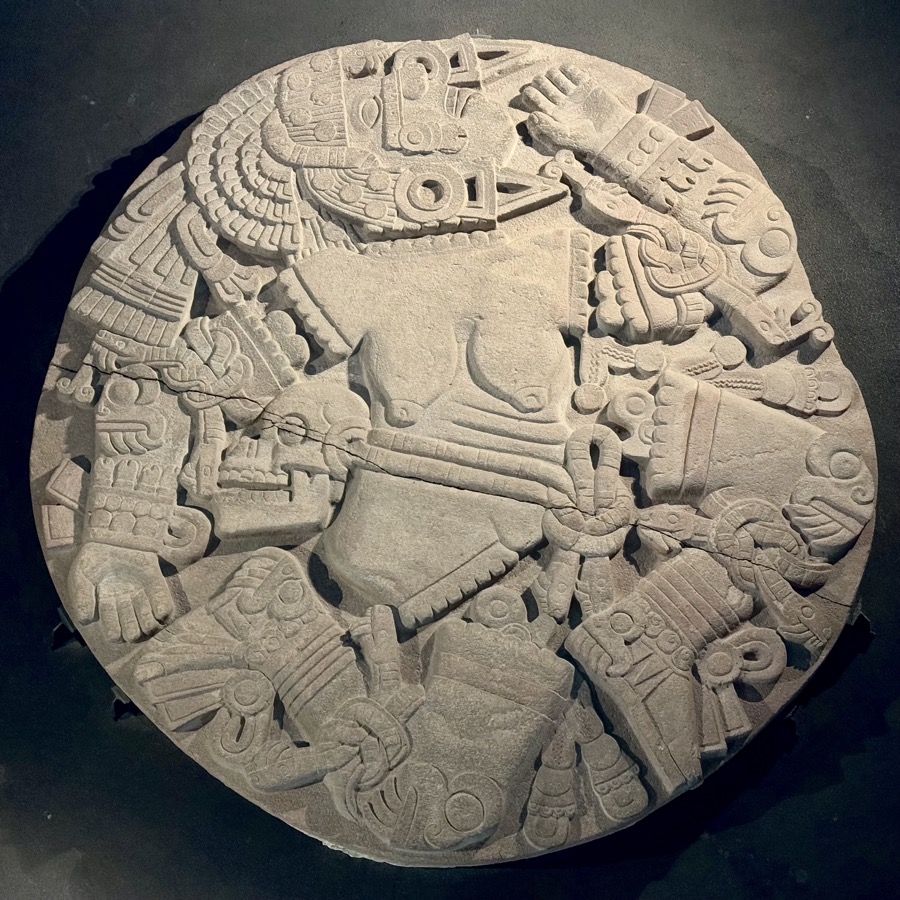
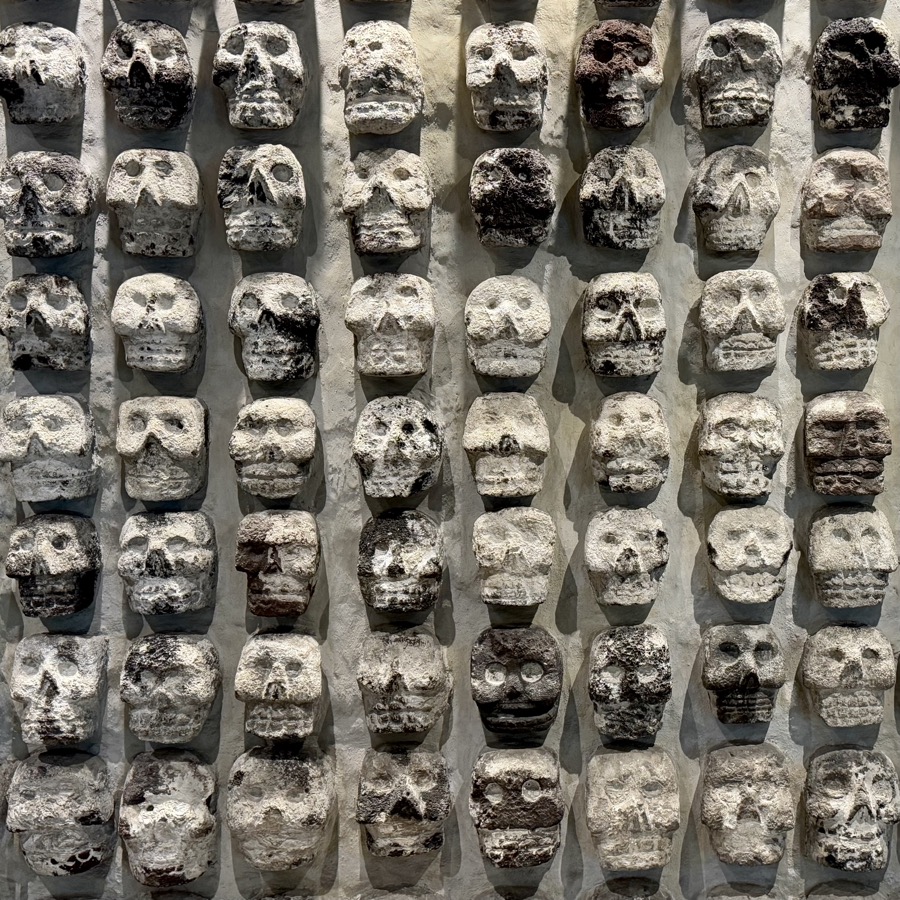
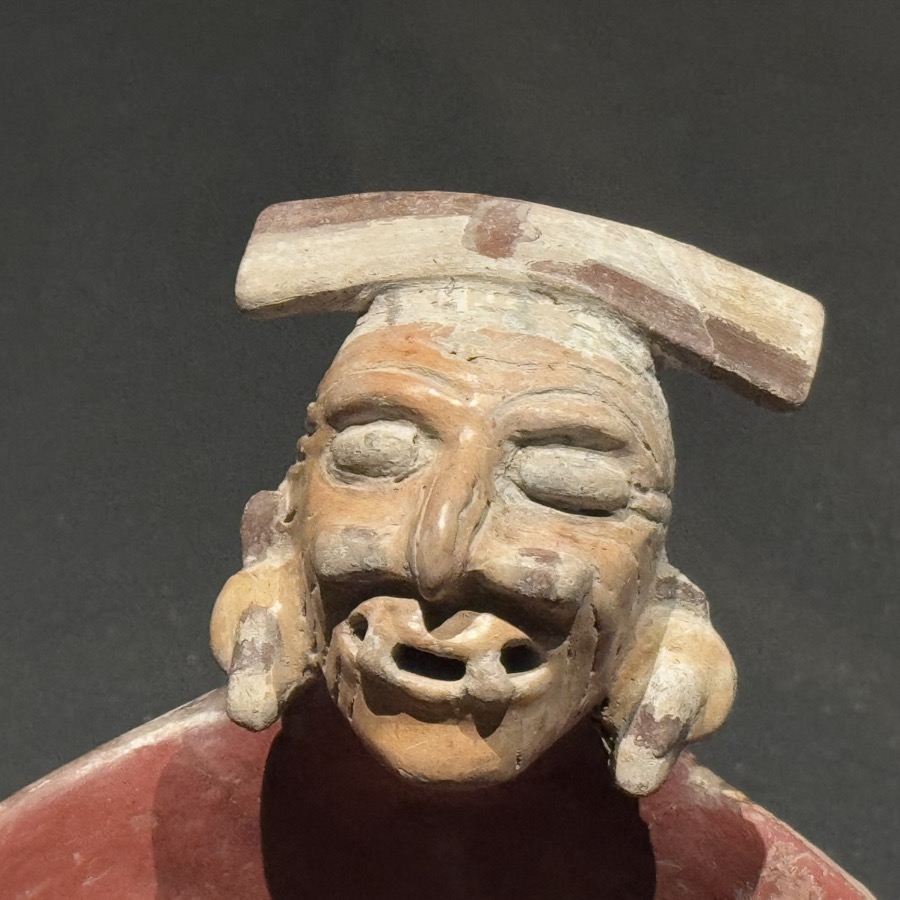
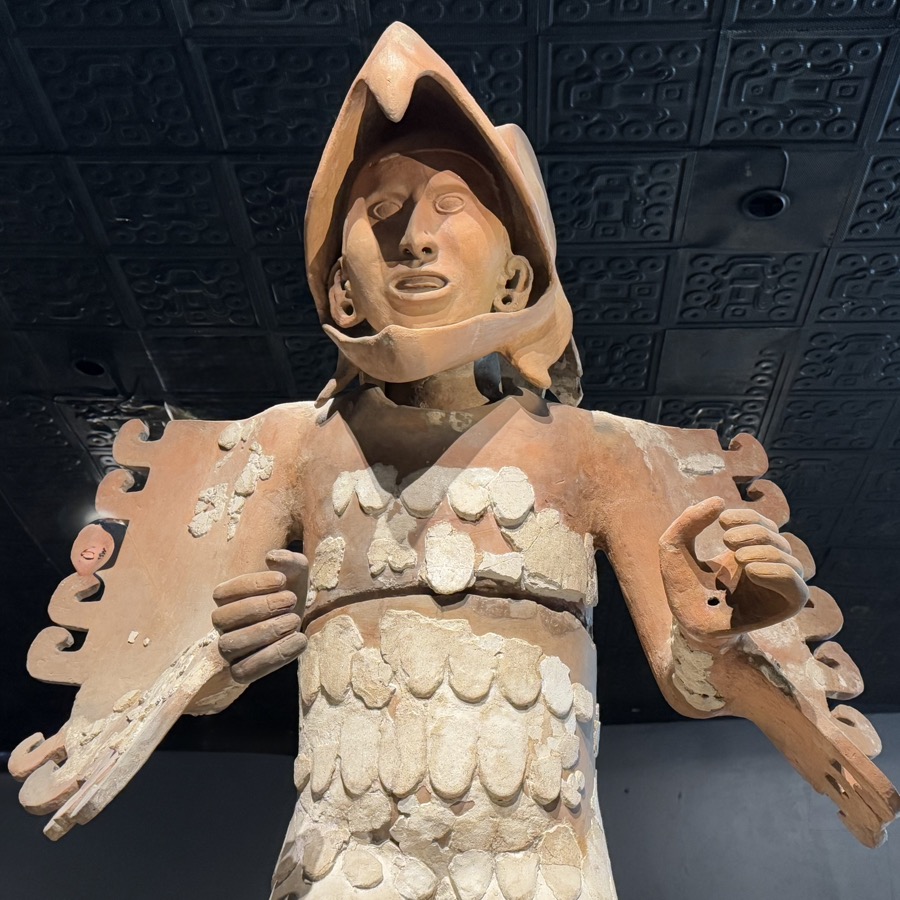
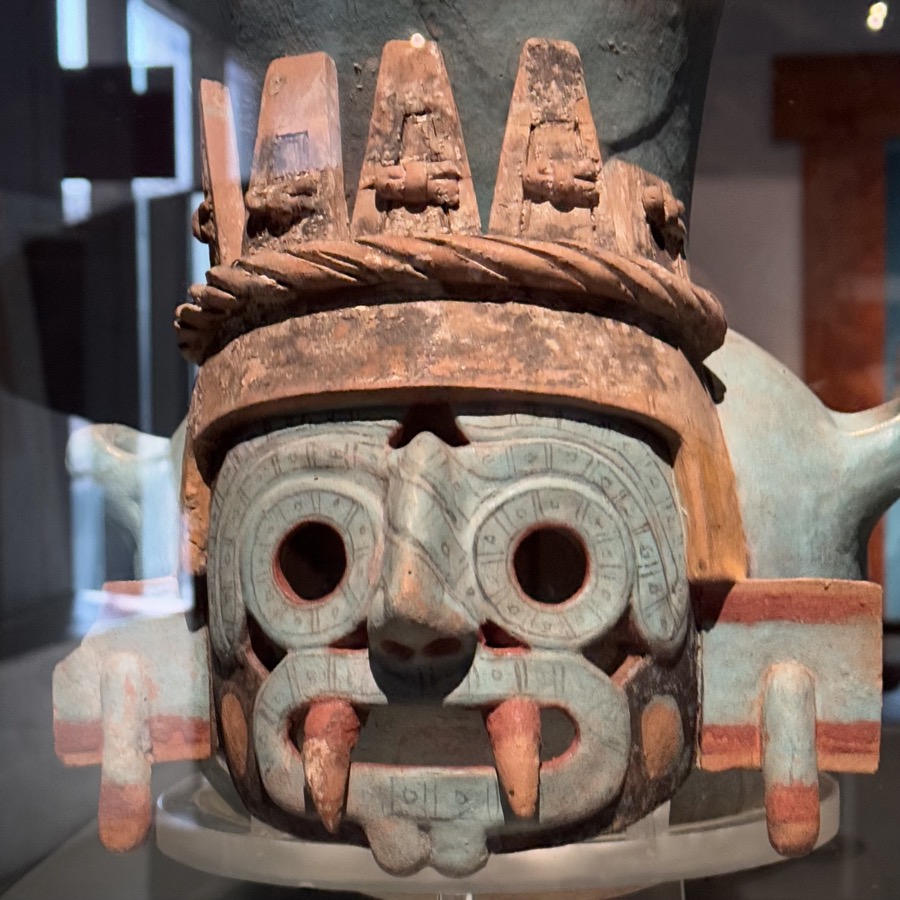
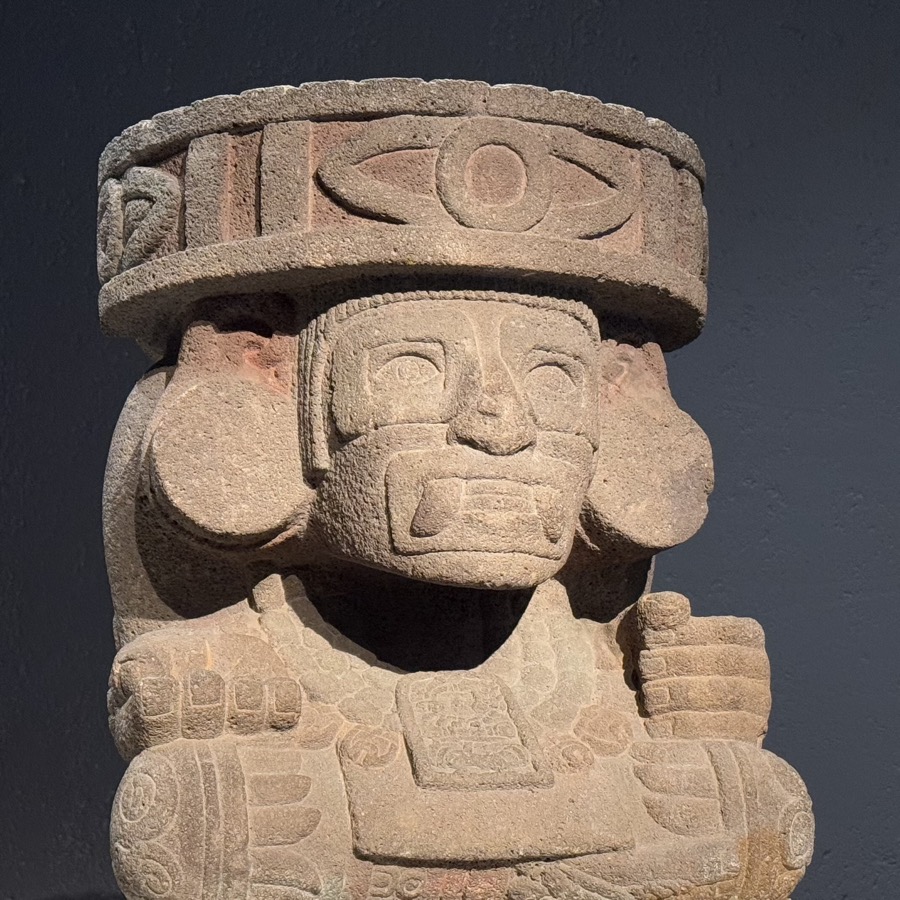
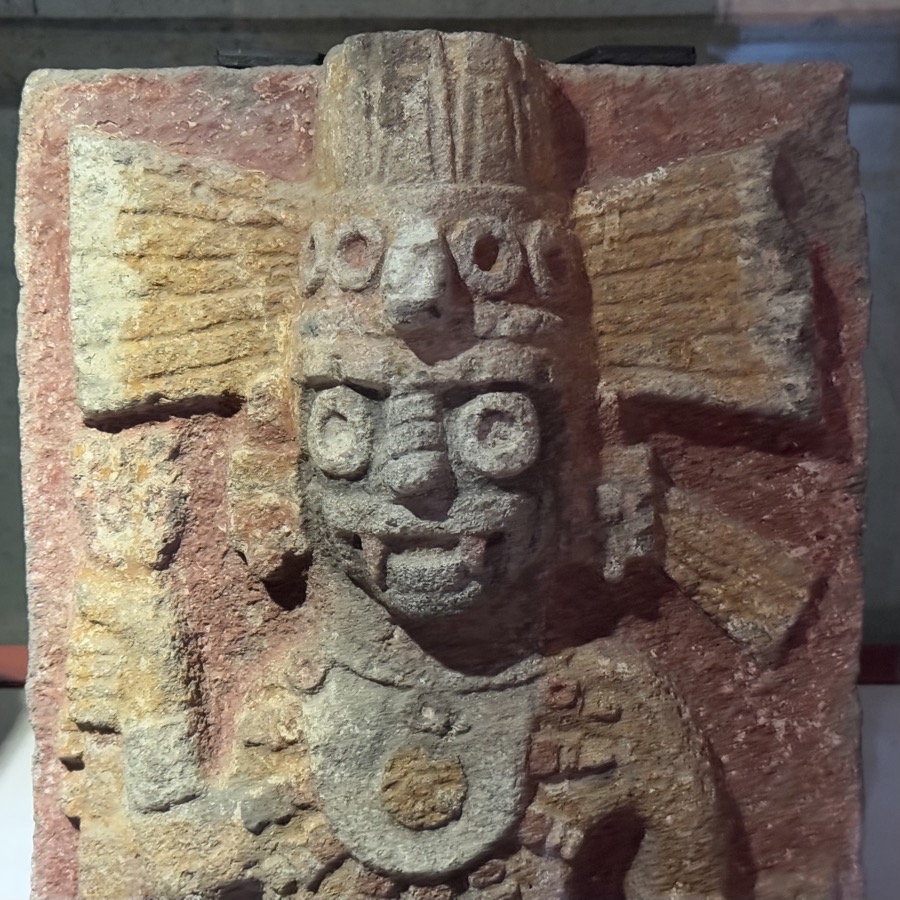
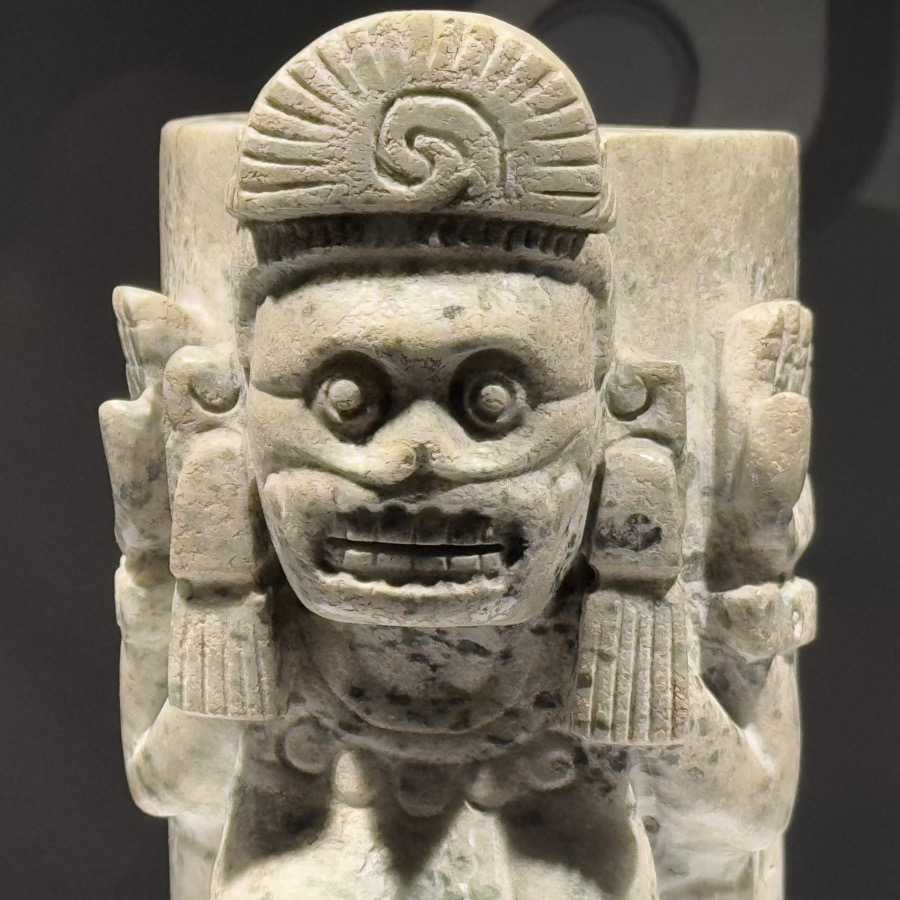
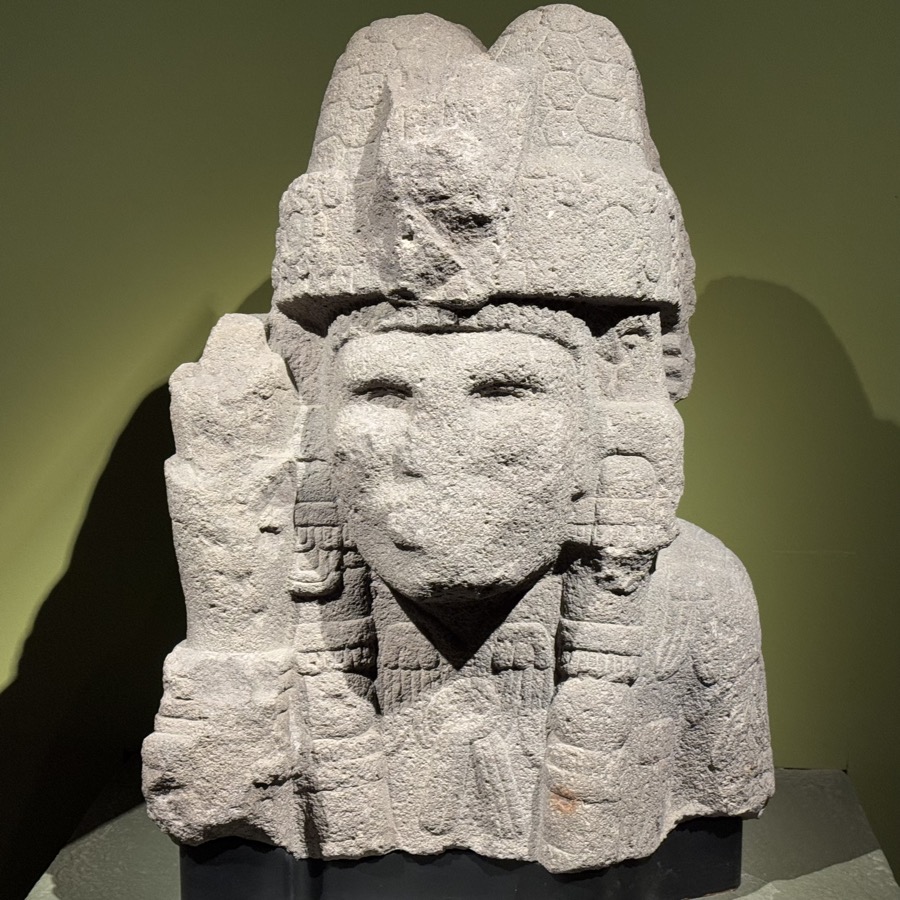
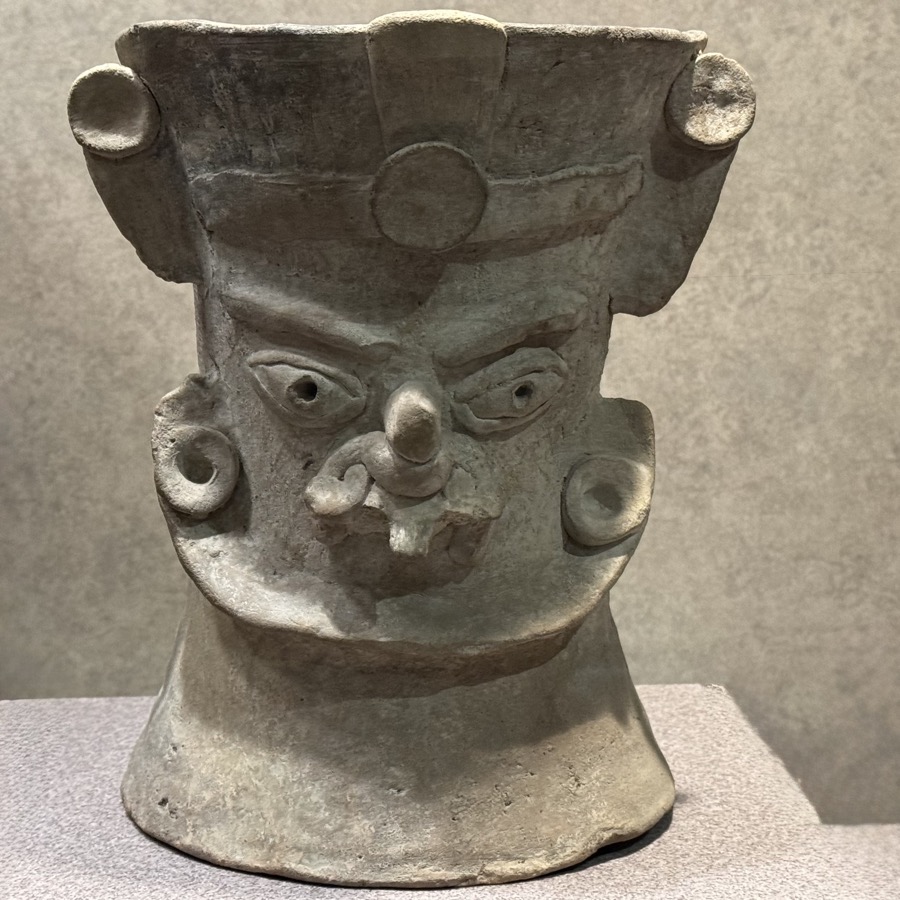
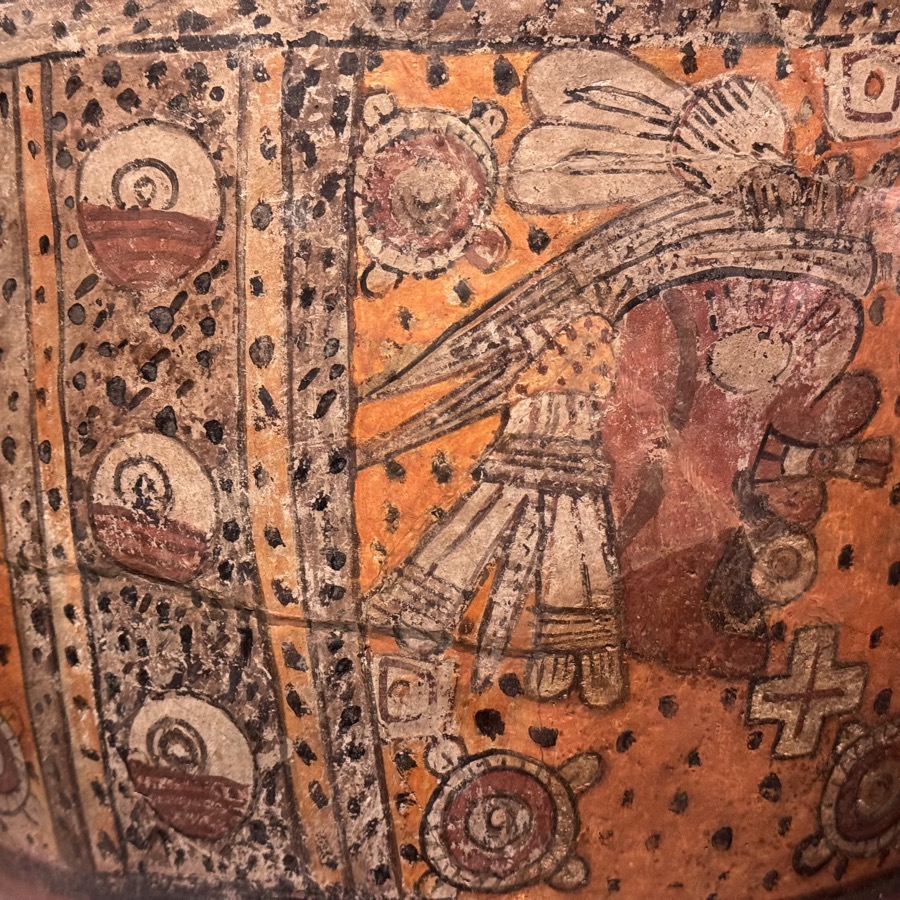
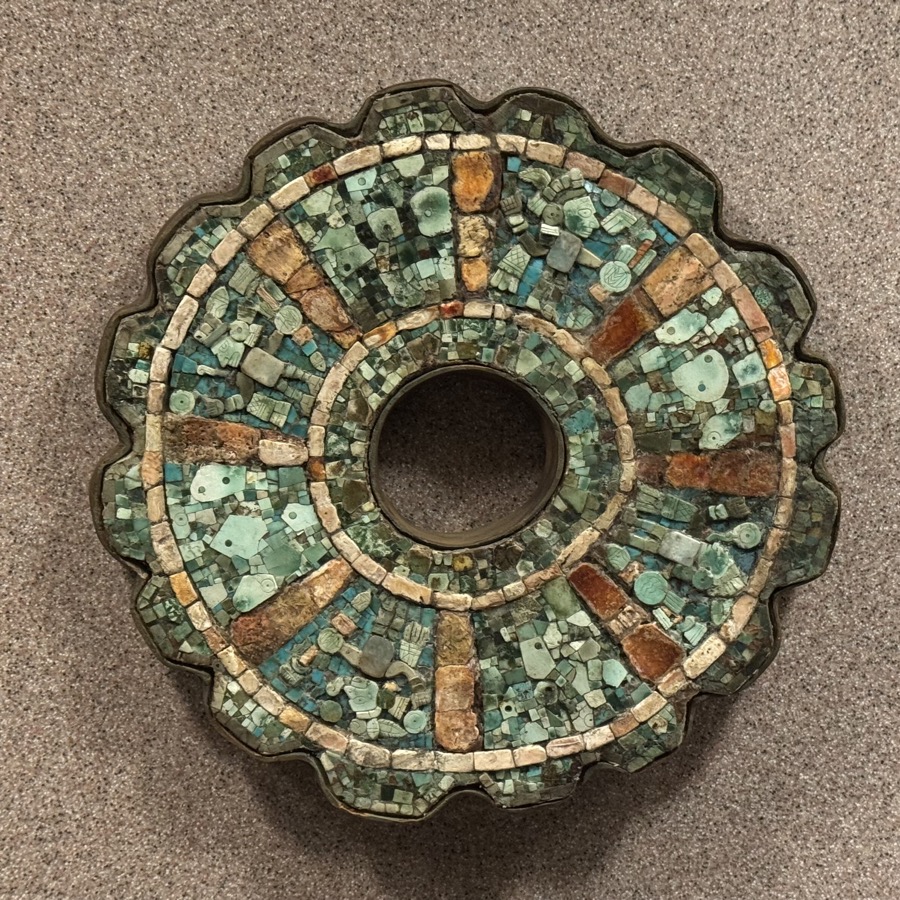
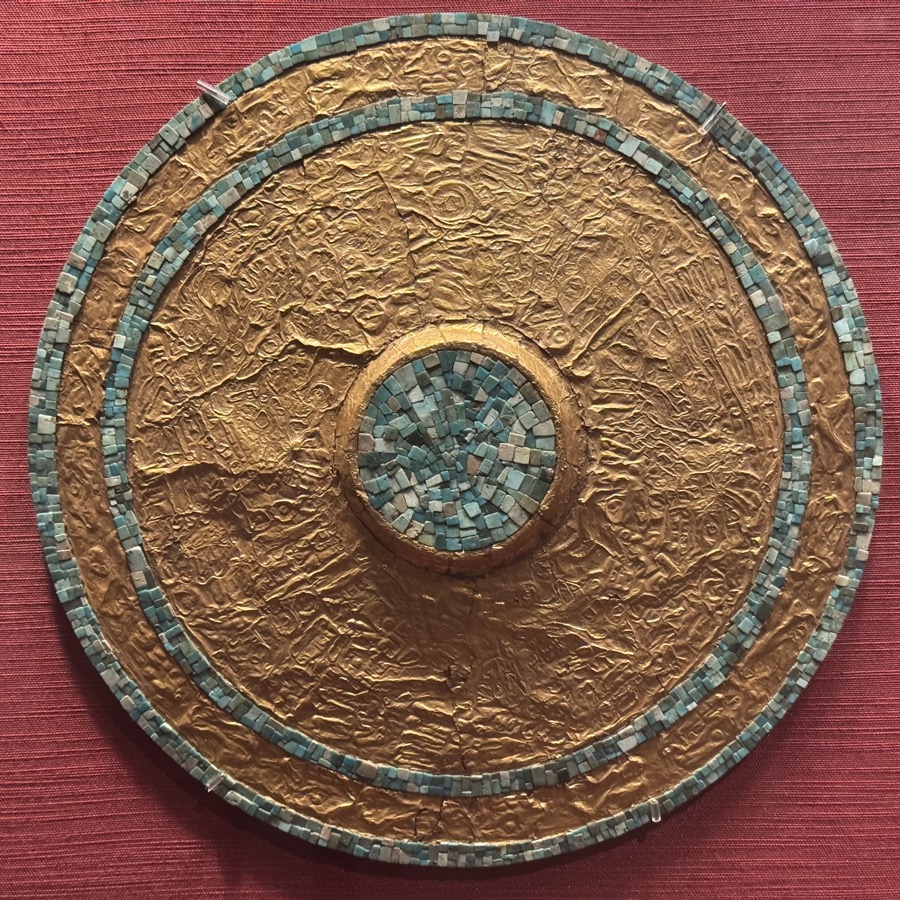
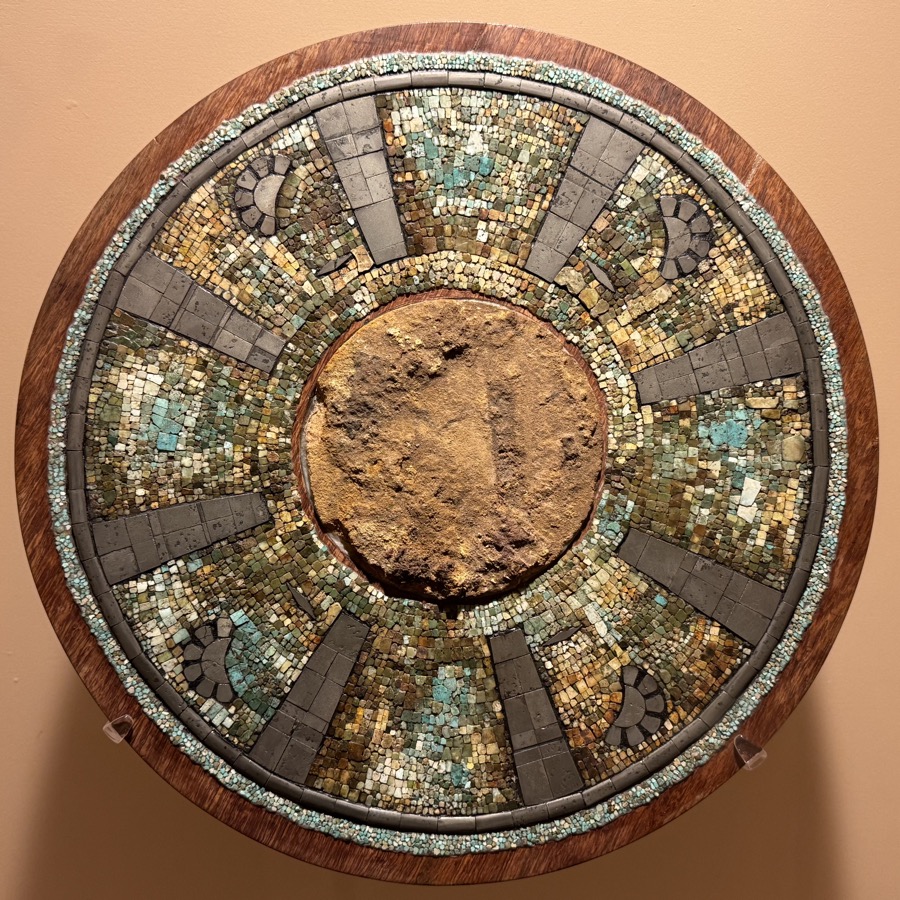
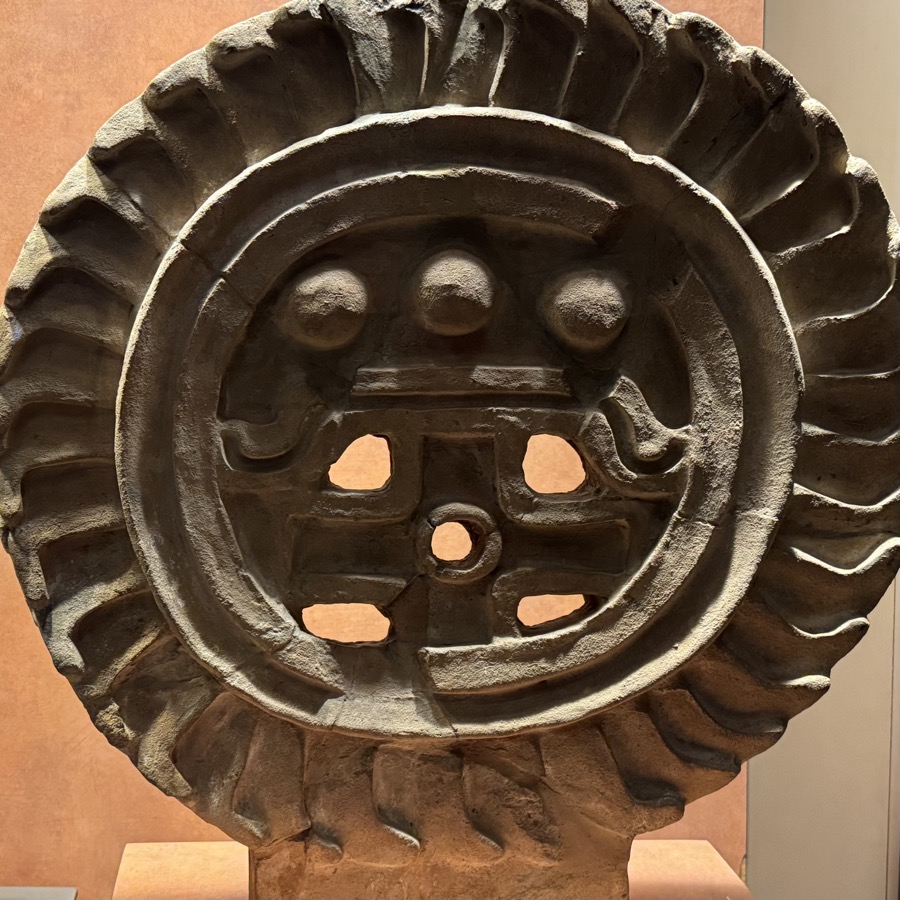
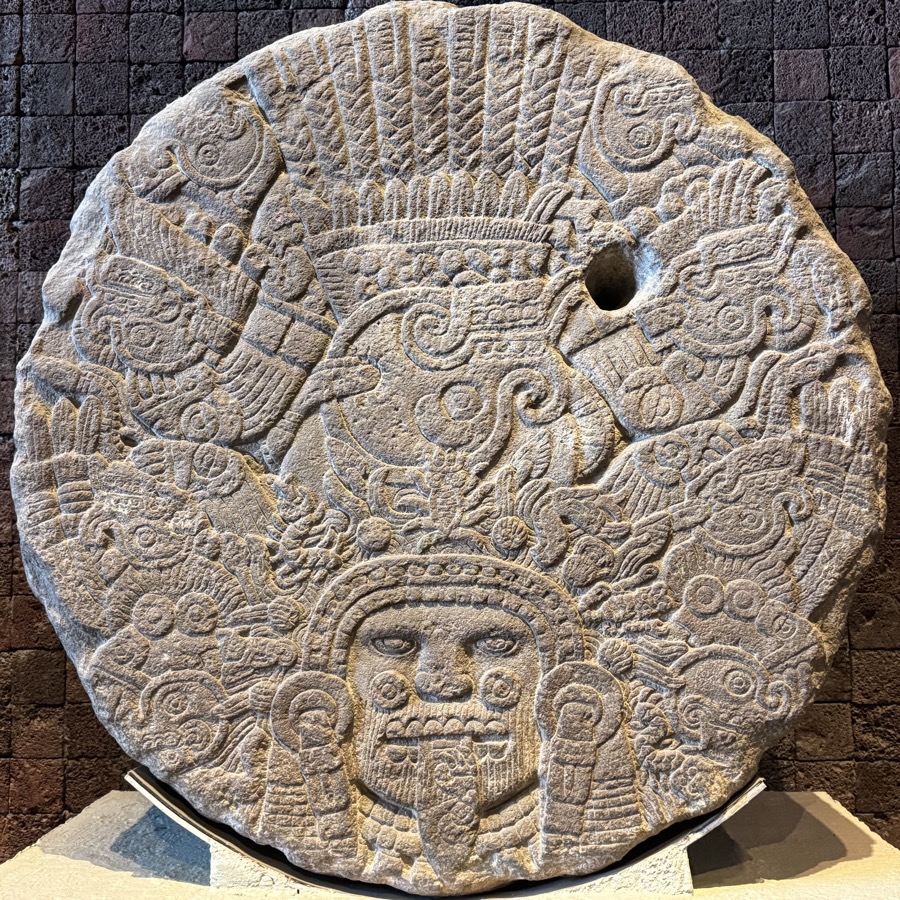
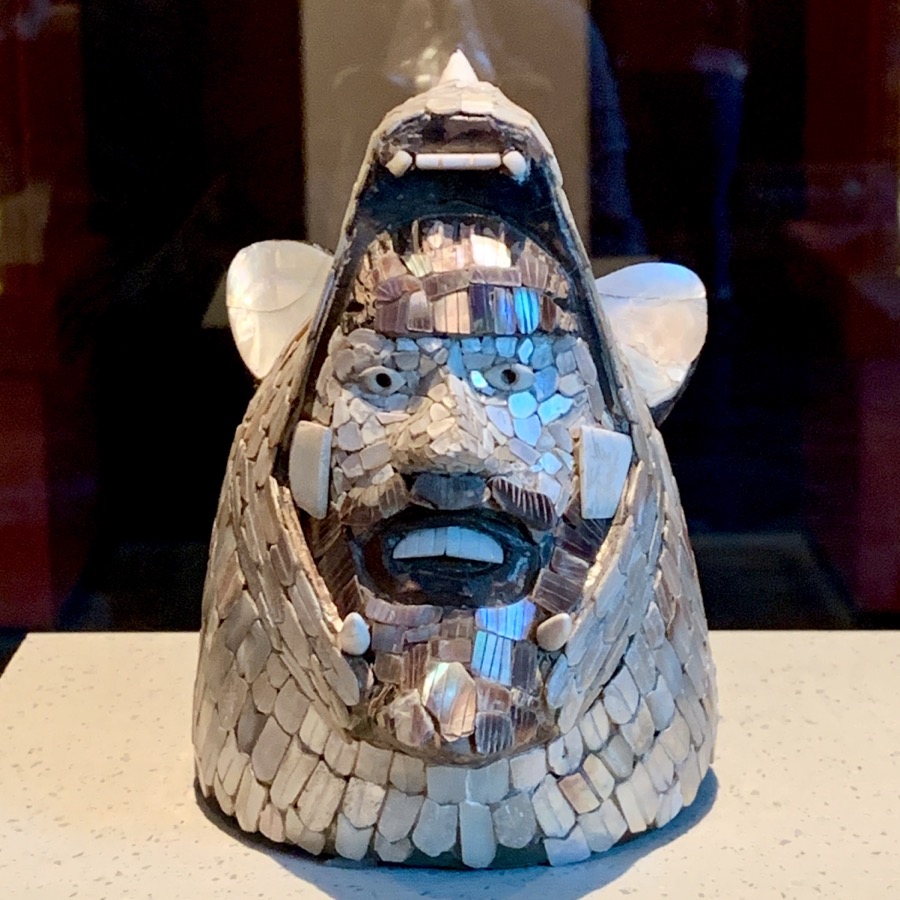
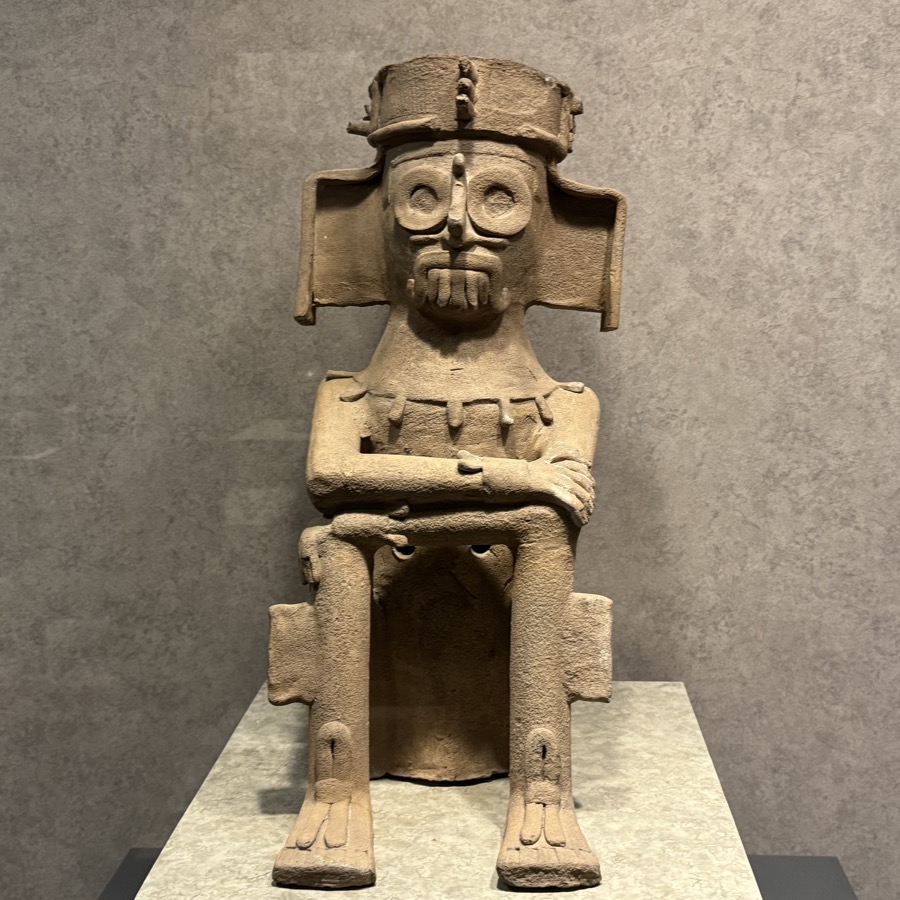
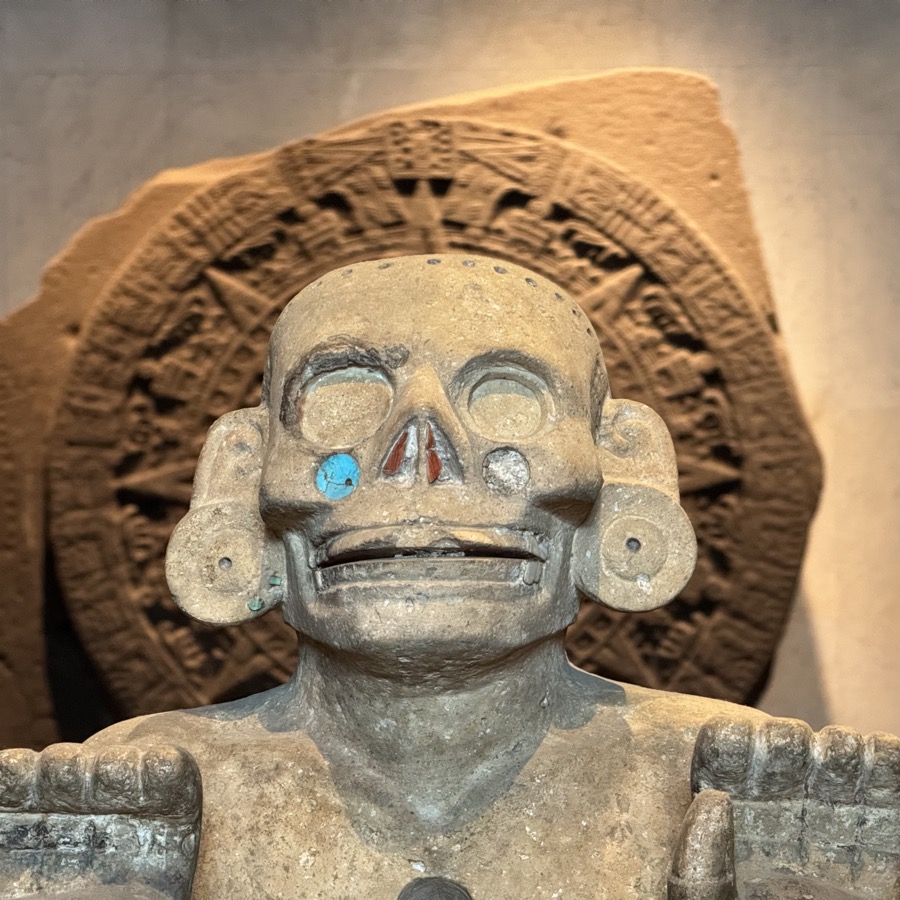
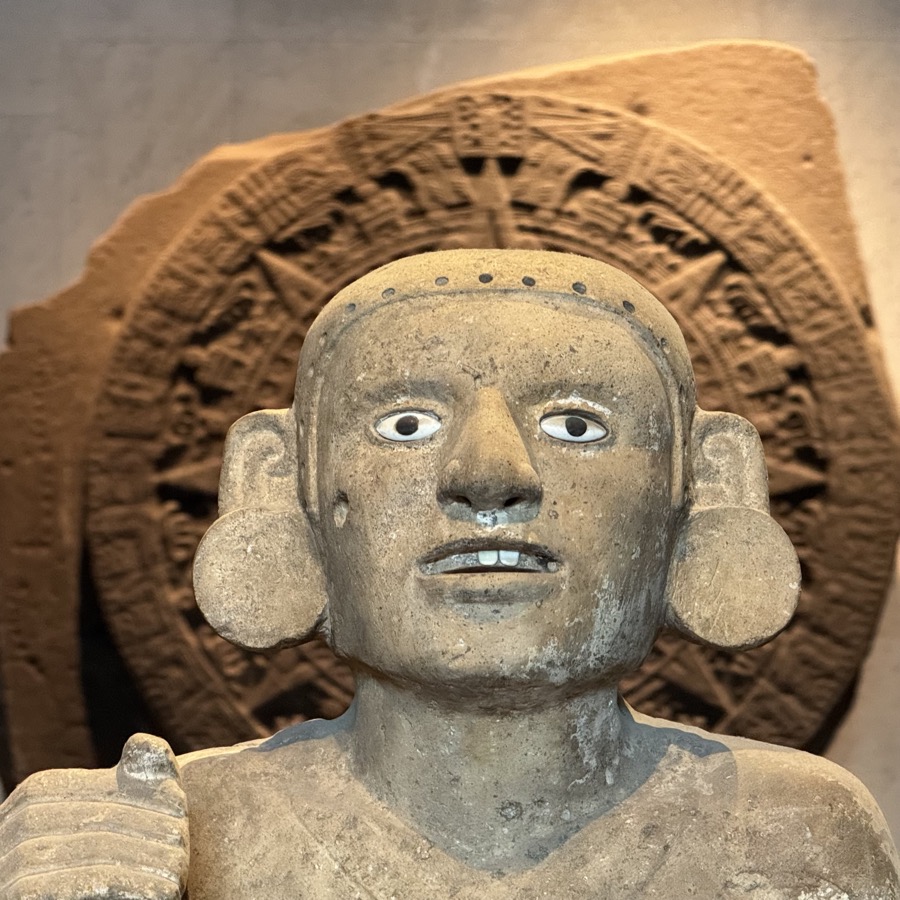
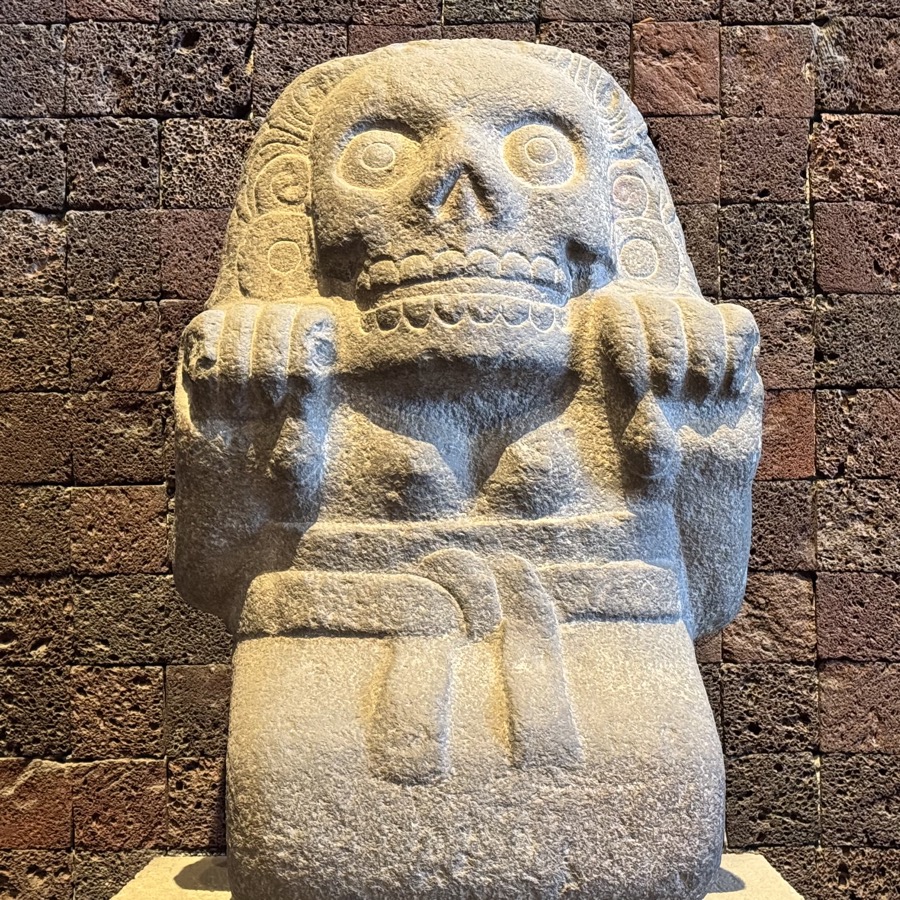
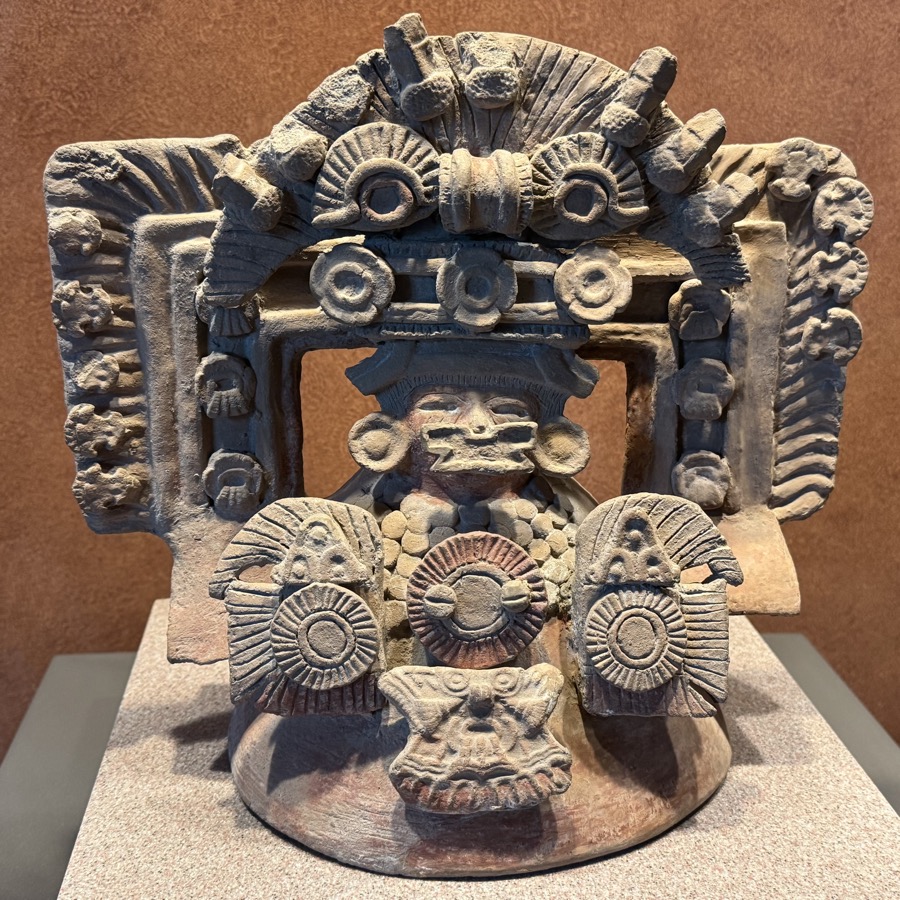
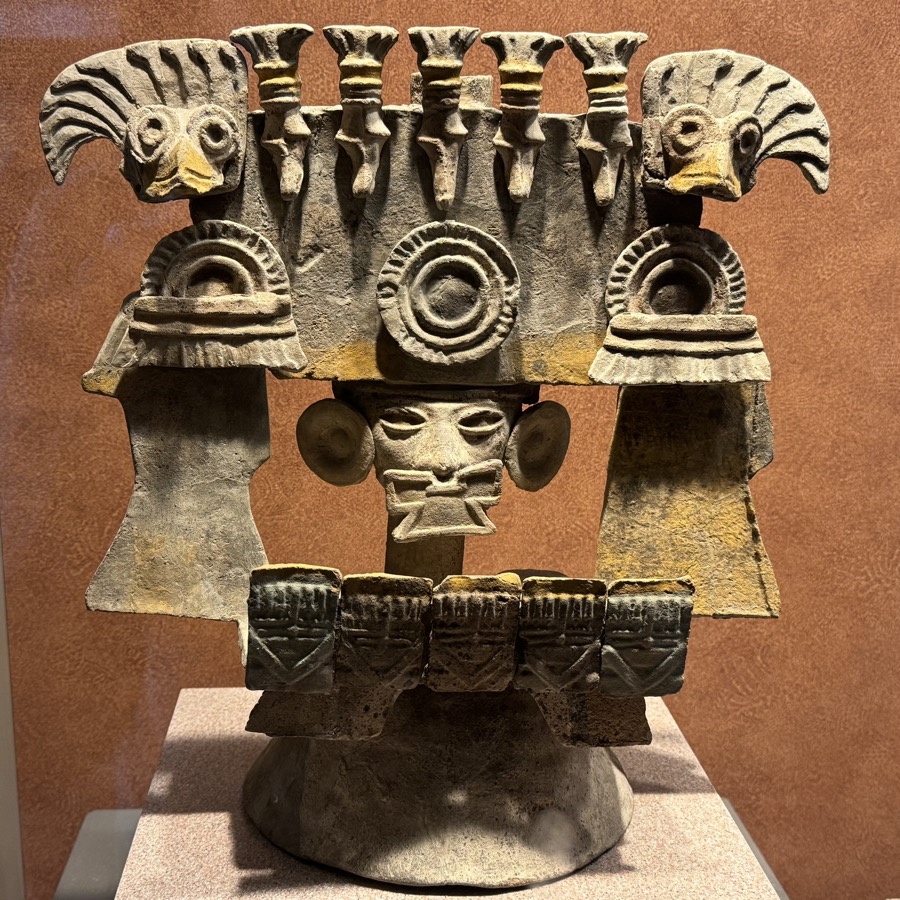
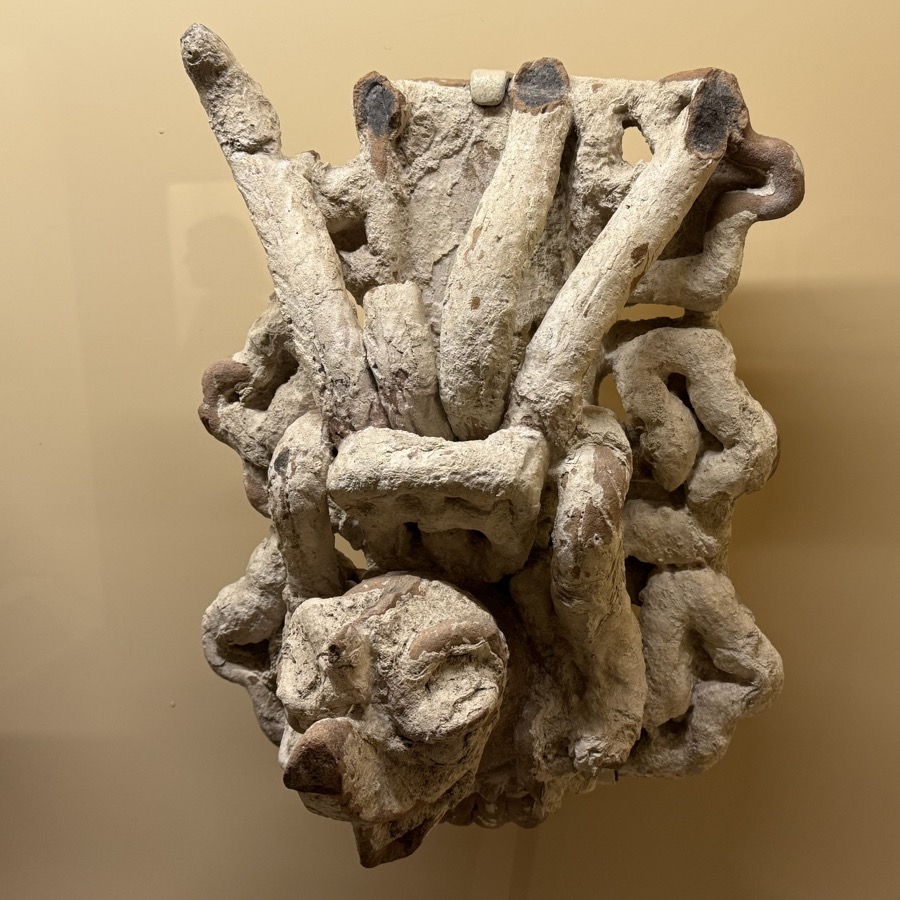
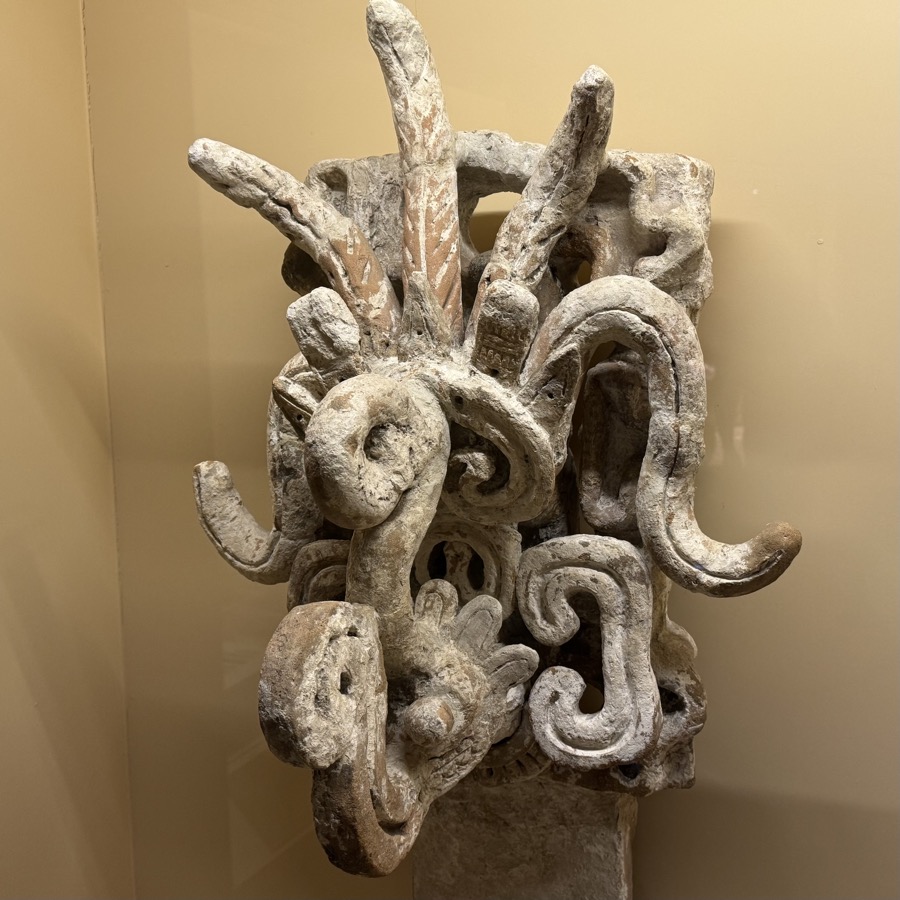
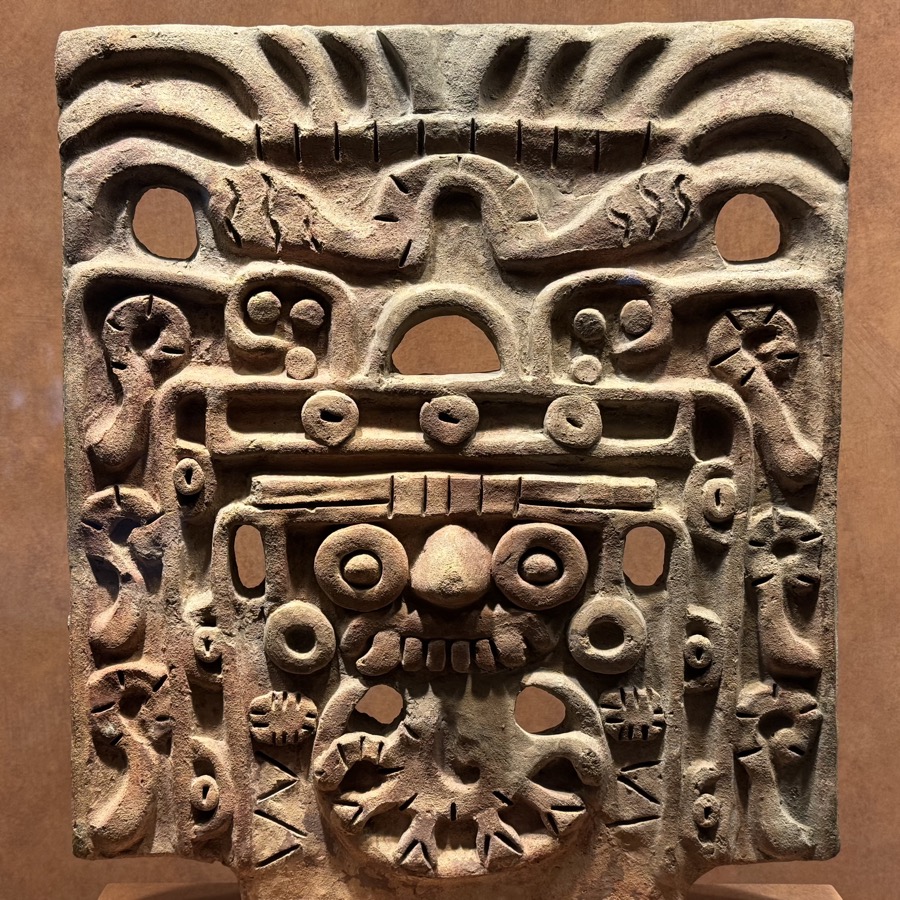
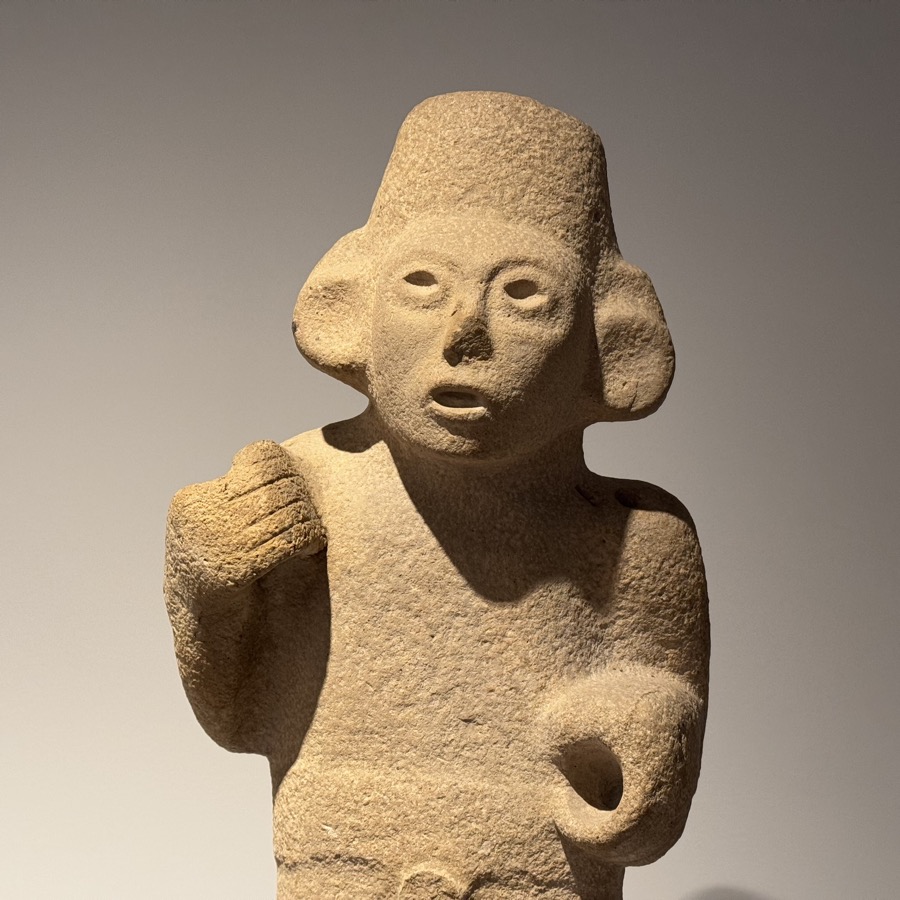
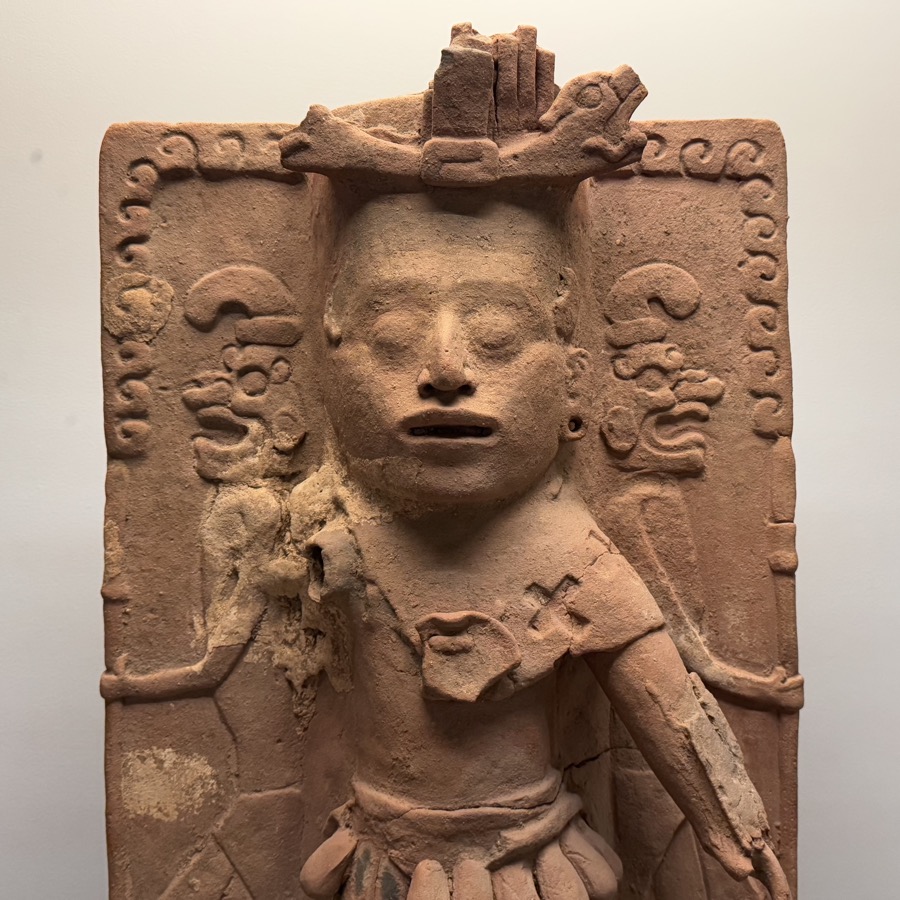
We returned to Zócalo and interesting Templo Mayor ruins. It was the main pyramid temple of Mexica/Aztec in Tenochtitlan (now Mexico City), as usual built over time in several layers, with temples of war and rain gods at the top. Remains of the pyramid and some other structures from the old days have been excavated and restored. Museum has many interesting artifacts (from the site), many offerings were buried and survived above-ground demolition.
Templo Mayor, Catedral
Templo Mayor
Templo Mayor excavated ruins
Museo Templo Mayor
Sacrificial knifes
Tlaltecuhtli – Earth deity
«« Scroll to view more photos »»
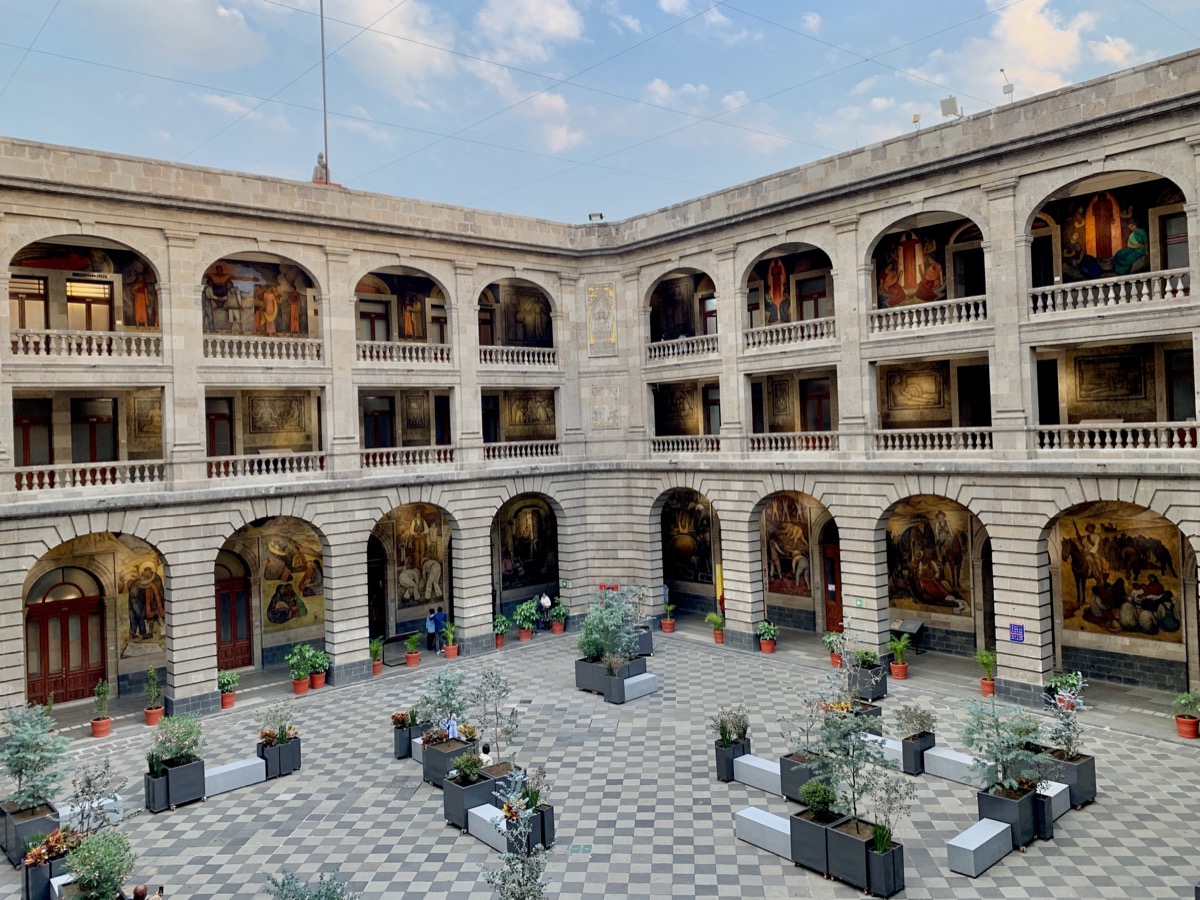
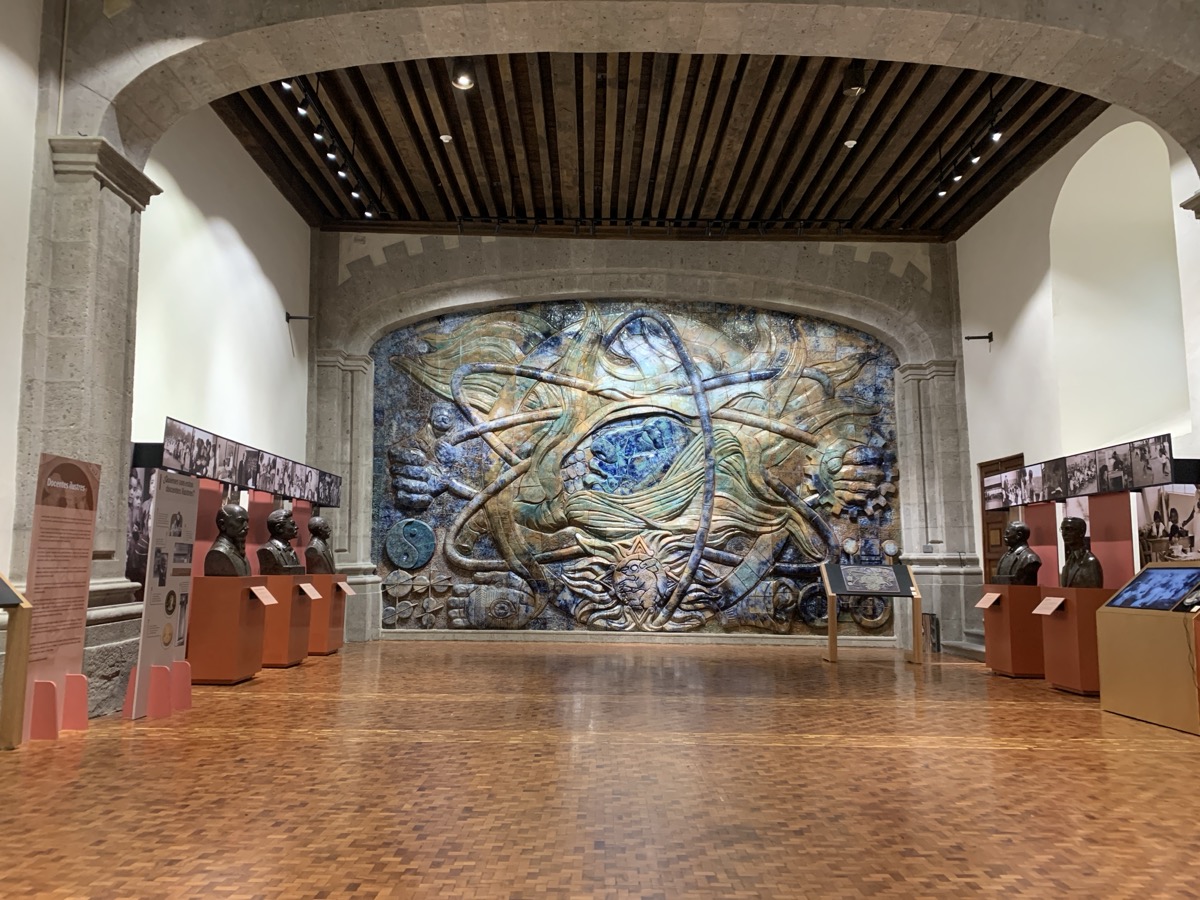
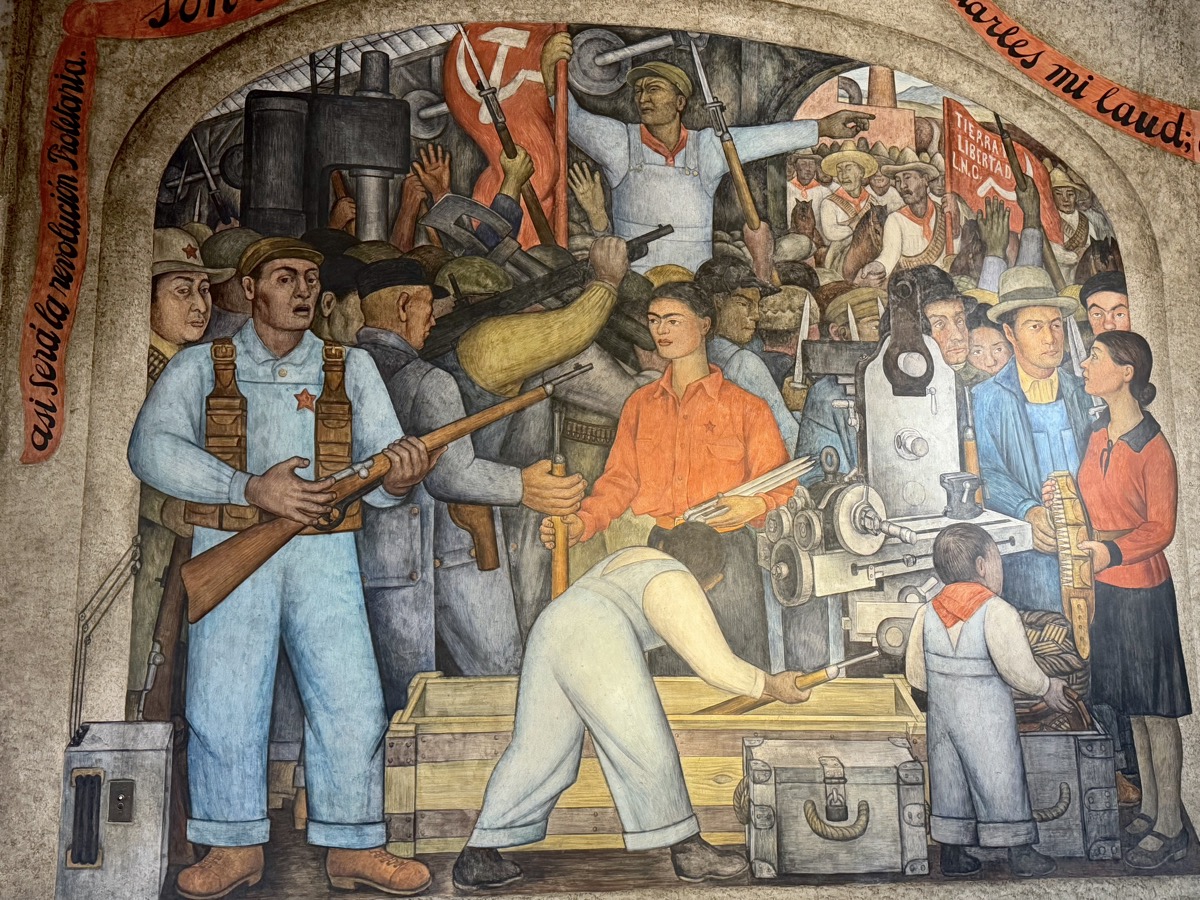
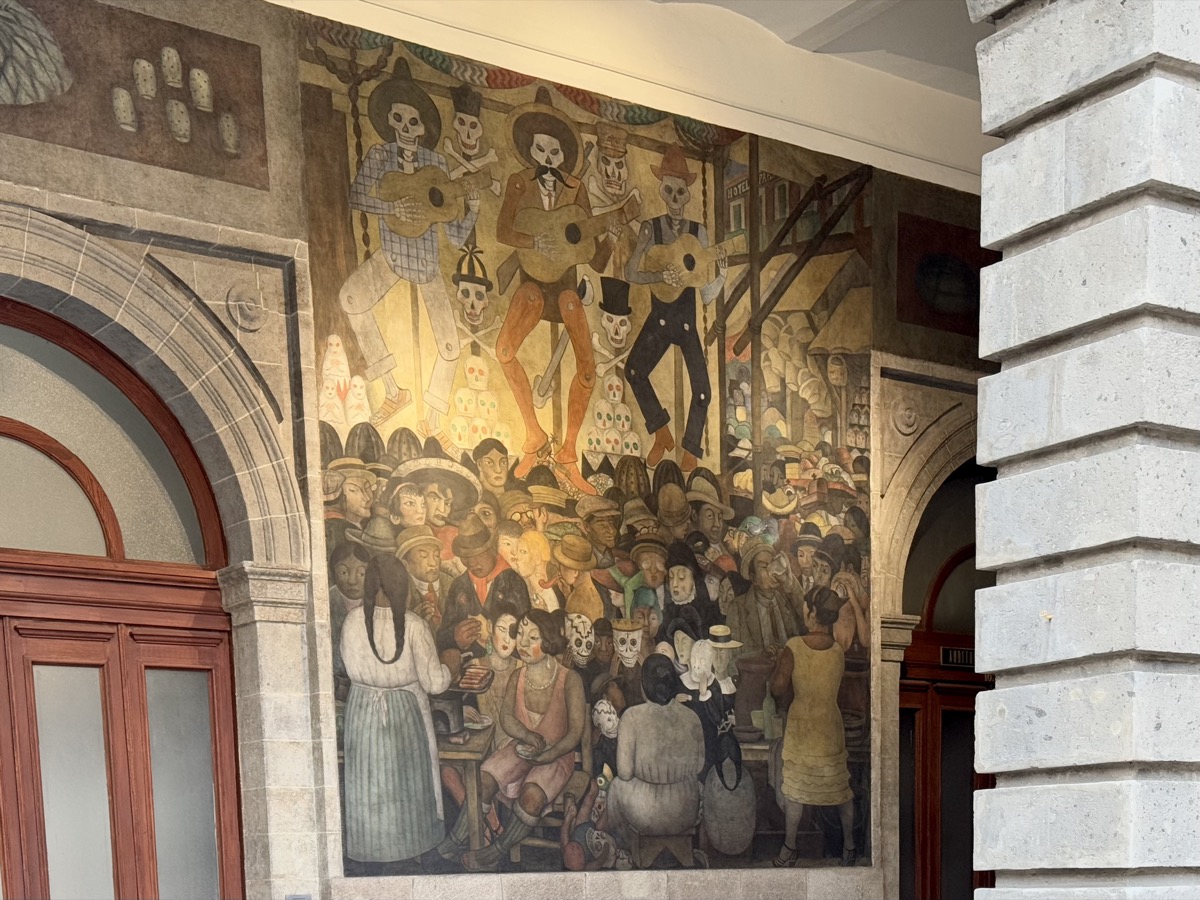
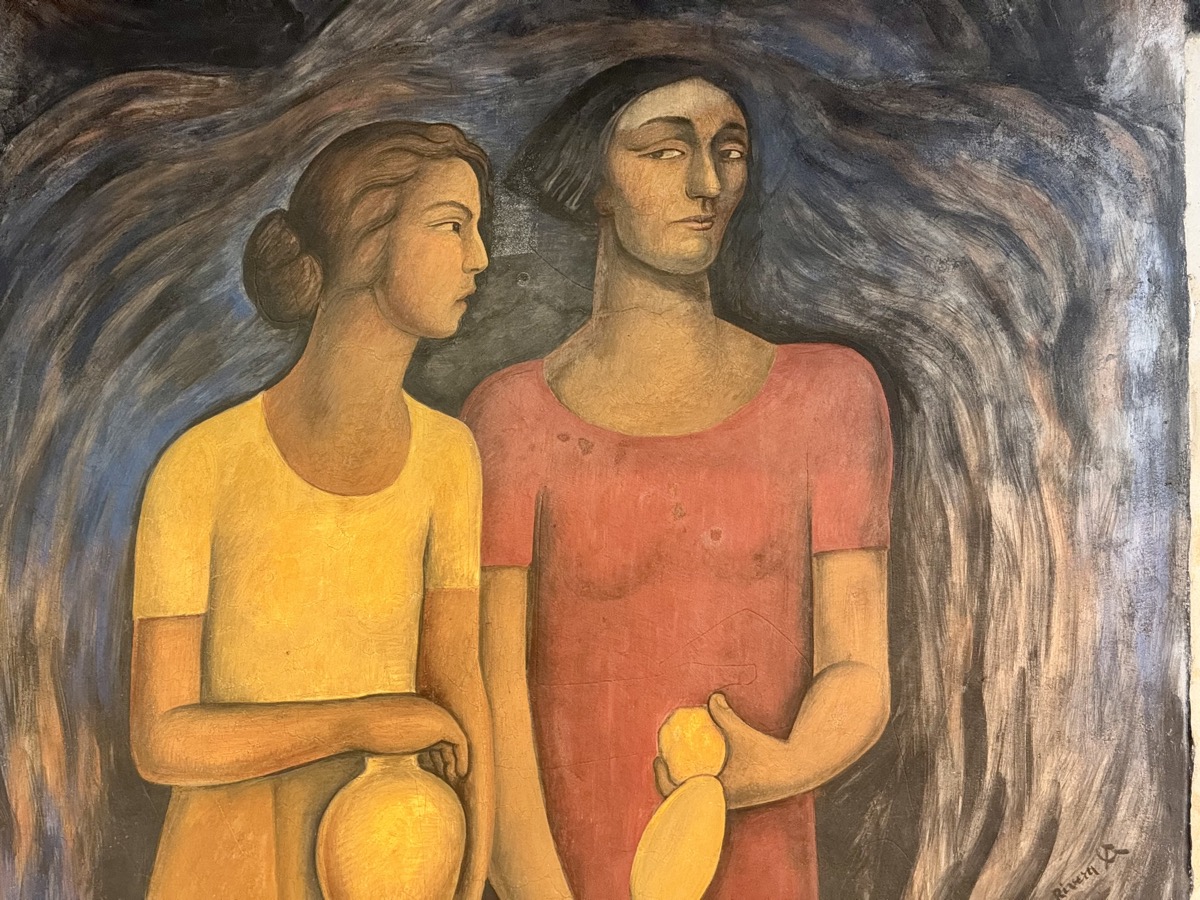
Since we missed murals in Palacio National, we checked excellent Murales de la Secretaría de Educación Pública (Museo Vivo del Muralismo opened in 2024) with hundreds of murals by Diego Rivera and others, surrounding several courtyards on 3 levels. Signs and directions are confusing to reinforce the idea that people should get lost here (museo vivo) and find what they like by chance. We then walked around the neighborhood a bit looking for place to eat (some restaurants were already closing) and decided to stay at nearby Restaurante Catedral for dinner (Quesadillas Vegetarianas and Taquitos del Chef). On return to Cuauhtémoc (Uber – metro was not going to our station and we had not yet figured out bus routes) we stopped at Tiendas 3B to get some basics for breakfast. We saw many food vendors around the city, but we had not yet found any better-stocked grocery stores near our accommodation.
Museo Vivo del Muralismo
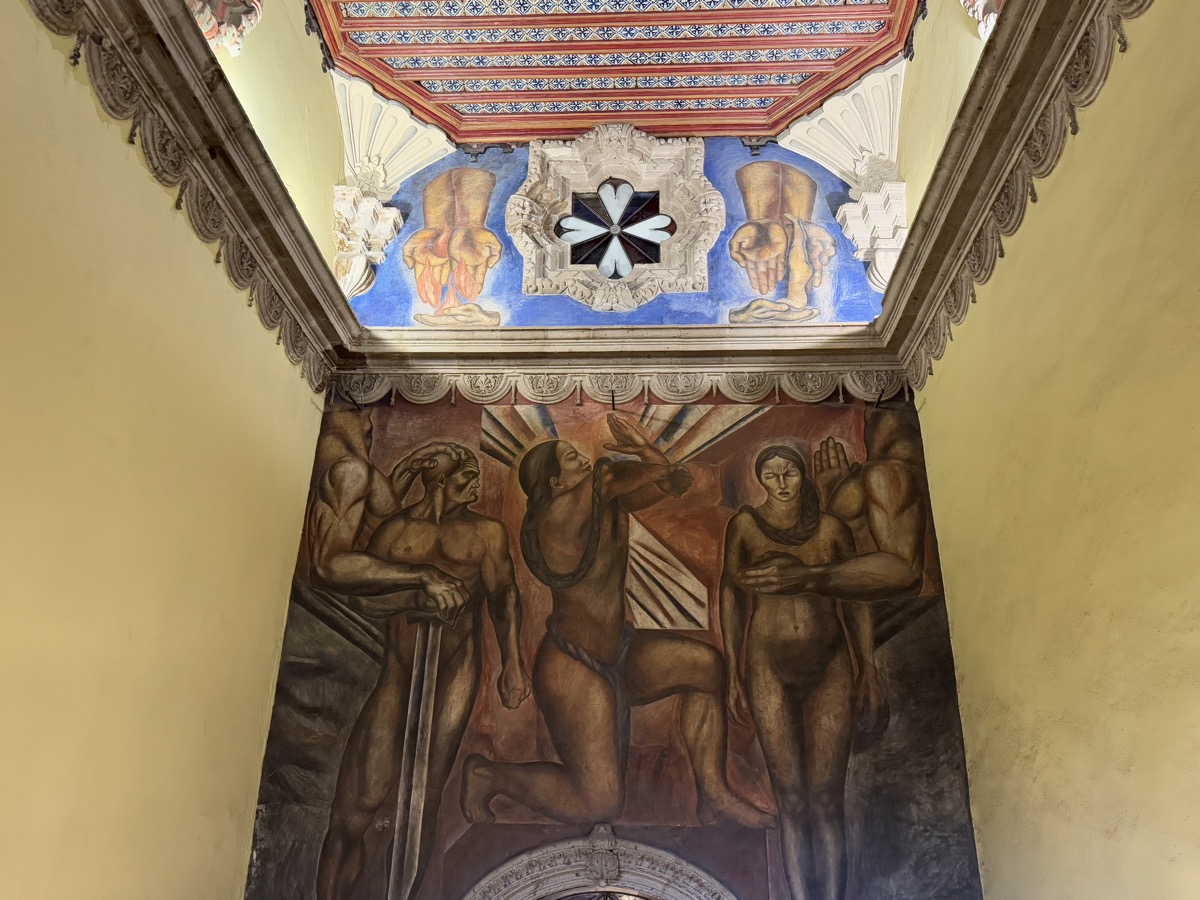
Luis Nishizawa: The image of man
D.A. Siqueiros: Patricians and Patrice
Diego Rivera: Distribution of arms
D. Rivera: Día de los Muertos Fiesta
…
Day 6.
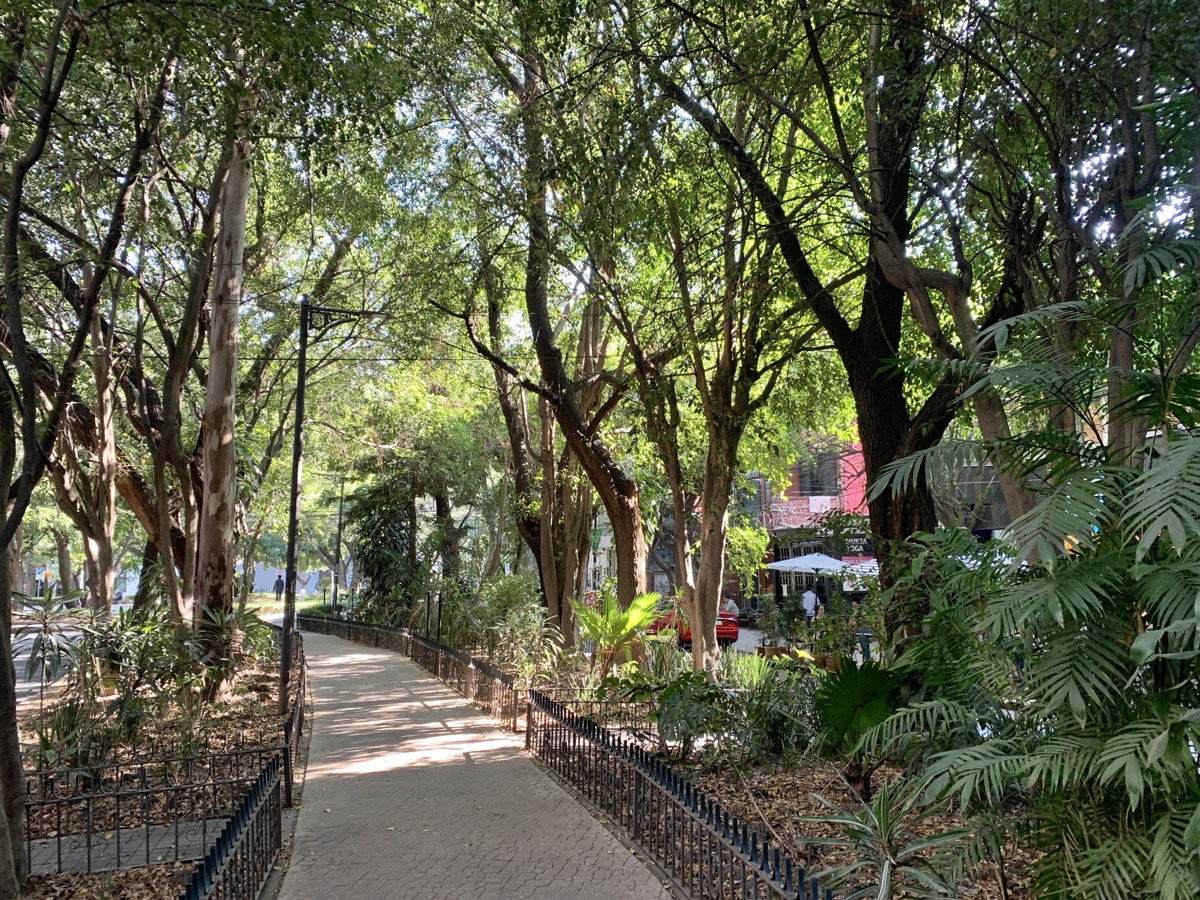
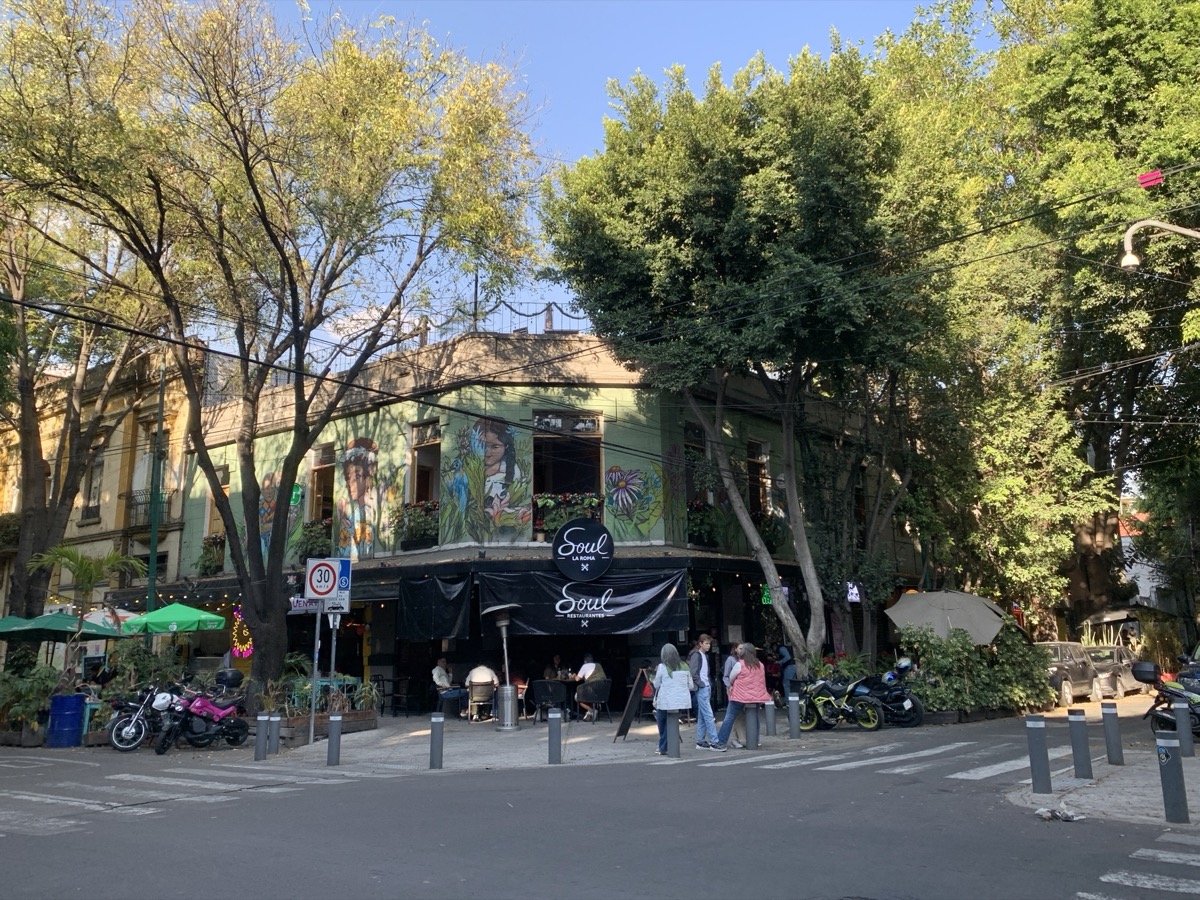
After days of intense sightseeing, rather than visiting more museums and historical places, we decided to spend the day just walking around. It would be hard to retrace our route precisely. We started with la Romita, once independent pre-Hispanic village, and then strayed in Roma Norte, our neighborhood, further away from home than on the first evening. Our strategy for this entire trip was to try to stroll smaller, side-streets and as many parks as possible to break more tiring (mega) city walking.
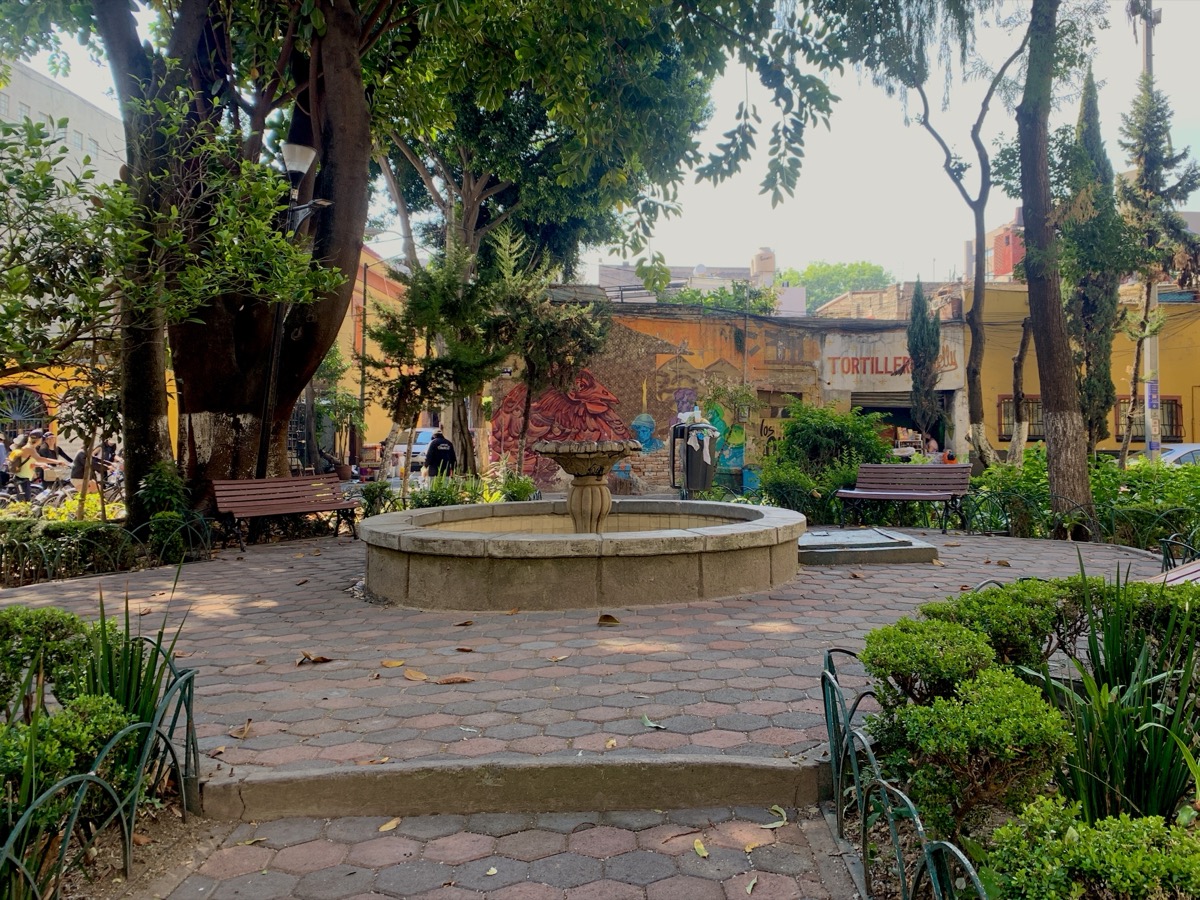
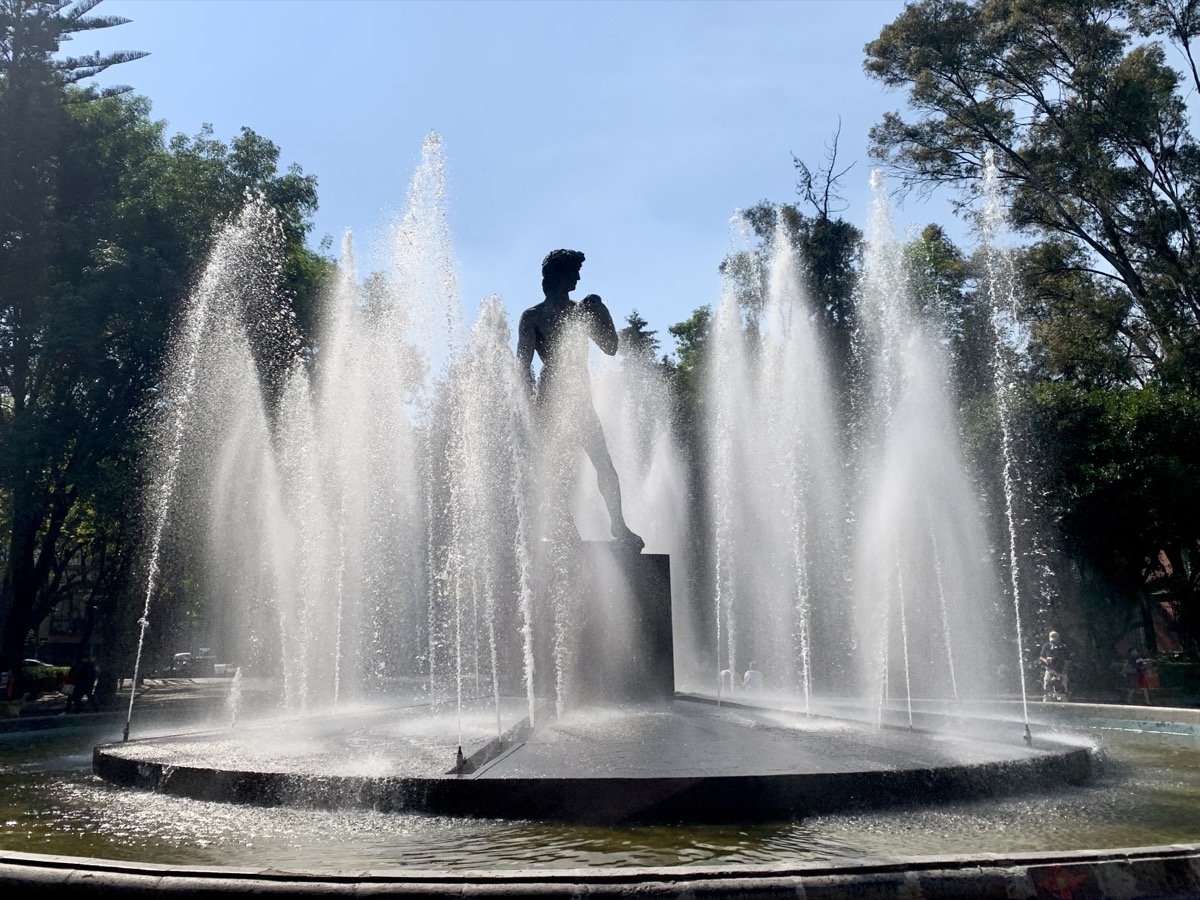
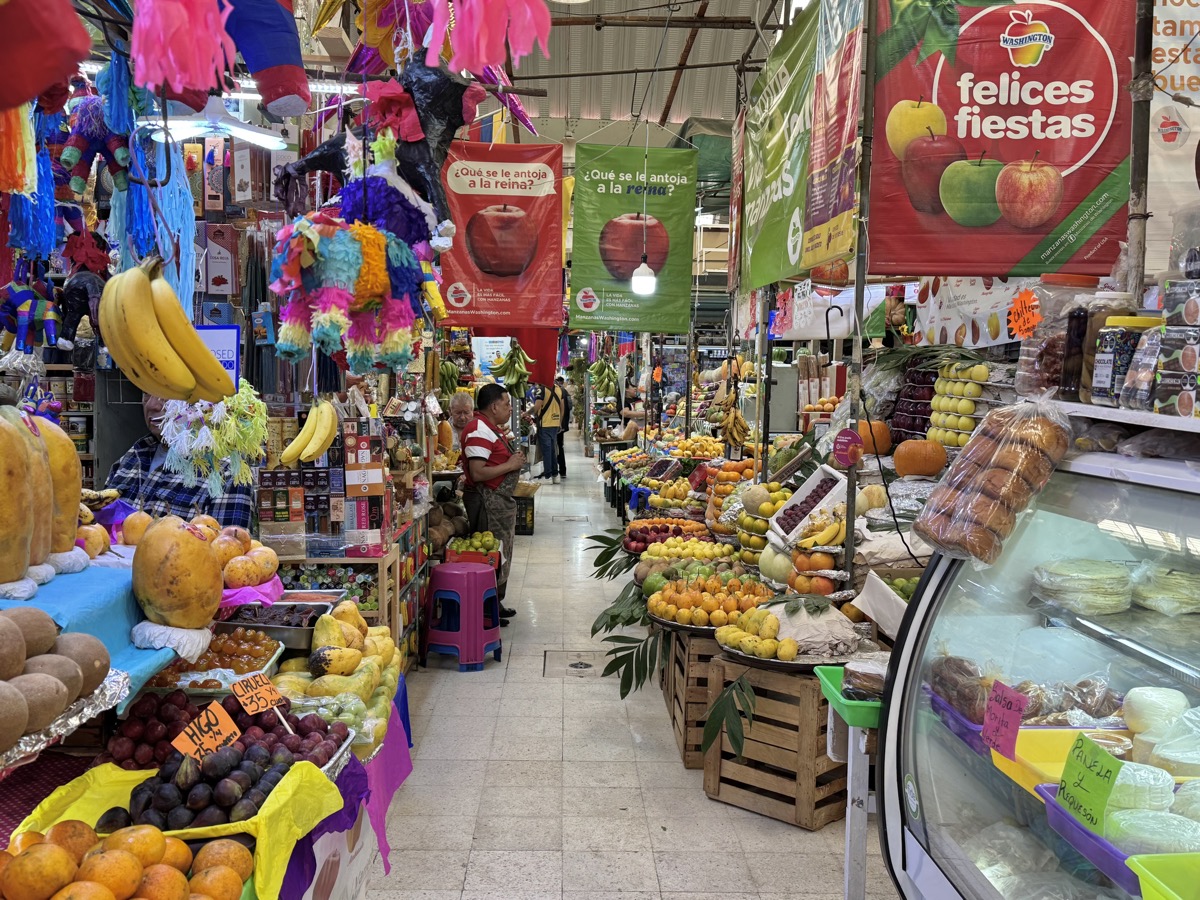
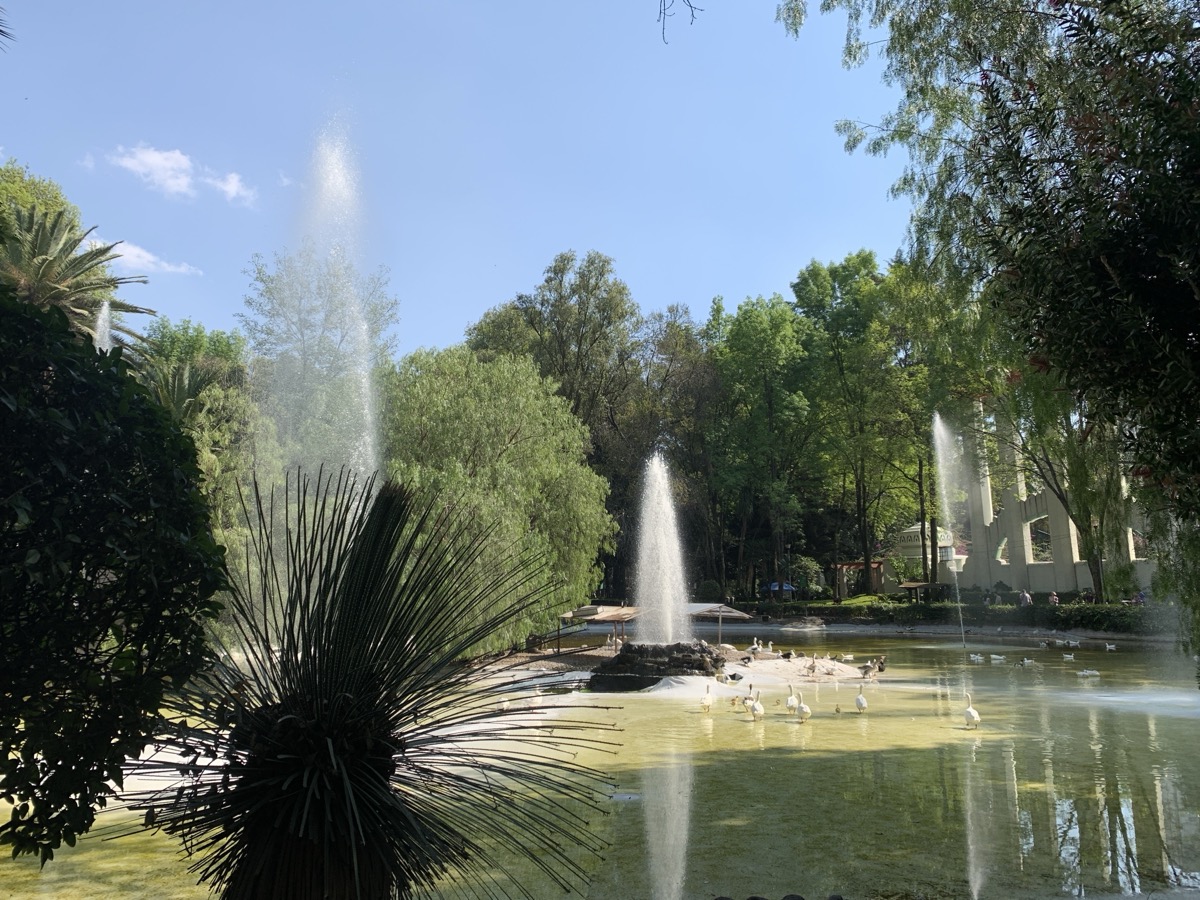
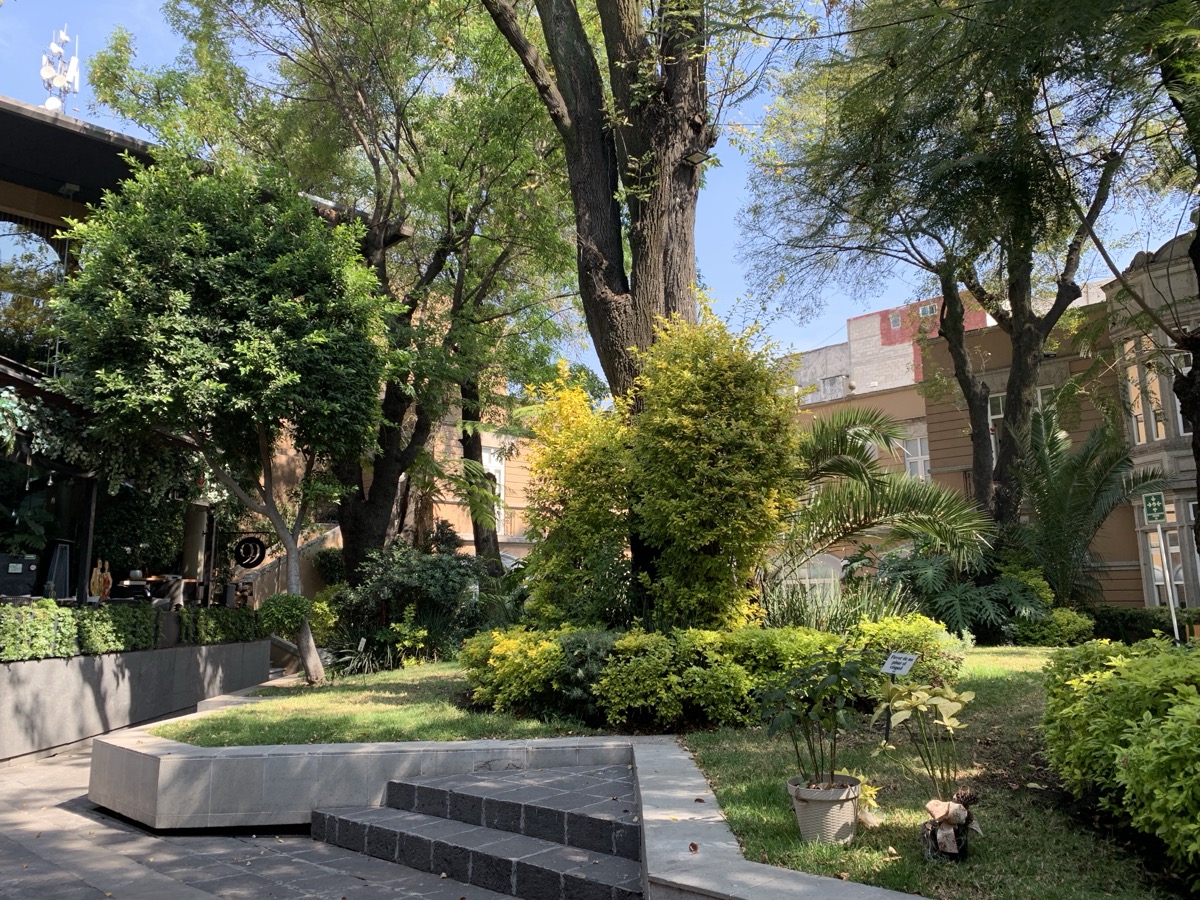
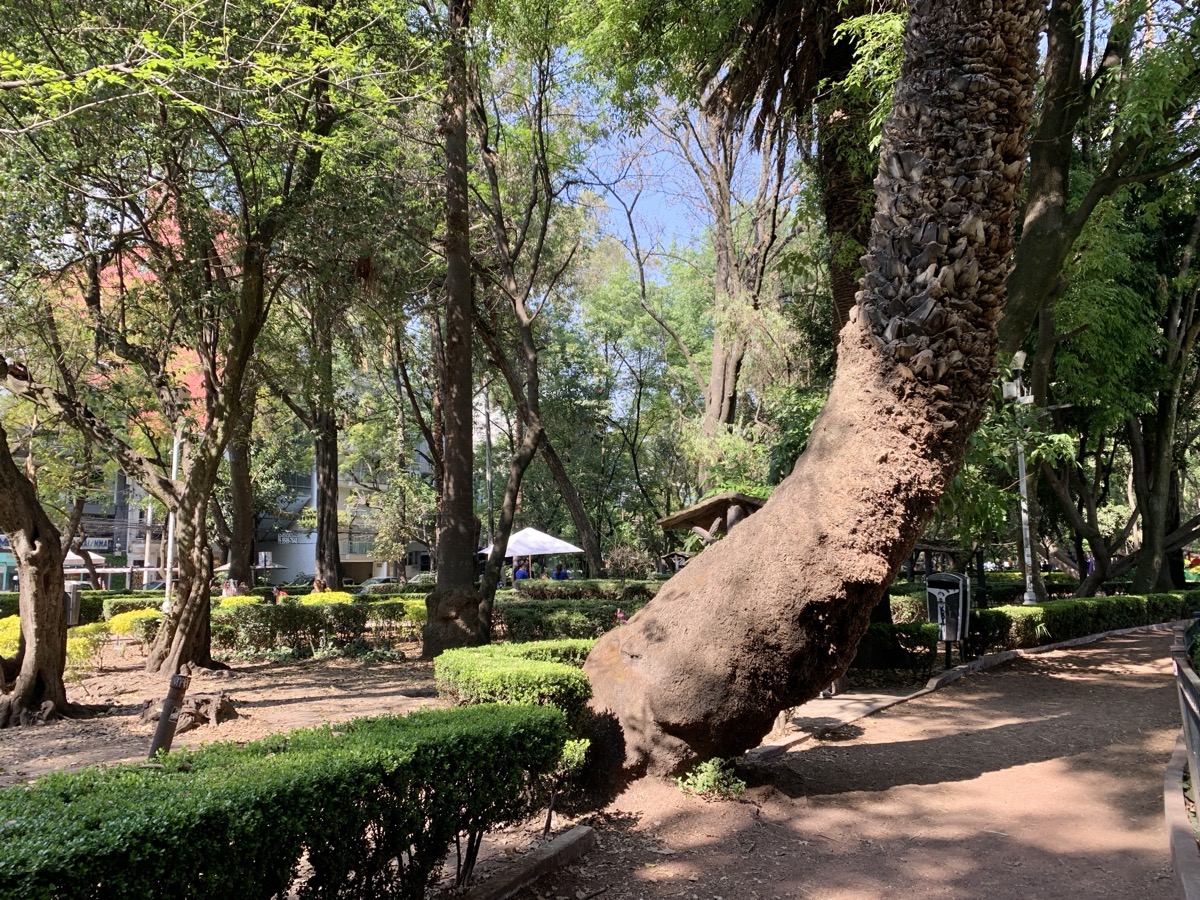
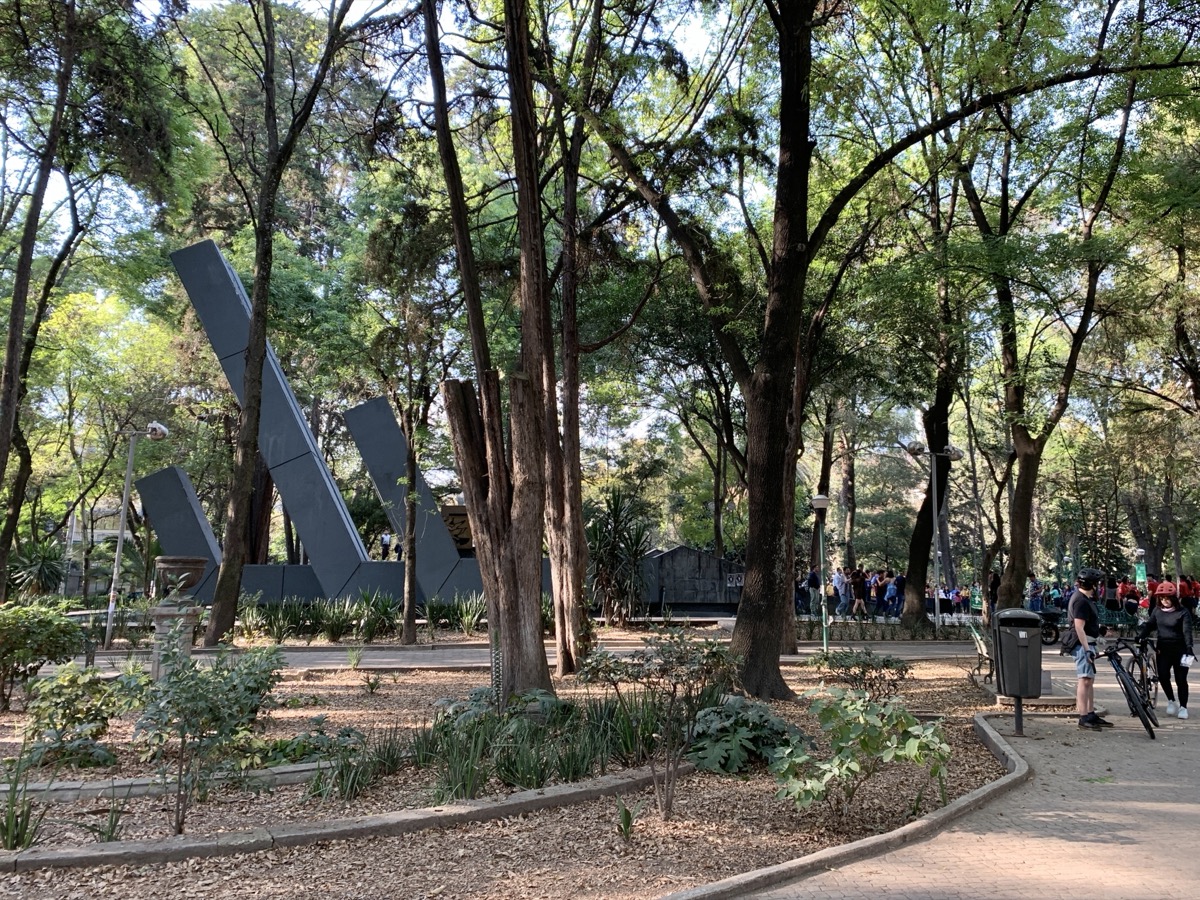
We looked-up grocery stores on map – this time we came across small, but well stocked Sumesa Colima. We looped around Plaza Río de Janeiro with small park and David statue fountain. Mercado Medellín in Roma Sur was next – now we knew where to get fruits and veggies (other stuff was of lesser interest to us on a short trip). People were friendly and relaxed, none of the hustles we experienced in markets in some other parts of the World. We saw food tours there, but Piotr was not ready for lunch at the market. Continued into La Condesa (or was it Hipodromo?), even nicer and more posh neighborhood, and rested in very pleasant Parque México – walking, sitting, watching people walking with dogs and pond with ducks and geese.
Plaza de Romita
David, Plaza Río de Janeiro
Mercado Medellín
Parque México
…
…
Most of the time on this trip we would buy fruits and veggies, baked goods and other food items stopping in different places as we were walking around, buying something here and something there, rather than making special grocery shopping trips. We found some items in local mini-markets, a lot of stuff at markets, learned how to find good bakeries and coffee shops. Non-diary food is hard to find – everything is con queso or con crema. Fortunately lactose-free milk is available everywhere. Here we shopped at La Espiga Panificadora to get bread and pastries for supper and breakfast.
There are many restaurants in Mexico City, hard to choose on the go, if you have only time for a few. Lunch at El Pez Azul (recommended). Simple street-side table and tasteful seafood. After lunch, we started walking along Ave Insurgenes Sur and somehow found our way home, stopping in Parque España (even more dogs around here). Piotr had to stop at the Sumesa again to get more sweets (Abrazos con Crema) and of all things Jamon Iberico for Joanna.
Avenida Amsterdam
Parque España
Calle Merida – Calle Tabasco
Day 7.
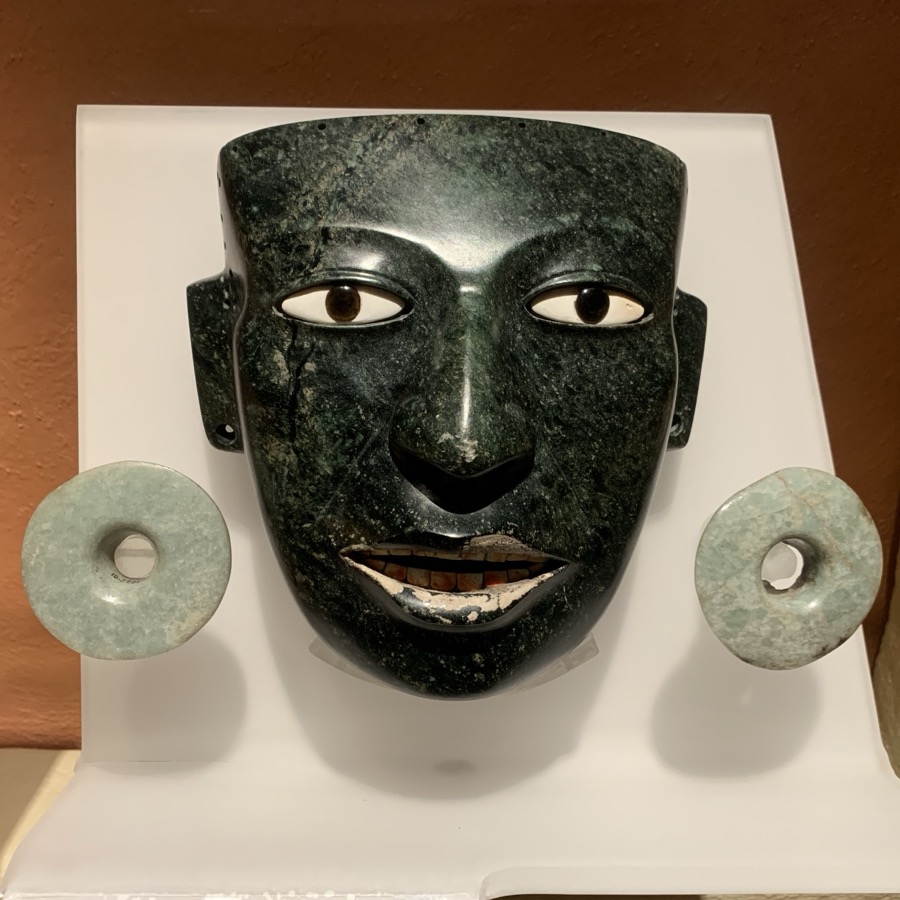
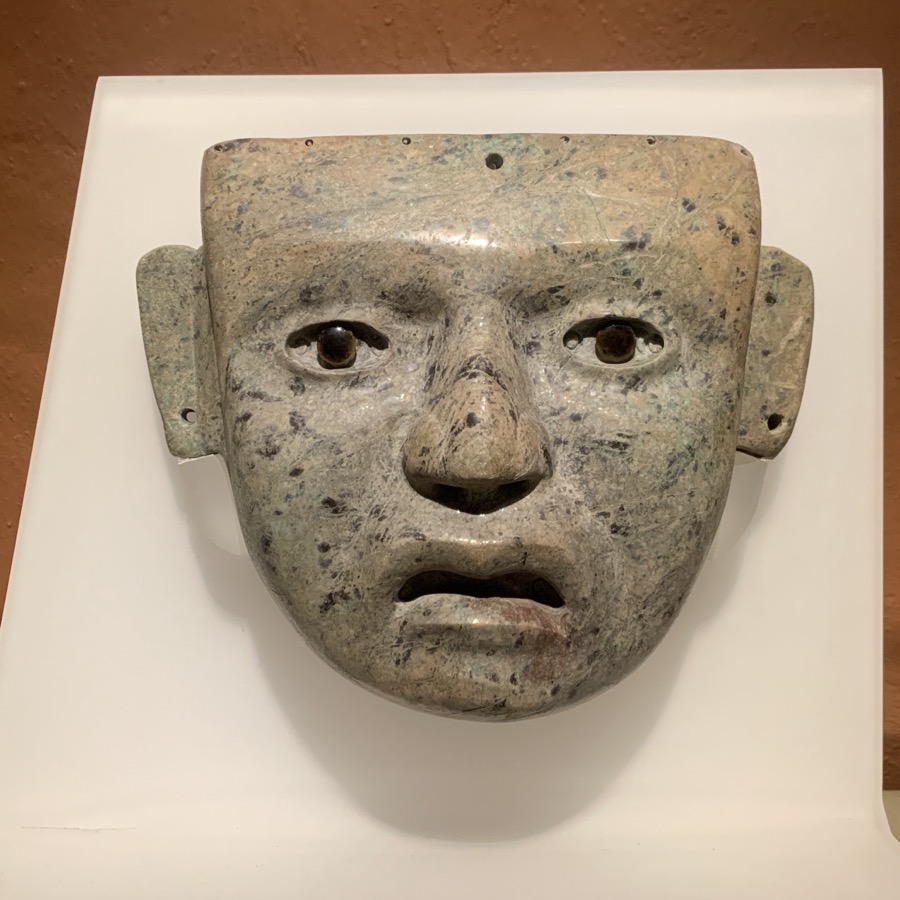
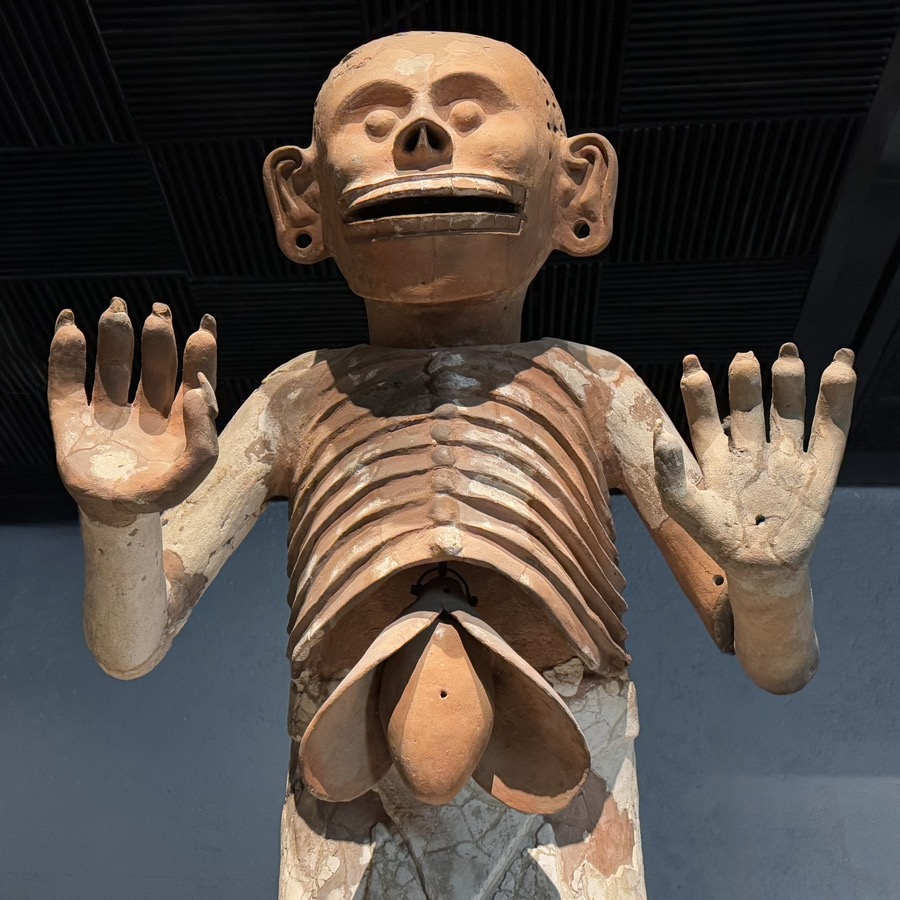
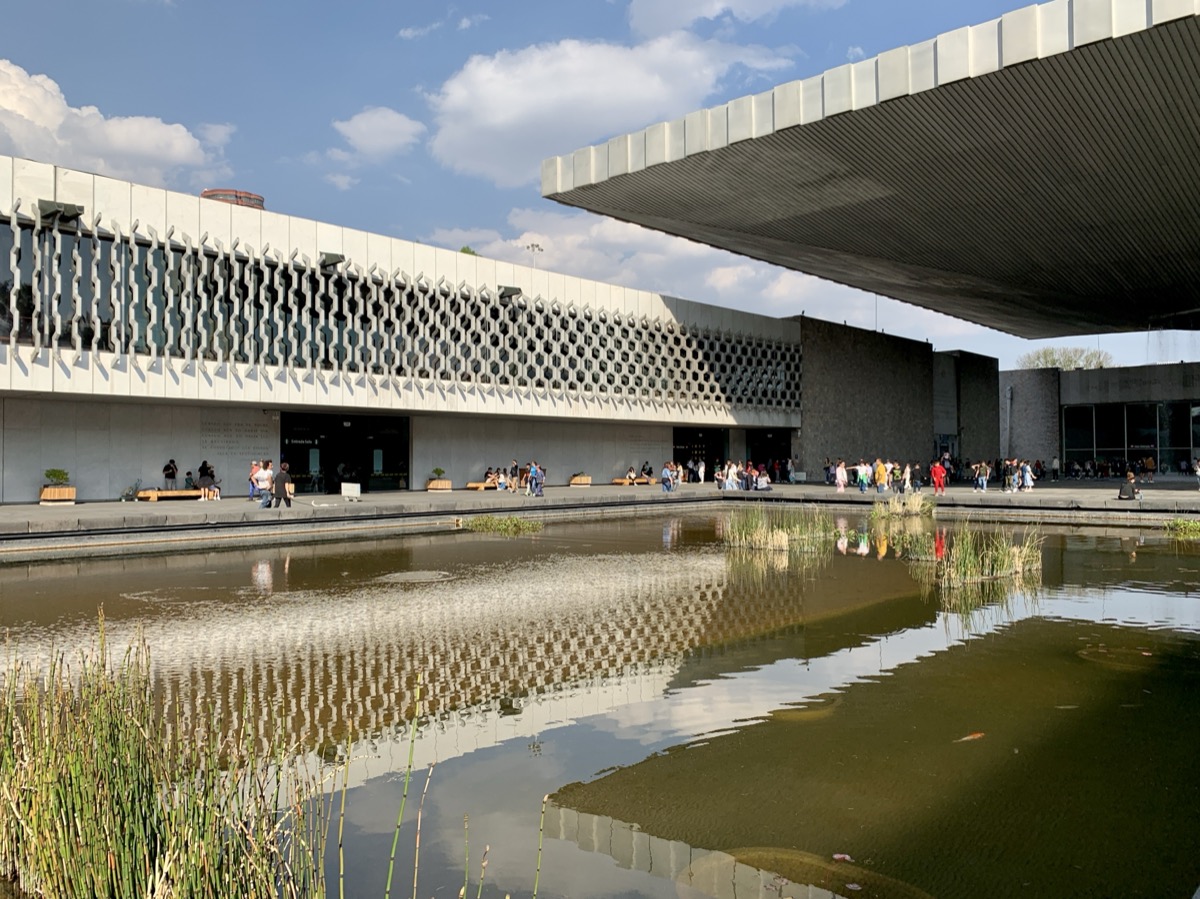
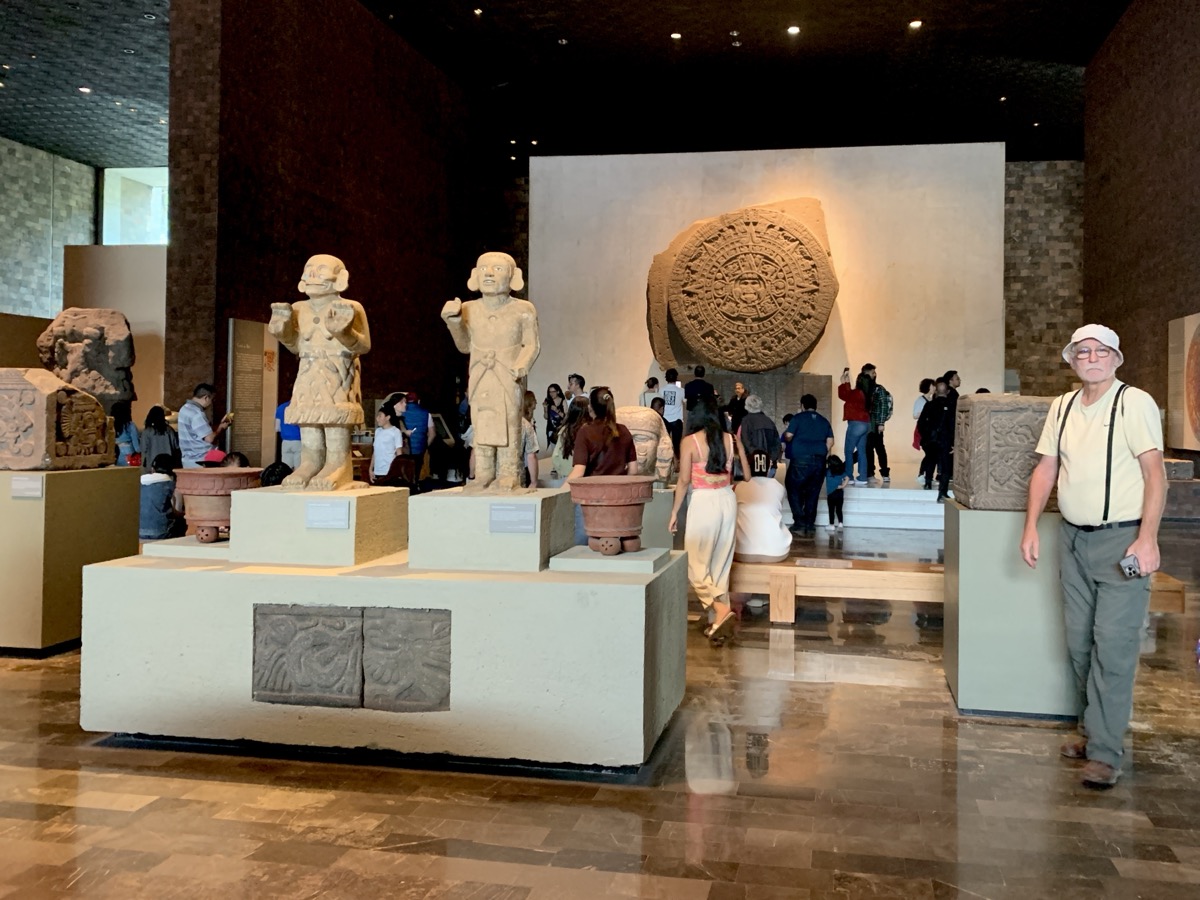
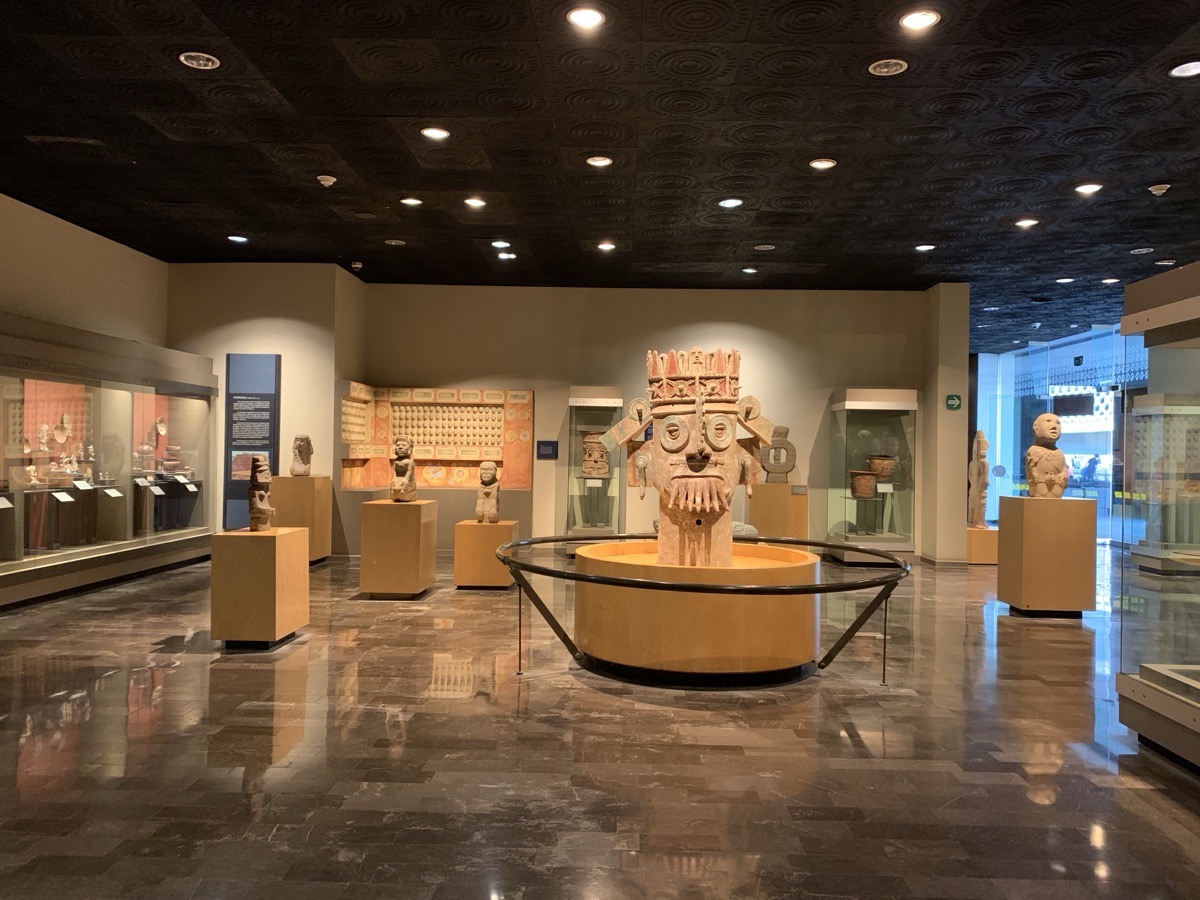
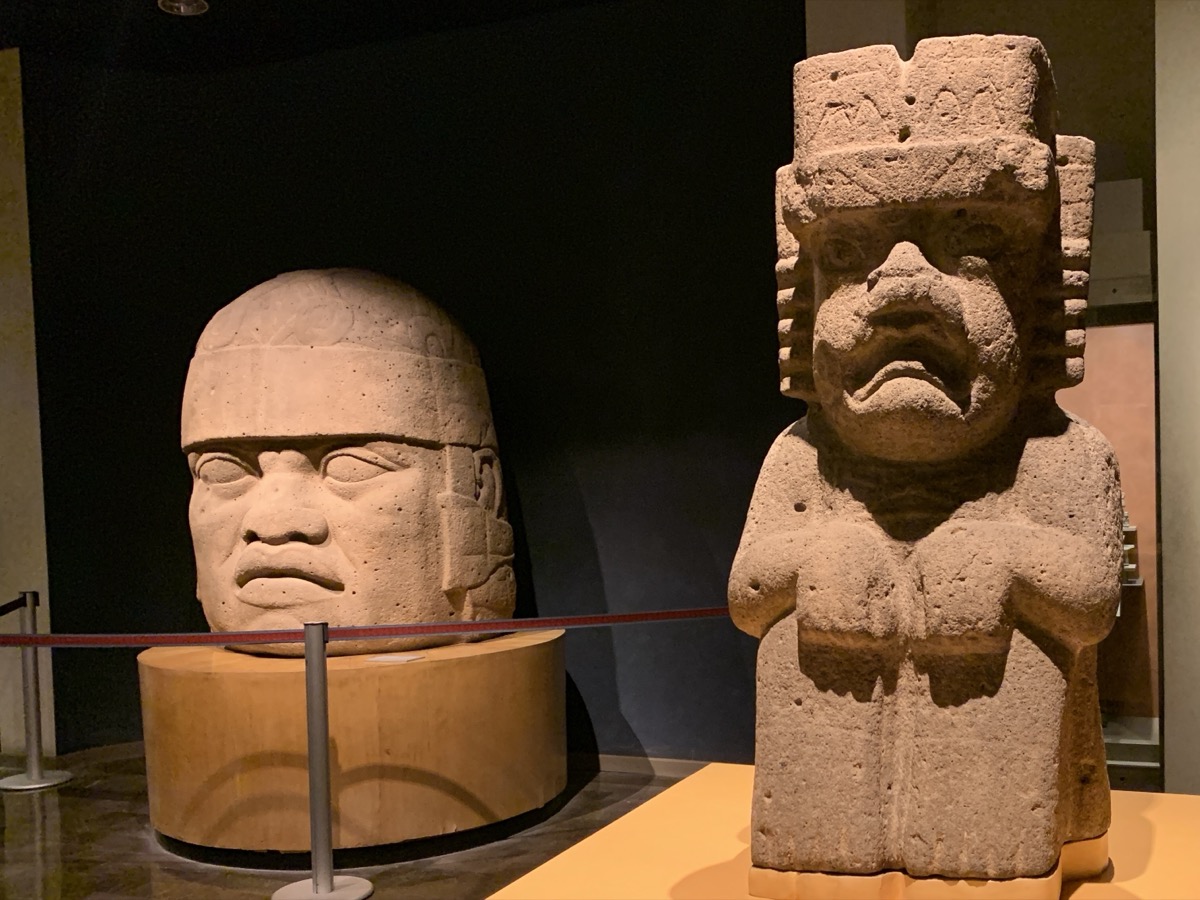
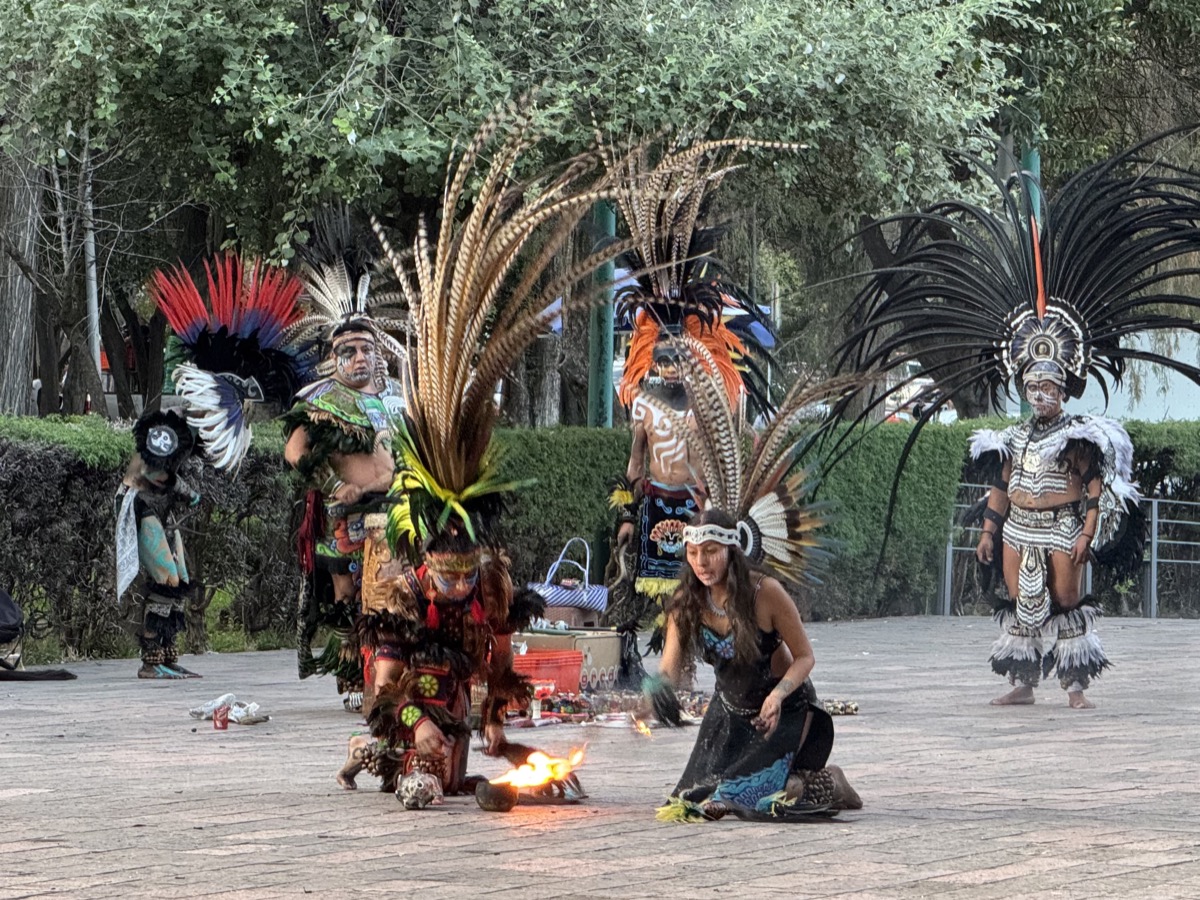
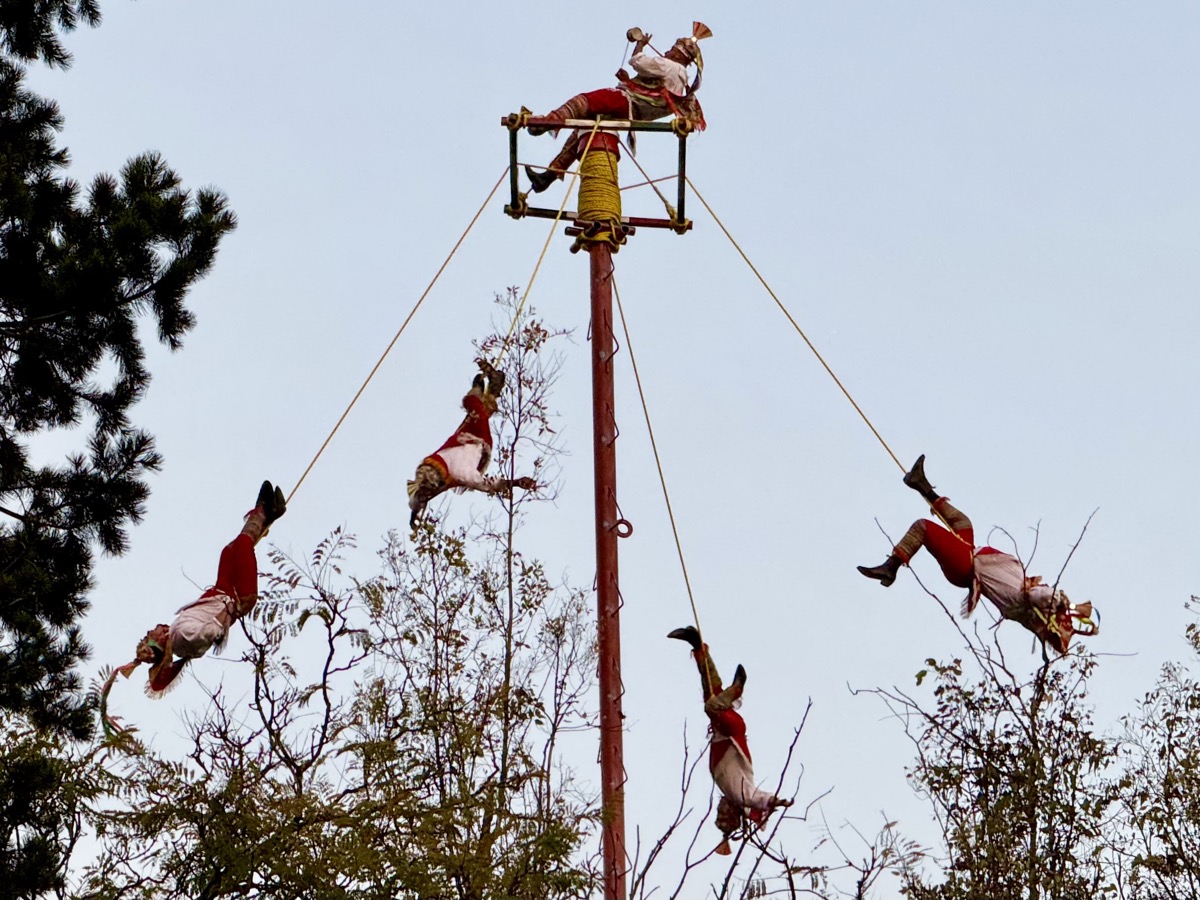
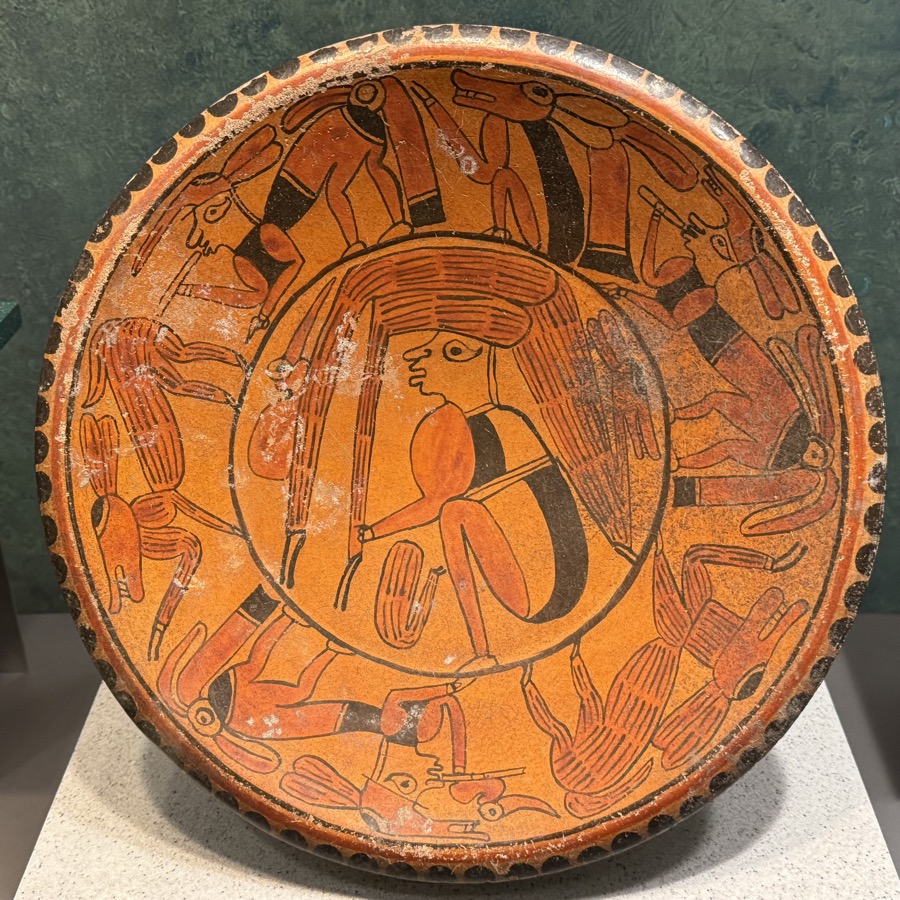
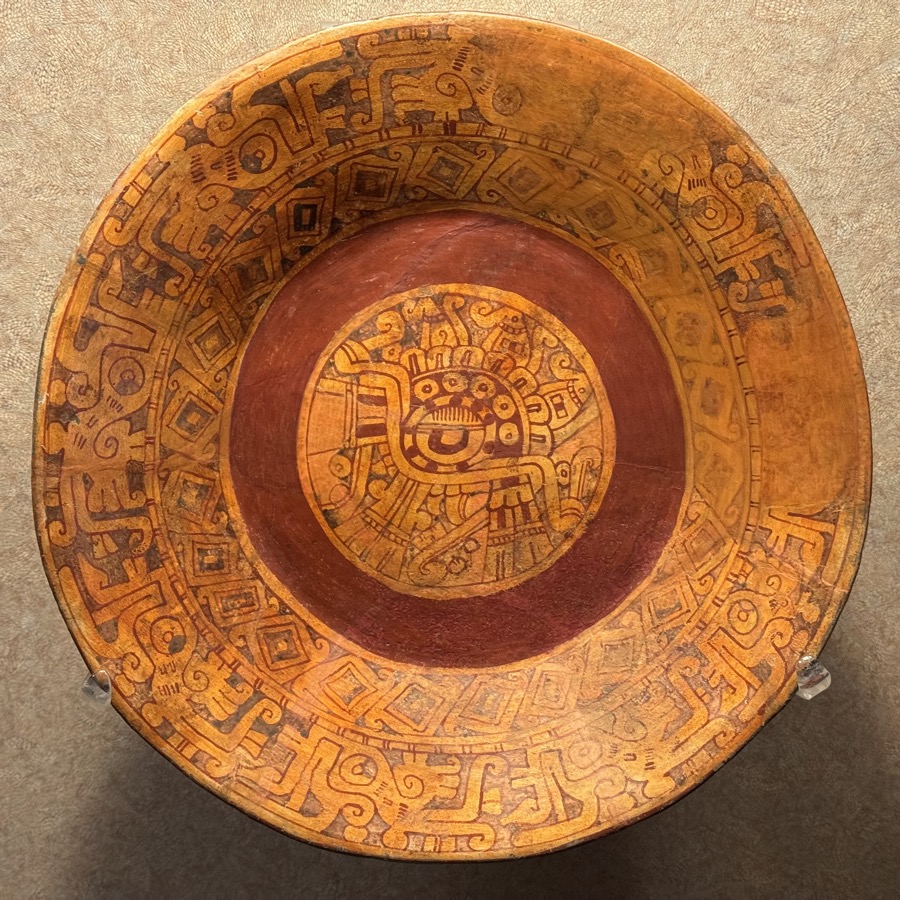
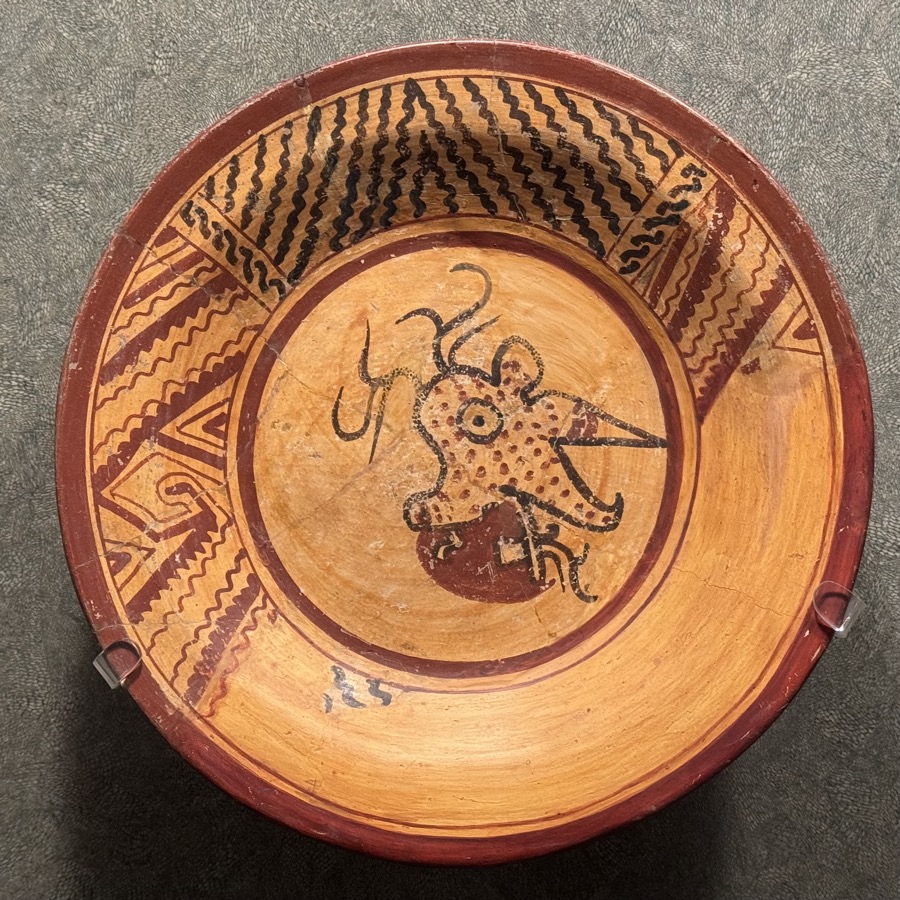
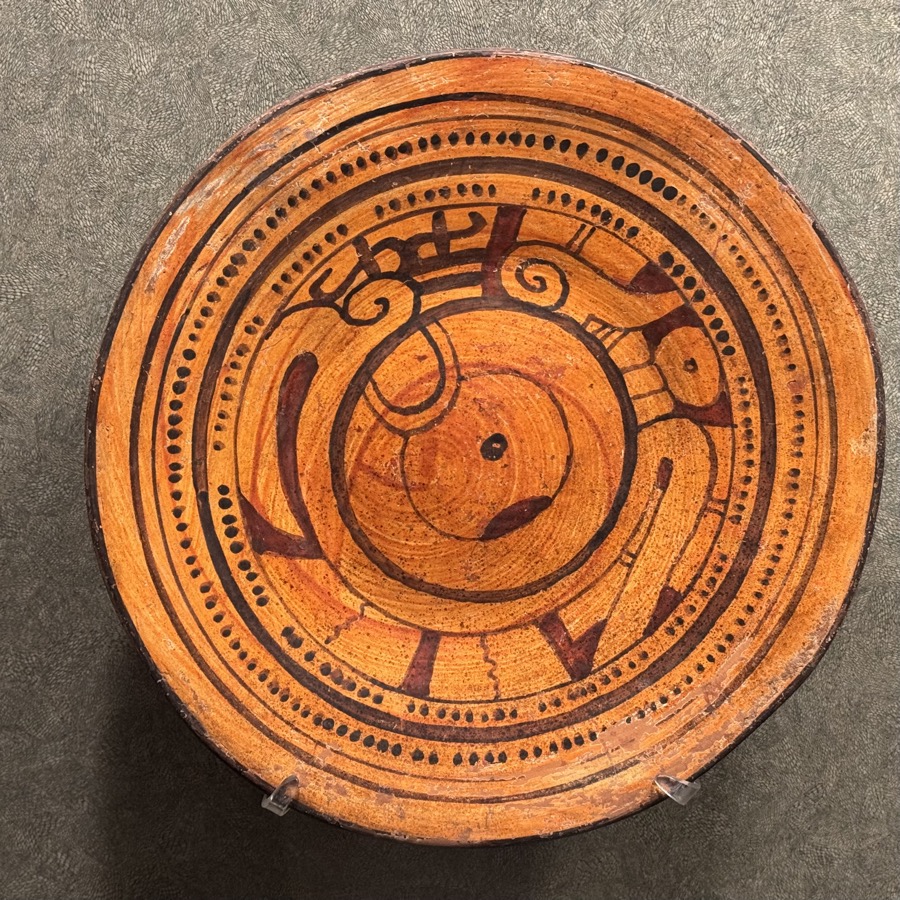
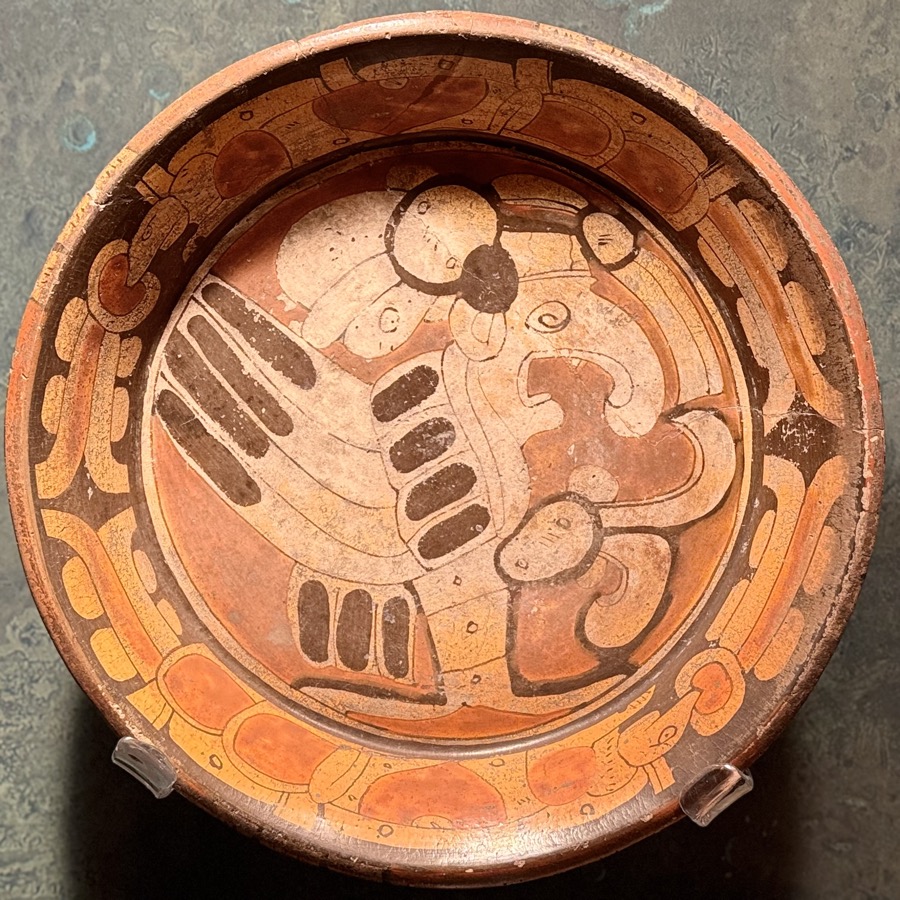
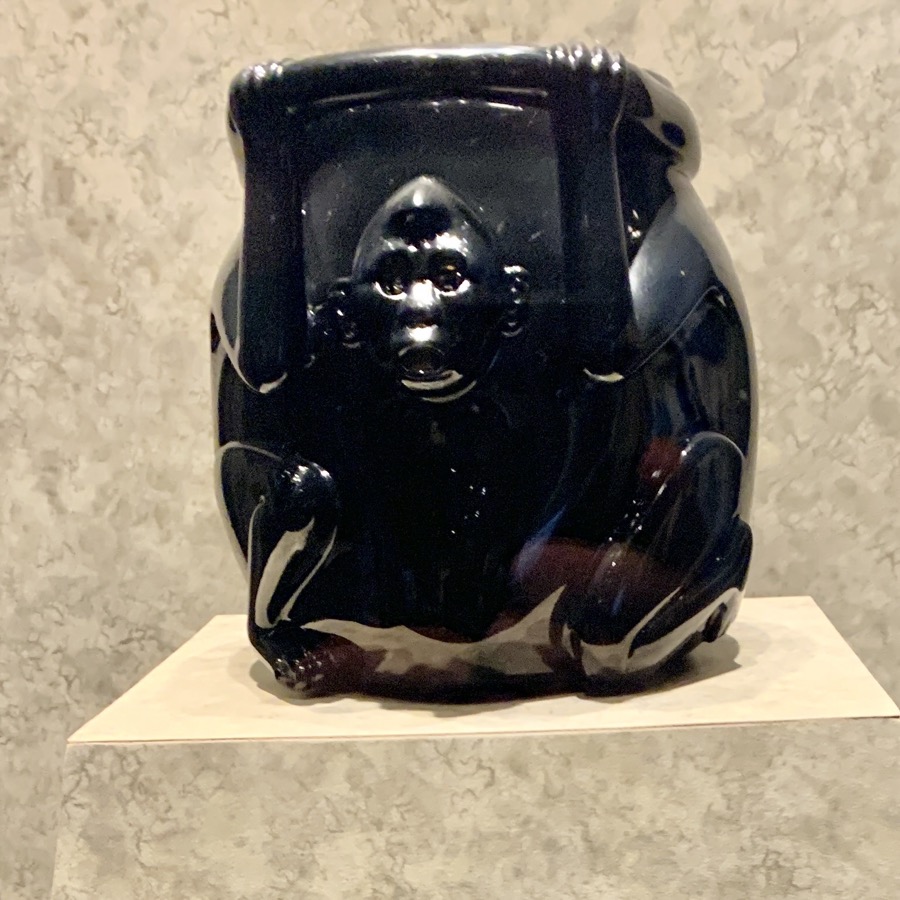
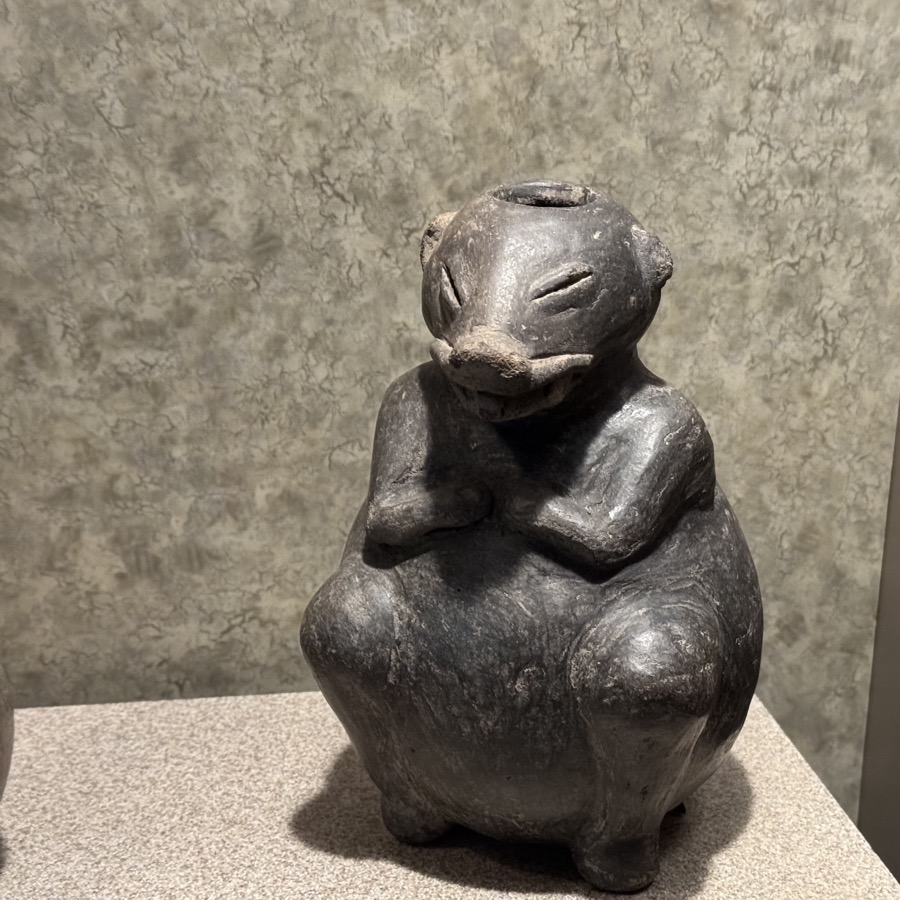
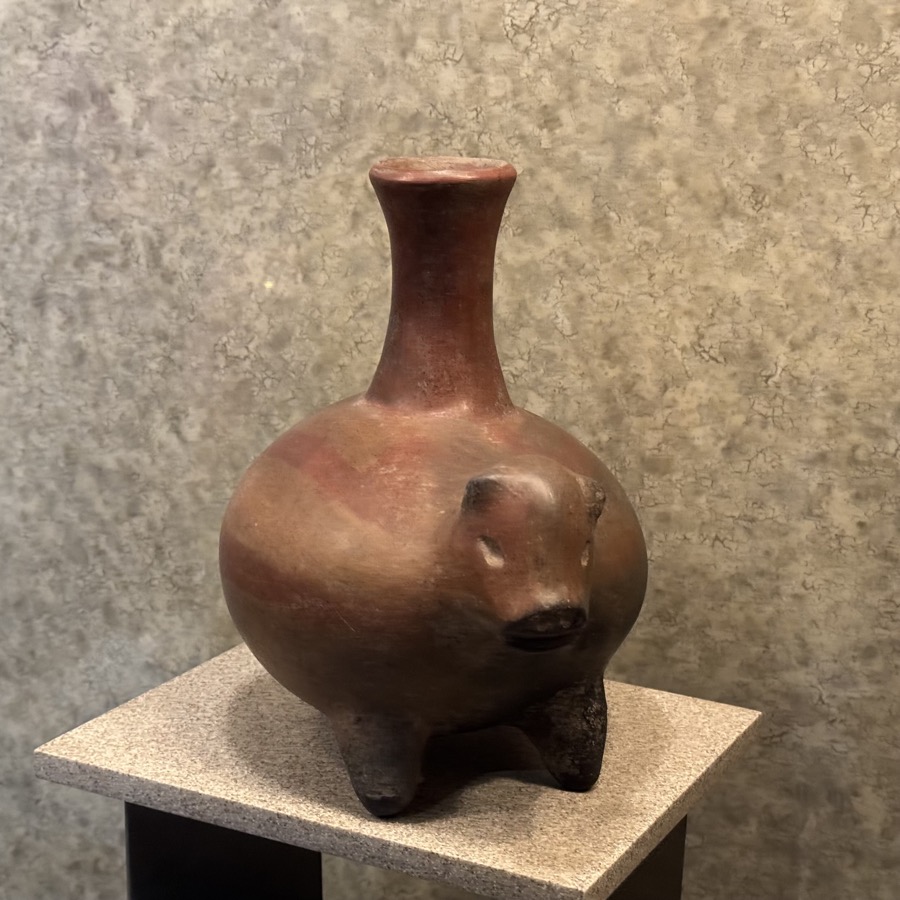
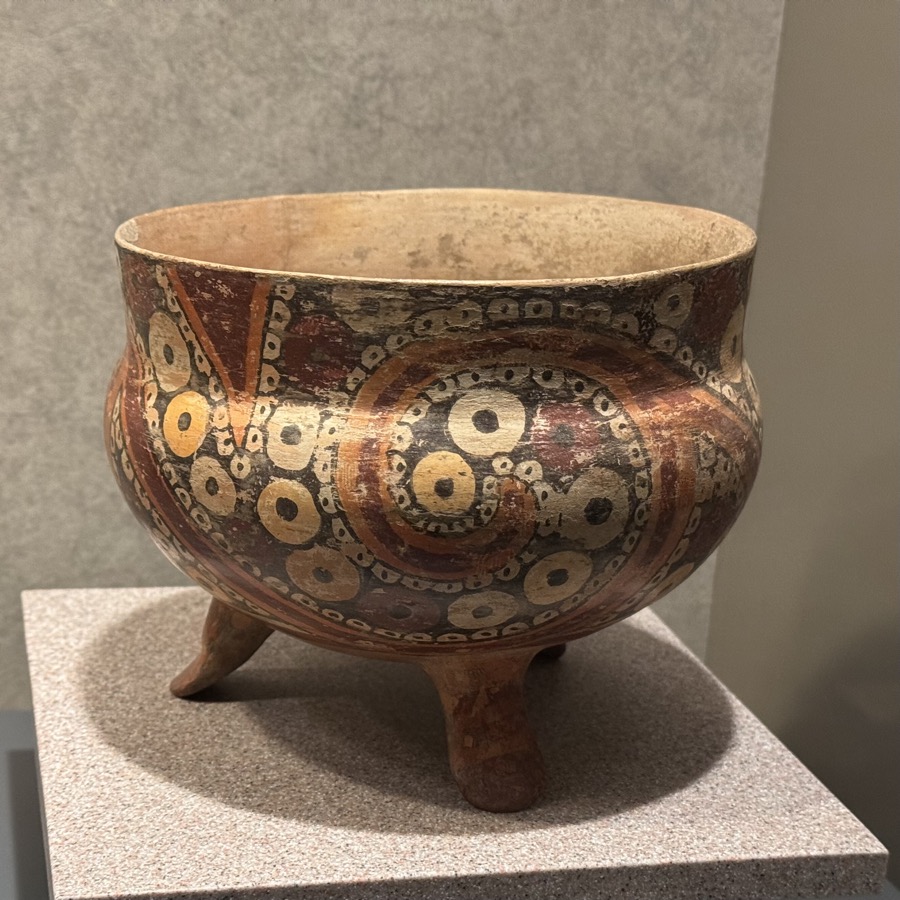
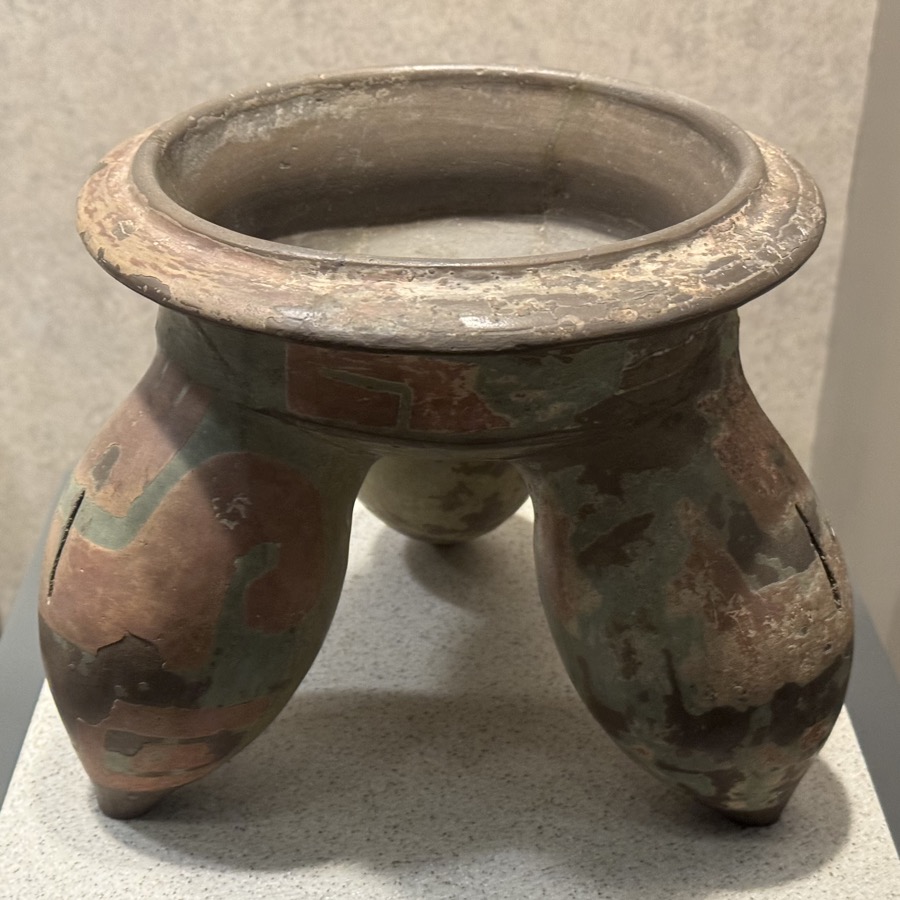
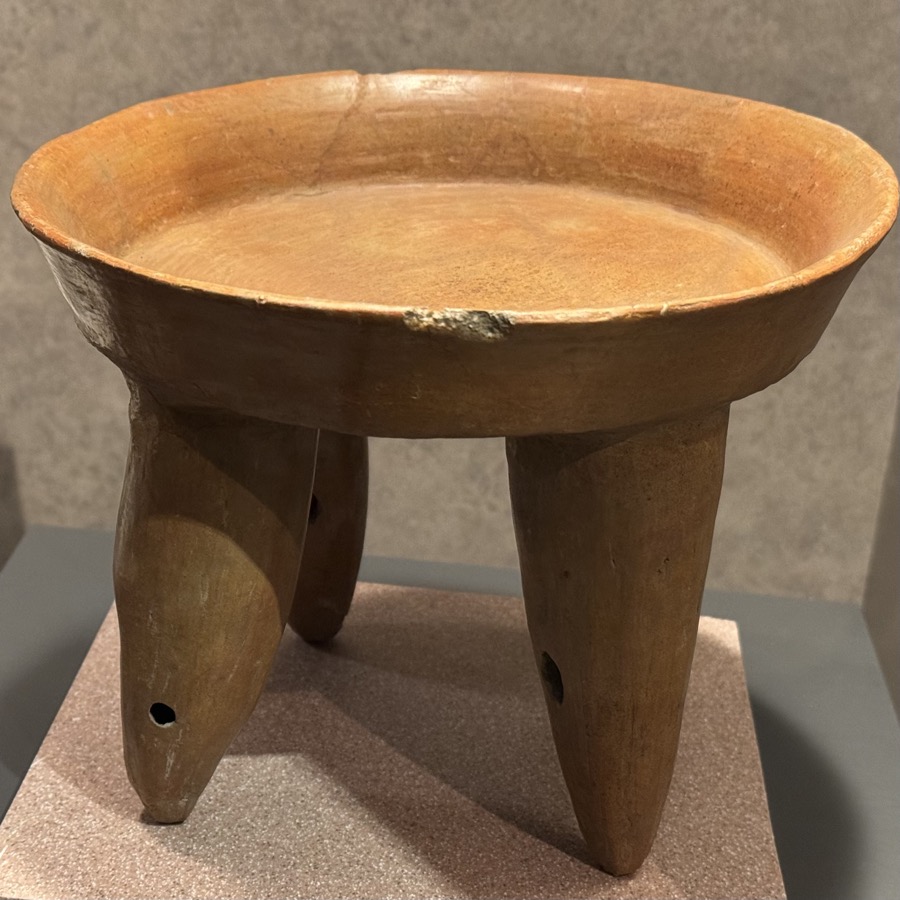
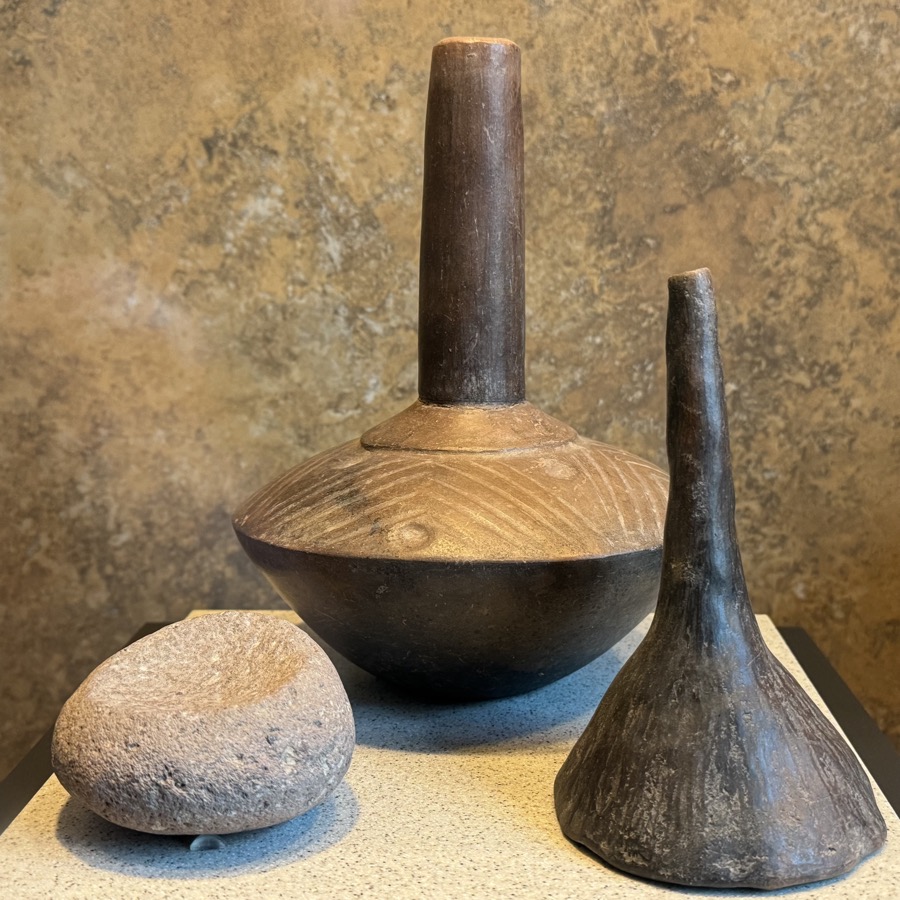
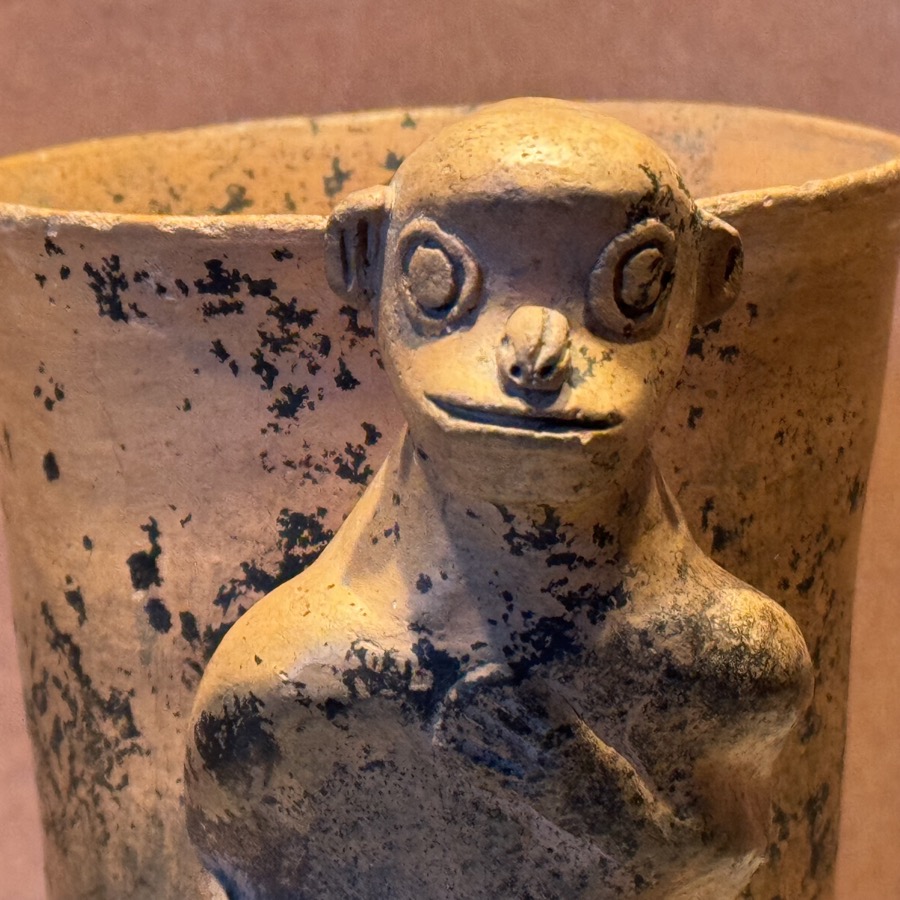
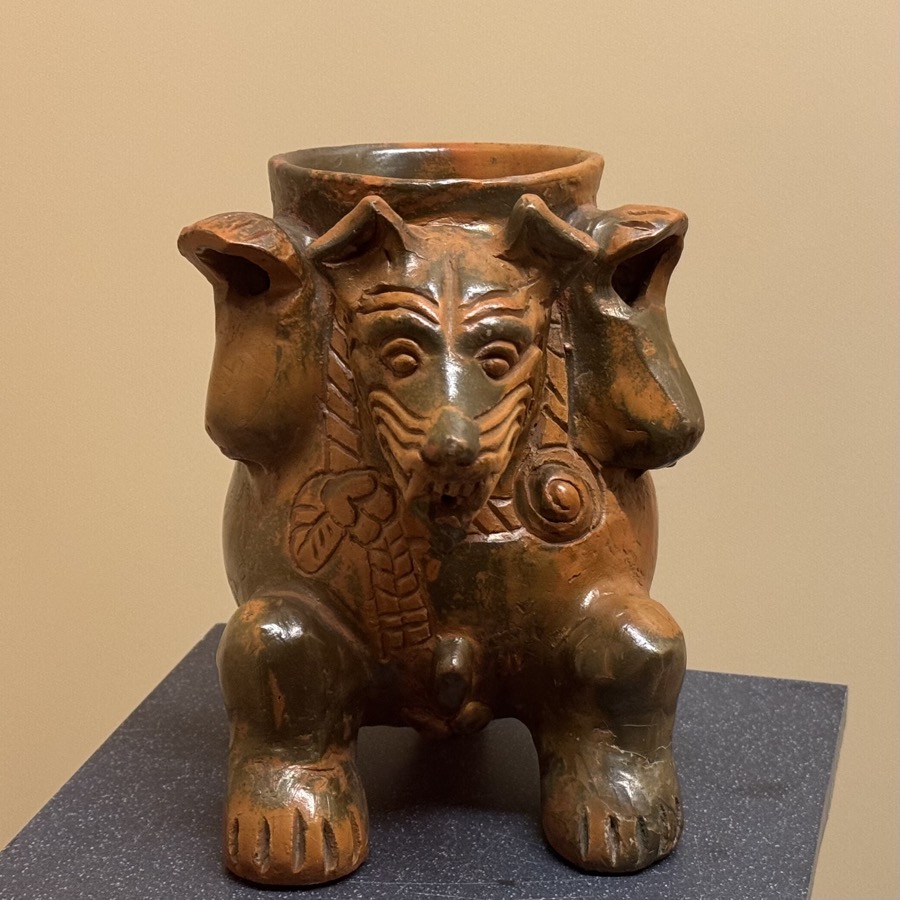
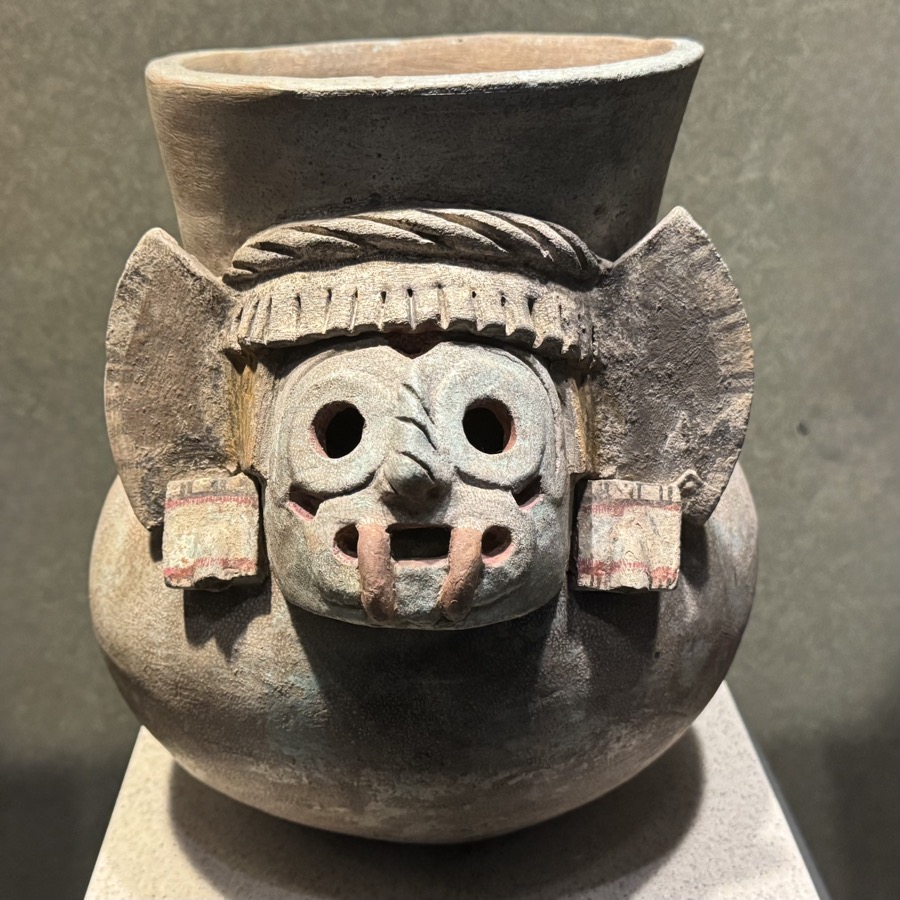
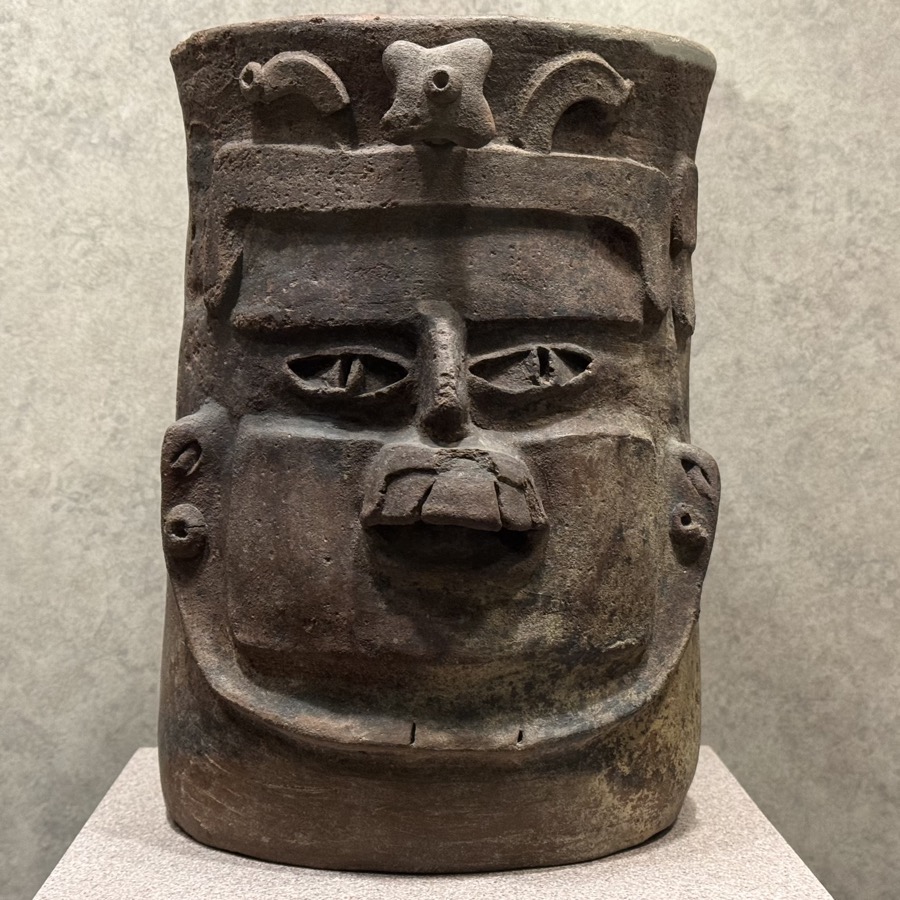
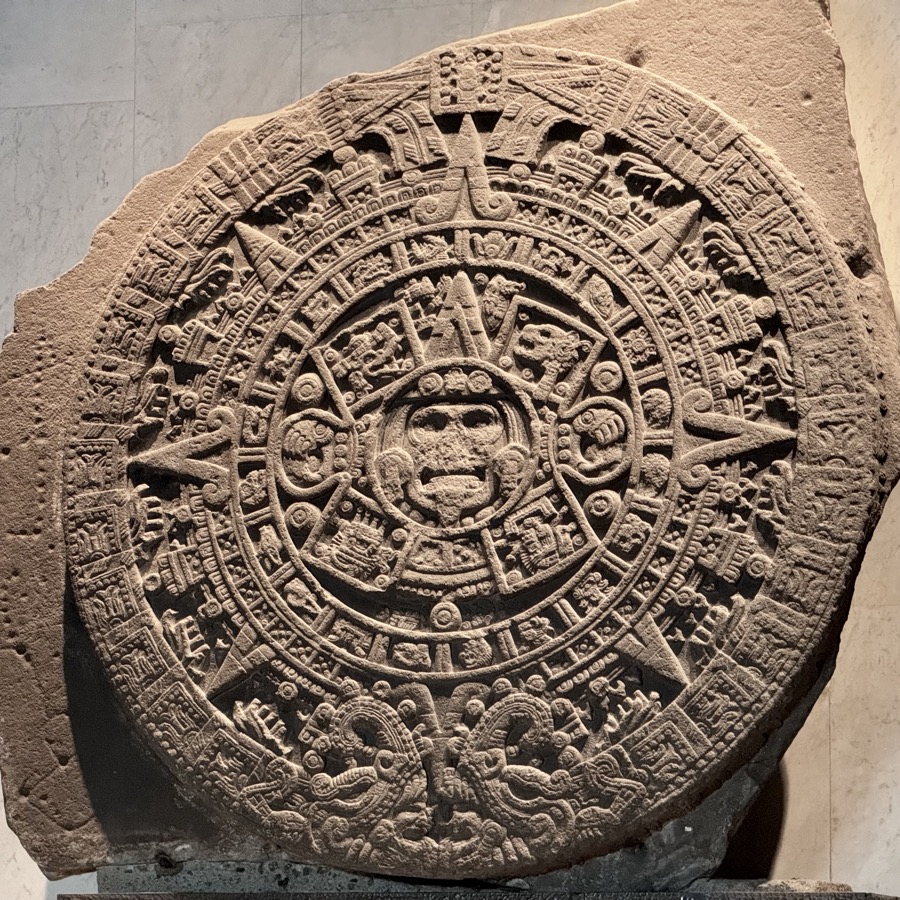
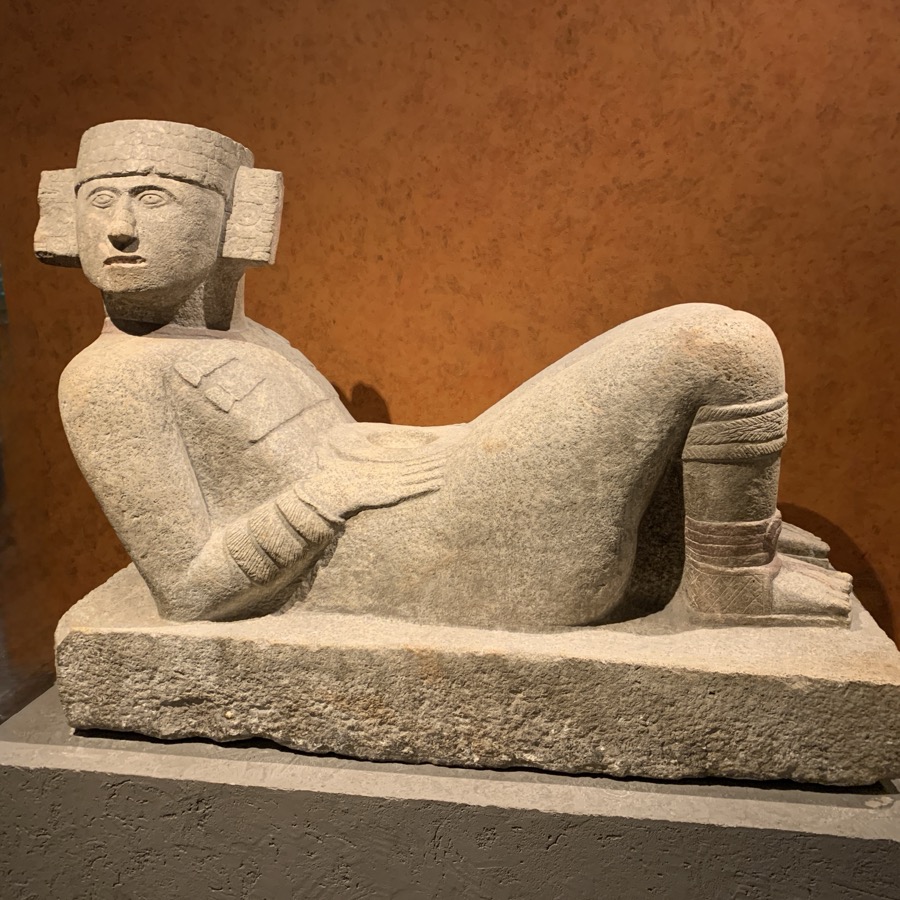
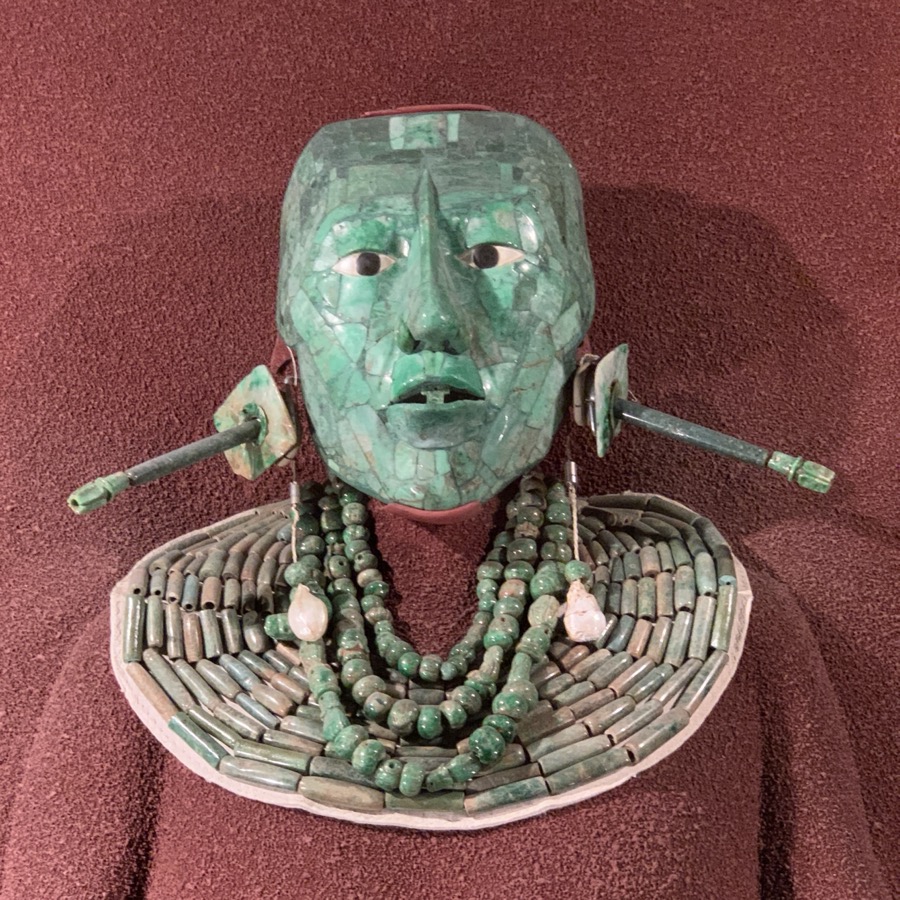
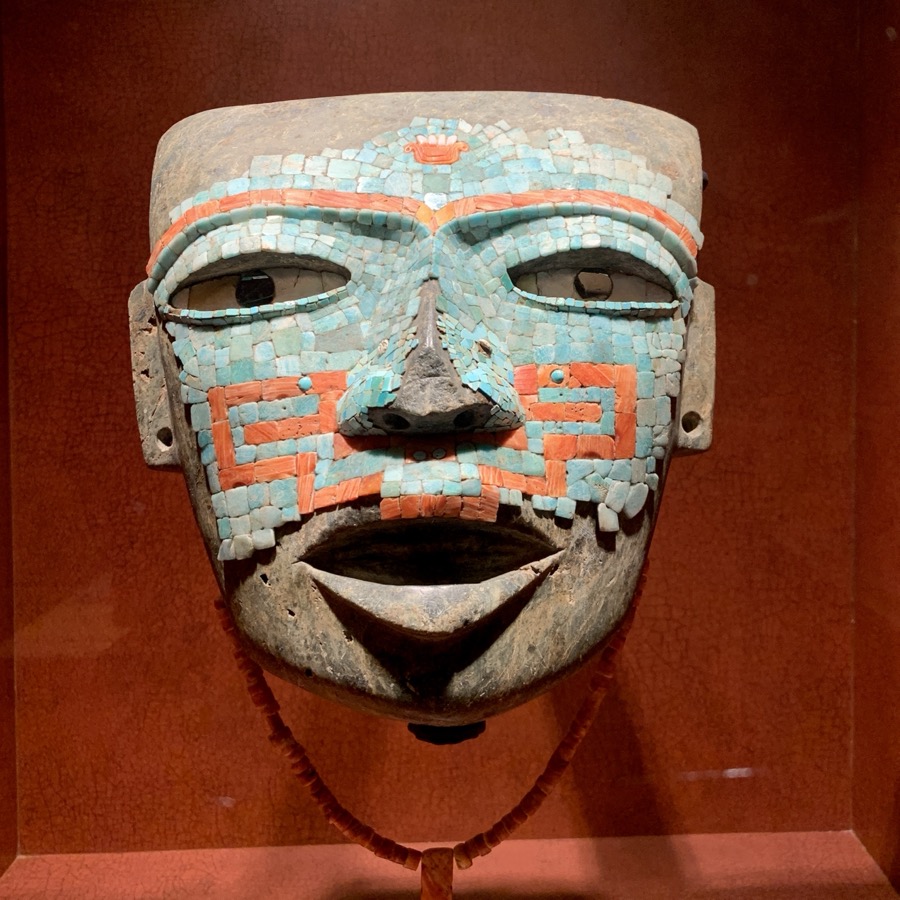
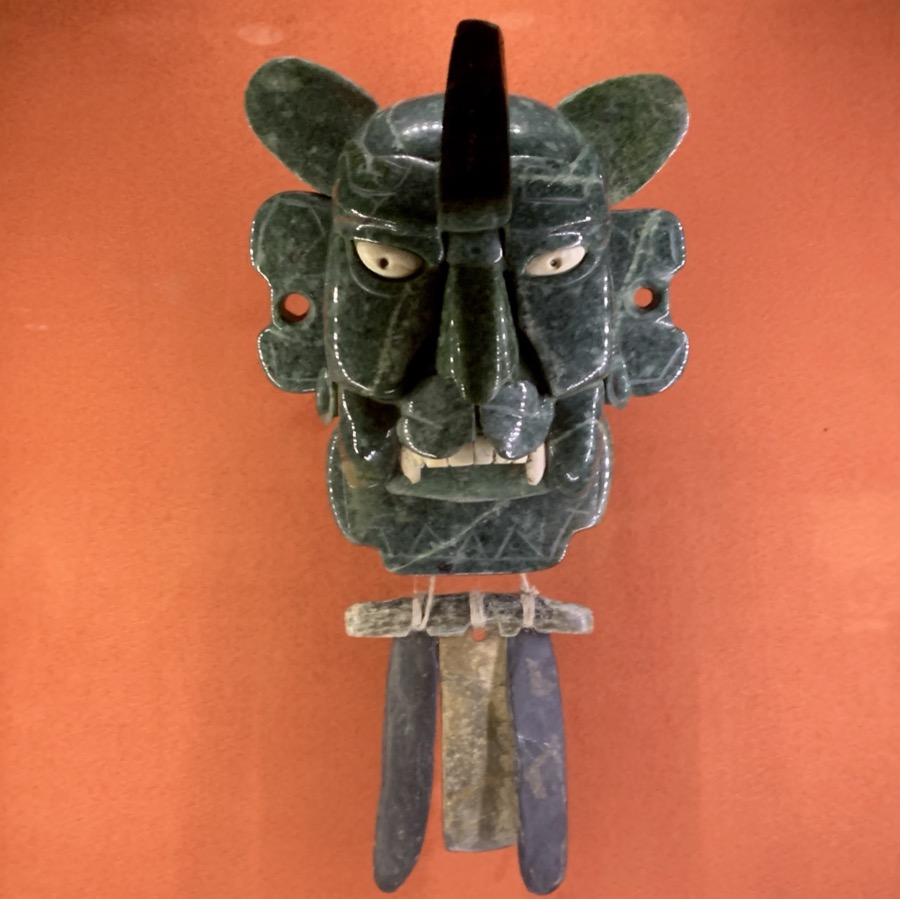
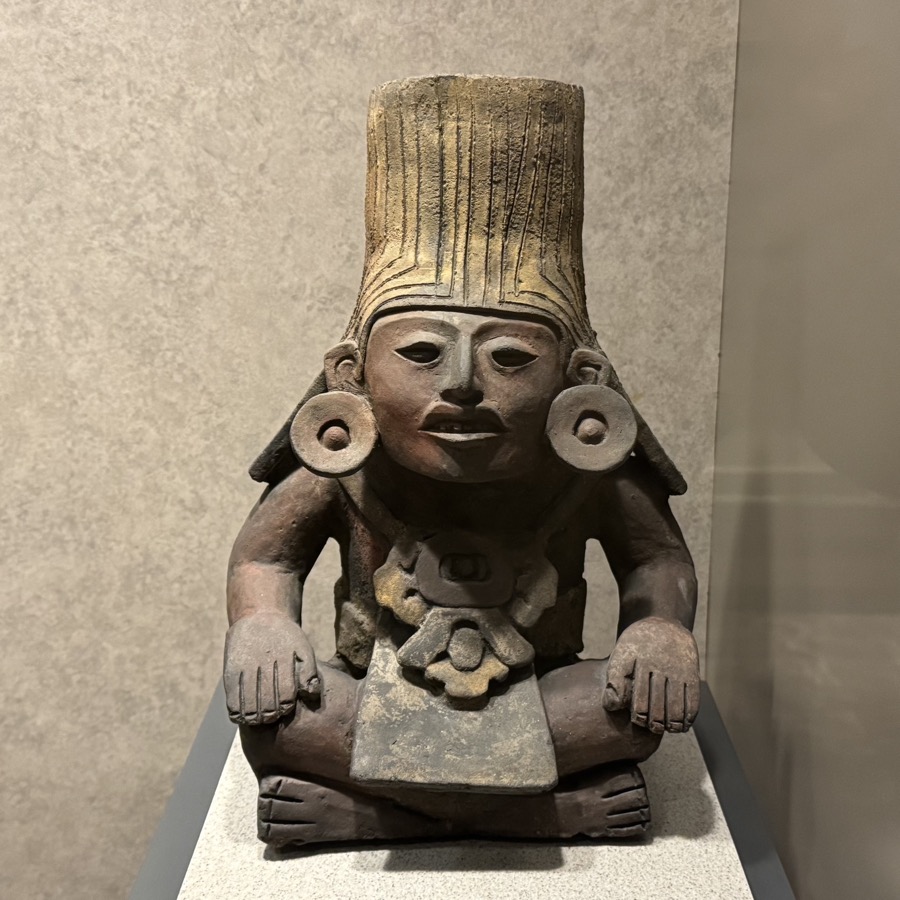
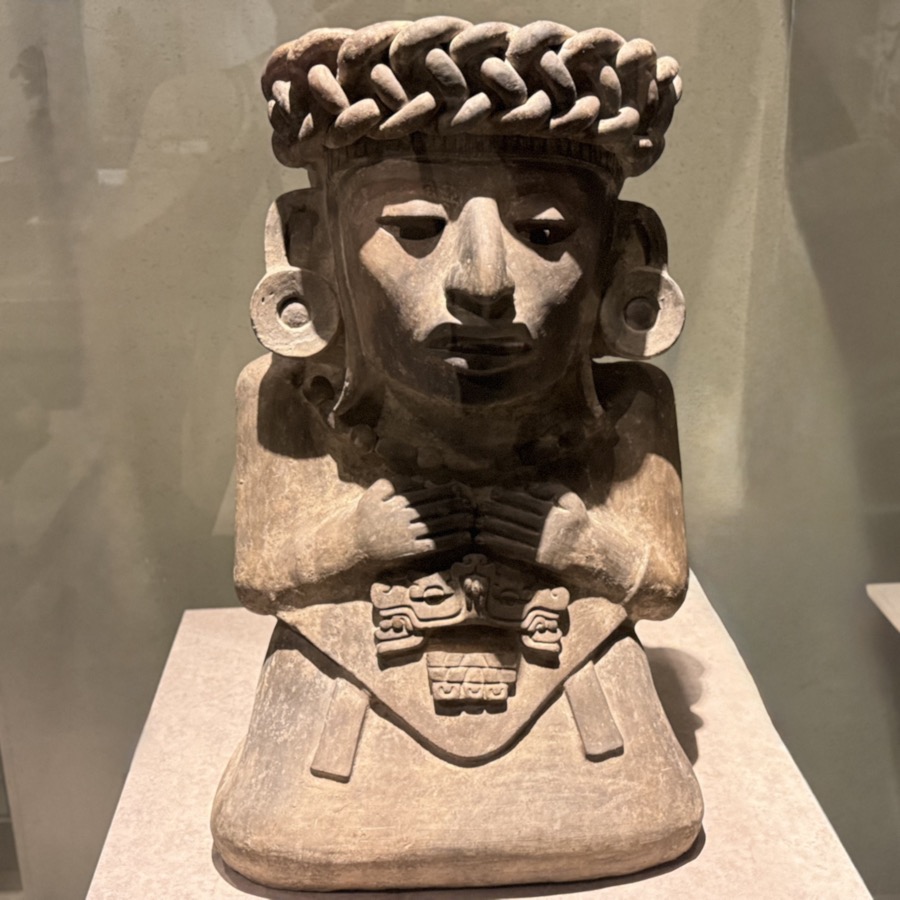
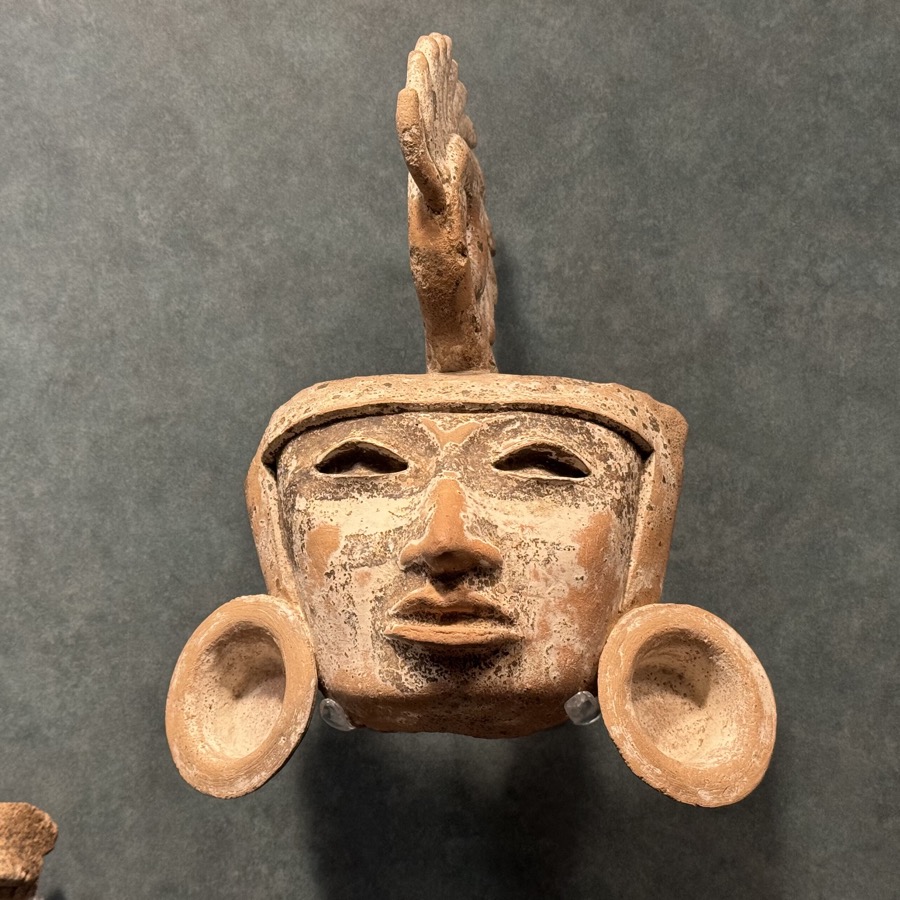
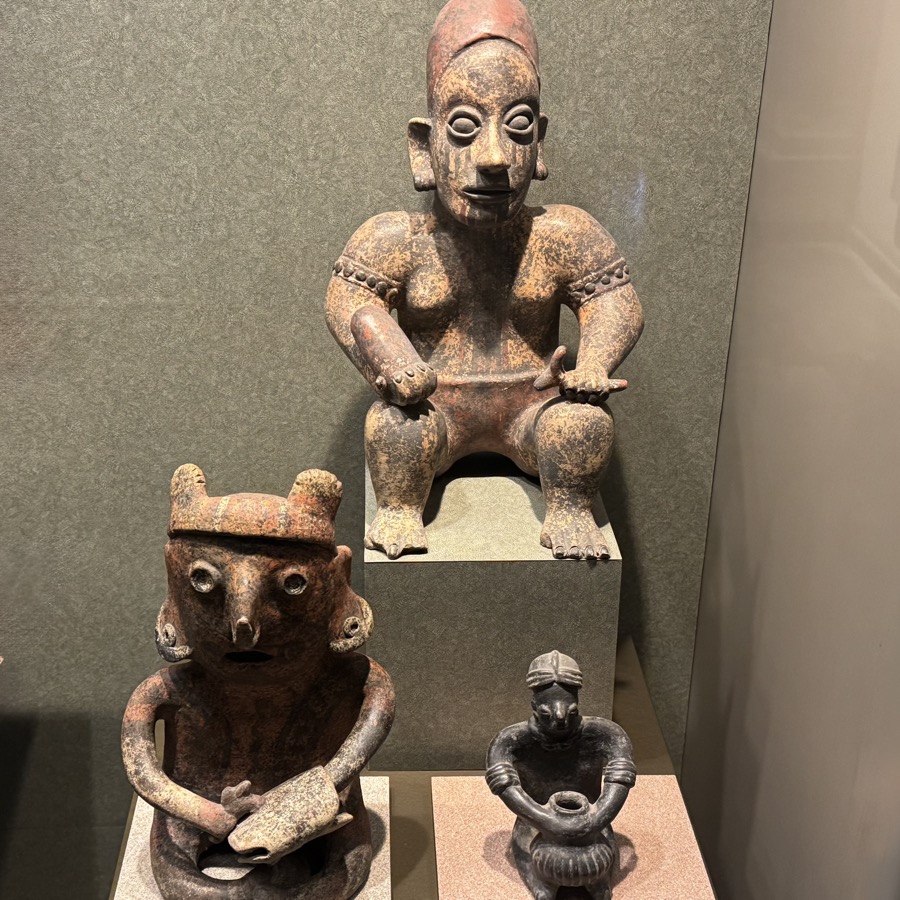
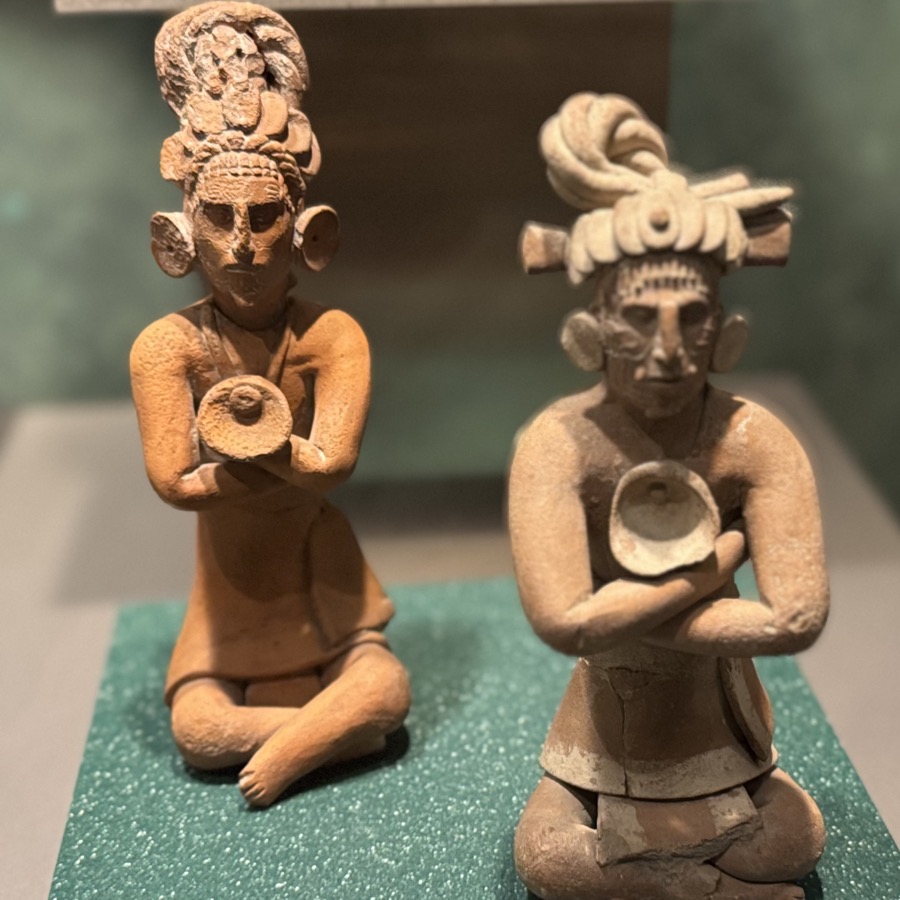
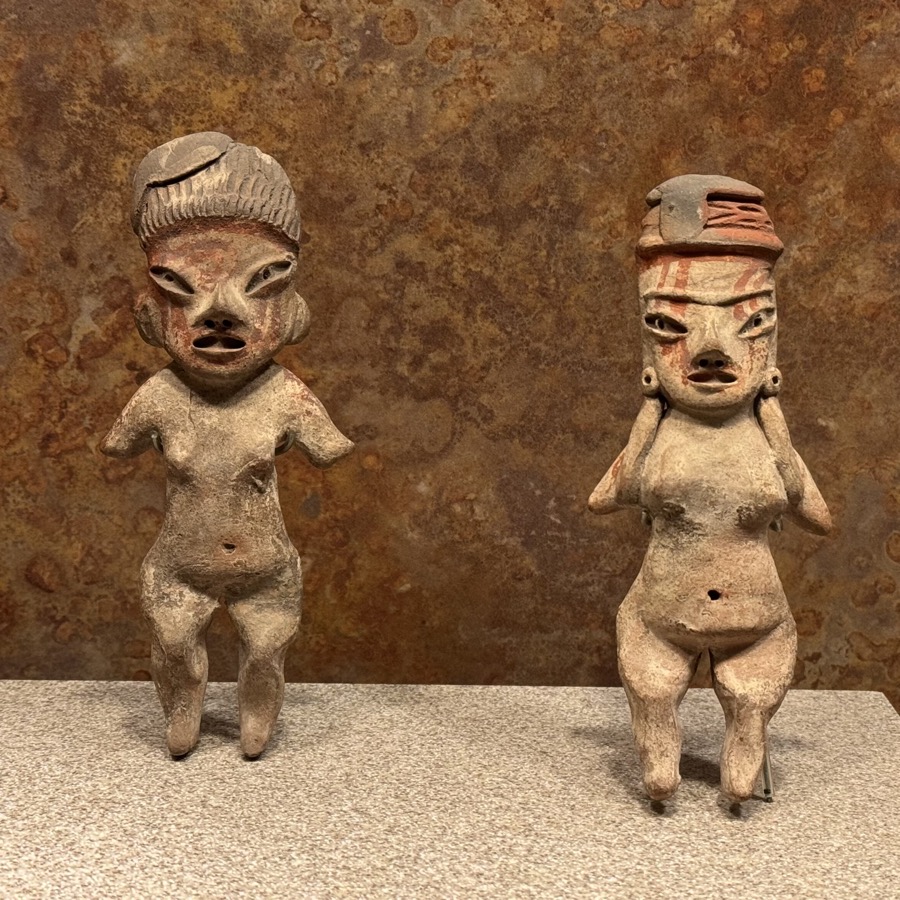
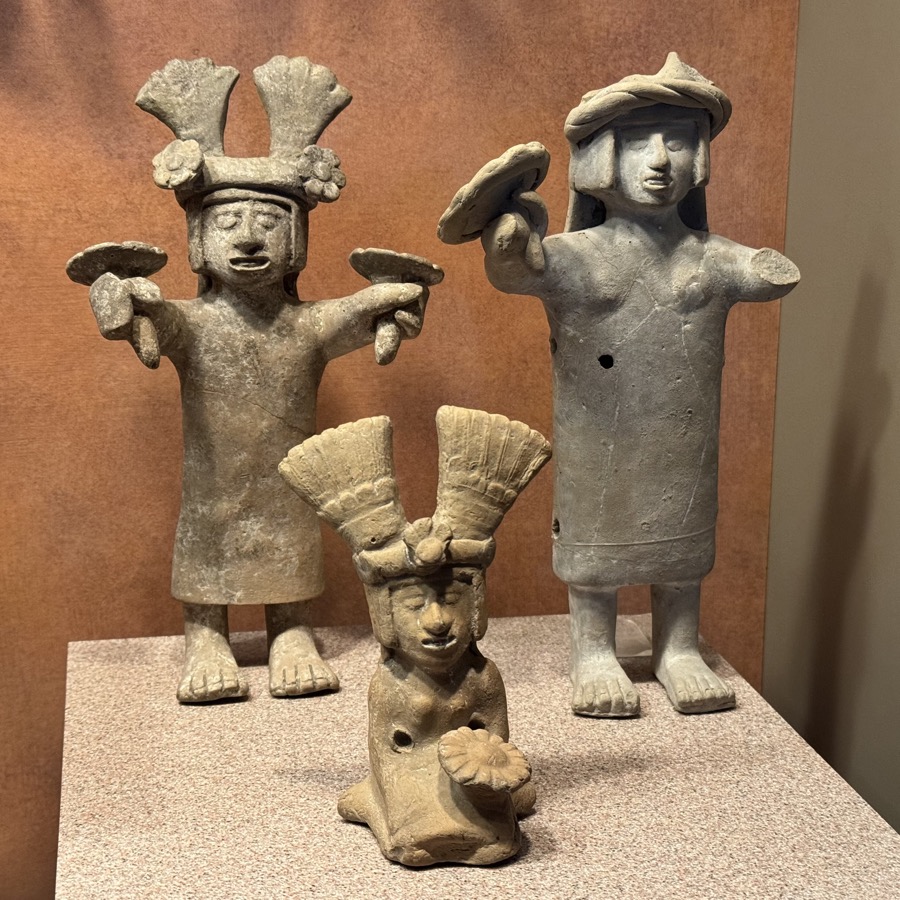
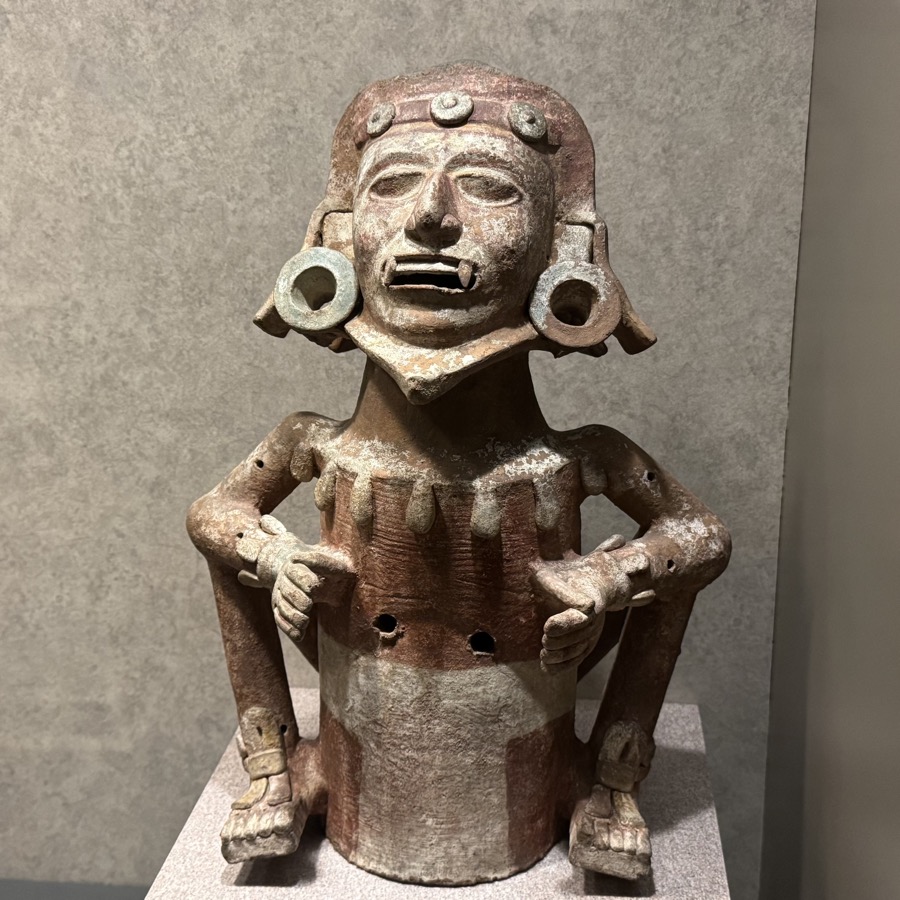
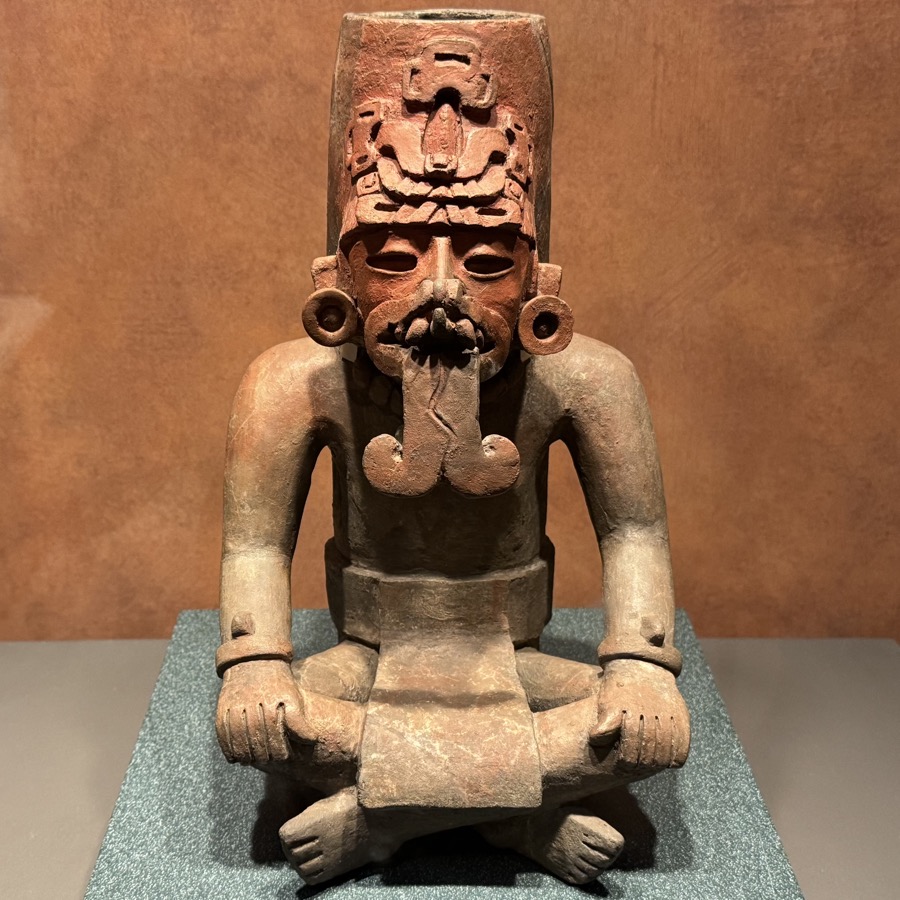
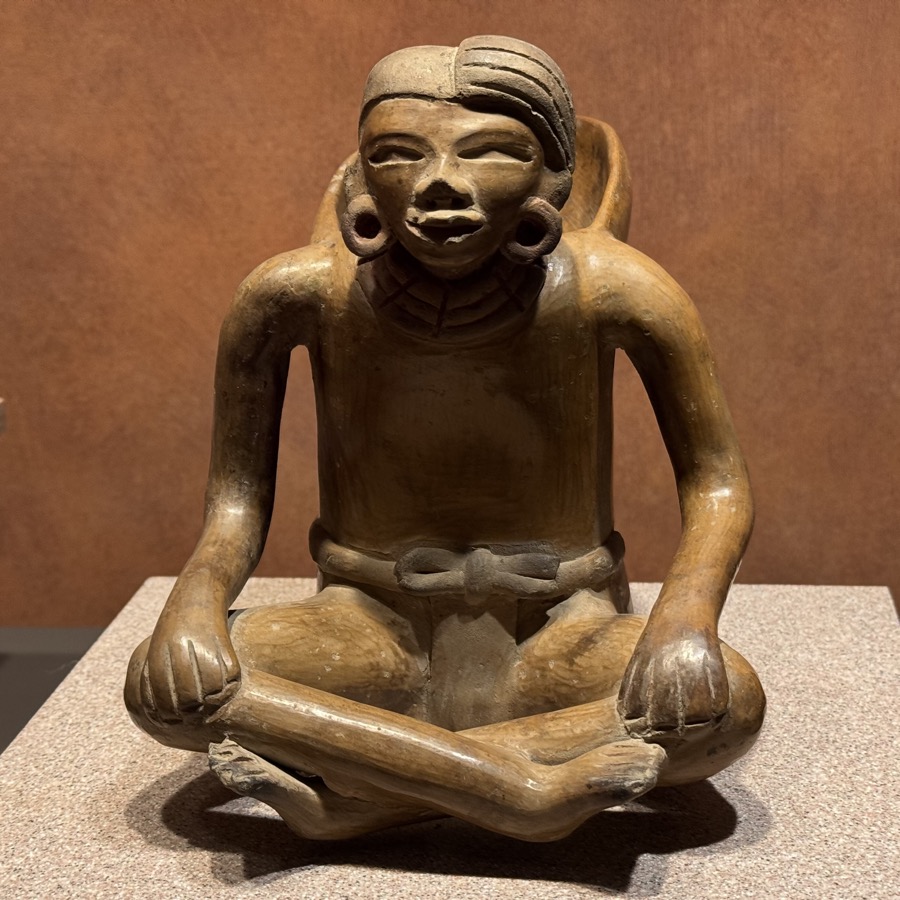
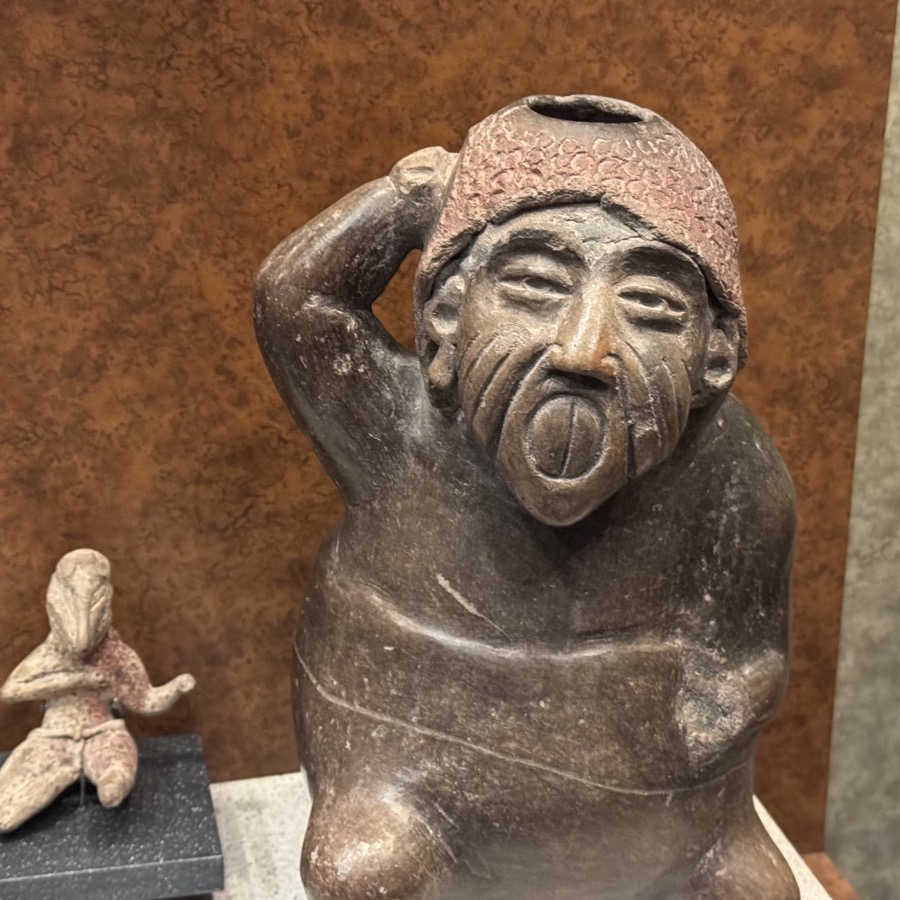
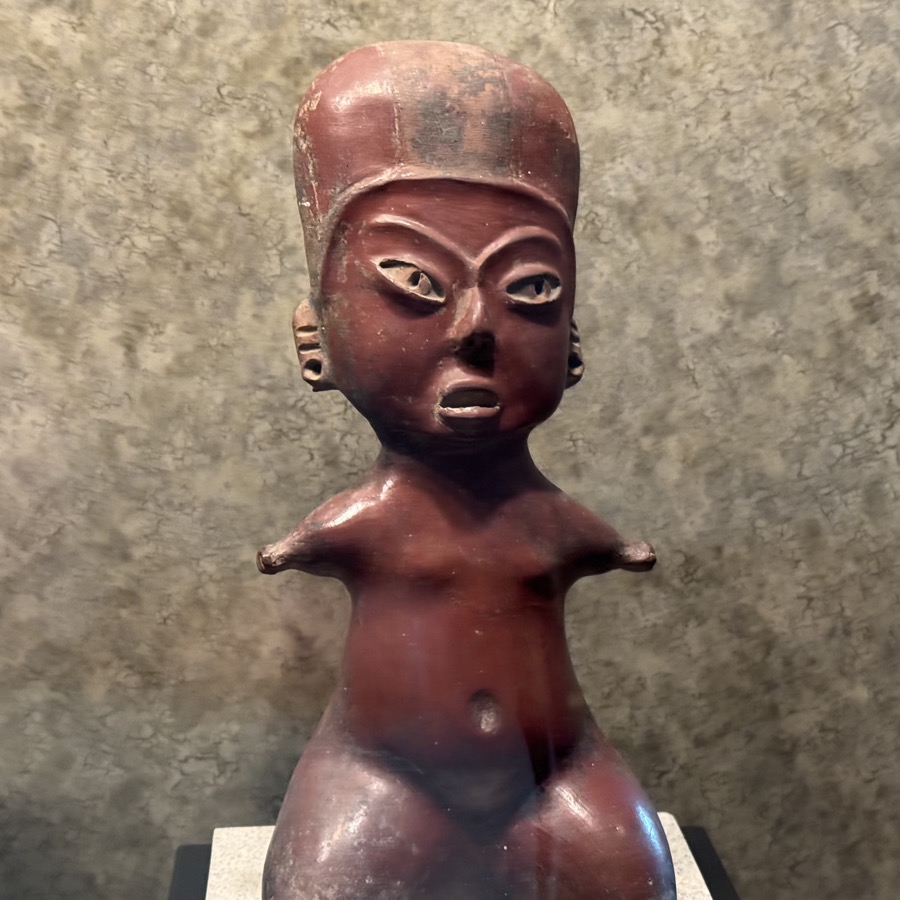
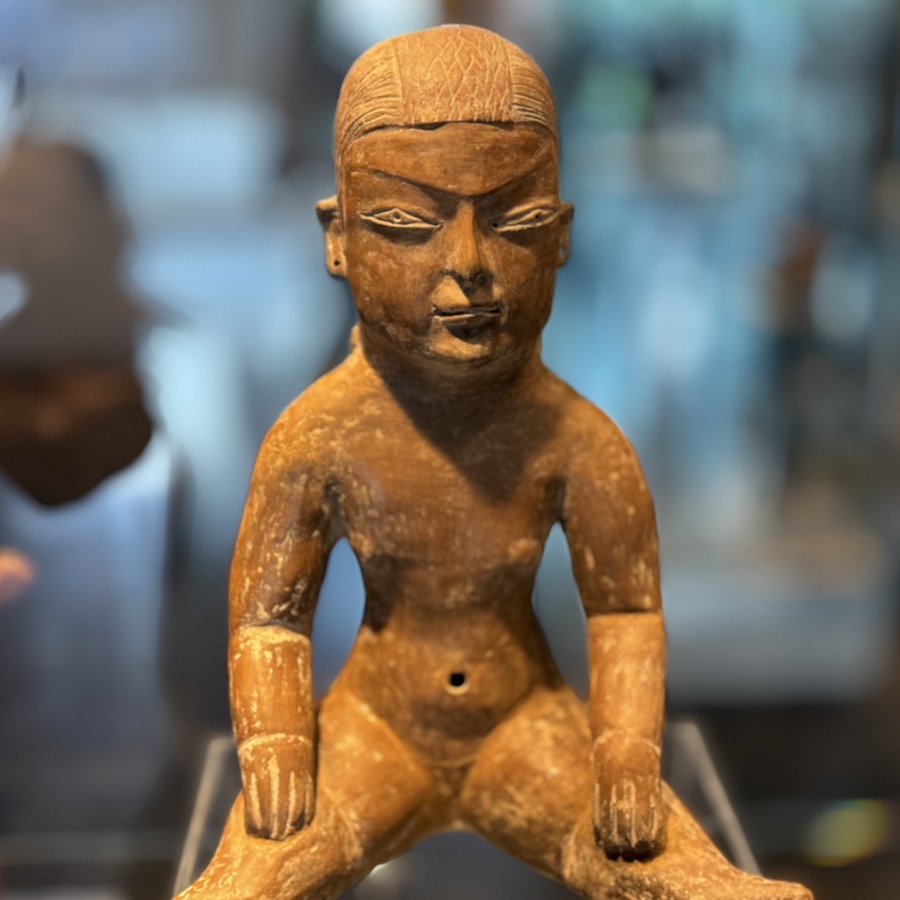
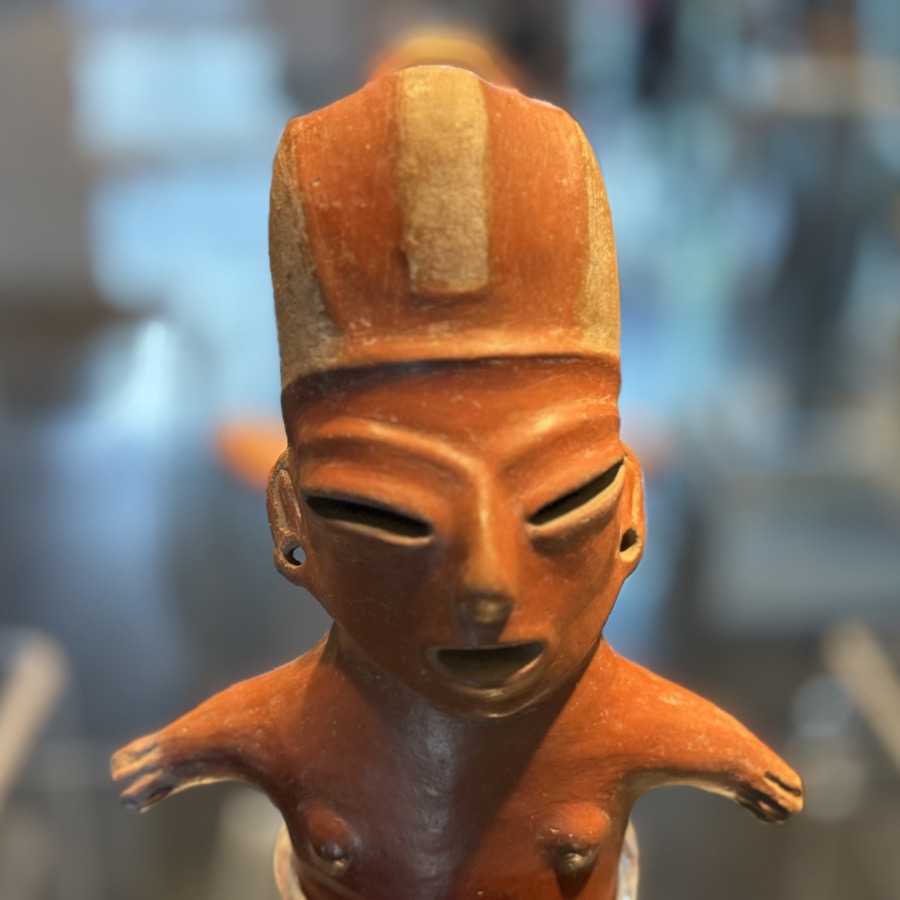
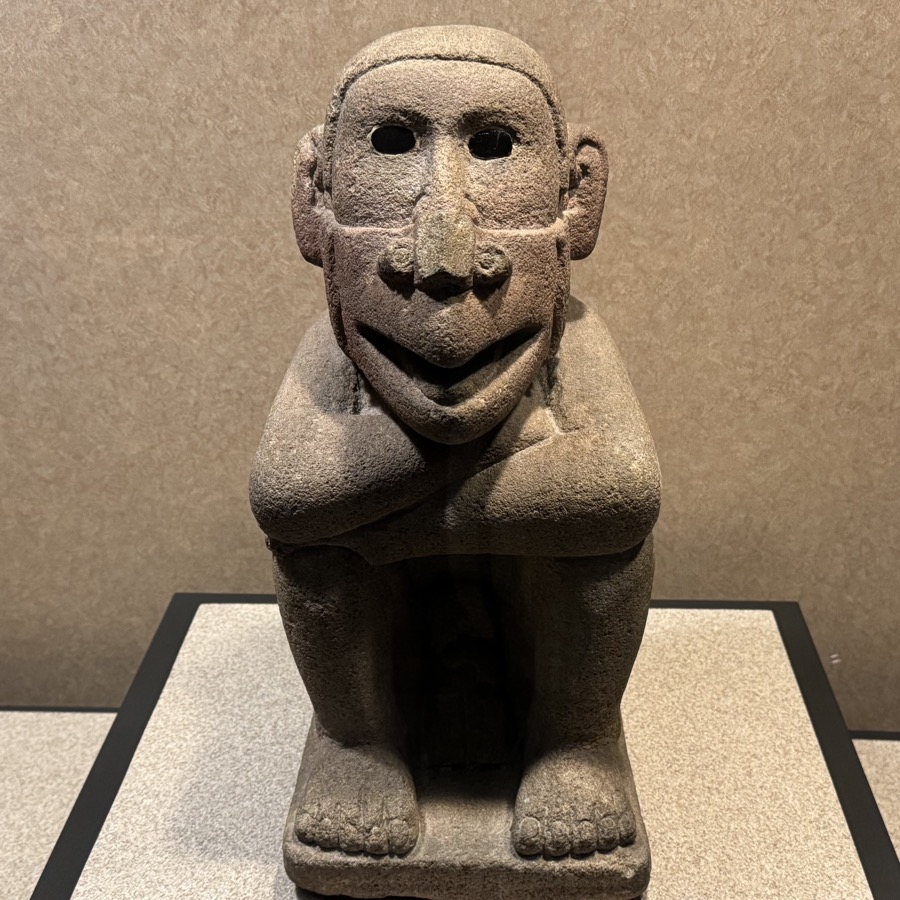
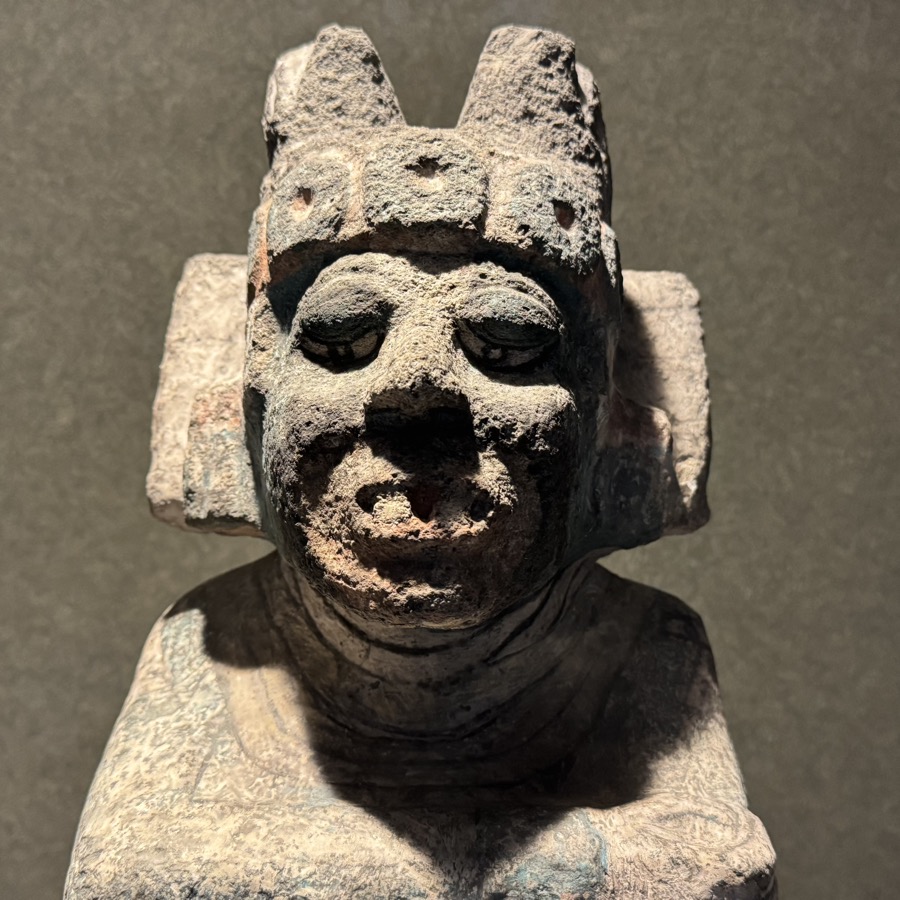
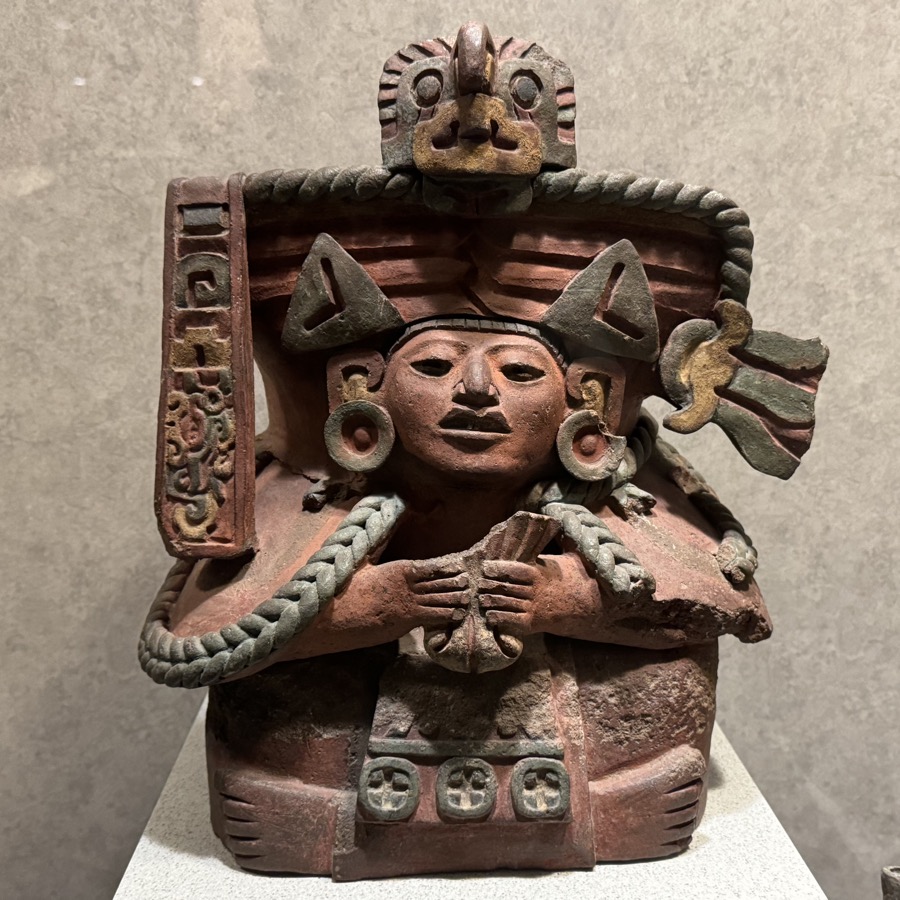
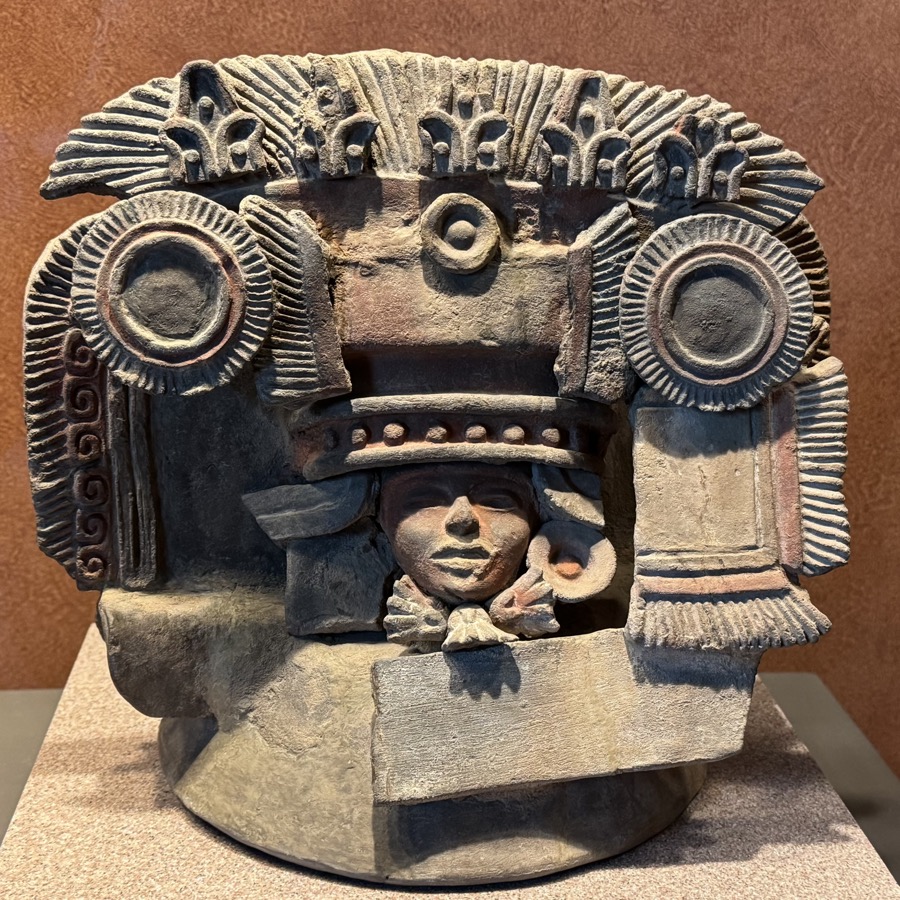
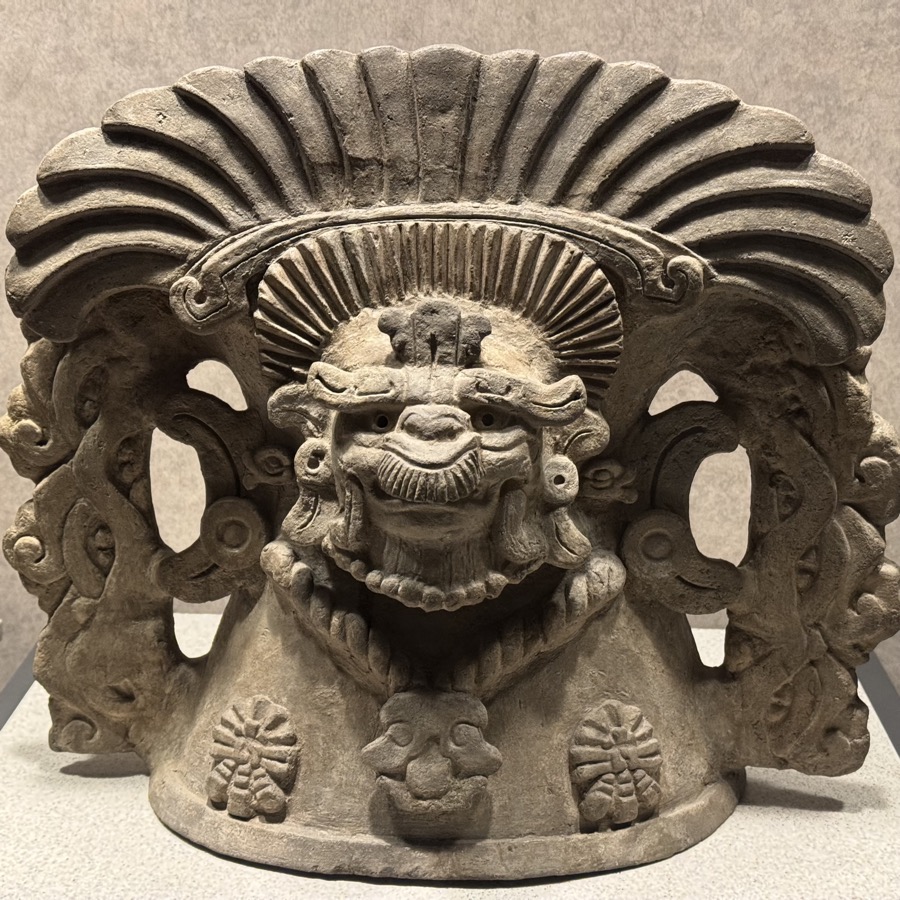
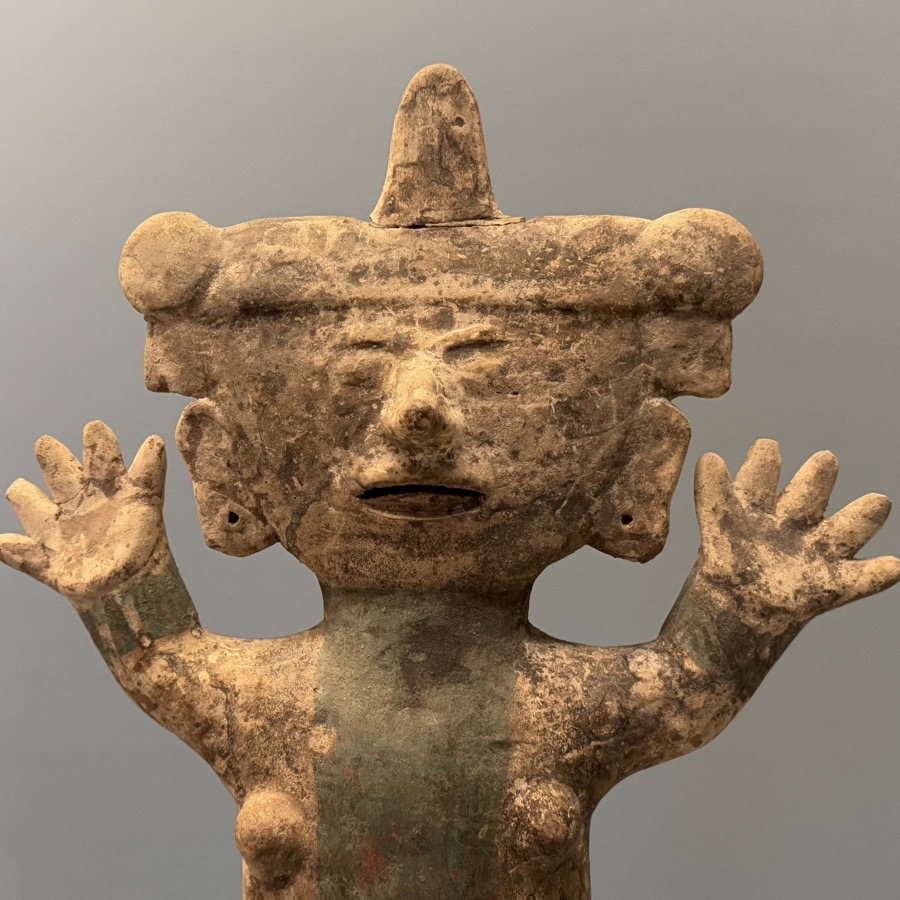
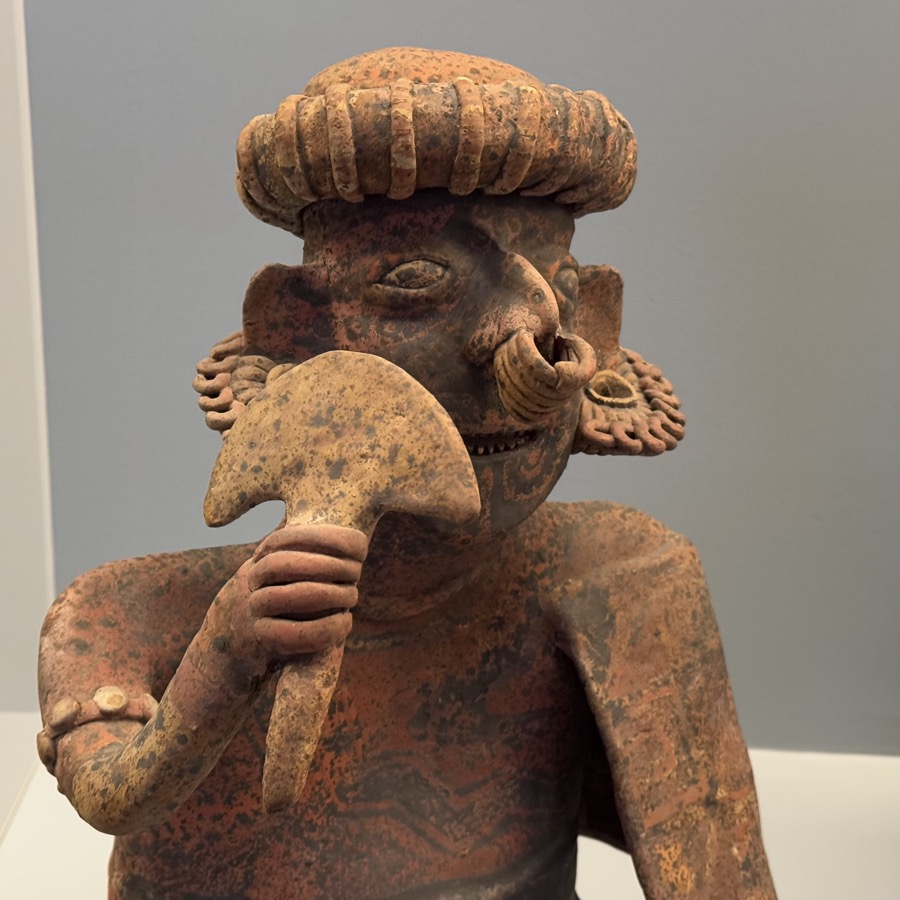
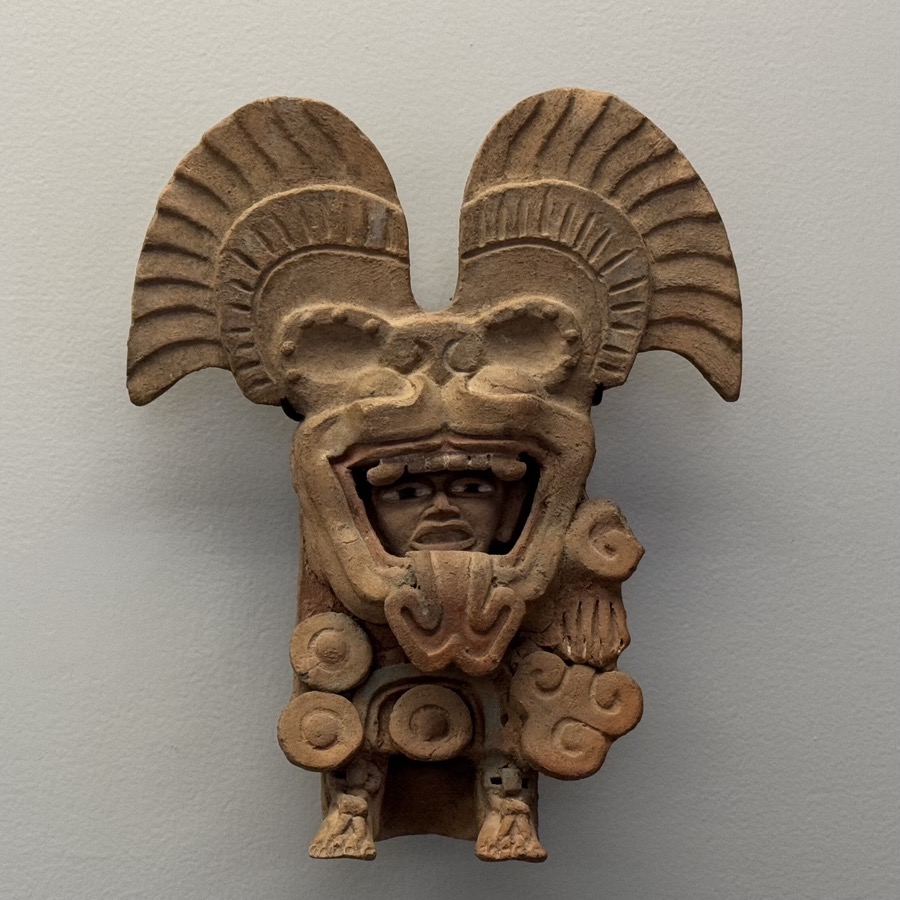
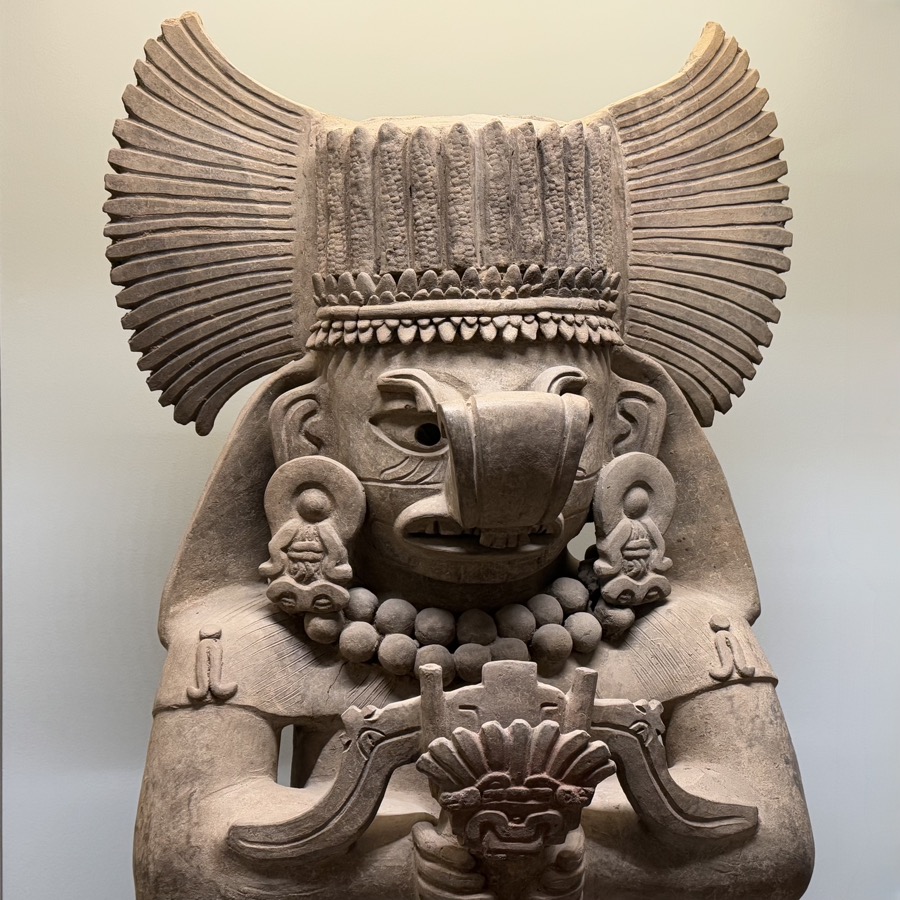
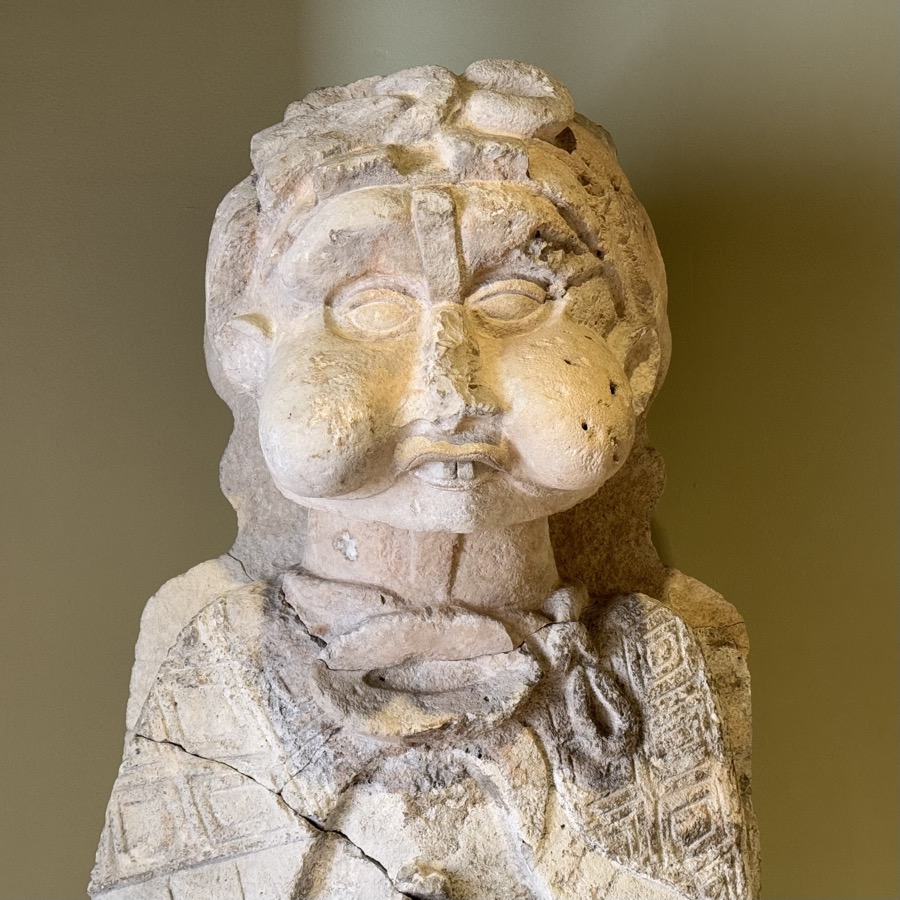
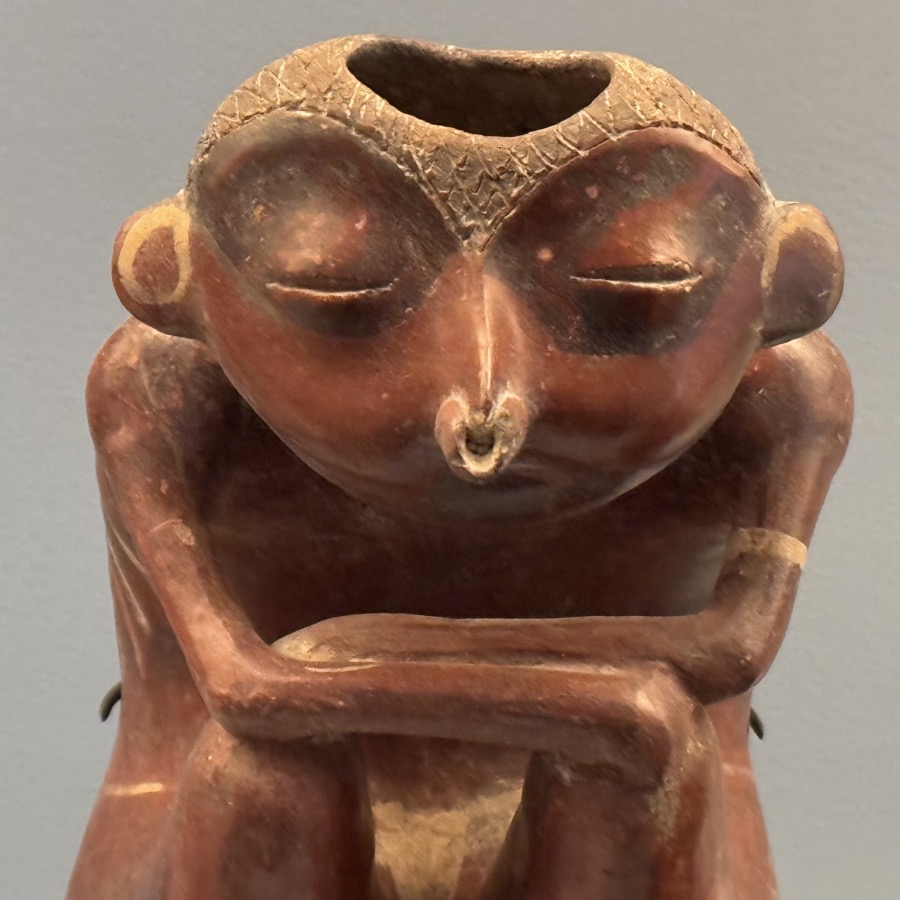
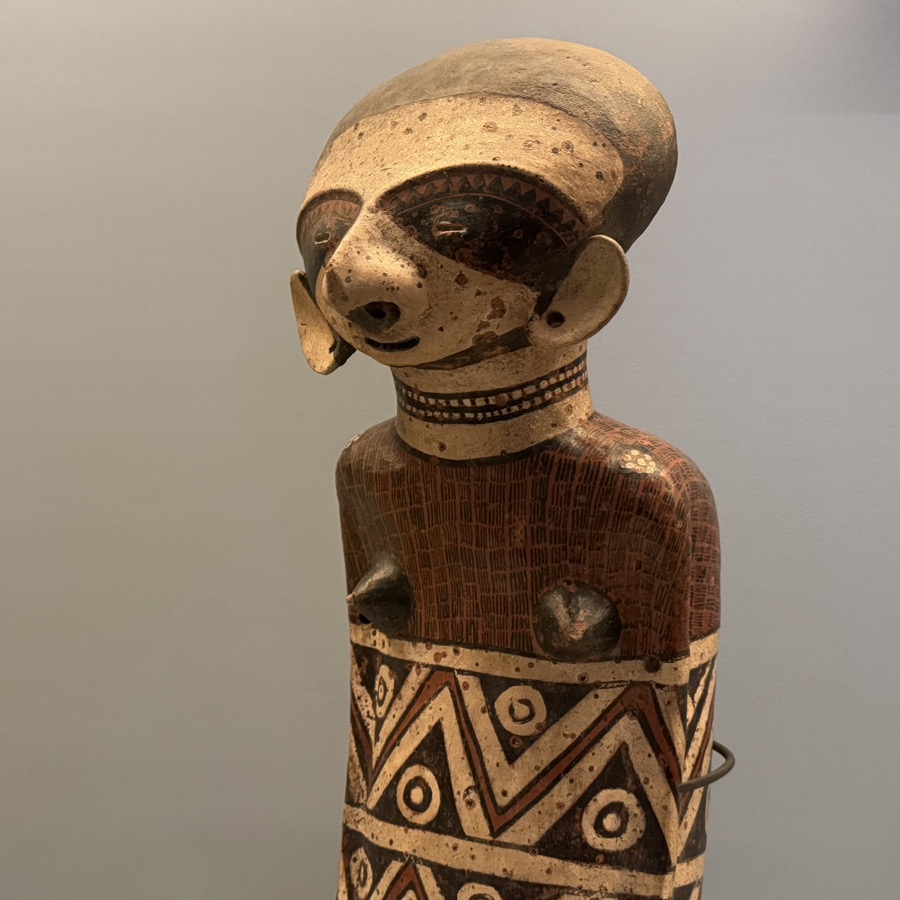
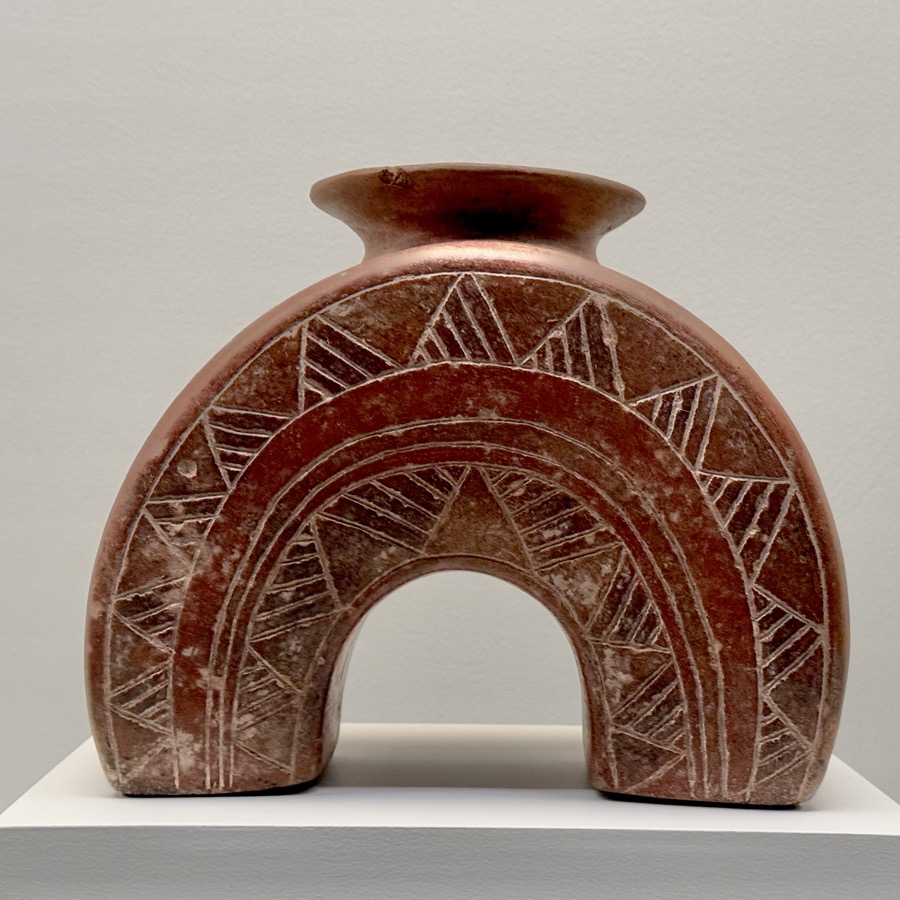
We spent almost all day at Museo Nacional de Antropología and it was worth it. The museum covers a lot of ground from Olmecs and Maya to Aztecs. There are many interesting artifacts and some models (reconstructions) from different cultures. After one-day and rather fast visit it all got mixed up in our heads, as we focused more on overall picture rather than discerning historical and cultural details. We have more than 600 photos to sort through. We took Uber to get there faster in the morning and stayed until it closed. We watched dancers and voladores performing in front of the museum, and then walked into Polanco (upscale neighbourhood) checking out restaurants (on expensive side). We chose Taquería El Califa (recommended) for dinner (Gaona, Taco de Pastor, Costra Gaona, Quesadilla Champiñones Portobello, Frijoles de la Olla). Cafeteria-style, fast service, good food, not expensive. Uber home.
Museo Nacional de Antropología
Sala Mexica/Aztec
Sala Costa del Golfo
Olmecs
Street performance
Voladores
«« Scroll to view more photos »»
«« Scroll to view more photos »»
Day 8.
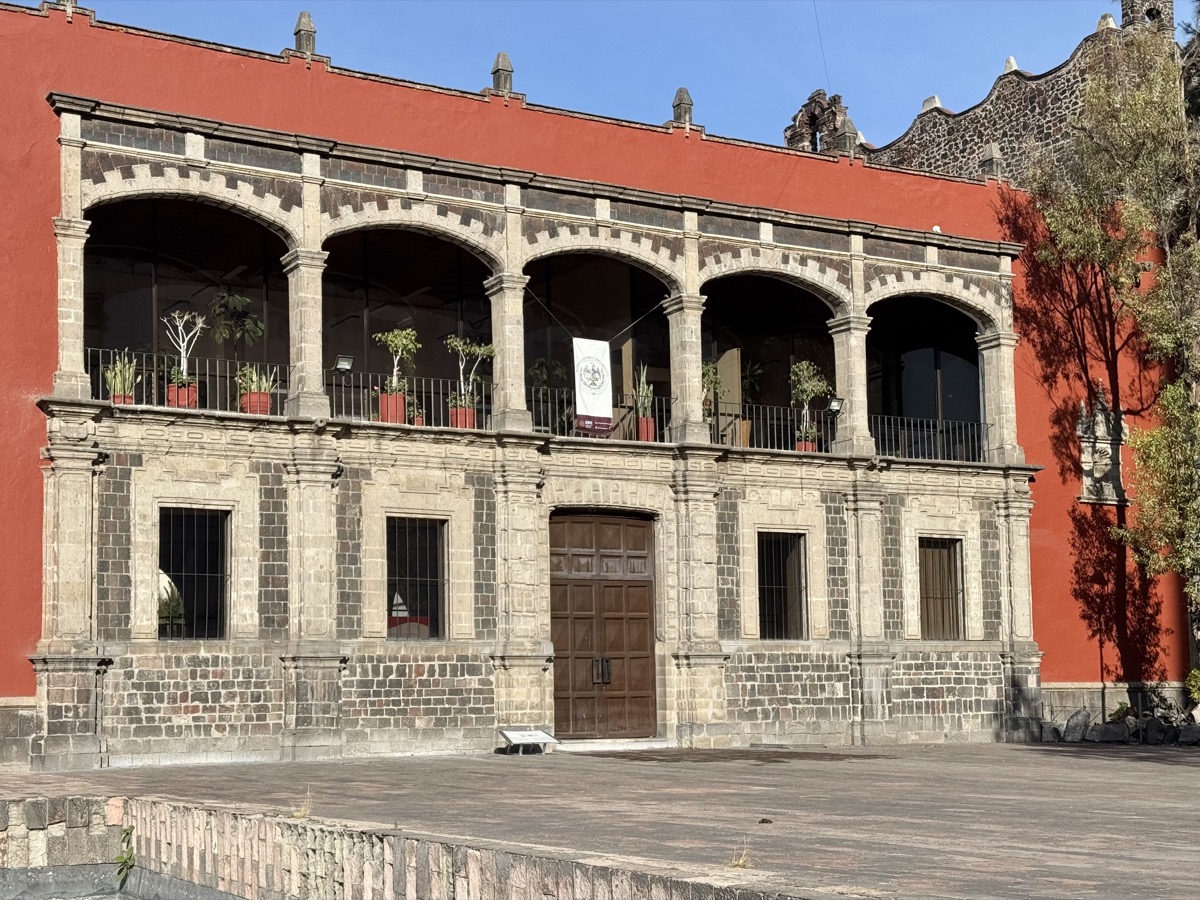
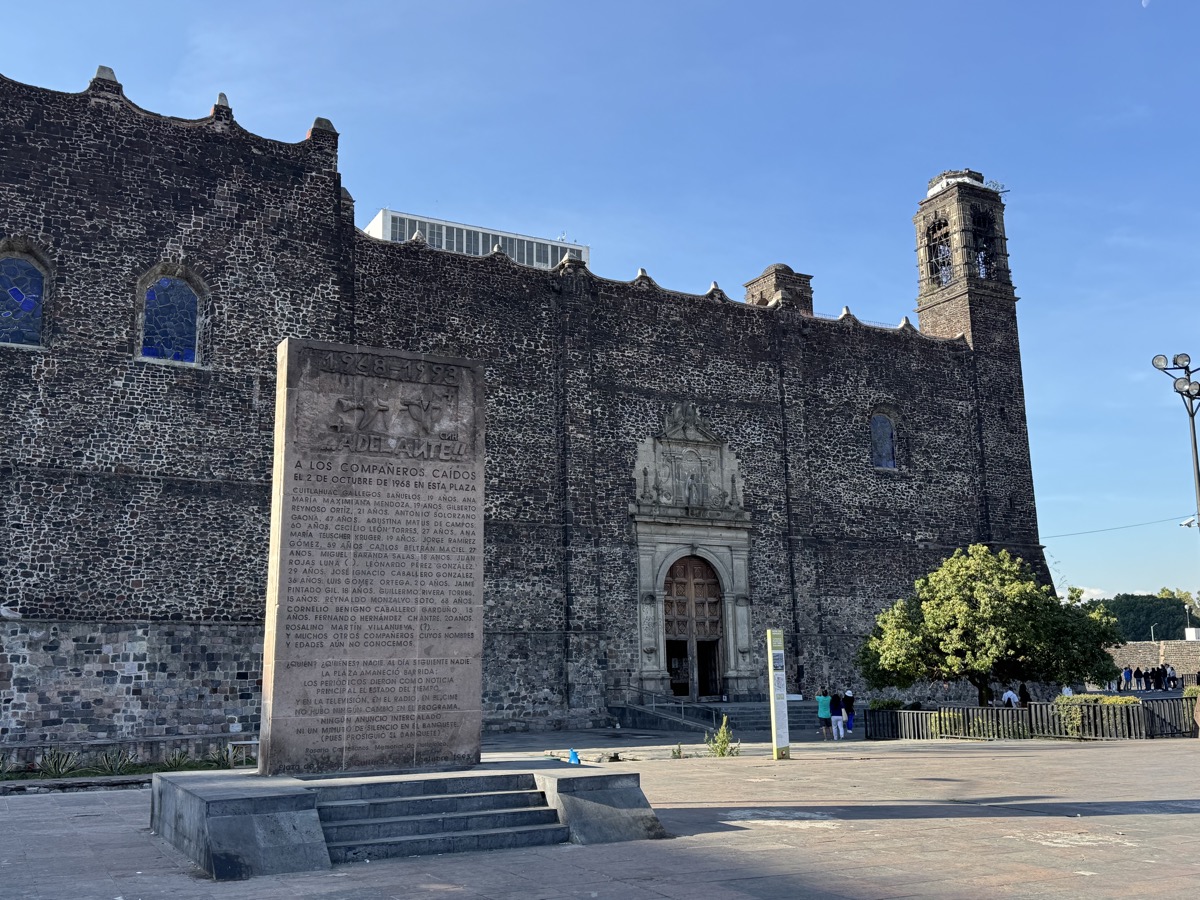
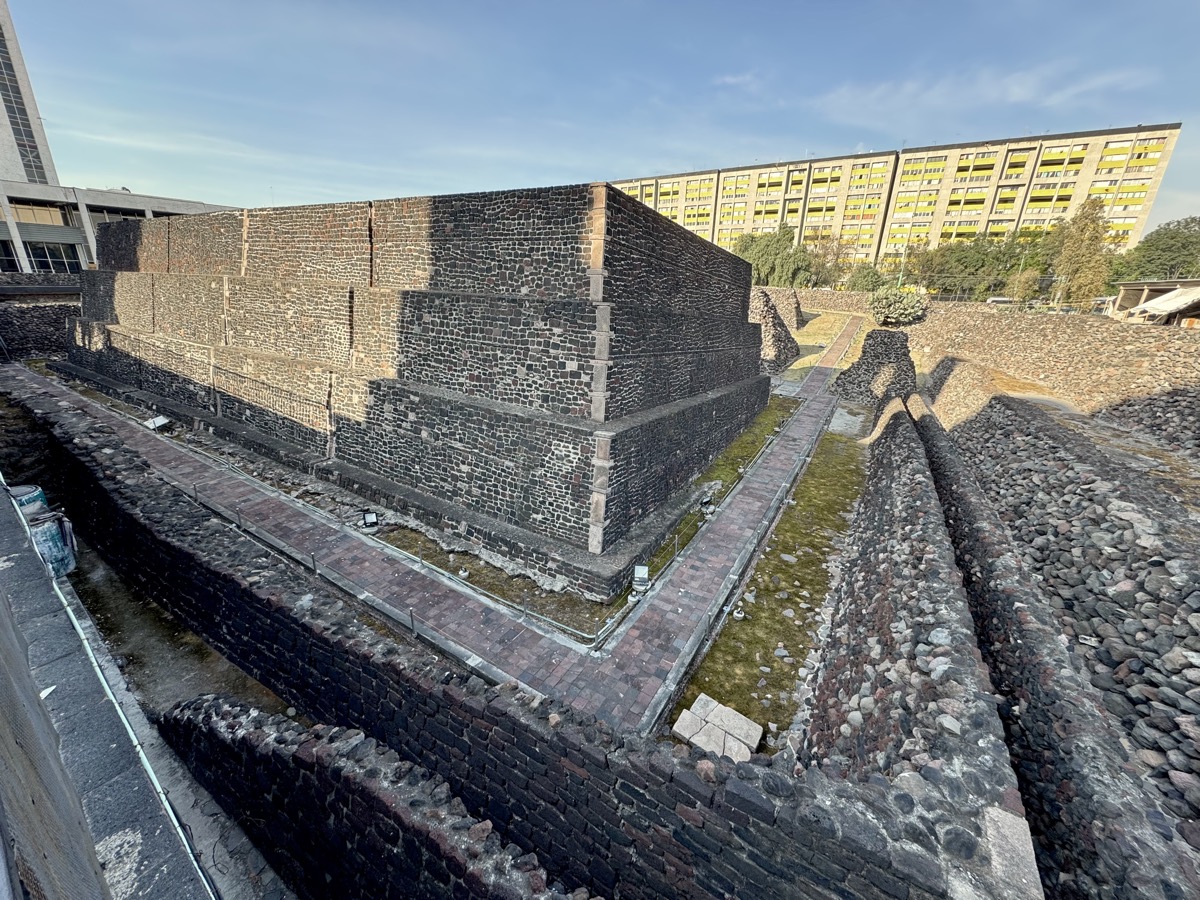
Mexico City and Teotihuacan. We decided to go on organized tour with Amigo Tours (recommended), so we could stop at two other sites on the way to pyramids. Uber to group meeting point at Miga Cafe . First was Tlatelolco – second Aztec city in central valley of Mexico. We looked at the ruins (similar to Templo Major), 16th century church (built with temple stones) and the earliest college in the Americas (Colegio de Santa Cruz) from large Plaza de las Tres Culturas (pre-Colombian, colonial and modern Mexican). Tragic events took place here not only during conquest: in 1968 student protests were suppressed in military massacre.
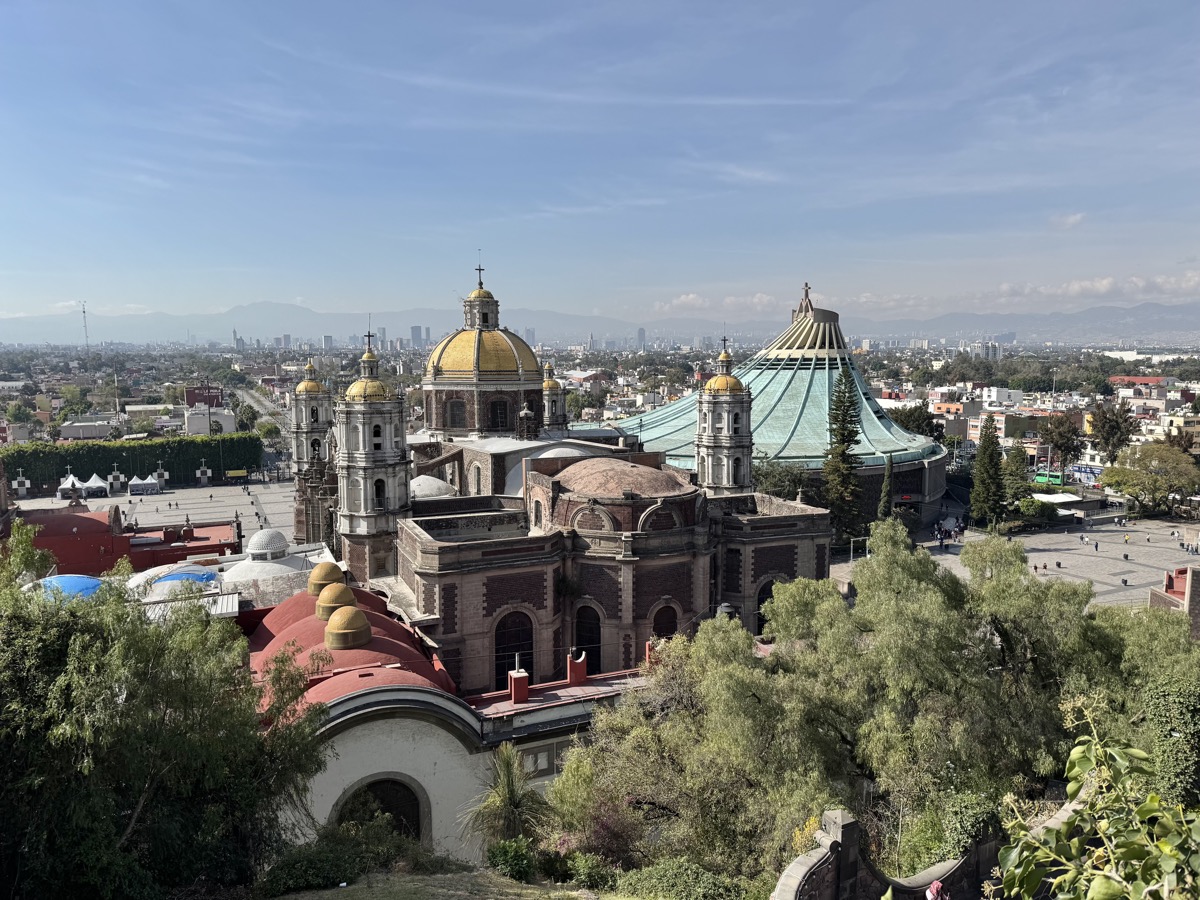
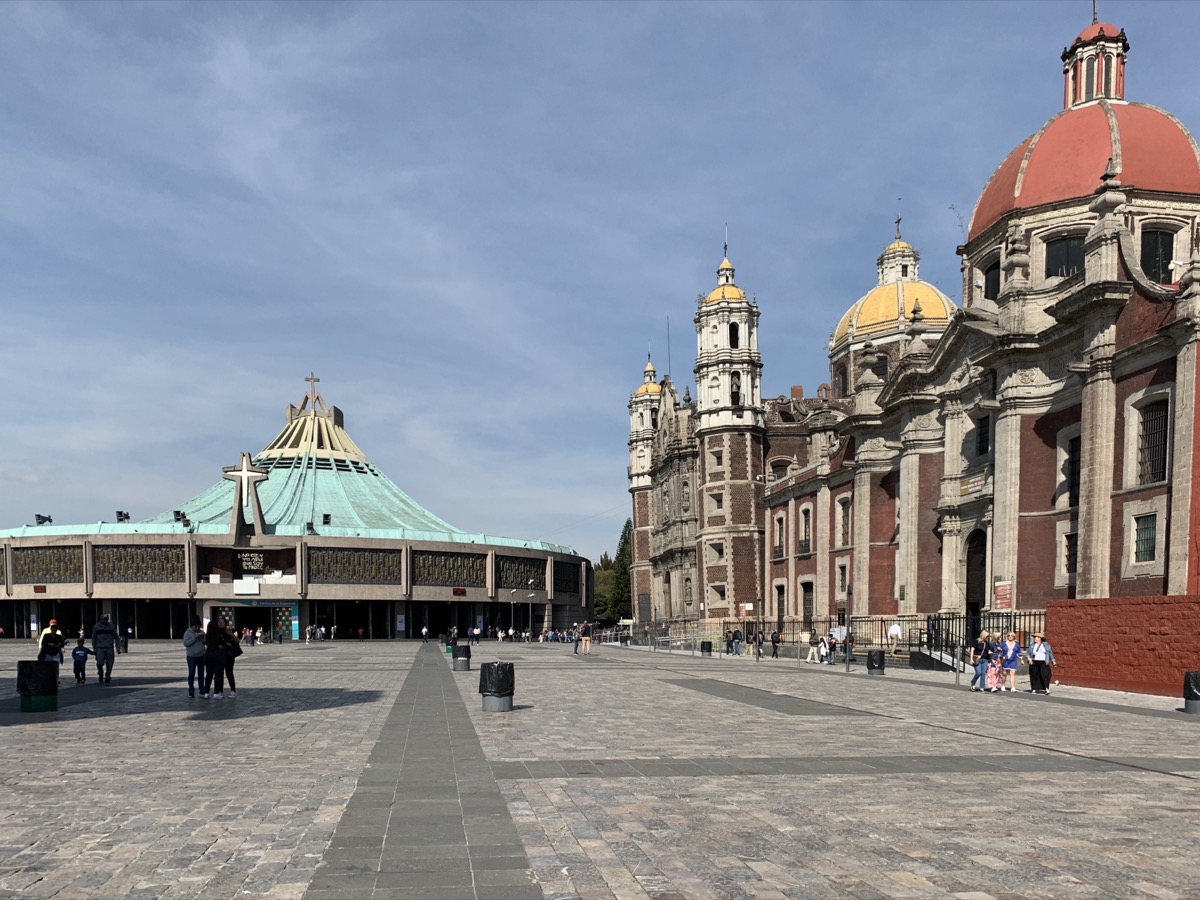
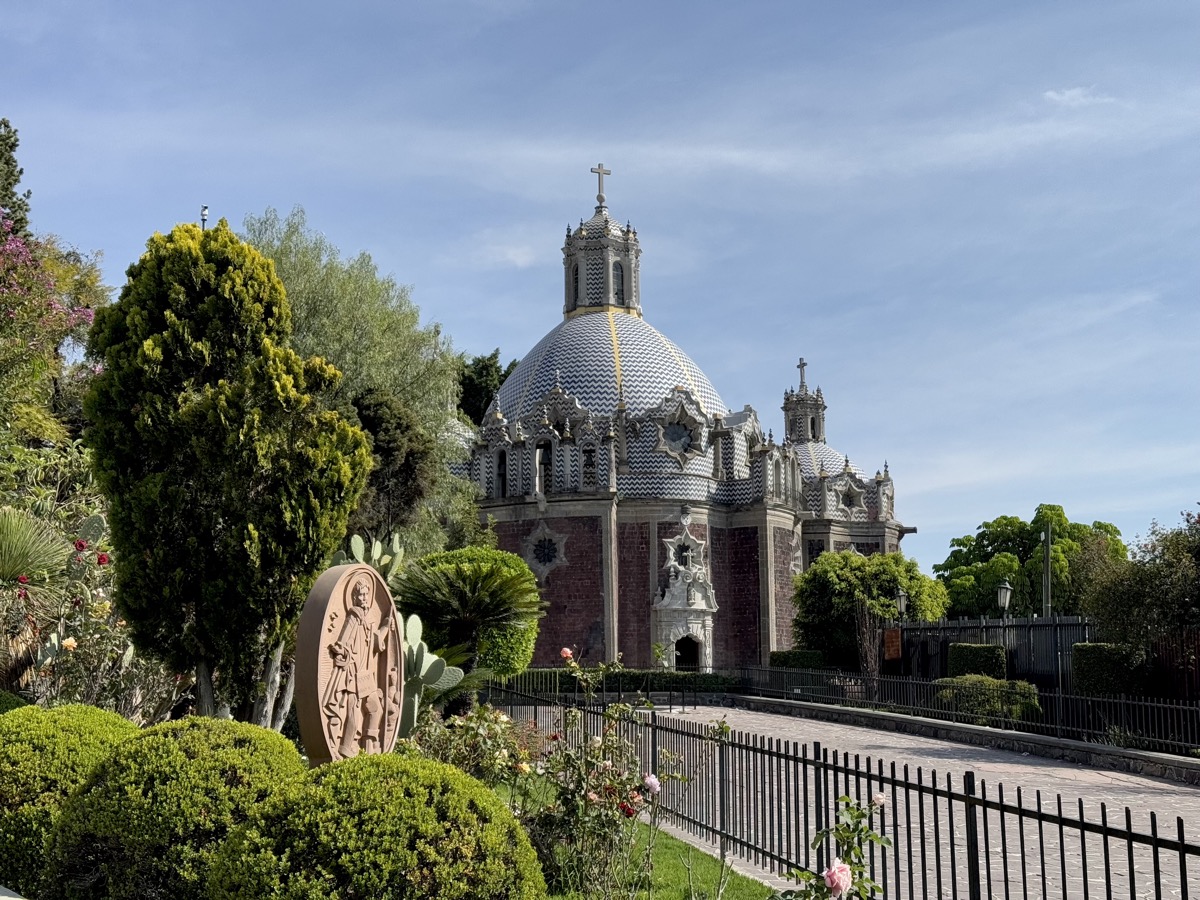
Next we went to Basílica de Santa María de Guadalupe, major religious and pilgrimage site in Mexico where Virgin Mary is believed to appear to indigenous peasant Juan Diego. It is a large complex with old and modern basilicas, several chapels (mass for Polish pilgrims in one of them), including one on the hill above basilica (great views) where apparitions took place. Many religious and souvenir shops, restaurants and services outside. Not crowded on week-day, we had good look at everything and nice stroll over and on both sides of the hill.
Colegio de Santa Cruz
Iglesia Santiago Tlatelolco
Tlatelolco
Basílica de Santa María de Guadalupe
…
Capilla del Pocito
Next was obligatory touristy stop at souvenir market, but it included good explanations (weaving, pottery, stonework) and tasting drinks made from agave (pulque, mezcal and tequila), and then lunch. We had to wait 45 min for our (essentially pre-cooked) food – way too long.
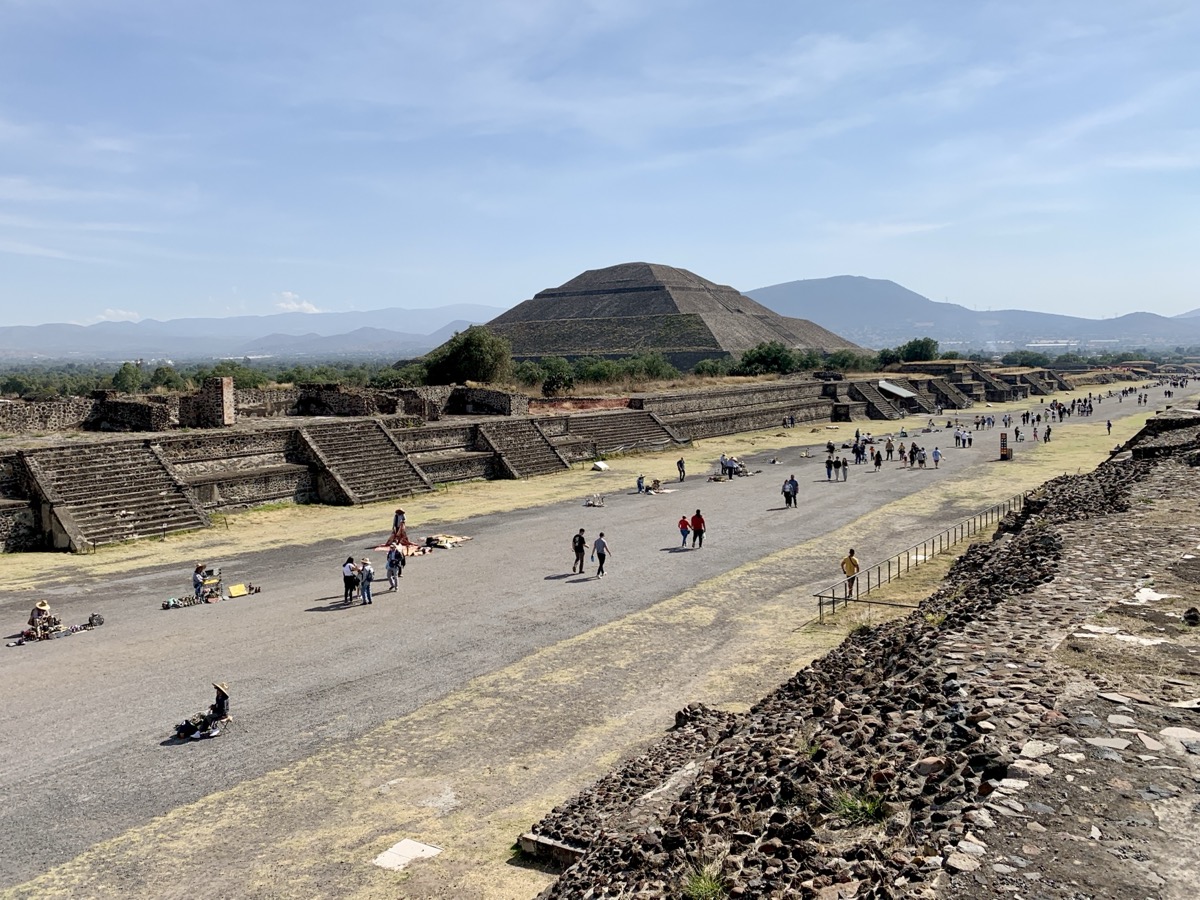
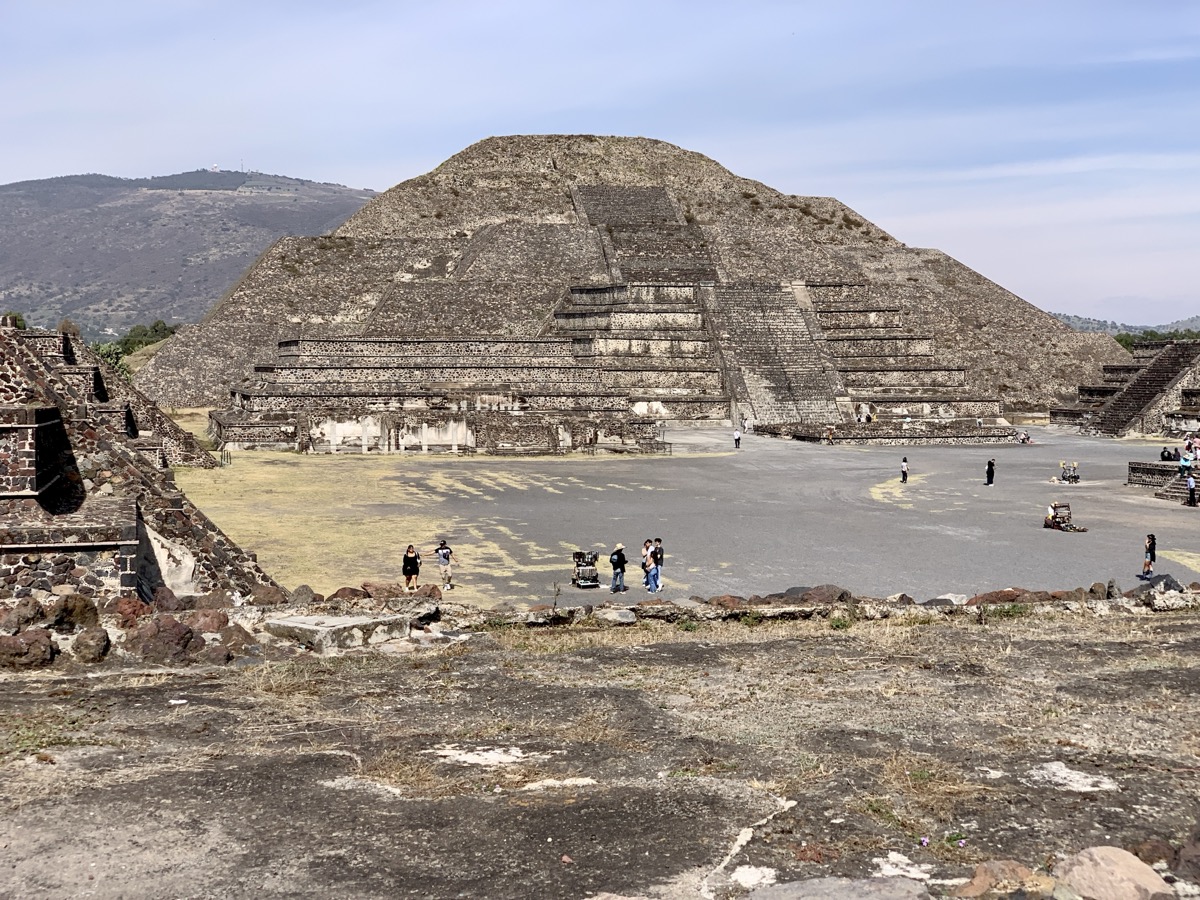
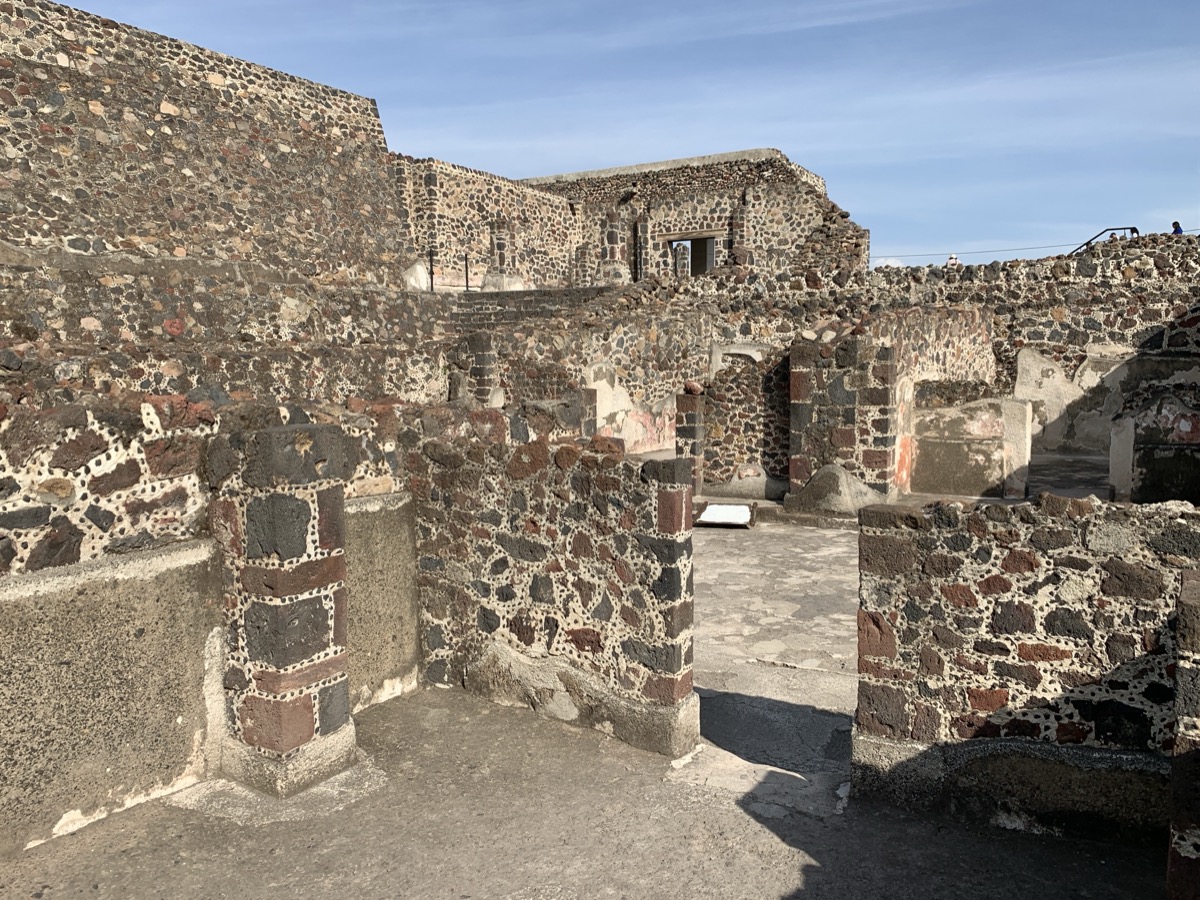
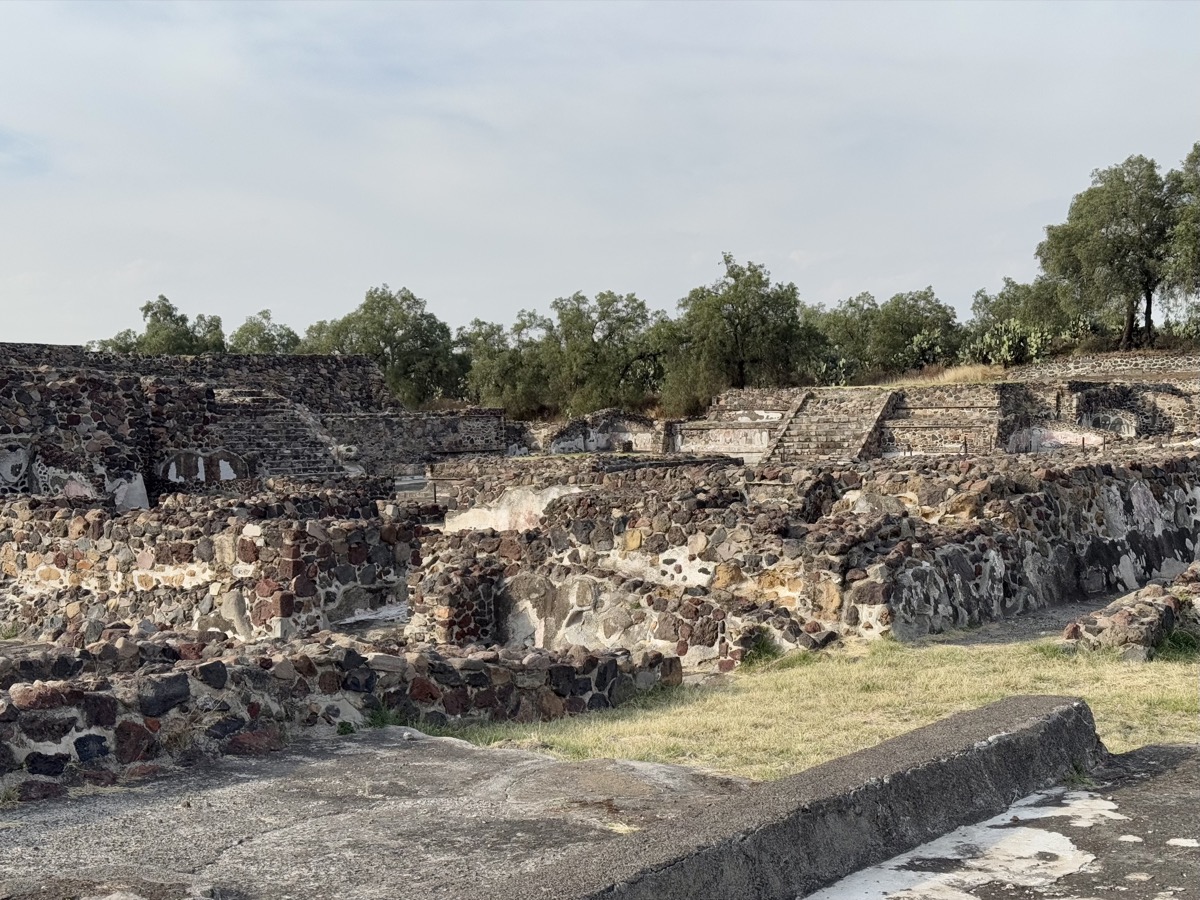
Finally we got to Teotihuacan (Zona Arqueológica). Huge ancient city was long abandoned when Aztec arrived. They gave it its name (place where gods were born) and called pyramids of Sun and Moon, but the civilization that built the city 2000 years ago remains unknown and it was discovered that rain gods were worshipped here, not Sun and Moon. City grew and flourished thanks to control and processing of obsidian.
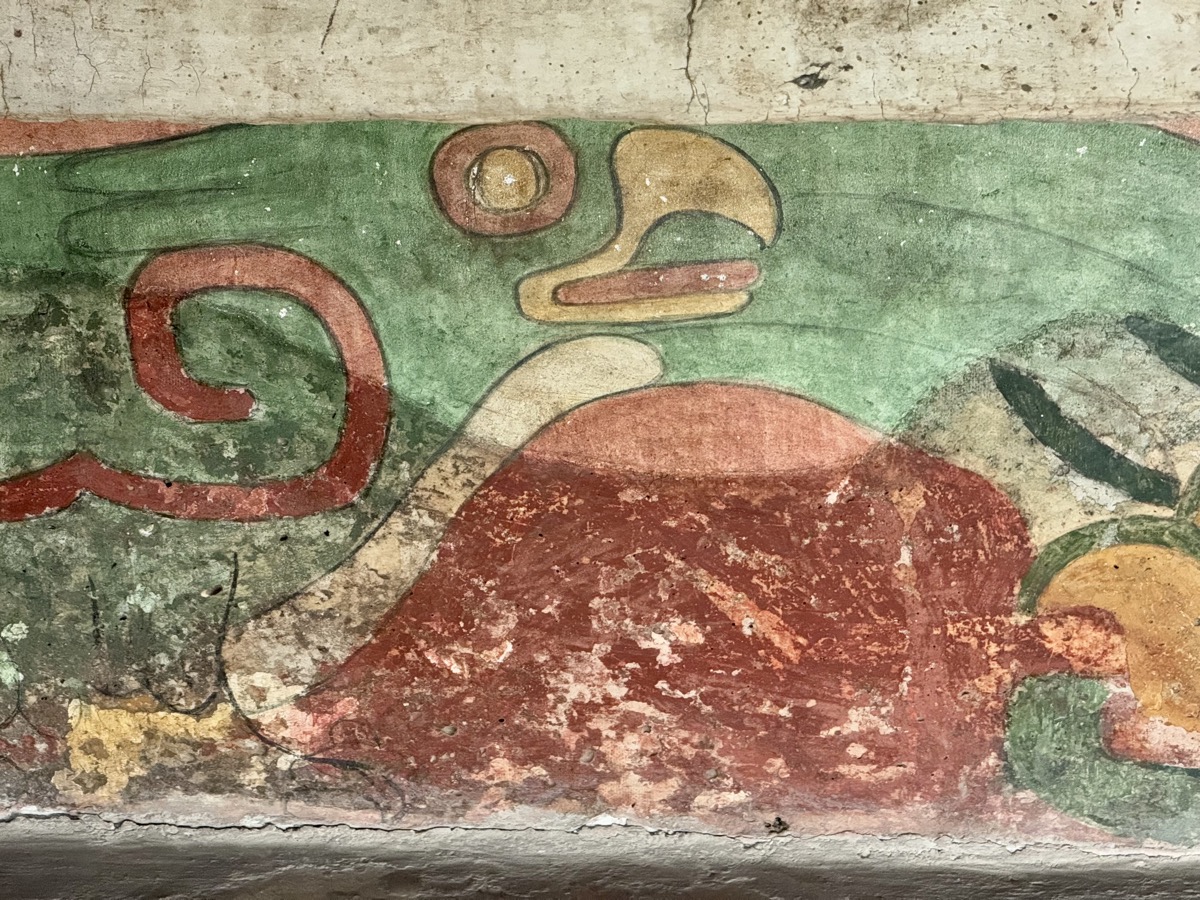
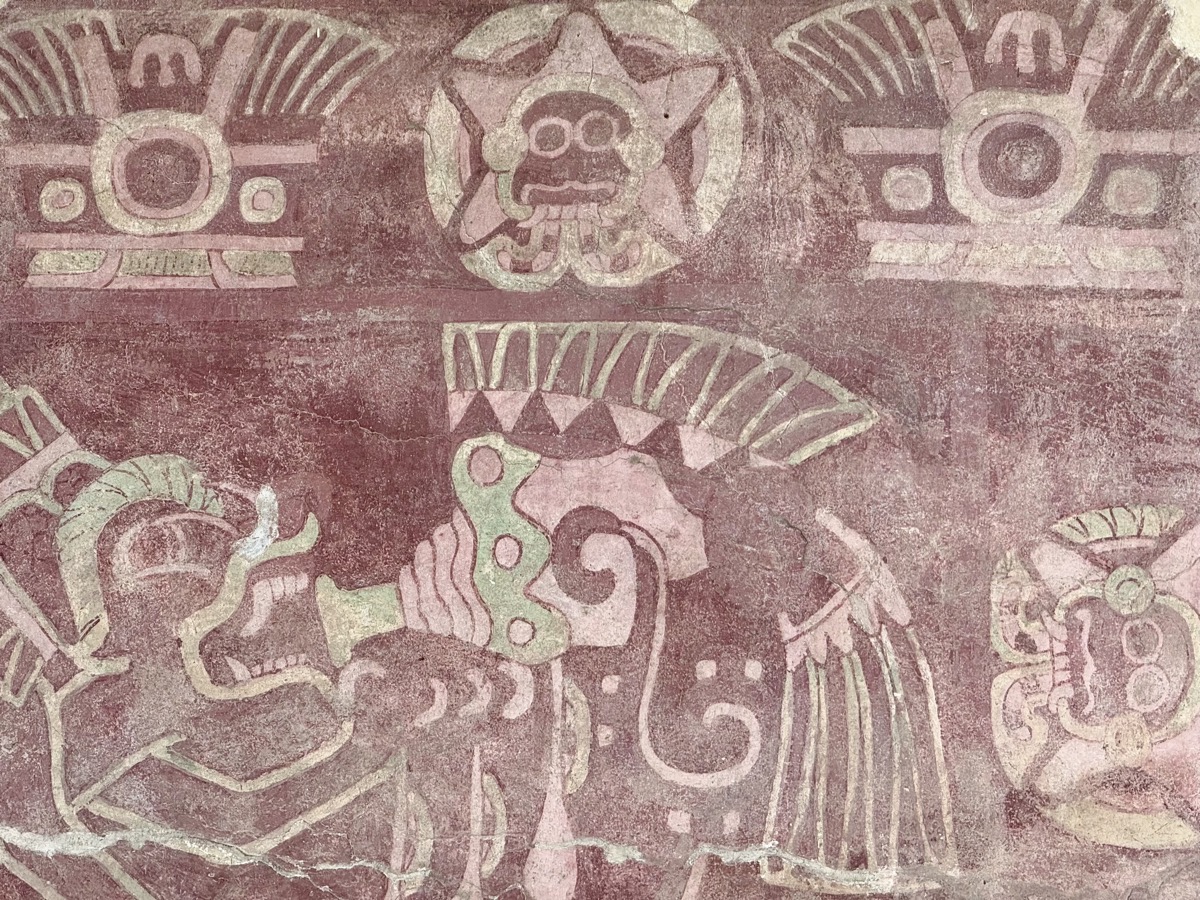
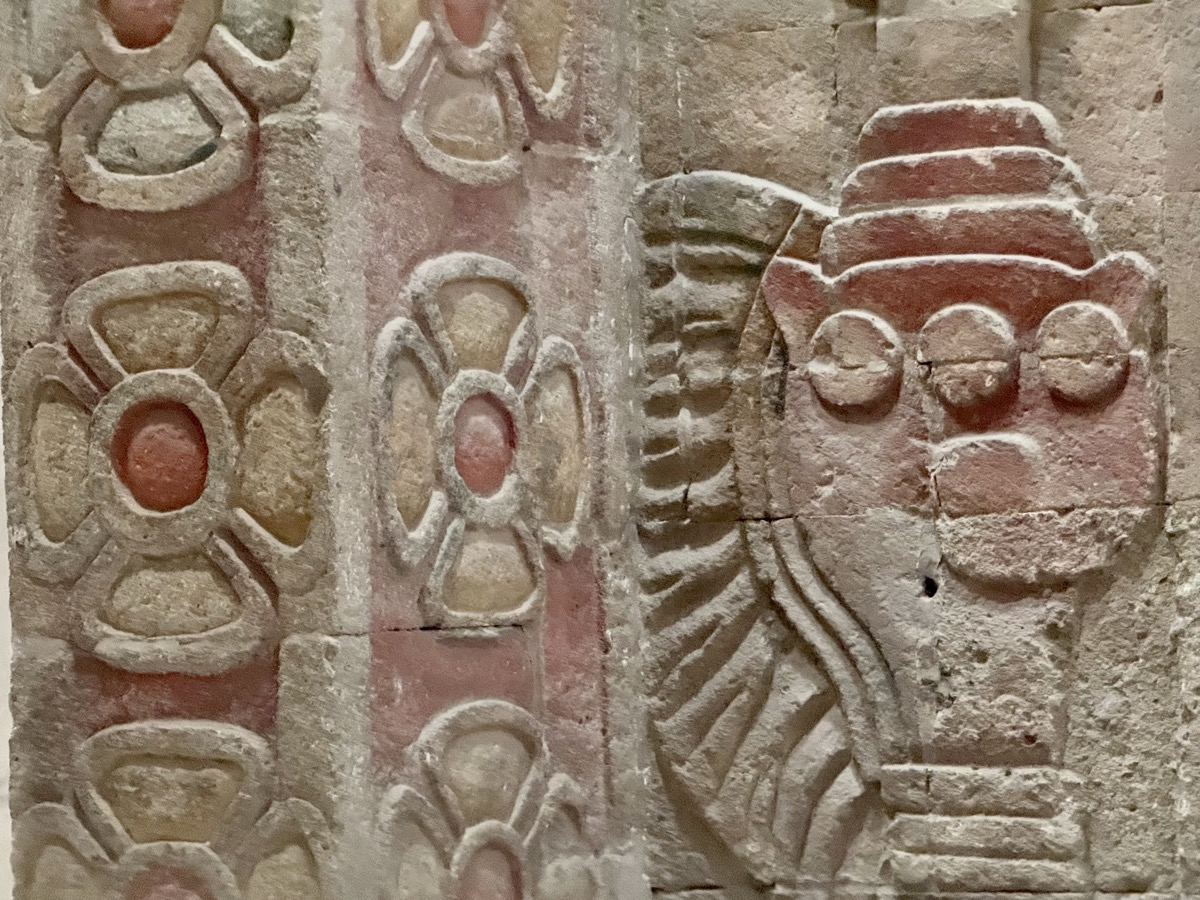
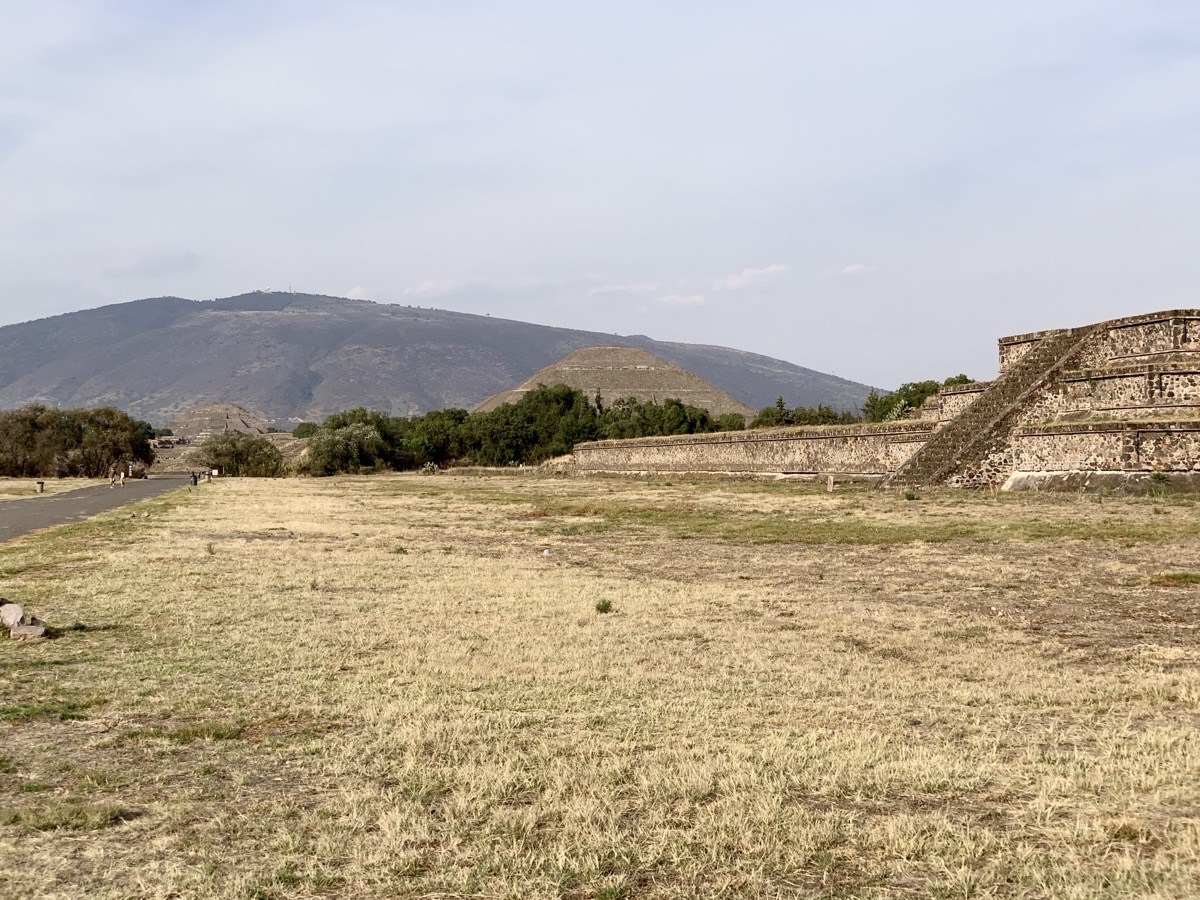
We started exploration in Palacio de Quetzalpapálotl with some well preserved frescos – interesting and quite rare in ruined ancient cities. Next was impressive Moon Pyramid at the beginning of Avenue of the Dead. The guide gave very informative and engaging explanations, but a little lengthy. We briefly stopped at the largest Sun Pyramid where the tour ended (2 hours at archaeological site). We decided to stay an hour longer and return by bus on our own. Unfortunately by the time we got to Ciudadela and Templo de Quetzalcóatl the temple was already shutting down and we were not allowed to visit it up close. Still it was an interesting walk and we saw areas not included in the tour. Bus back to Indios Verde and Metro 3 to Balderas. Stopped at small Panadería Chapultepec (rolls and more pastries) on the way home.
Calzada de los Muertos, Pirámide del Sol
Pirámide de la Luna
Pirámide del Sol
Templo de los Caracoles Emplumados
Conjunto de los Jaguares
…
Palacio de Quetzalpapálotl
Edificios superpuestos
Calzada de los Muertos, from right: Ciudadela, Pirámide del Sol, Pirámide de la Luna
Day 9.
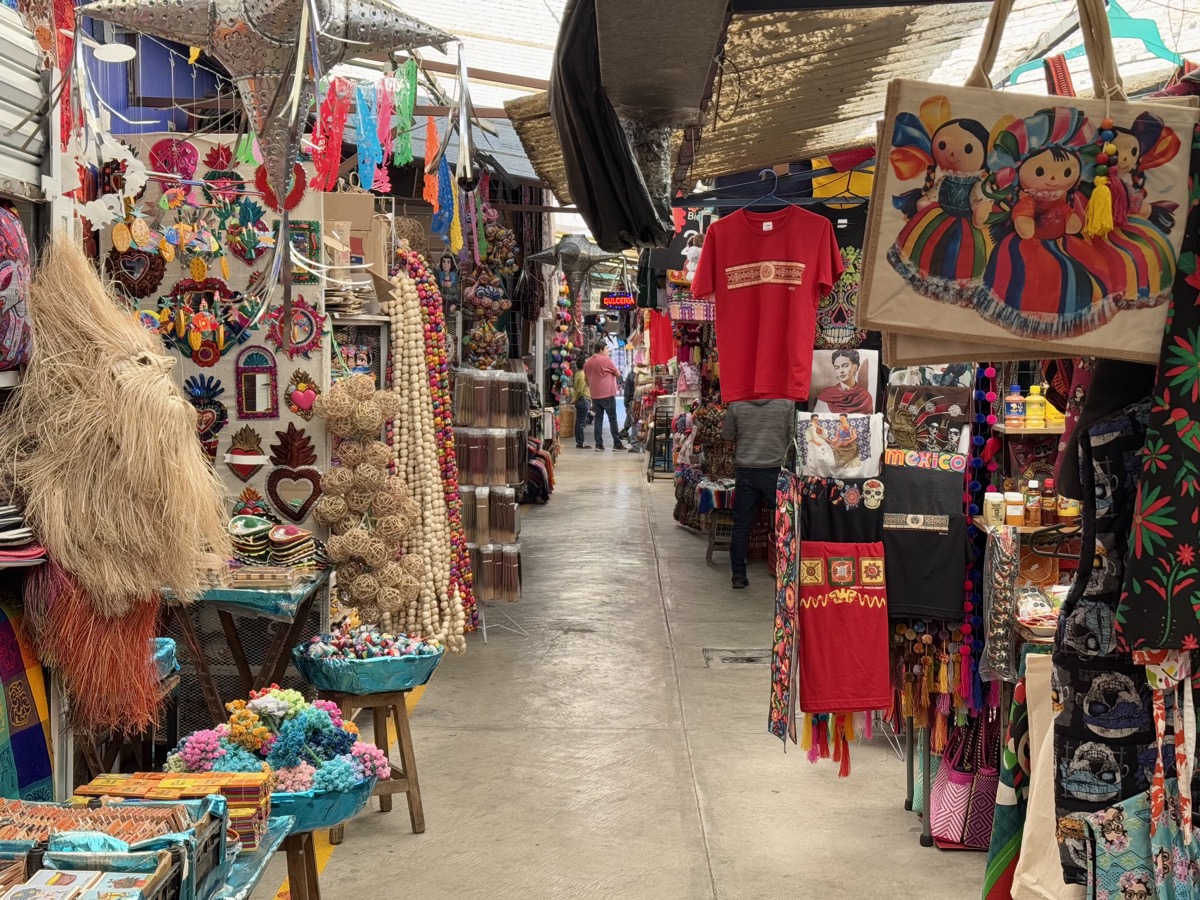
Walking day in Centro again. This time we were not in a hurry and “found” Mercado Juarez just behind closed Cuauhtémoc metro station – came back in the evening to buy food. First destination of the day: Parque de la Ciudadela and Mercado de Artesanías La Ciudadela. The art market was surprisingly peaceful. There are many stalls packed-full with souvenirs dominated by bright, vibrant colors often emanating from clusters of objects, like small animal figurines, arranged in large numbers on shelves. Again enjoyed very relaxed interaction with sellers. Bought three small souvenirs for ourselves (cat from pictured collection, of course, and two small tiles).
And time came for colorful and large mural “Dream of a Sunday Afternoon at Alameda Central Park” at dedicated Museo Mural Diego Rivera. We spent some time there reading the explanation of who is who, rather unusual way to learn history. Then real walk across Alameda Central, the oldest park in the city and apparently in Americas, with many fountains, wide marble alleys (how they walk there when it rains?) and very clean (saw several maintenance crews).
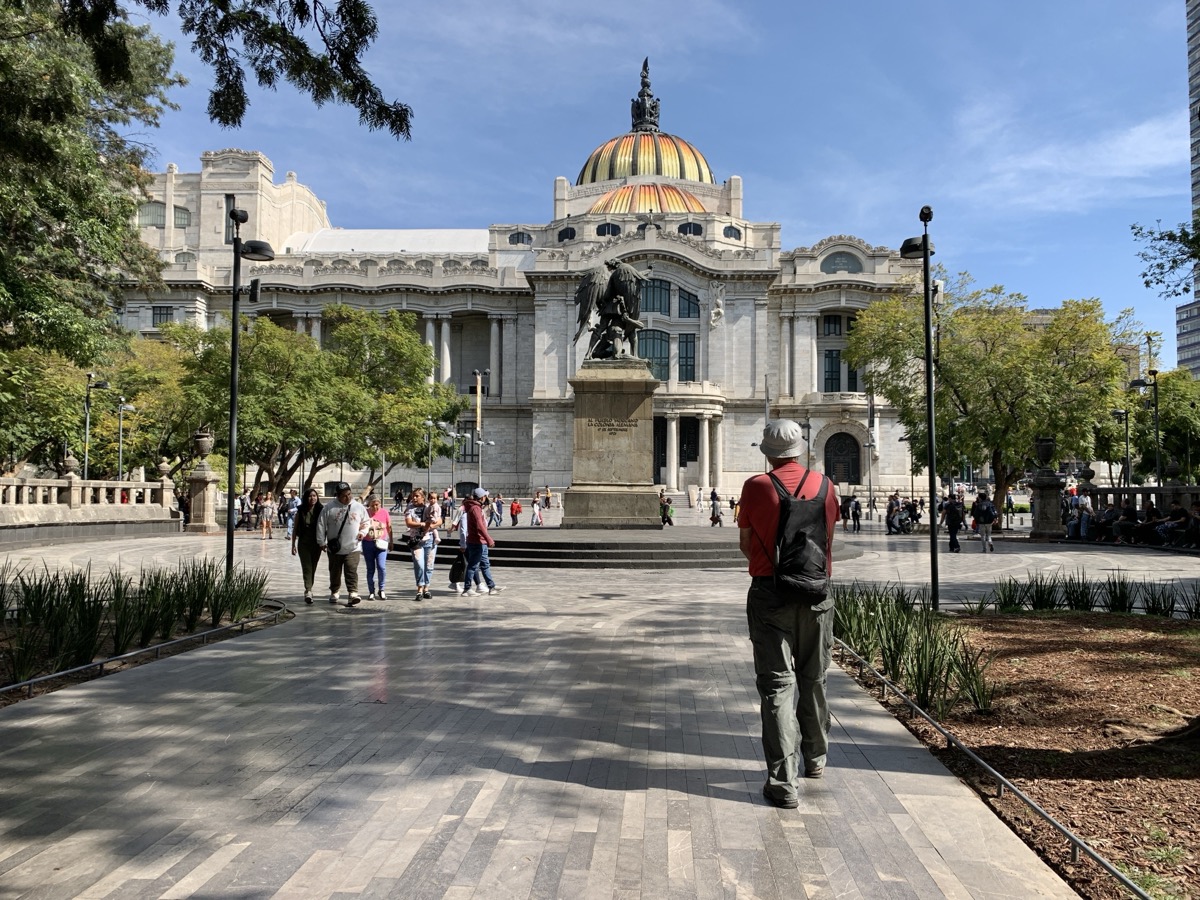
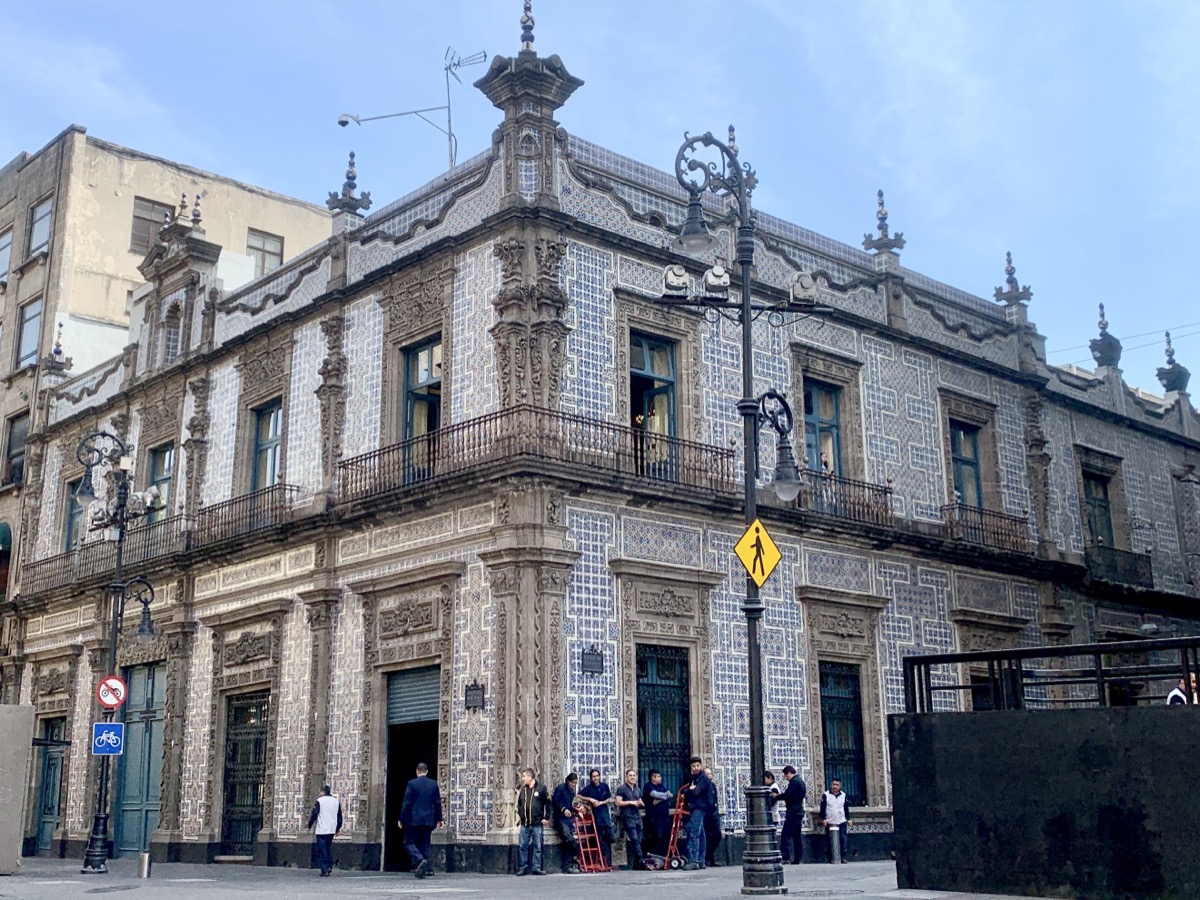
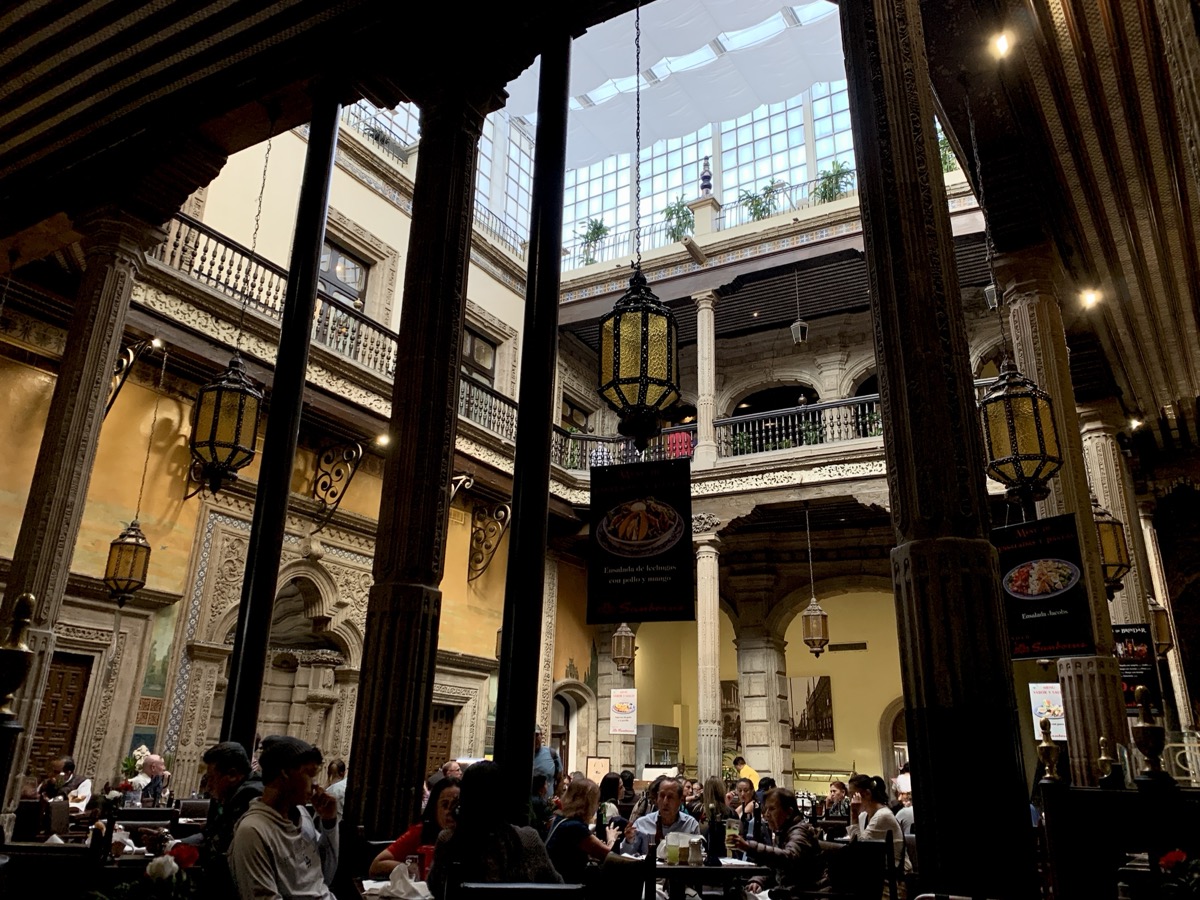
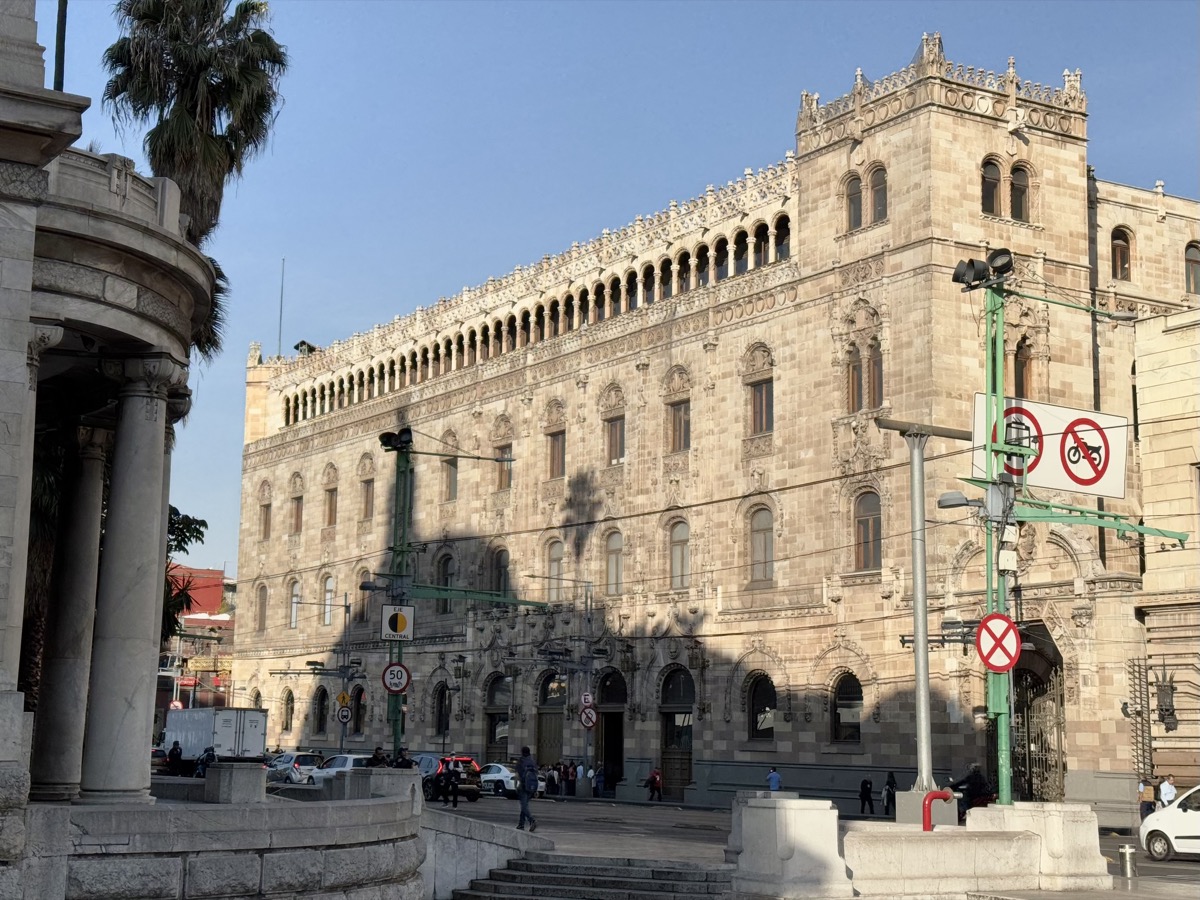
We strolled past palaces, museums, peeked into old post office and had lunch in beautiful Casa de los Azulejos (Sanborns Madero Restaurante). Looked at modernist Torre Latinoamericana and came back to Palacio de Bellas Artes – Art Nouveau outside, beautiful Art Deco inside.
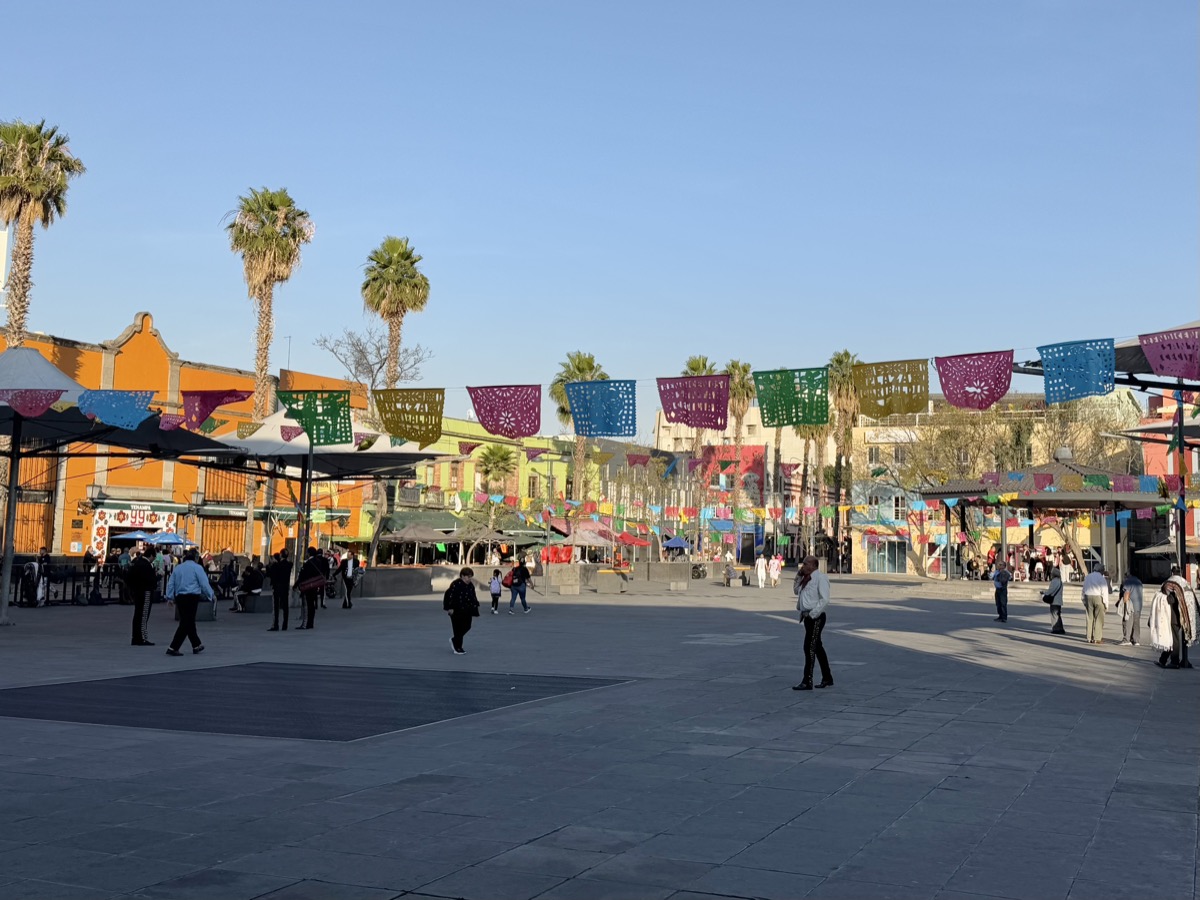
We walked to Plaza Garibaldi to end the day. A little disappointing – many mariachi bands waiting, but almost no clients and little music. We still had not figured out buses, so Uber back home. We quickly walked over to Mercado Juarez to buy bread and pastries (no time for anything else) as it closed (literally) at 7 PM – we had to find our way through stall-labyrinth to small side-gate to escape.
Mercado de Artesanías La Ciudadela
Estación Hidalgo Metrobús, Museo Mural Diego Rivera
Palacio de Bellas Artes
Casa de los Azulejos
Sanborns Madero Restaurante
J.C. Orozco: Omnisciencia
Art Deco Palacio de Bellas Artes
Palacio Postal
Plaza Garibaldi
Day 10.
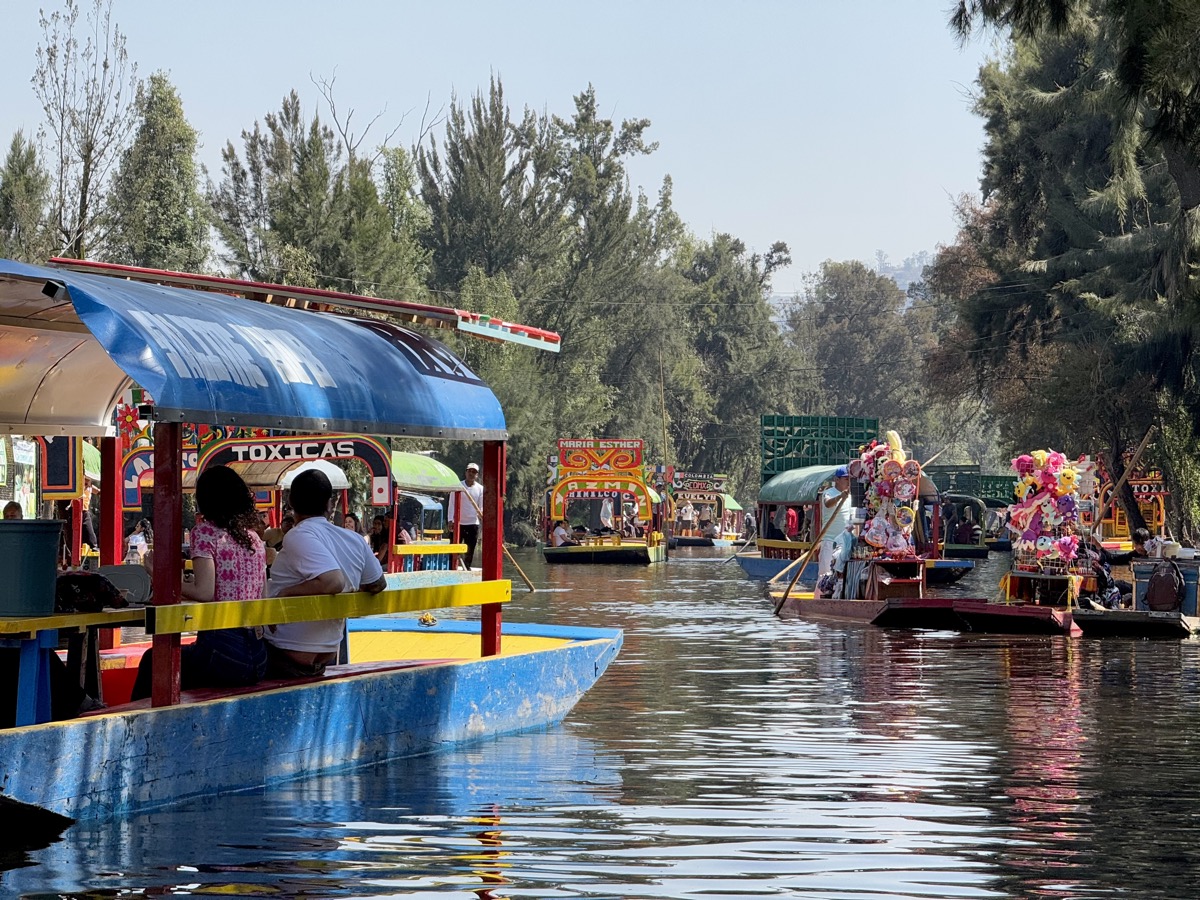
Relaxing day in southern neighborhoods and many forms of transport. Metrobus 3 and Metro 2 to Tasqueña, then Train 1 (Tren Ligero) to Xochimilco – less polished neighborhood where we visited market, checked-out a few boat docks (trajinera embarcaderos) and settled on Salitre. Very nice 1-hour slow ride on canals from Aztec times between houses and chinampas – floating gardens and fields. Lunch: tlacoyos (thick tortillas with beans and chicken) delivered to our boat from restaurant on one of the islands.
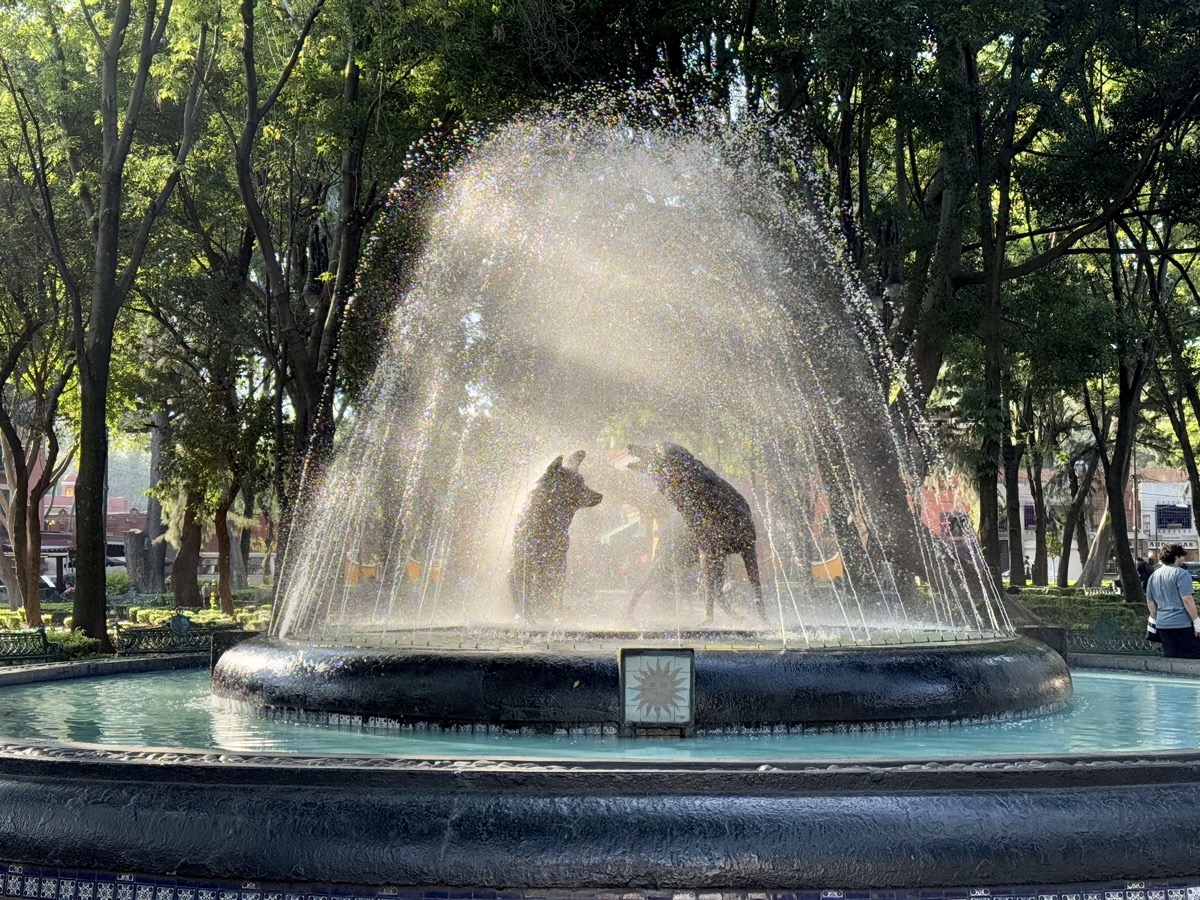
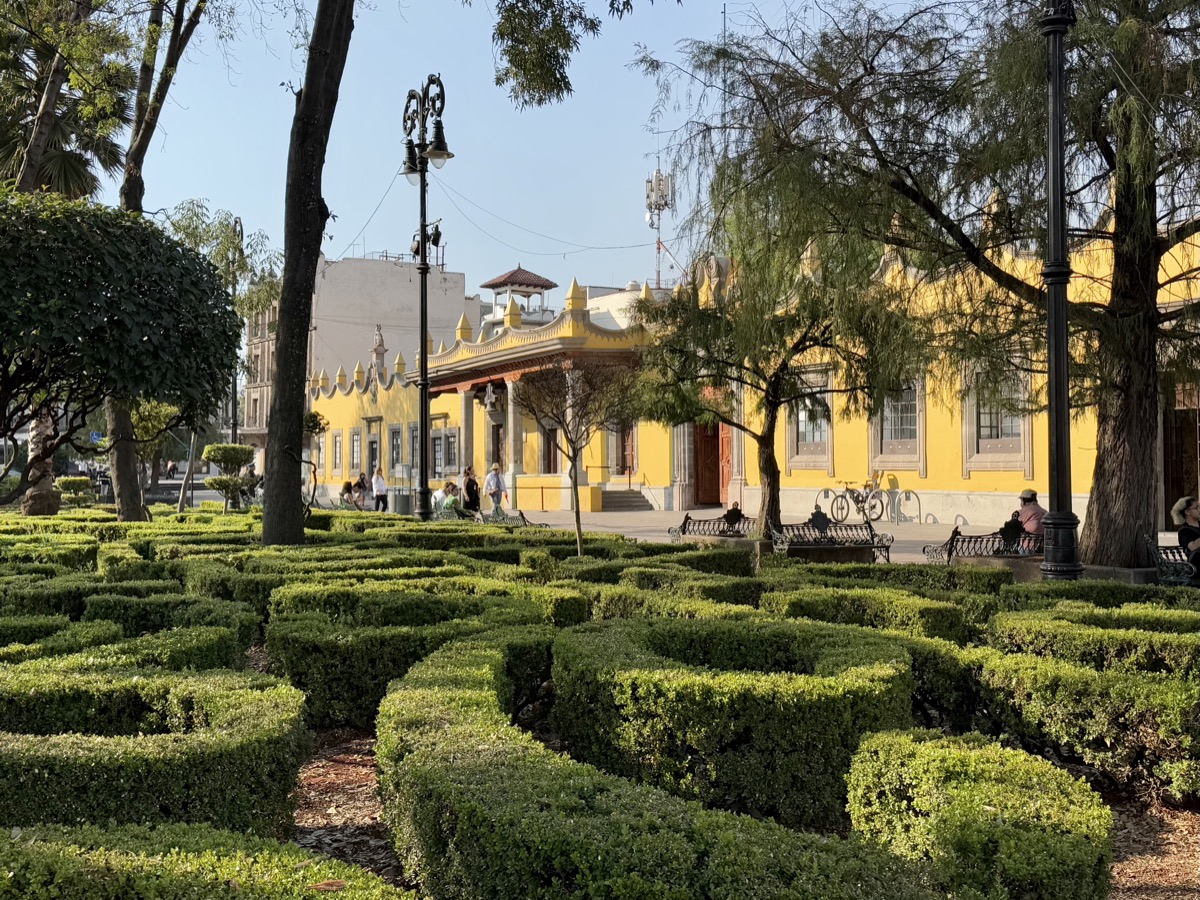
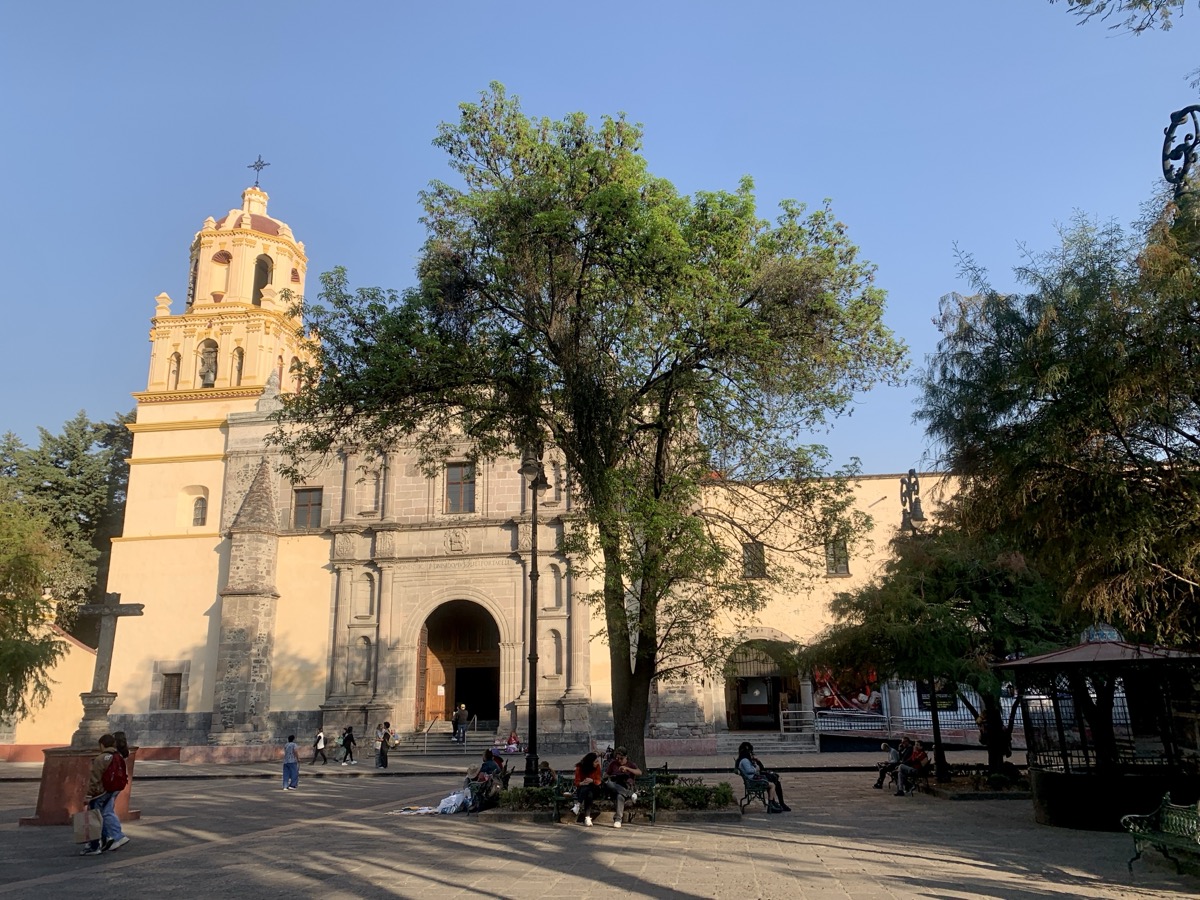
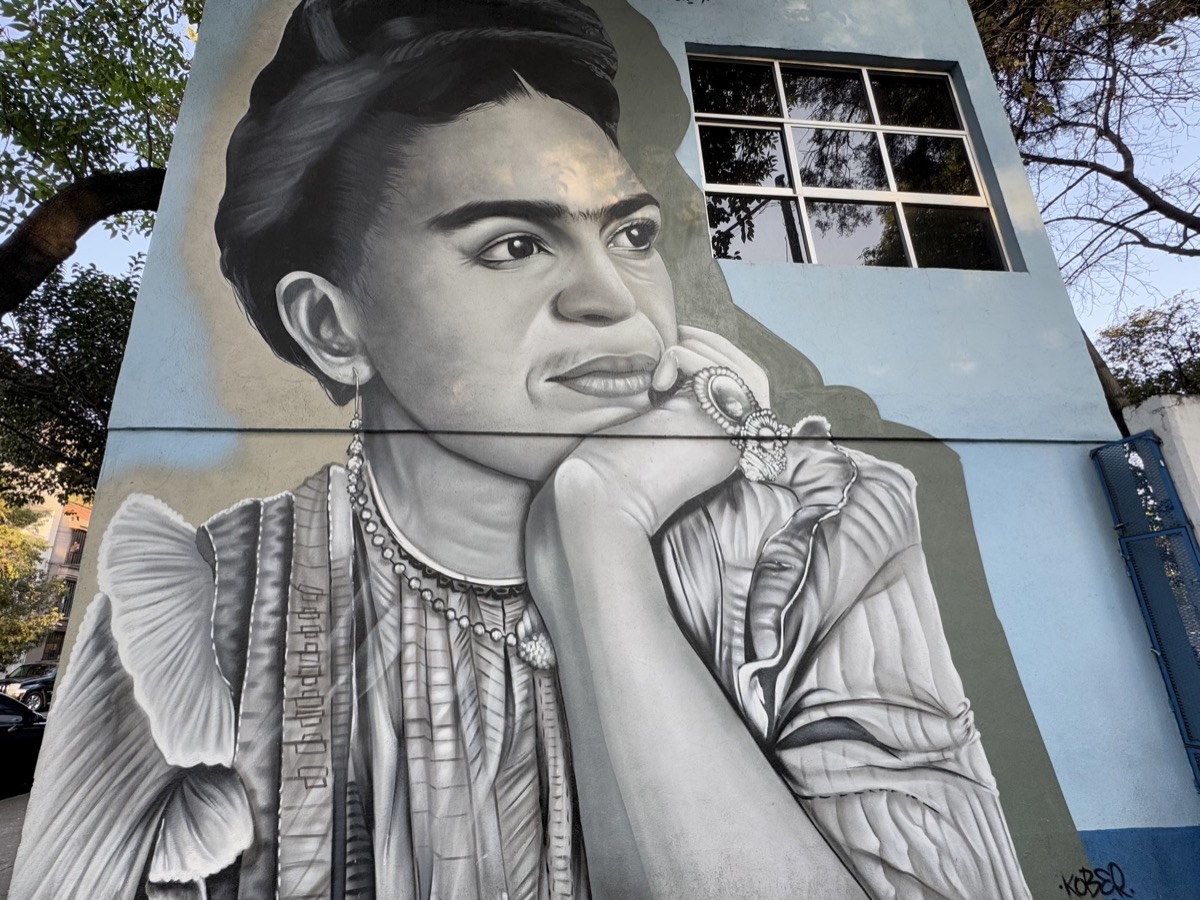
Tren Ligero back to Las Torres and Uber to Plaza de la Conchita in Coayacan. Very nice neighborhood with several plazas, parks and houses of Cortez (one for La Malinche, his native mistress), Frida Kahlo and Trotsky. Had coffee and hot chocolate, sat at Plaza Coyoacán (Jardin Centenarian) and Plaza Jardin Hidalgo, visited San Juan church, found Frida mural. Finally, walked through Mitikah Centro Comercial to Metro 3 (Coyoatan to Balderas). Stopped again at Mercado Juarez Cuauhtémoc to buy fruits and veggies. Joanna cooked dinner at home.
Xochimilco
Plaza Coyoacán
Casa de Hernán Cortés, Jardín Plaza Hidalgo
Parroquia San Juan Bautista
Frida Kahlo mural
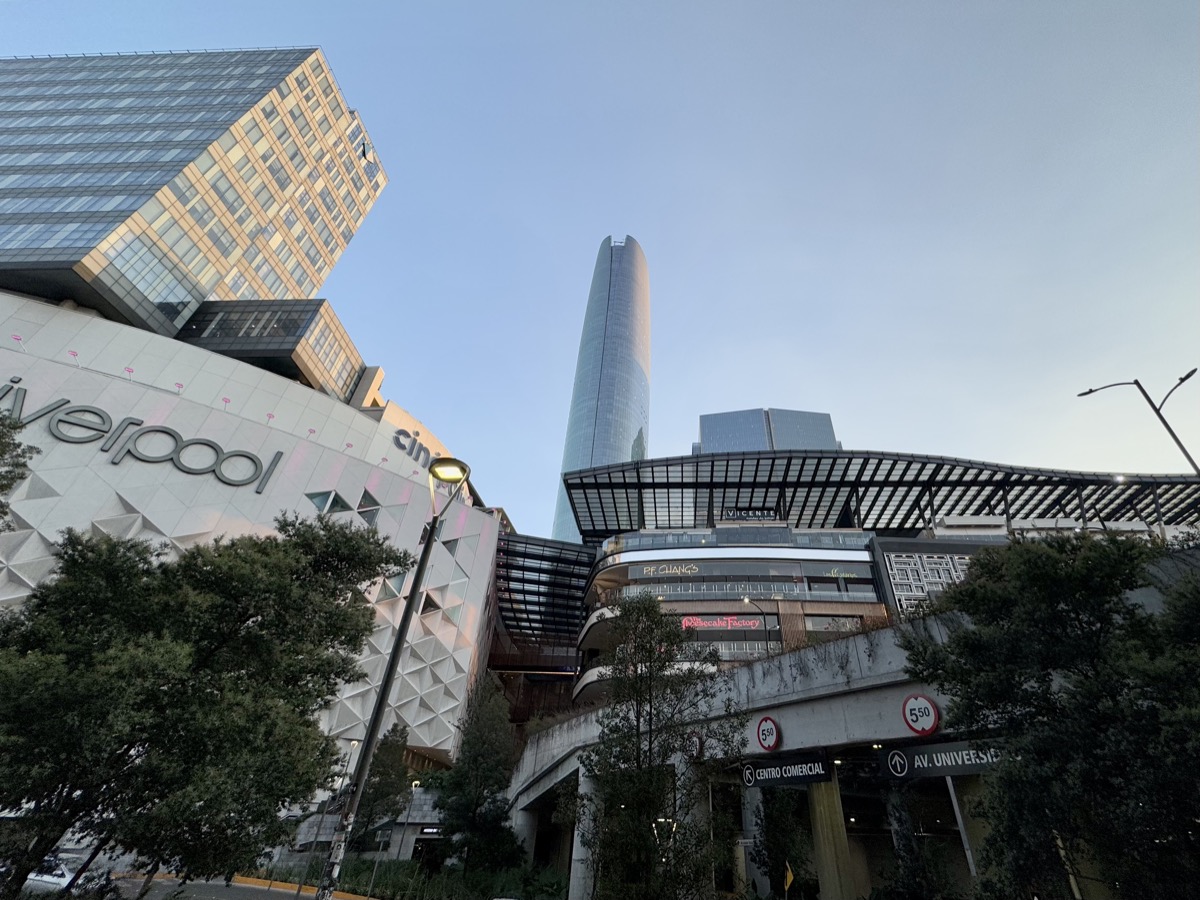
Mitikah Centro Comercial
Day 11.
We jumped on first RTP bus heading to Bosque de Chapultepec. Did not really have enough time for everything and decided to skip Museo Nacional de Historia Castillo de Chapultepec. Instead we walked full circle in the park around the hill, starting with visit at Museo de Arte Moderno: sculpture garden and all galleries where we finally saw a few Frida’s paintings. Then fountains, monuments, archaeological sites (aqueduct, baths), lakes and squirrels, followed by short walk and coffee in Polanco. It was quite slow and lazy day until it was time to go to the airport. We ran for RTP bus, picked-up our backpacks and took Uber to airport, enough time left for late lunch. We landed at ORD almost at midnight ready for cold weather (it was really cold in Chicago: down to -20ºC, when we enjoyed Mexican sun: mid 20s ºC), quick Lift ride and we were back home.
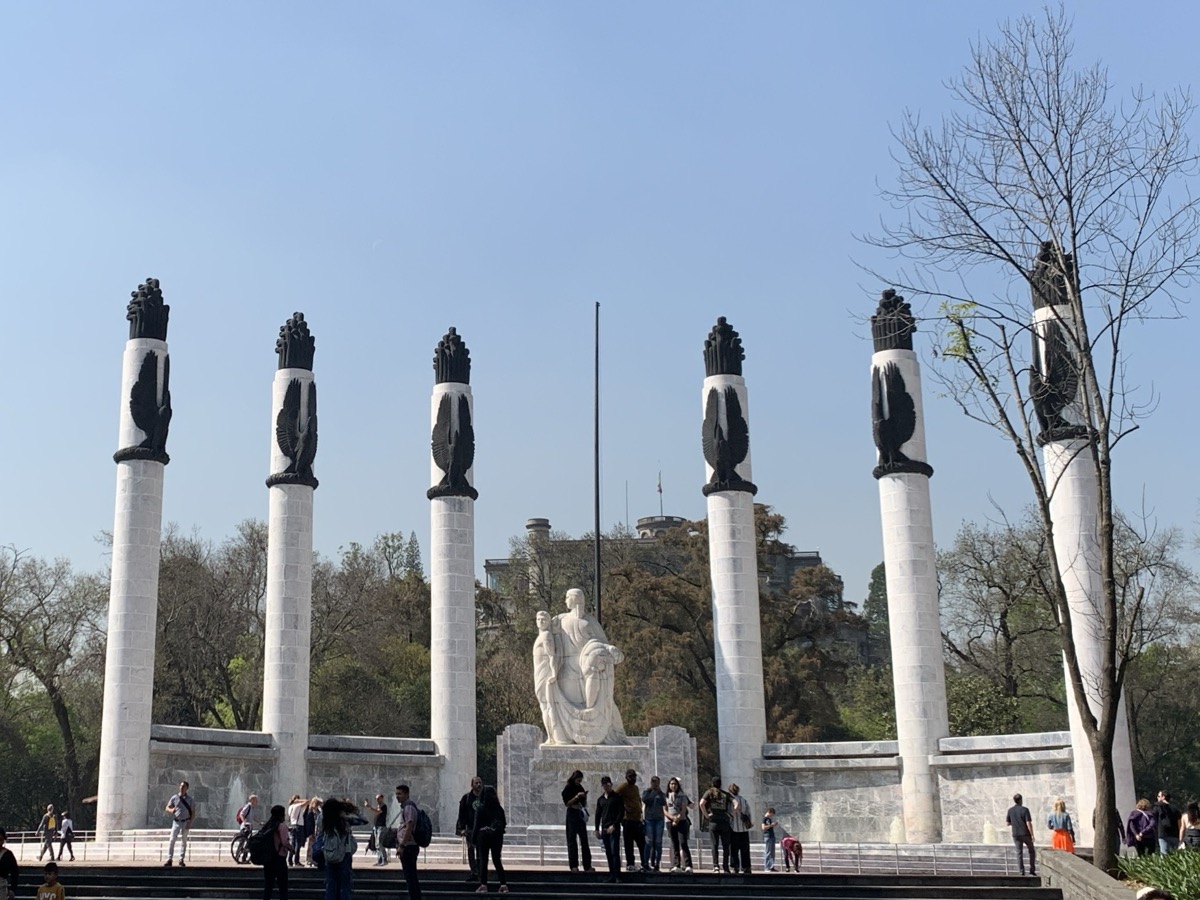
Altar a la Patria, Bosque de Chapultepec
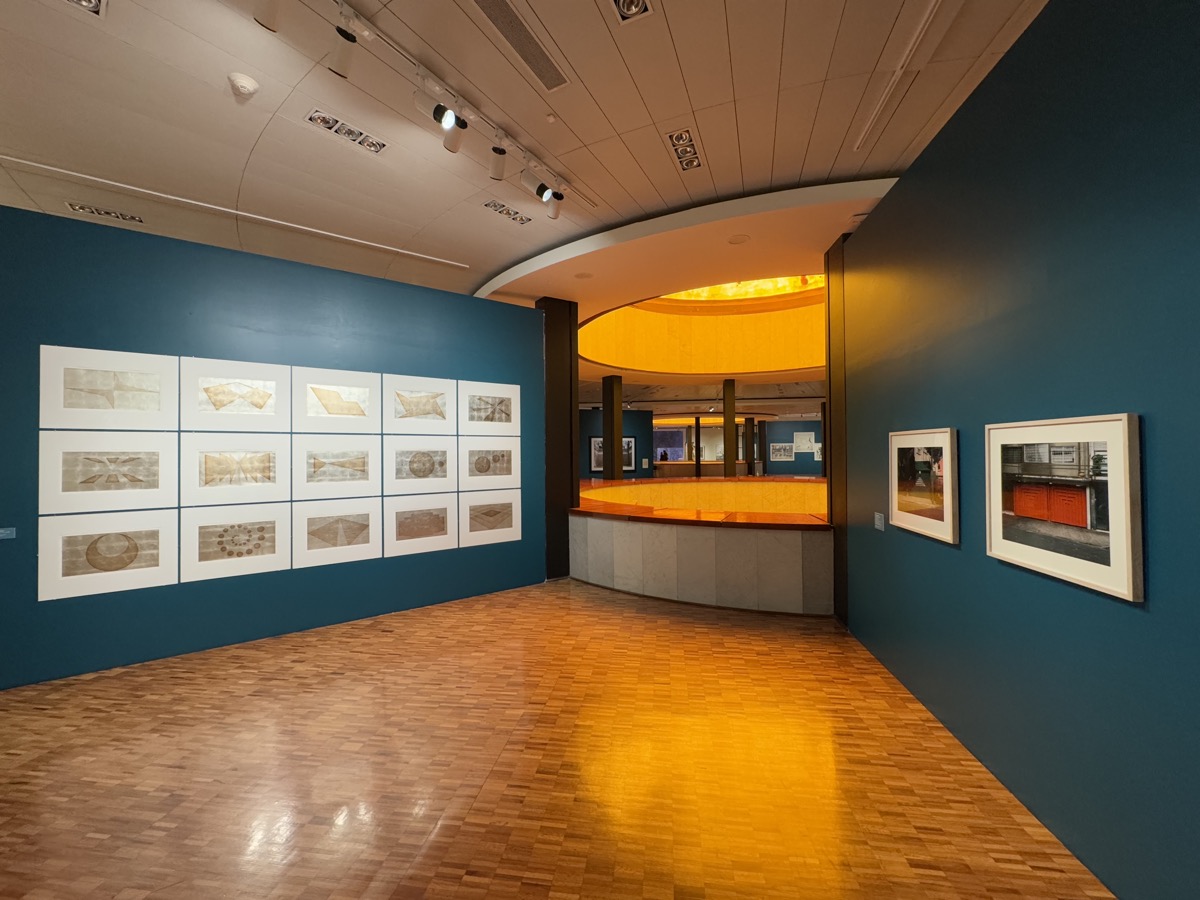
Museo de Arte Moderno
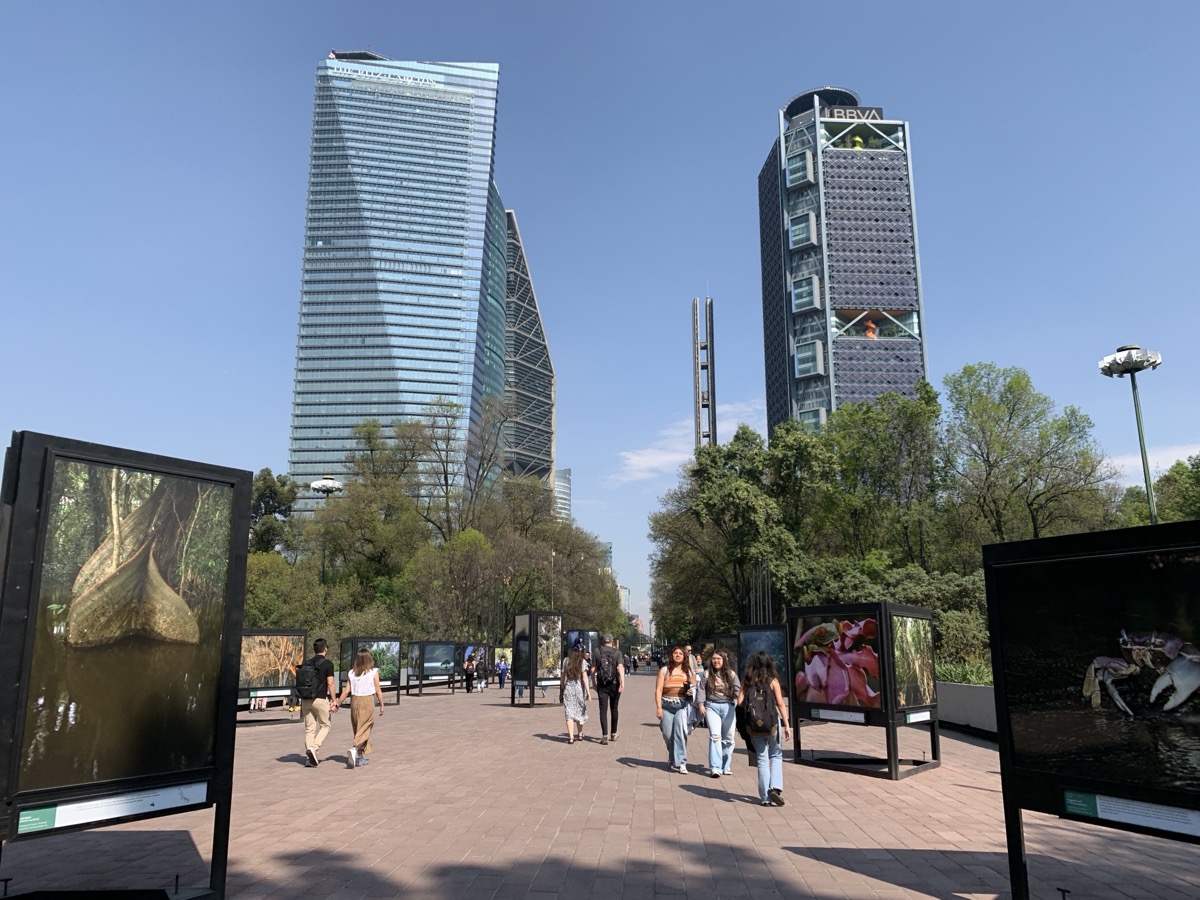
Avenida de la Reforma
During our time in Mexico City we traveled northeast from the center (Roma Norte) to Teotihuacan and another time south to Xochimilco across the city (straight-line distance of ca. 40 plus 20 km) and realized how big the 20-million people metropolitan area is. Great majority of buildings are small, but densely packed. With some effort and planning it looks like park all around though, very walkable, We liked it. We were surprised how different each district was, the city felt like a conglomerate of separate towns (which they were in the past), each with its own main square, parks, markets etc. and distinct character. Combination of public transport and Uber (fast, inexpensive) made moving around easy.
It was again a last minute decision to go, facilitated by direct flights from Chicago to Mexico City (Aeromexico) and easy to work tourist infrastructure. We had a plan what to see, but made detailed decisions on day-to-day basis. We split our time between Puebla (travel day plus 2.5 days) and Mexico City (6.5 days). Joanna pre-arranged both accommodations a few days before the trip opting for locations either within walking distance or public transport to at least some of the local destinations. We used Estrella Roja to get from MEX to Puebla Paseo Destino and eBus back to Mexico City El Ángel. We used Uber (12 times) and in Mexico City also public transport : metro, metrobus and RTP buses, light train – inexpensive (free for seniors). All the transportation worked very well: convenient and fast. We got stuck in traffic only a couple of times, not too bad. Museum tickets are inexpensive, sometimes entrance is free for teachers and/or seniors. We spent ca. $1500 on everything except food which is inexpensive. We had access to kitchen to make morning coffee, prepare breakfast and supper, but had main meal each day somewhere in town. Visiting local cafés, panaderias and mercados was part of our trip. We did not do any nature hikes this time, but street-walked 10 km a day on average visiting different neighborhoods, many museums and archaeological sites.
Day 1-2.
Puebla. After somewhat delayed flight, we took bus from MEX airport to Puebla Paseo Destino and then Uber to The Dear hostel (recommended). Buses directly from the terminal are frequent and we did not have to wait. Despite late hour (almost midnight) our kind host was waiting for us. And he took us to local taco stand for late night snack. The place was secure, very clean, well maintained and equipped: shared kitchen, dining room, living room and bedrooms upstairs (with private or shared bathroom – ours was private). The hostel is located in Centro Histórico.
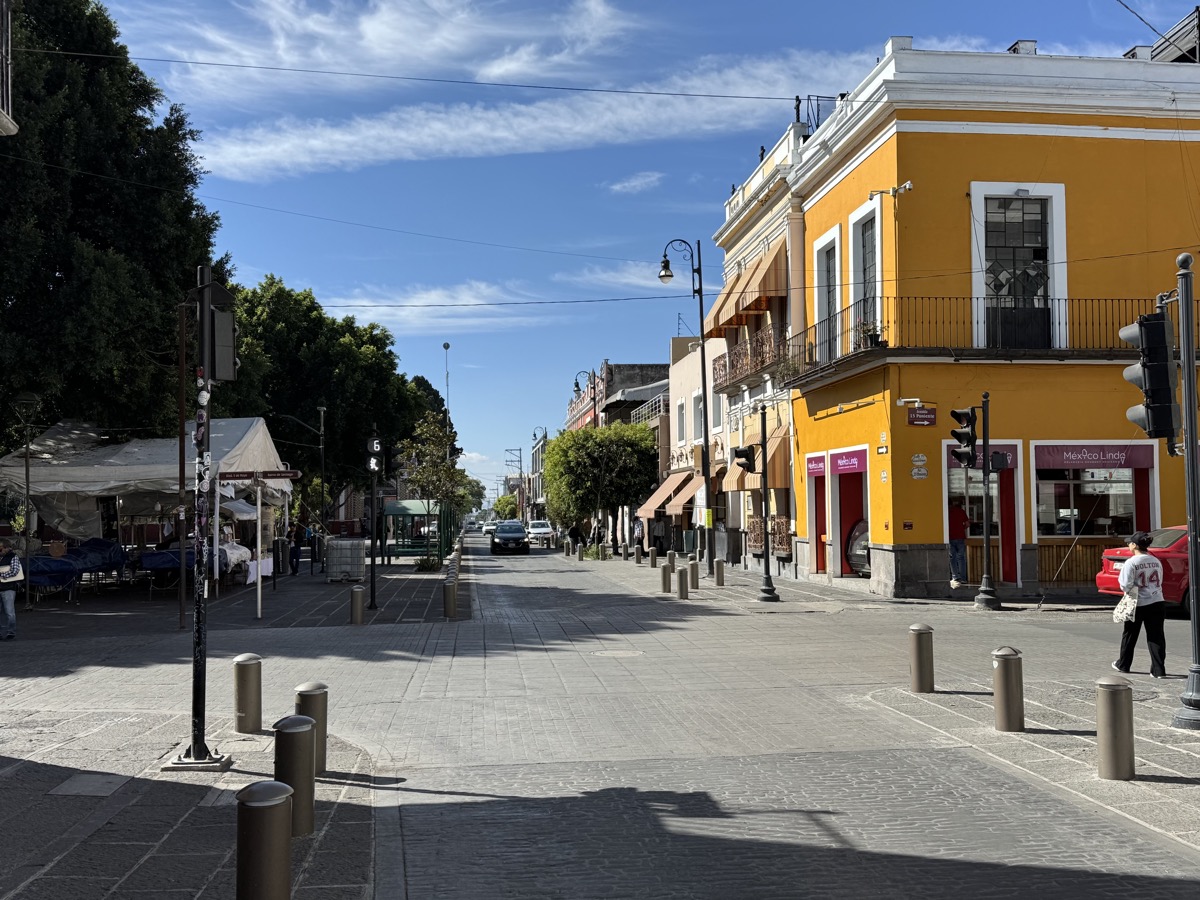
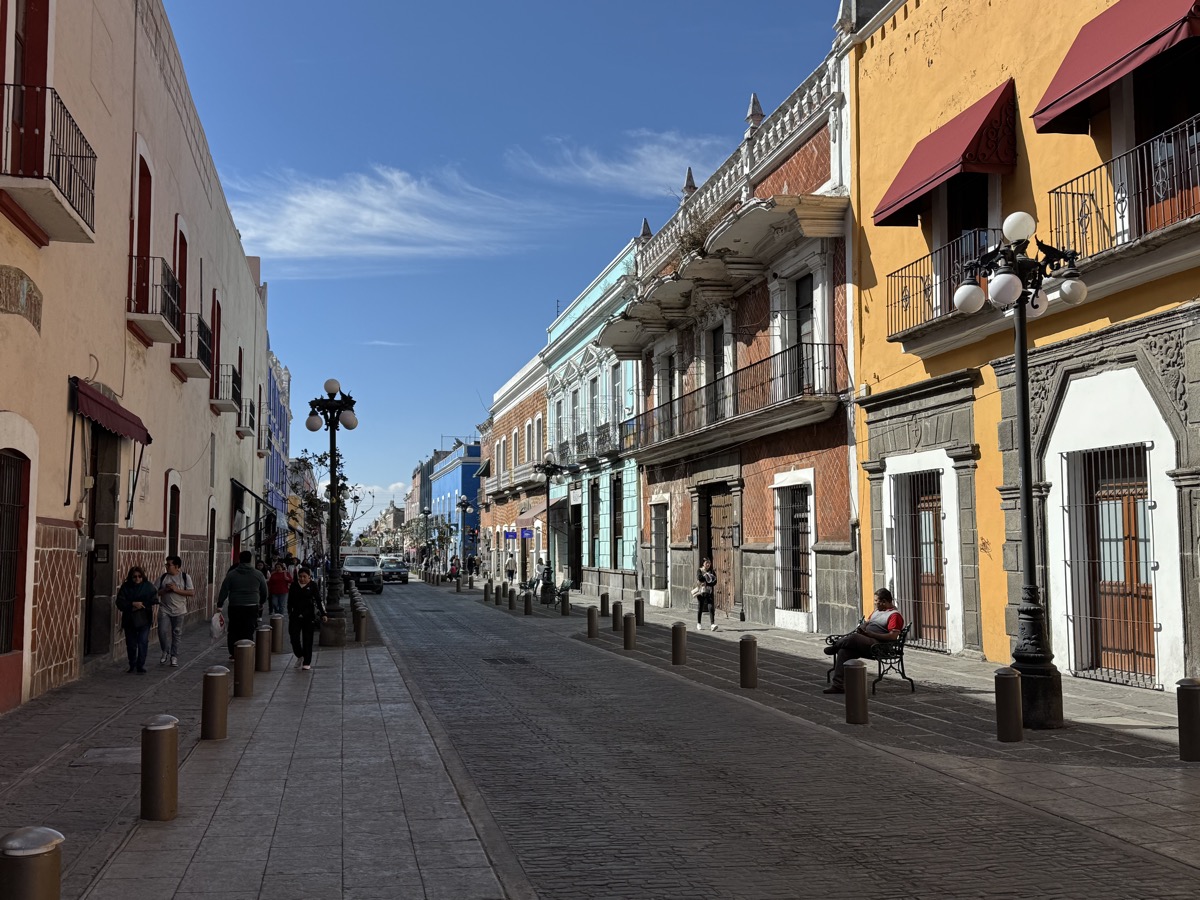
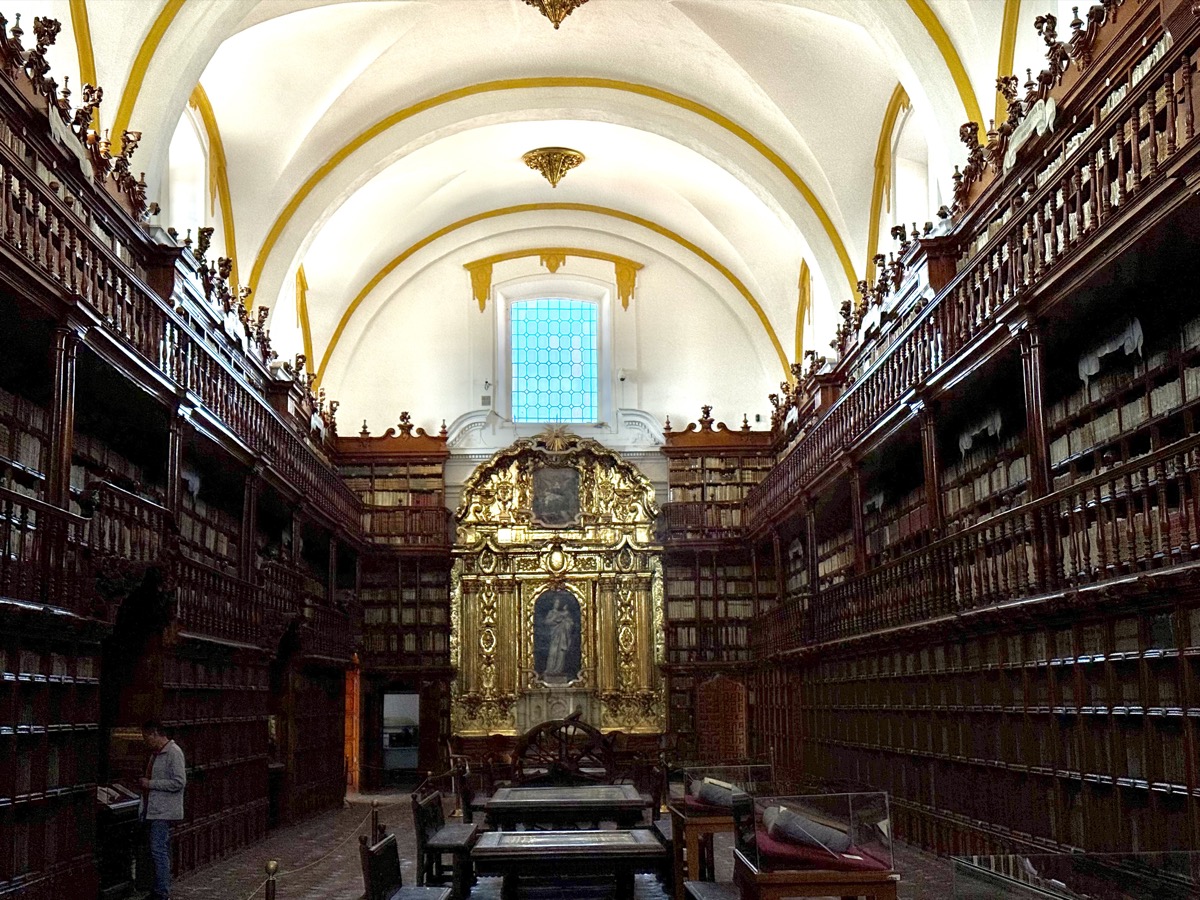
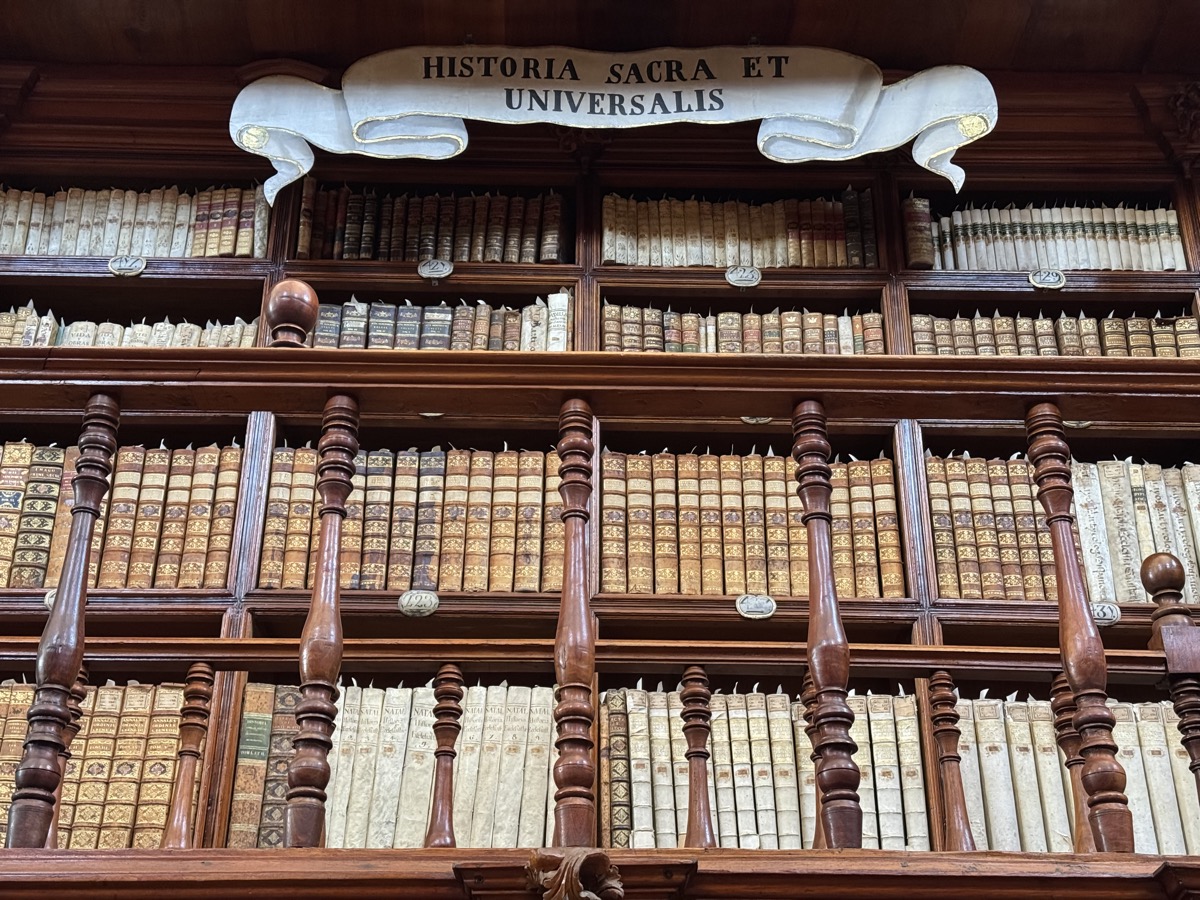
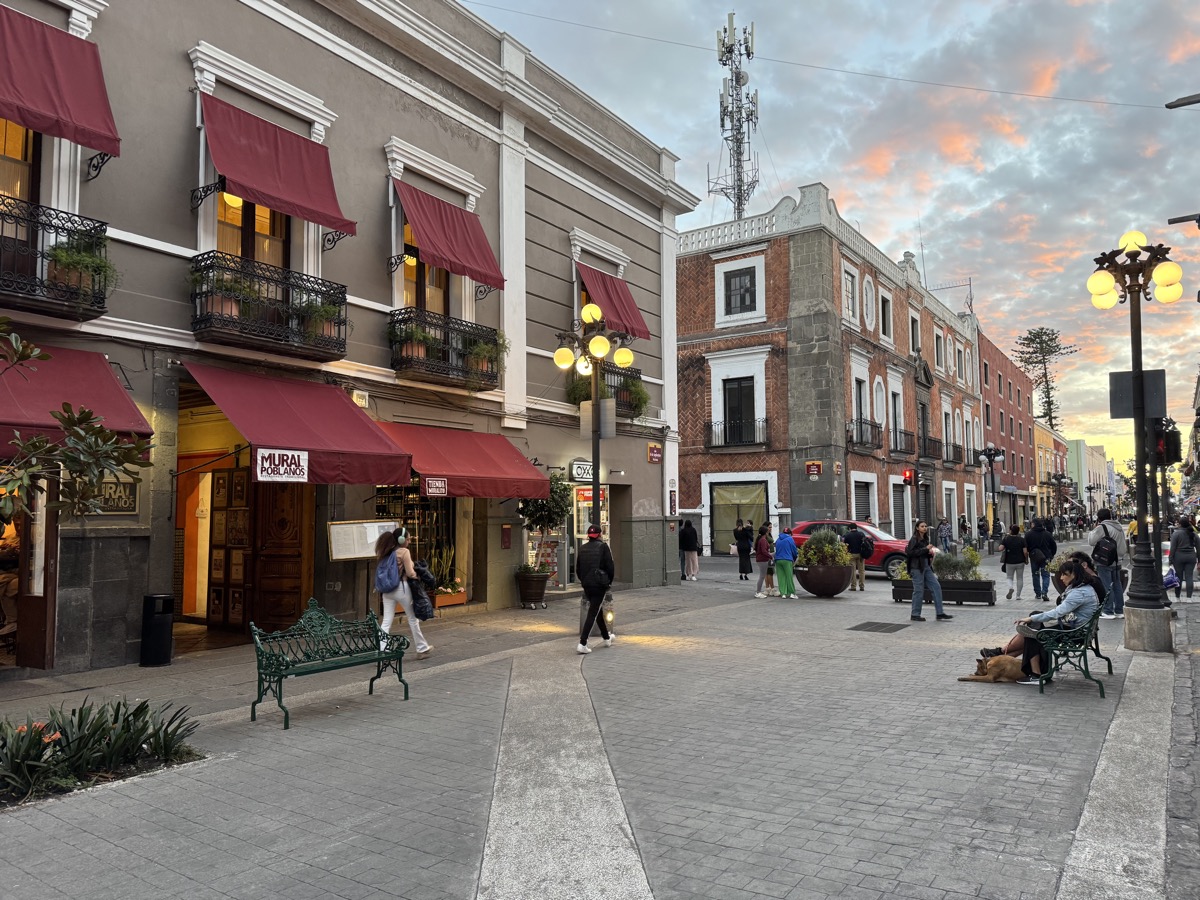
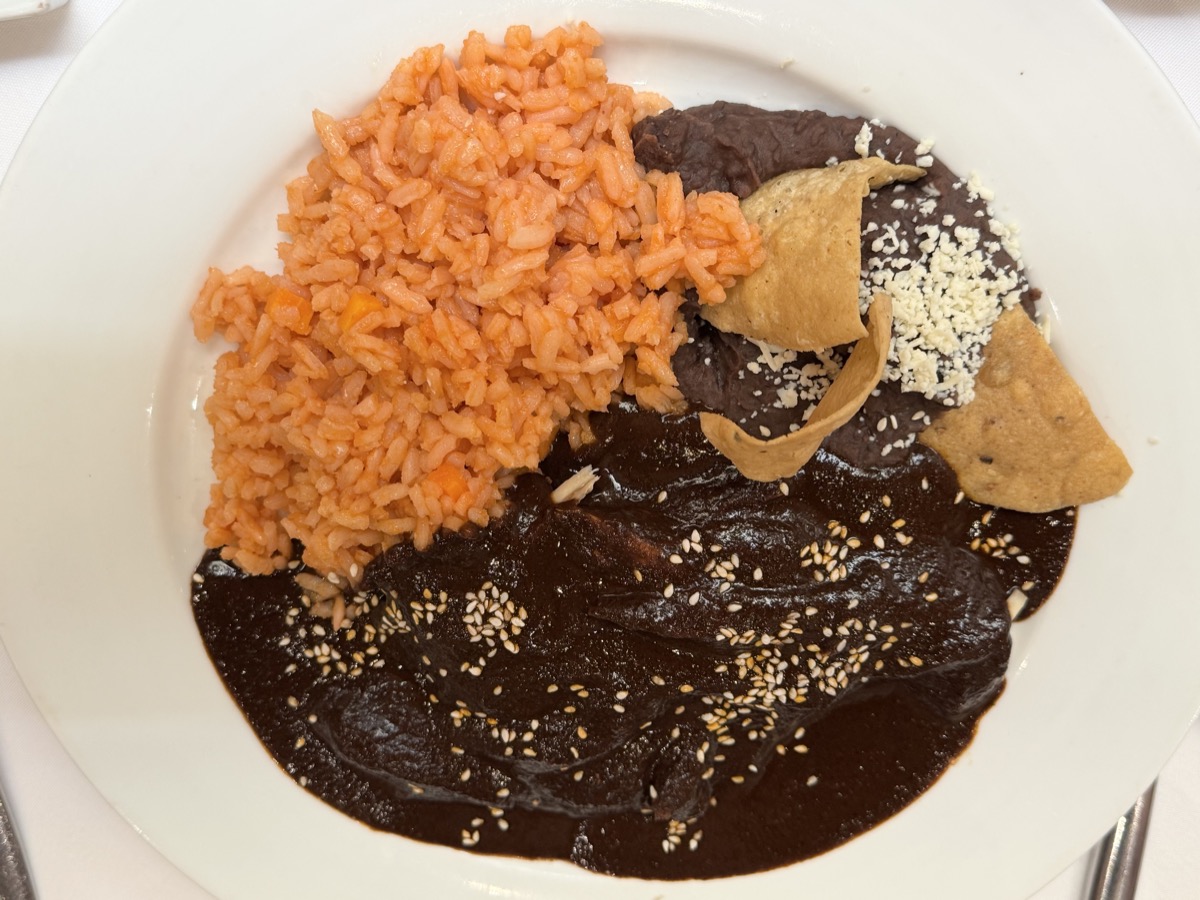
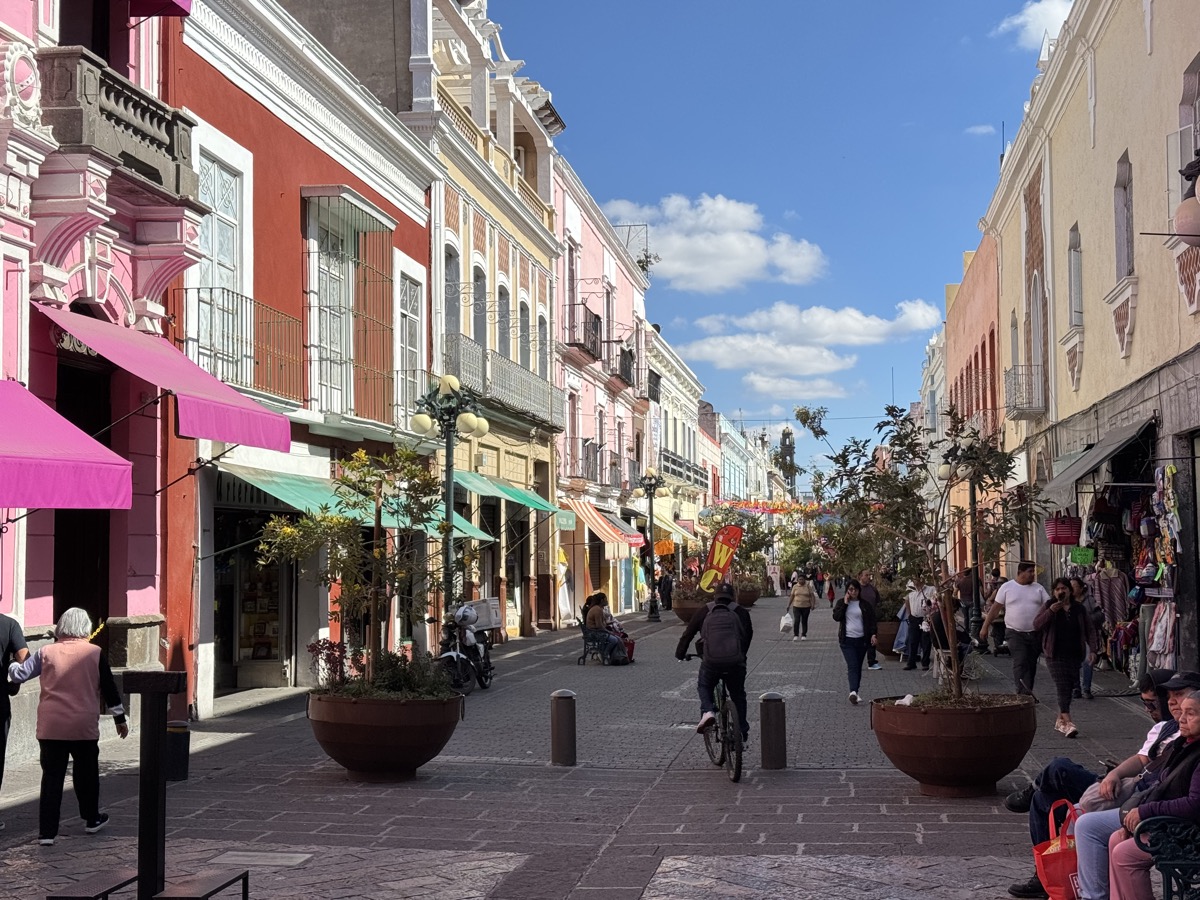
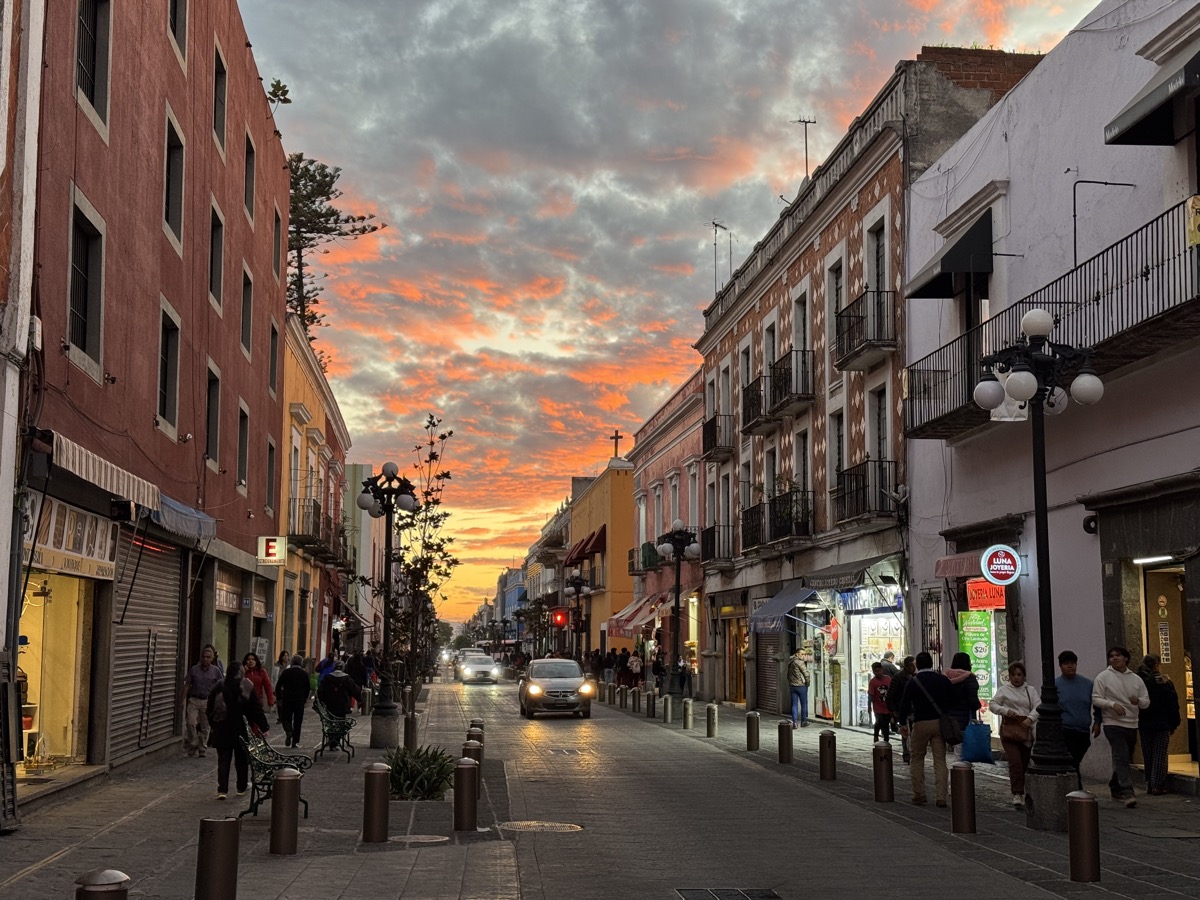
Despite slow morning we managed to see quite a bit on full day of walking. Puebla is Hispanic city founded in 1531: colorful, richly decorated houses, churches, Talavera pottery and tiles. We started up Calle 16 de Septiembre towards Zócalo, but first stop was at Casa de la Cultura to visit Biblioteca Palafoxiana: oldest library in the Americas founded in mid 17th century. Then it was already lunch-time and time for famous chocolatey mole poblano. We followed recommendations and settled in El Mural de los Poblanos (recommended).
Calle 16 de Septiembre
…
Biblioteca Palafoxiana
…
El Mural de los Poblanos (evening photo)
Pollo mole poblano
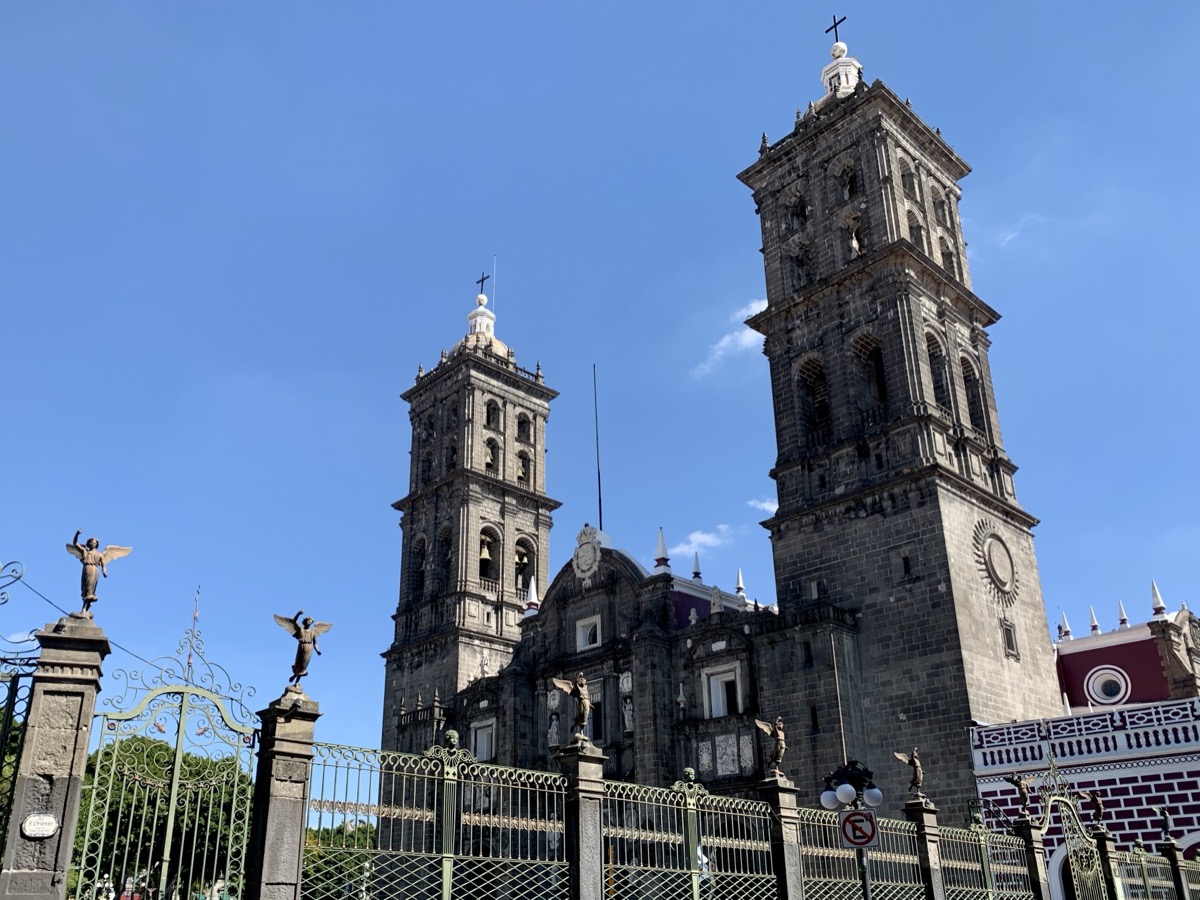
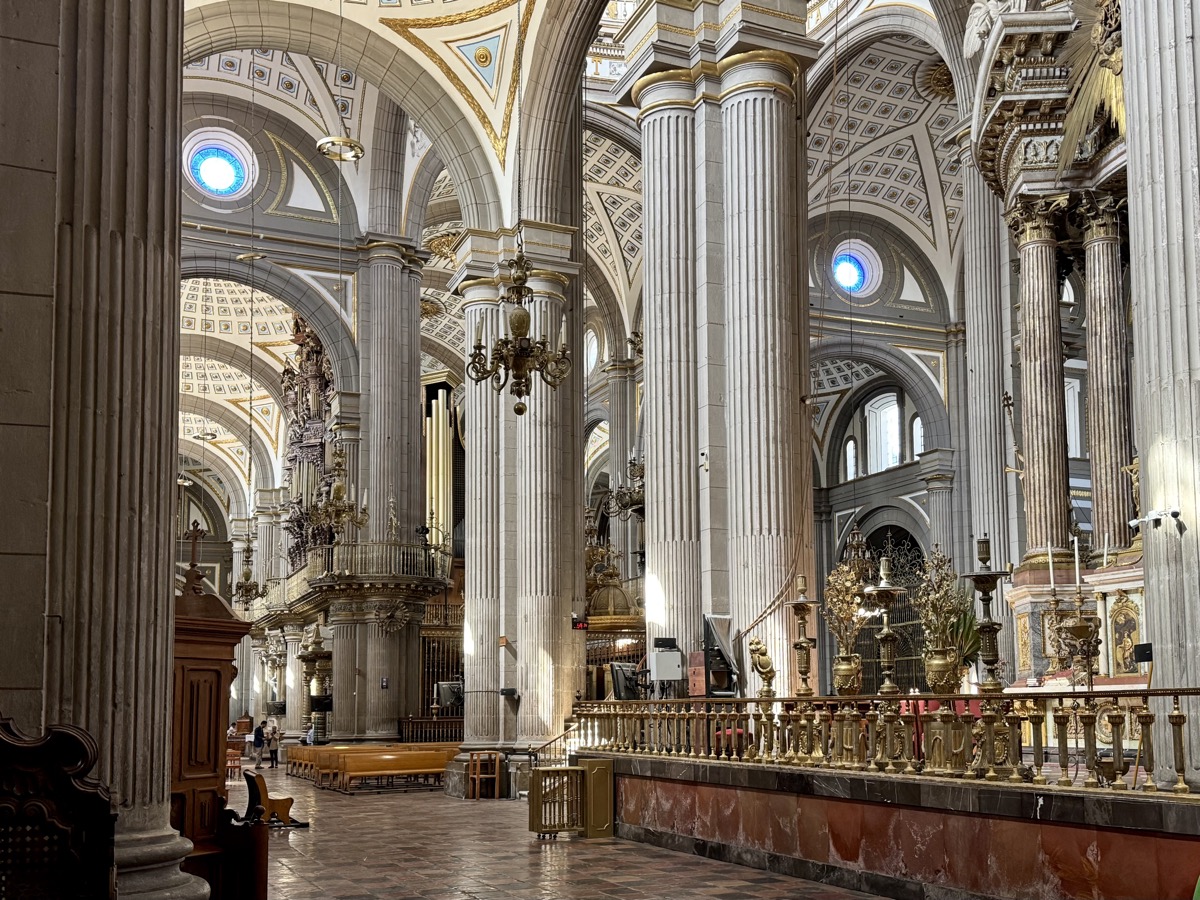
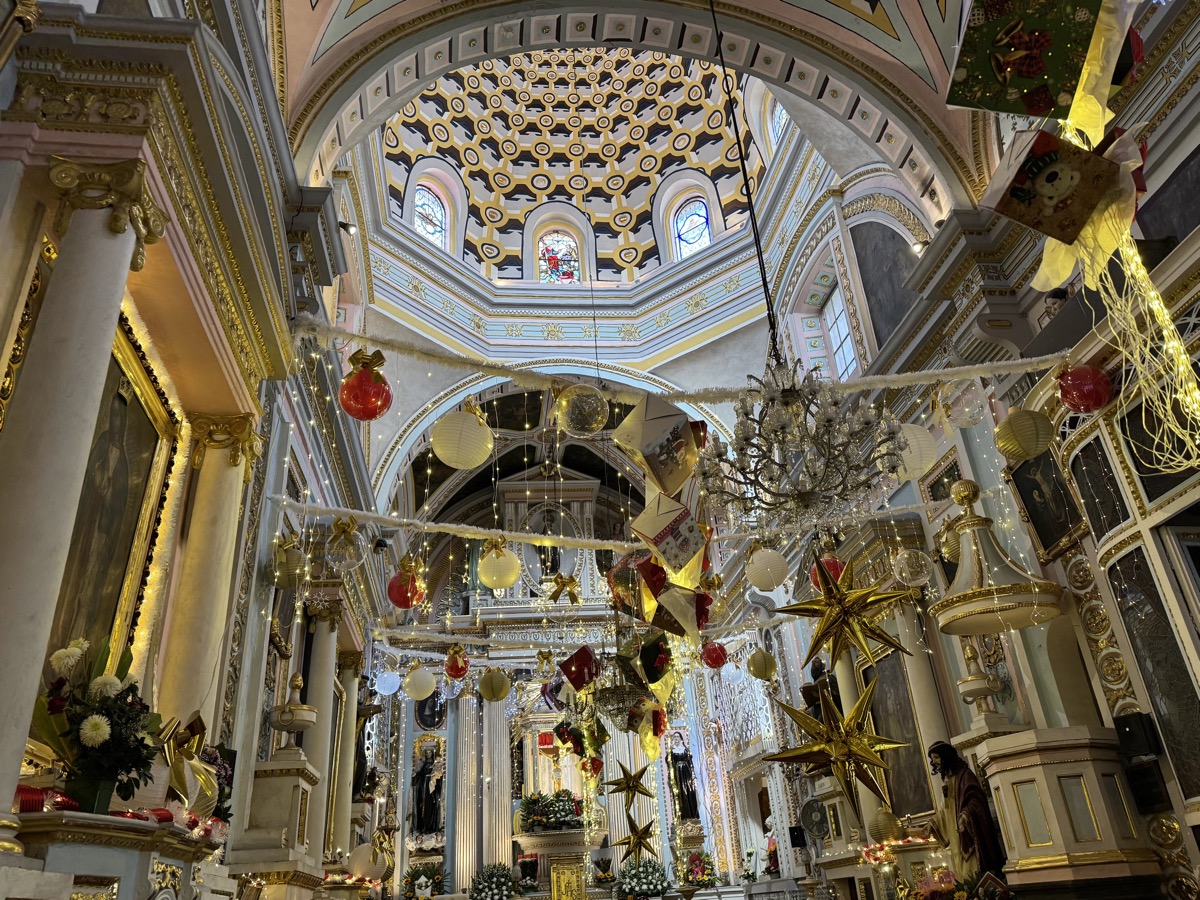
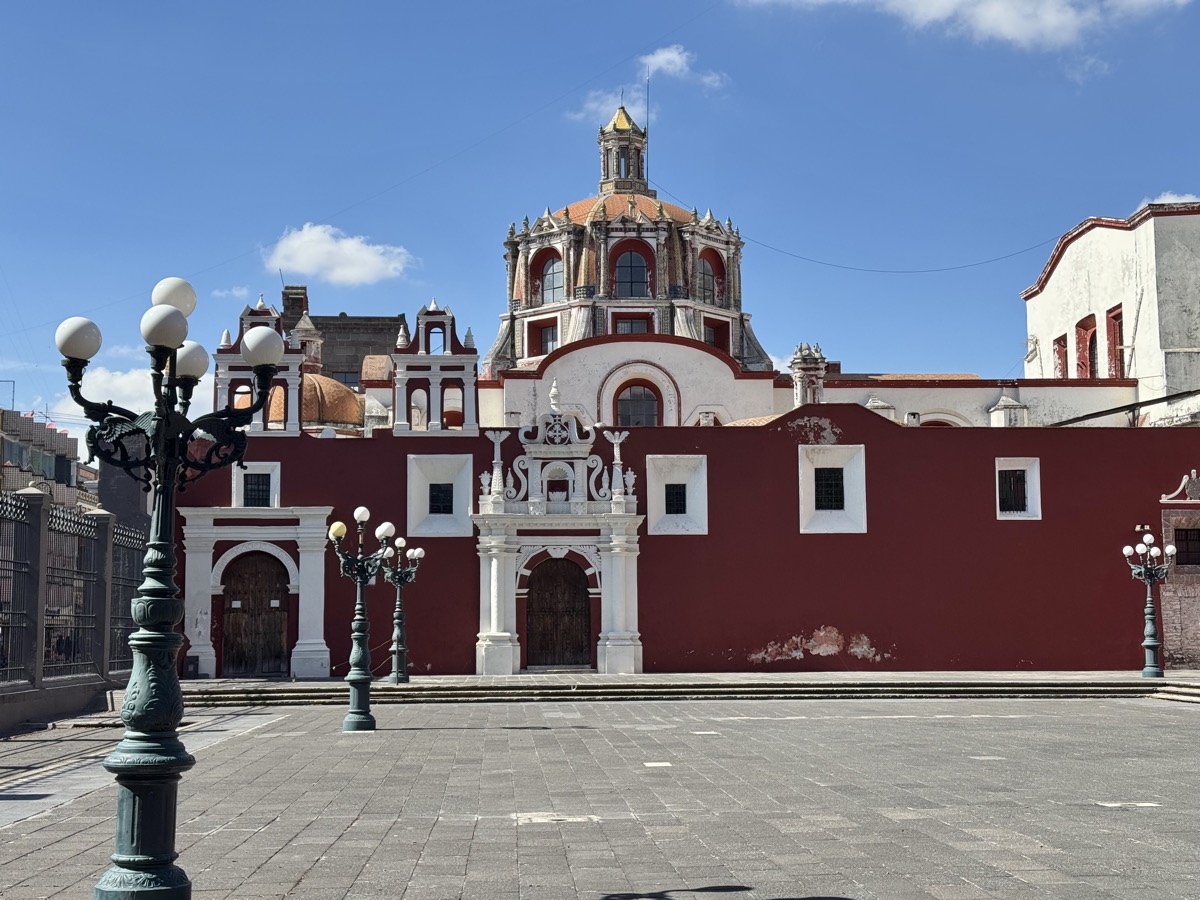
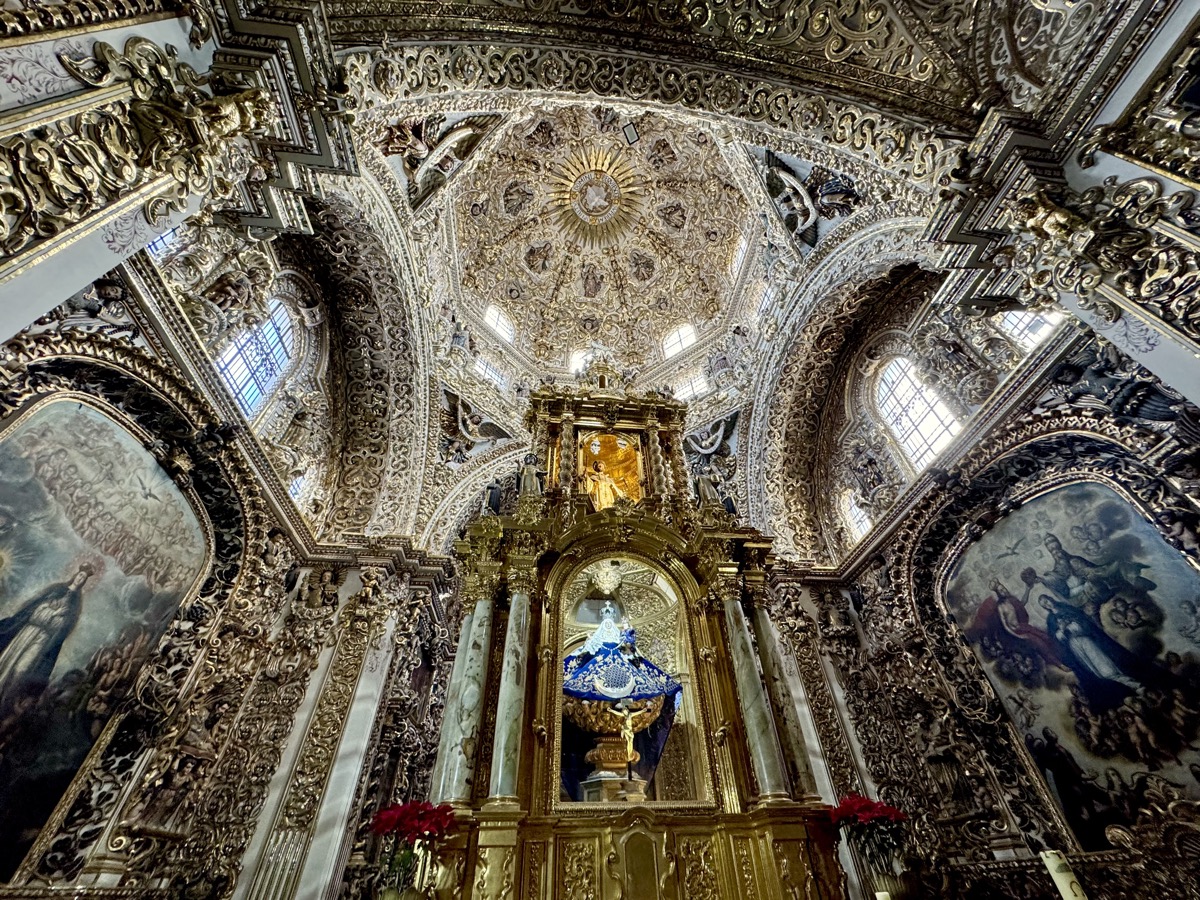
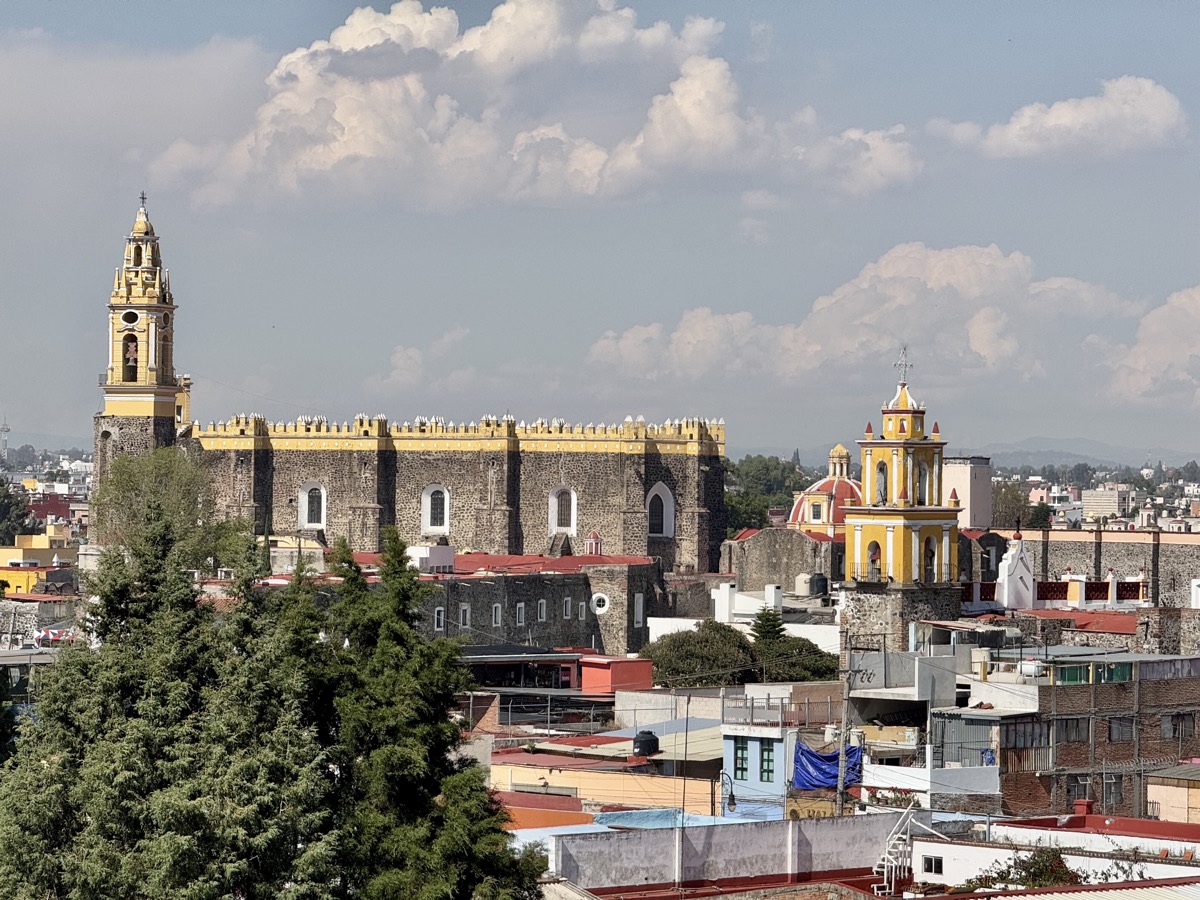
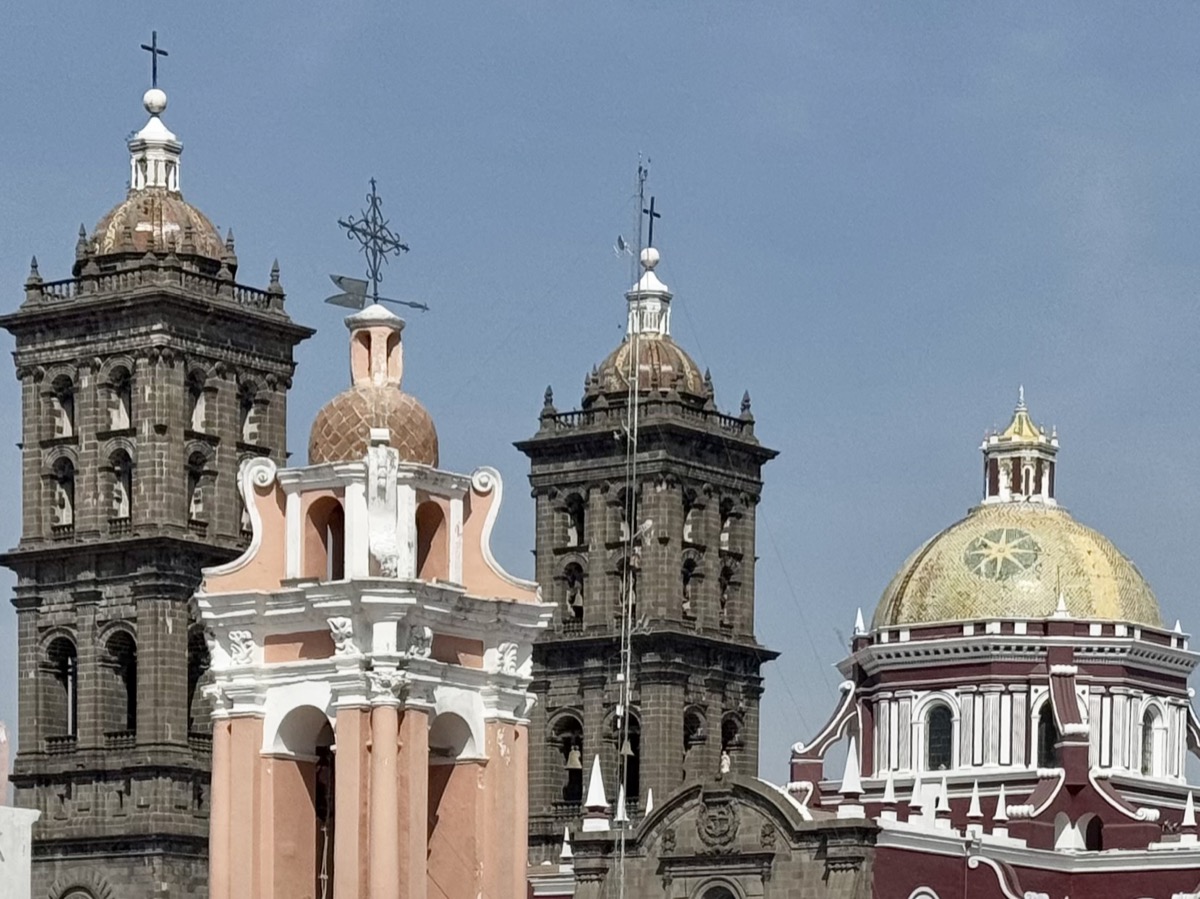
Next longer stop was at Basilica Cathedral. After a loop around the main plaza we walked along Avenida 5 de Mayo and other streets to Mercado la Victoria and Ex Convento de Santa Rosa (museum) – the place where mole poblano was invented, and beyond. This part of town looks like never ending street market. Puebla has many churches, most in ornate baroque style, we managed to visit only several. Our next main destination was Capilla del Rosario at Templo de Santo Domingo.
Basilica Cathedral
…
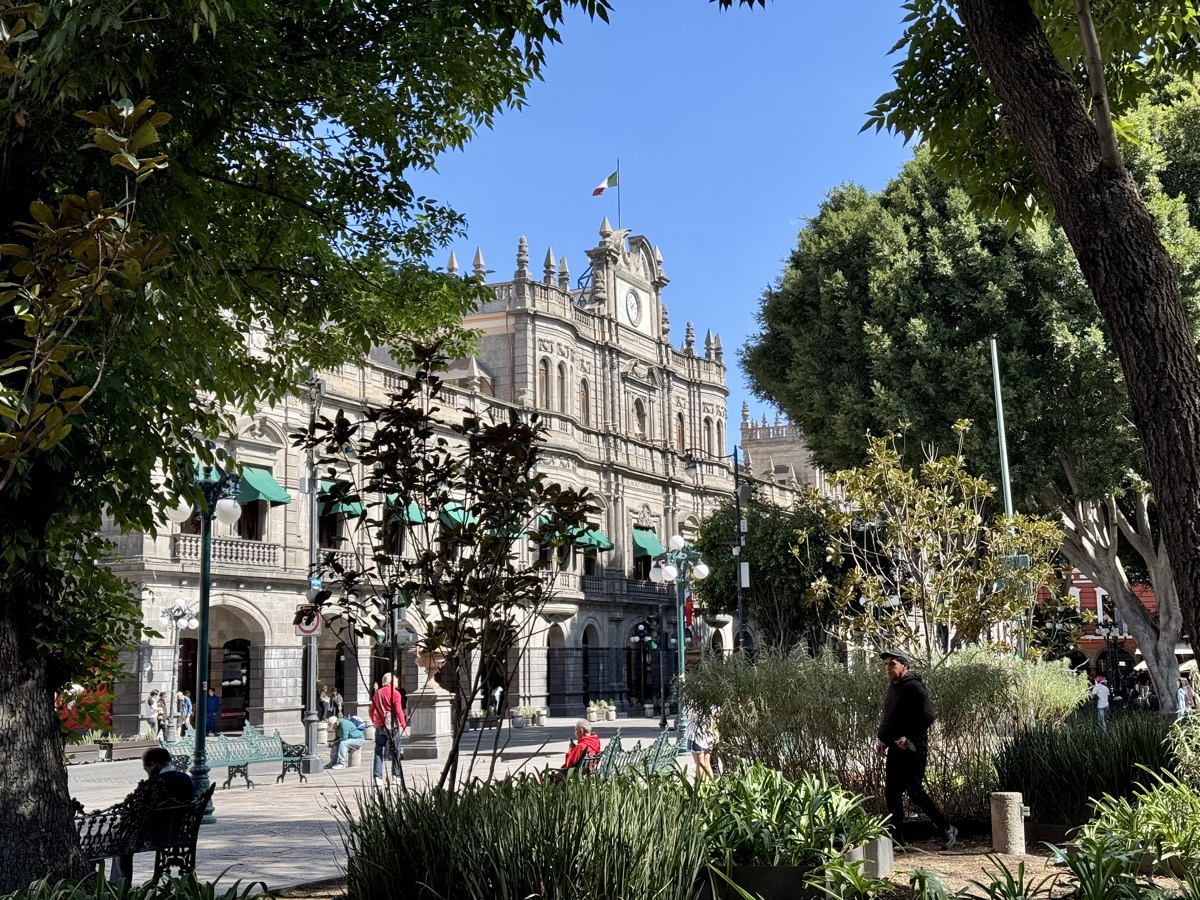
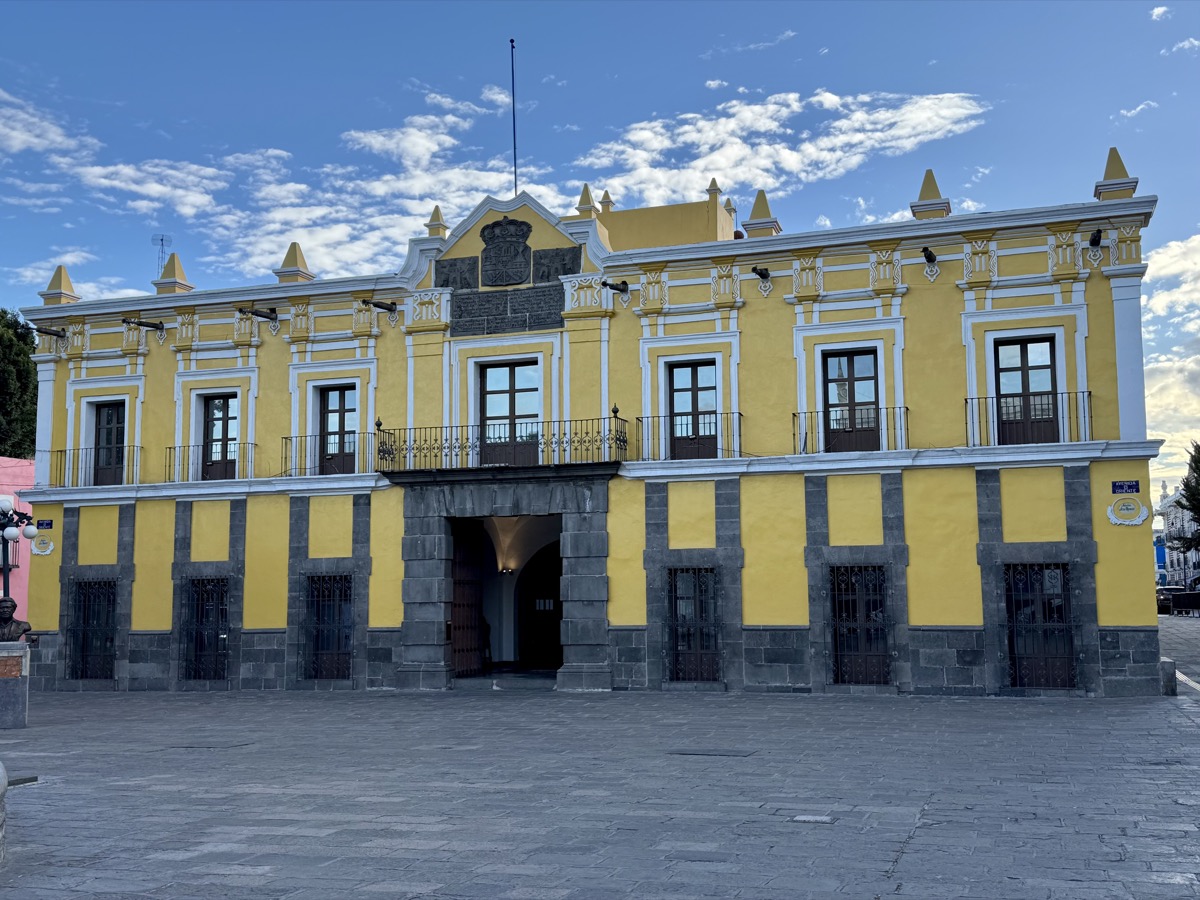
Palacio Municipal de Puebla
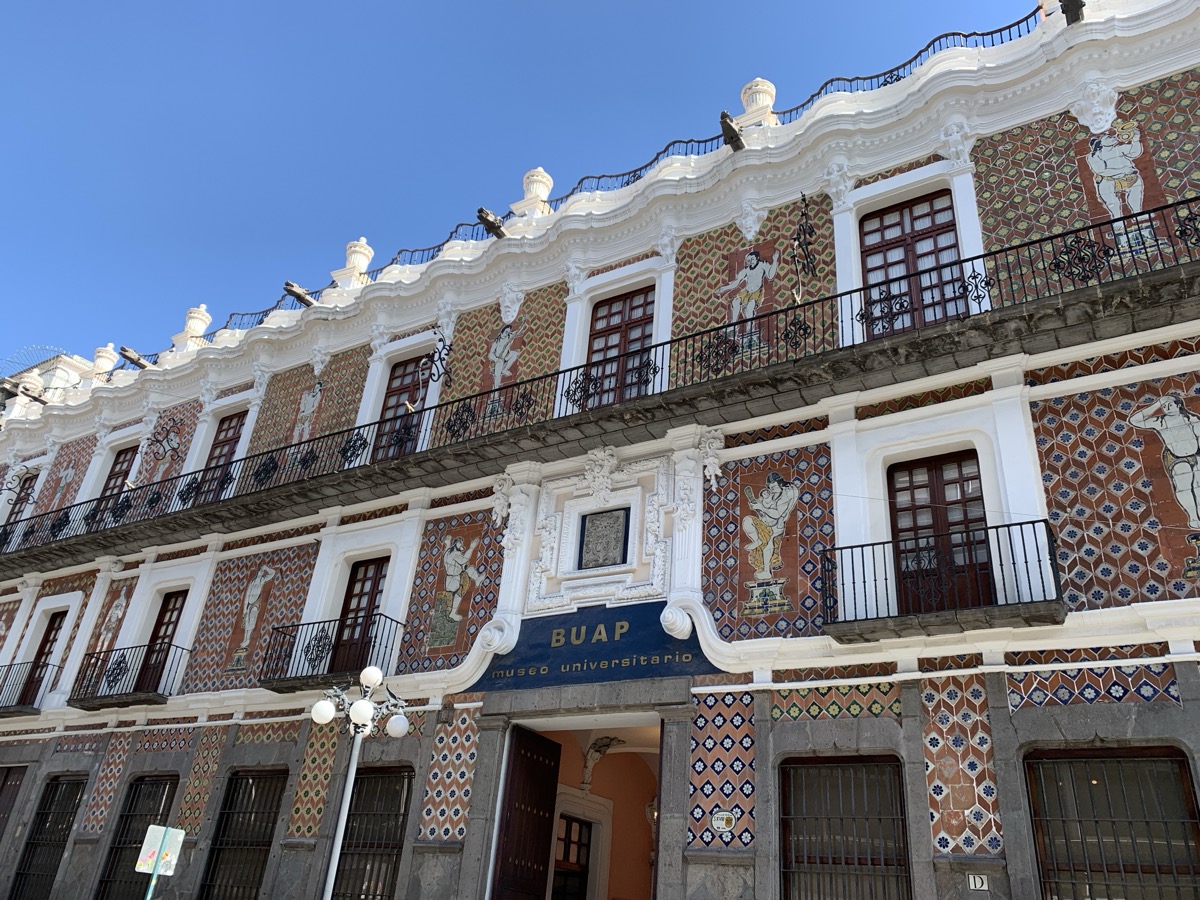
Museo Universitario
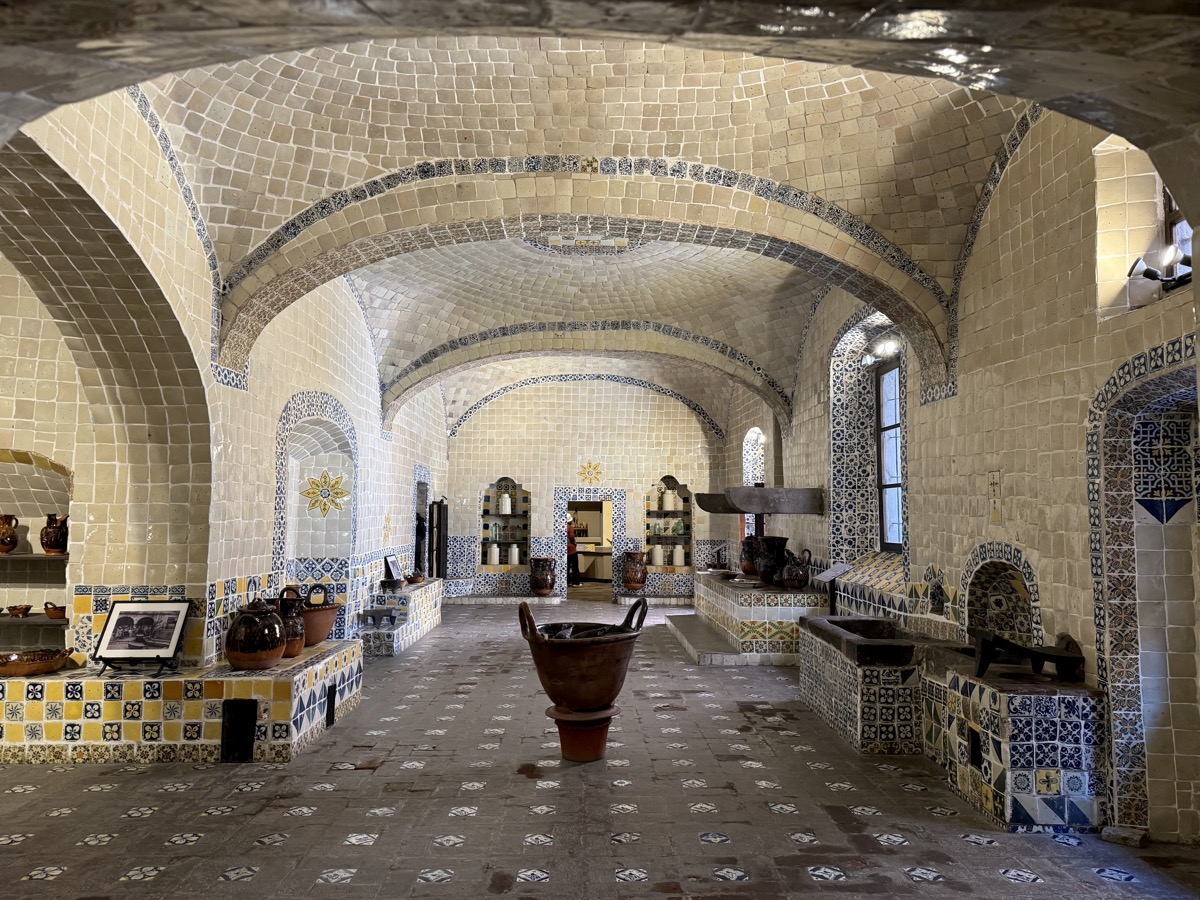
Ex Convento de Santa Rosa, first mole poblano kitchen…
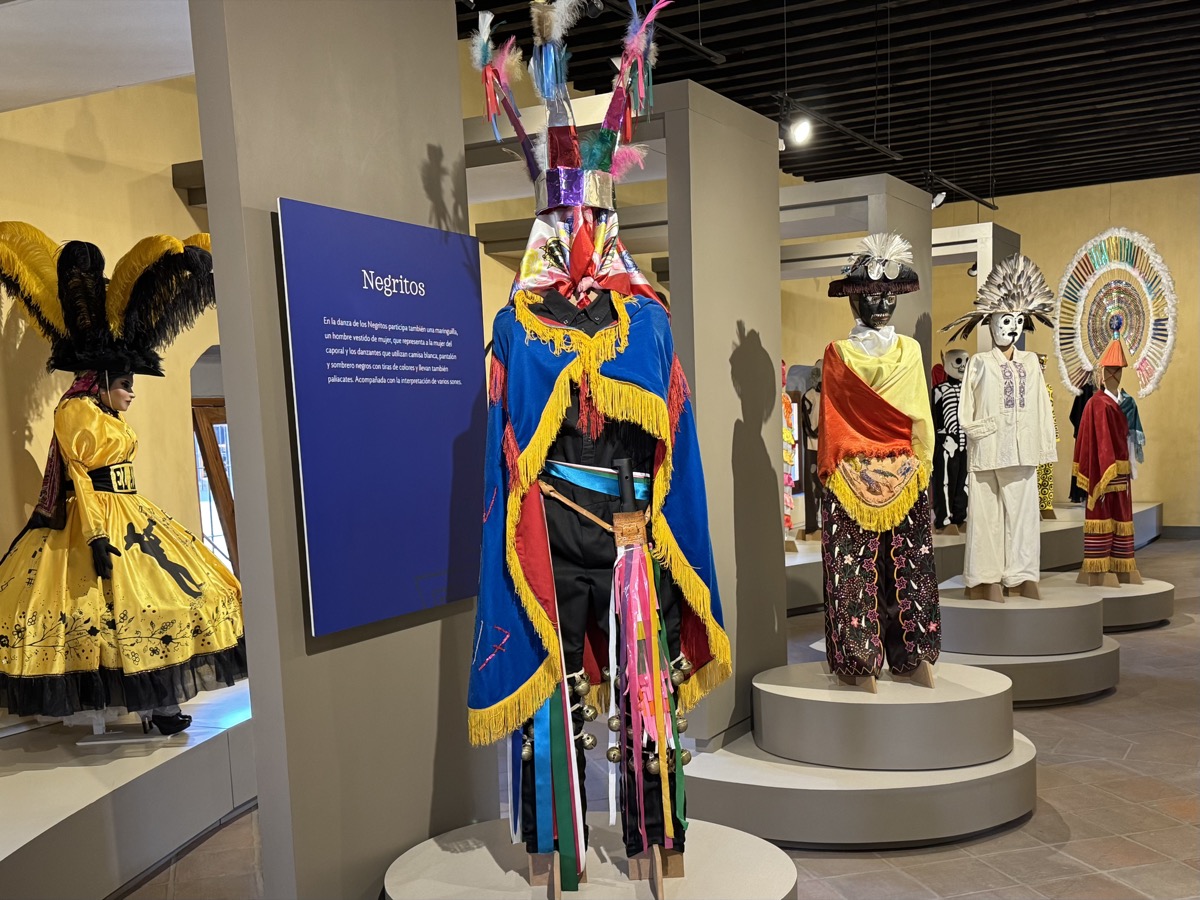
…and ethnographic museum
Templo Conventual de Santa Mónica
Avenida 6 Oriente
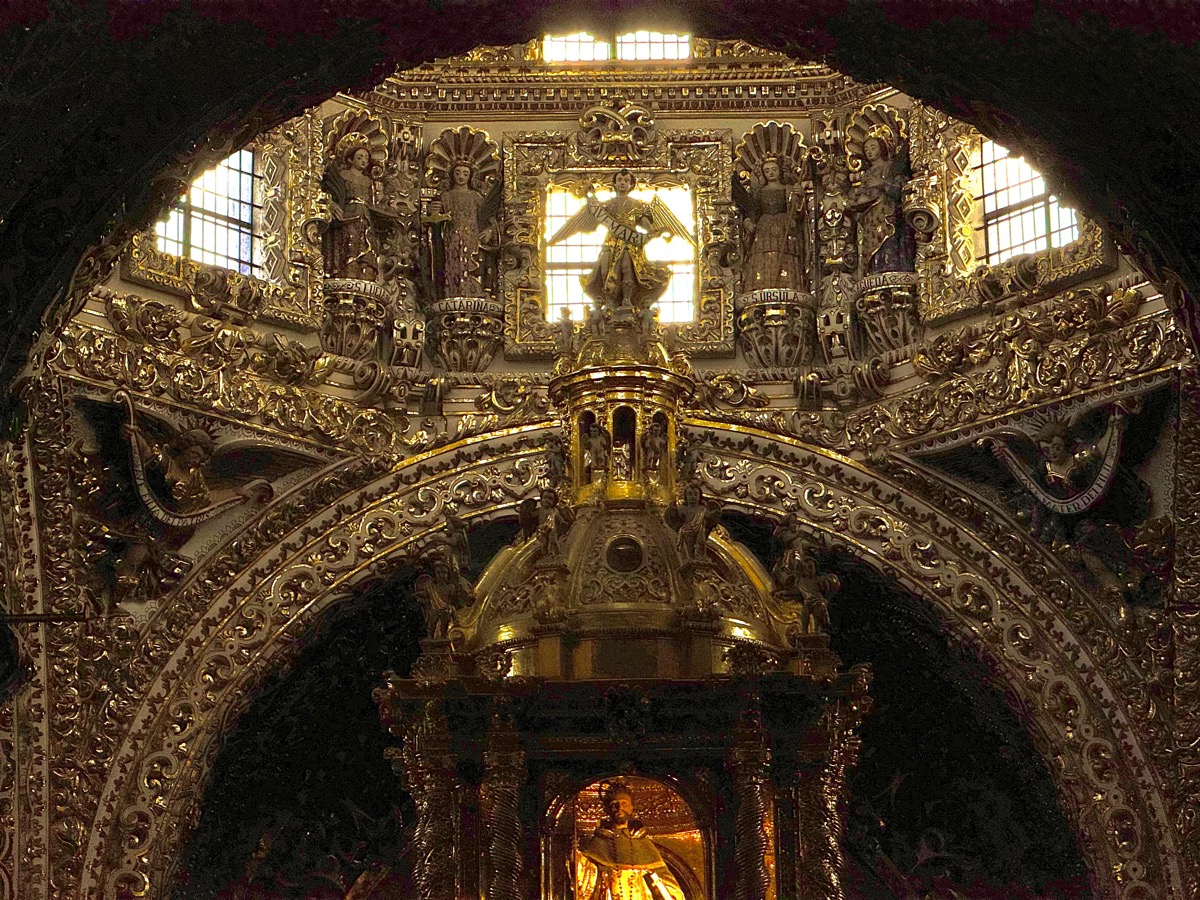
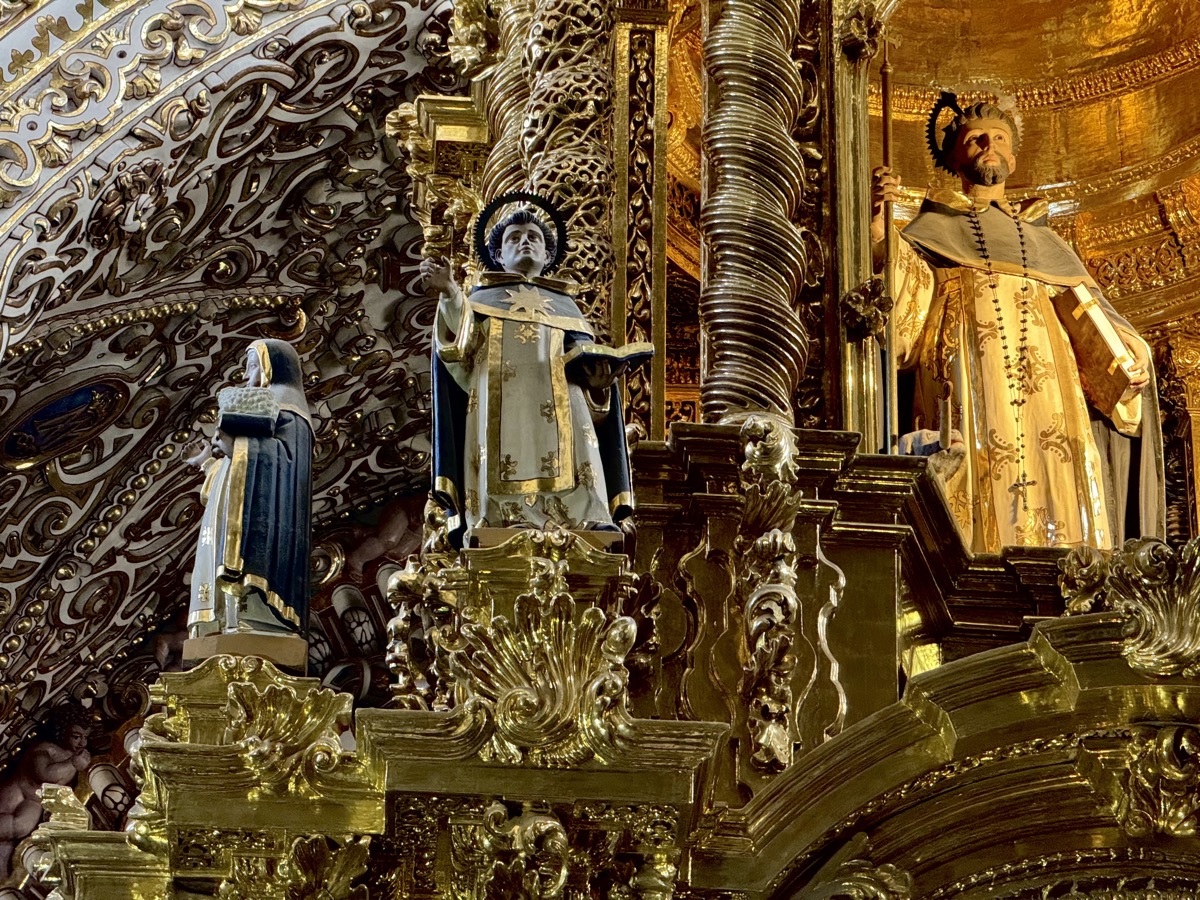
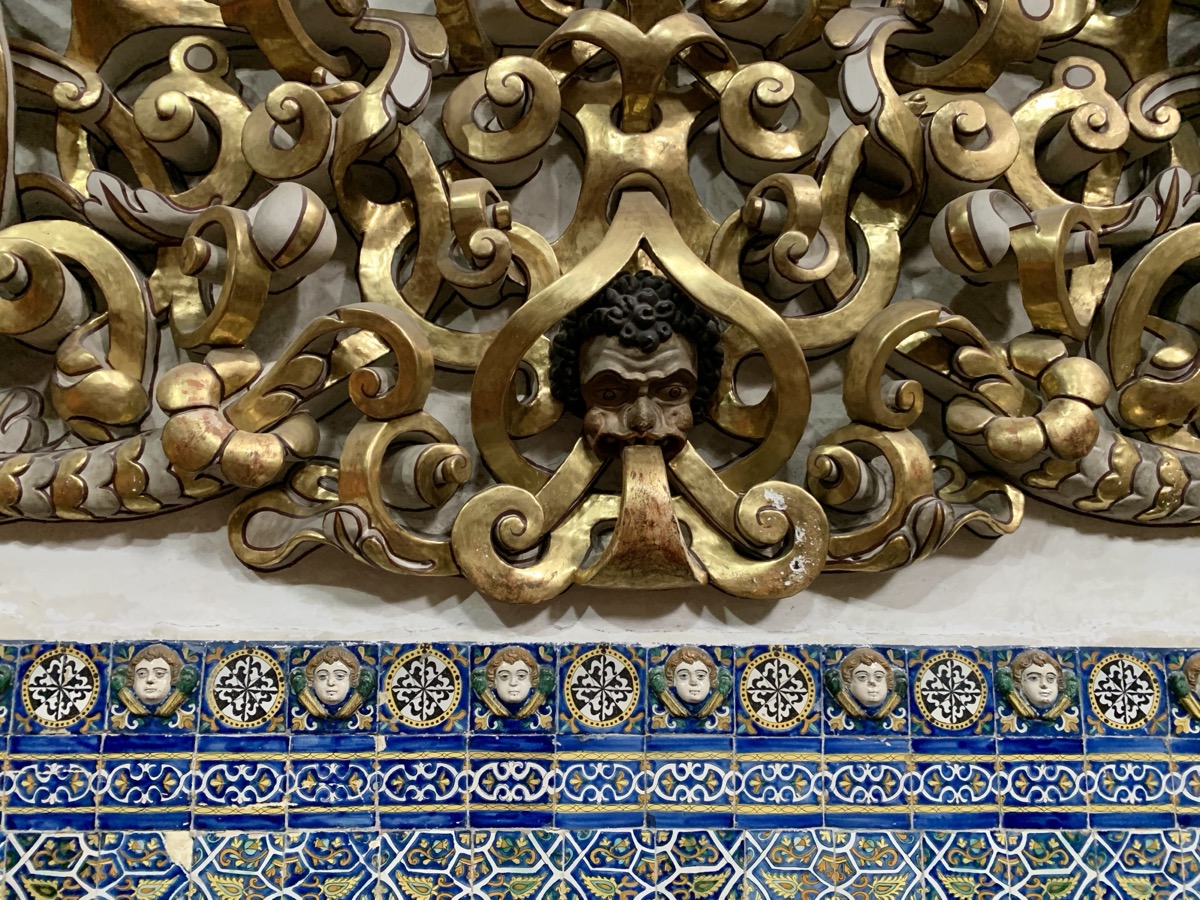
Templo de Santo Domingo, Capilla del Rosario
Capilla del Rosario – New Spanish Baroque.
We then made a loop a few blocks west to Teatro Principal, Casa de Alfeñique, Callejón de los Sapos, Cathedral and Calle 16 de Septiembre back to our hostel. With a short side “excursion” to supermarket Soriana to get groceries. Historical center is compact and very nice and easy to walk.
Teatro Principal
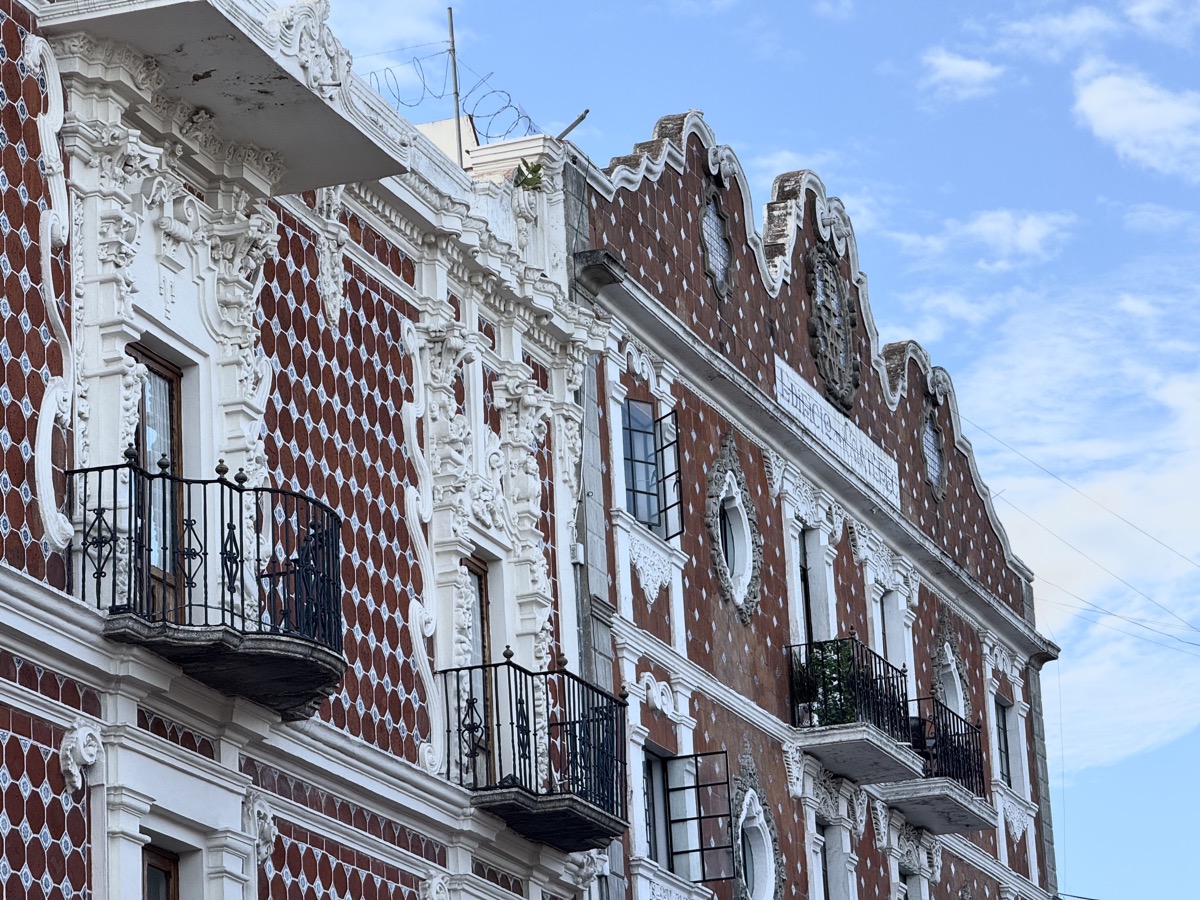
Casa de Alfeñique
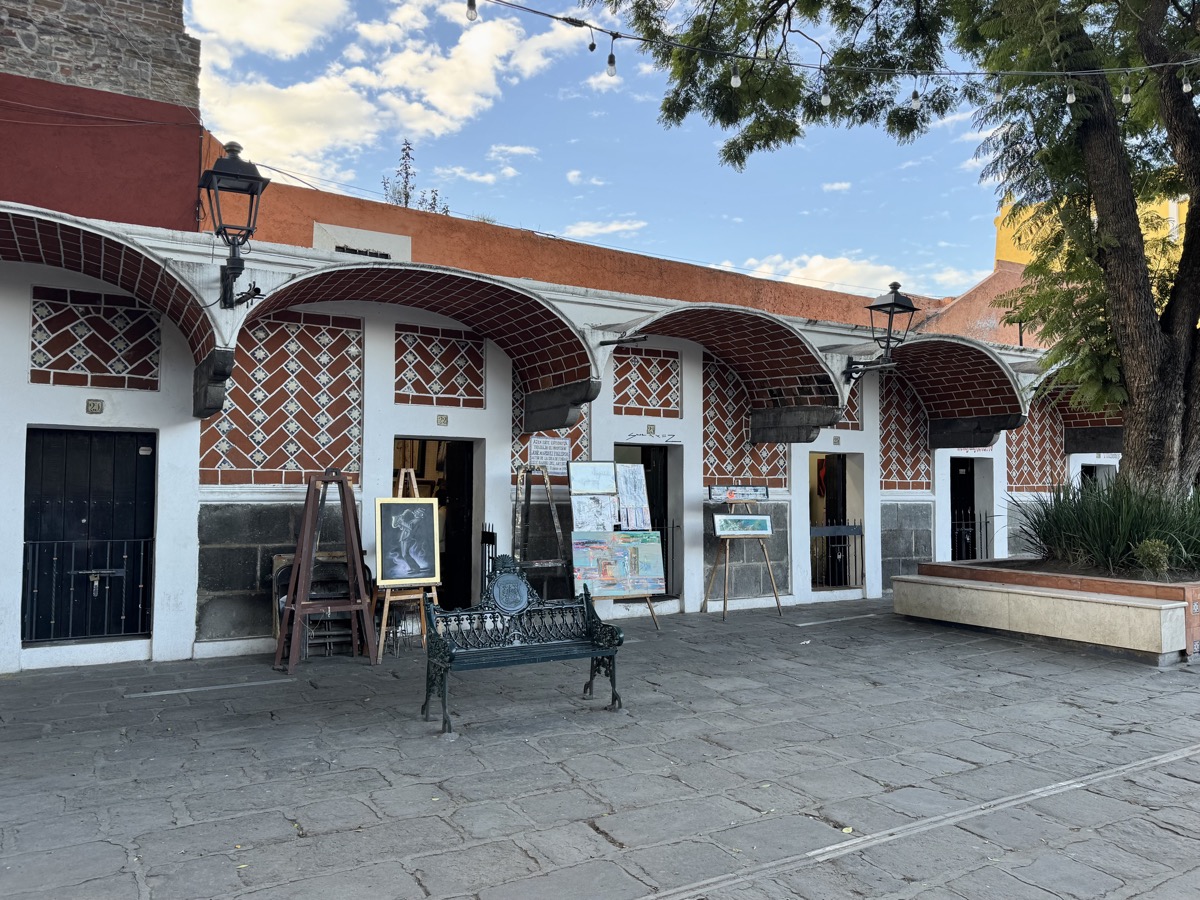
Artist studios
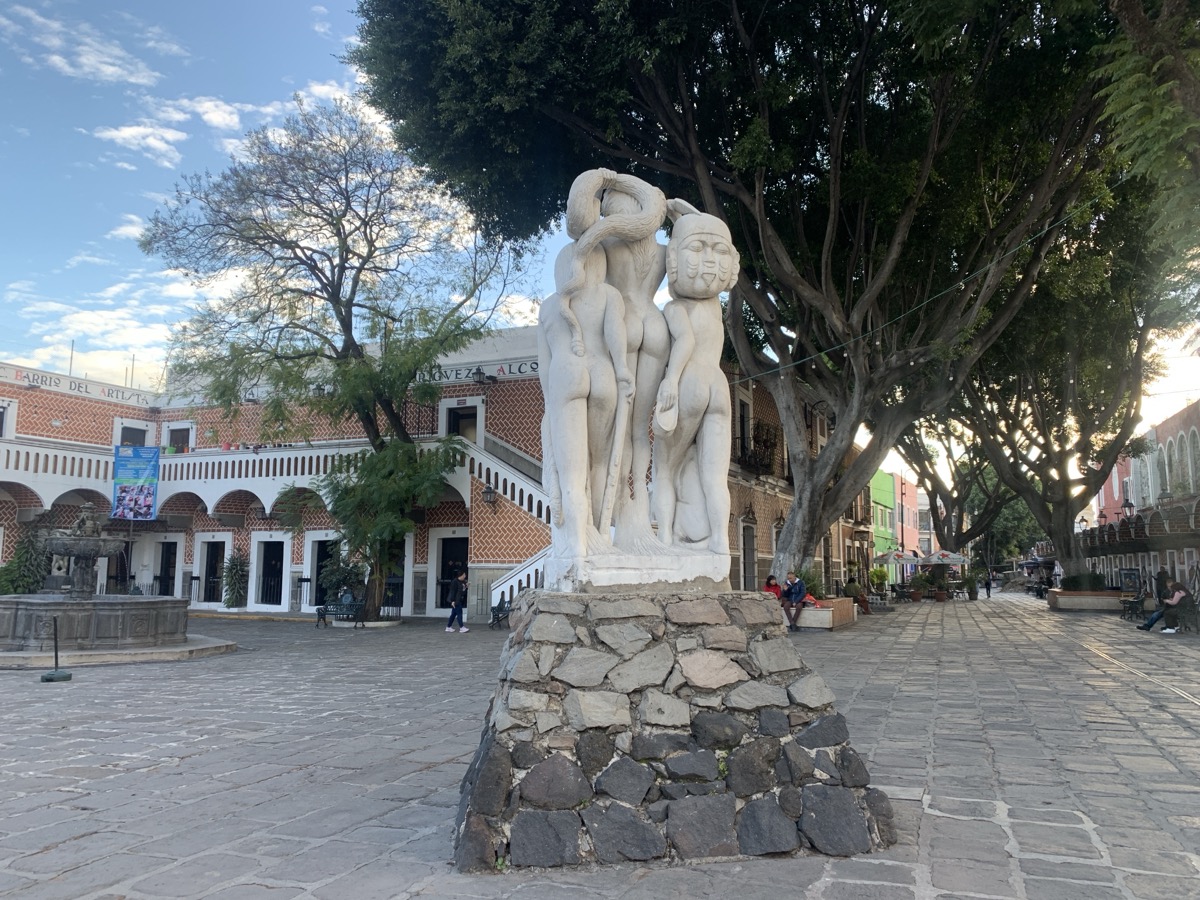
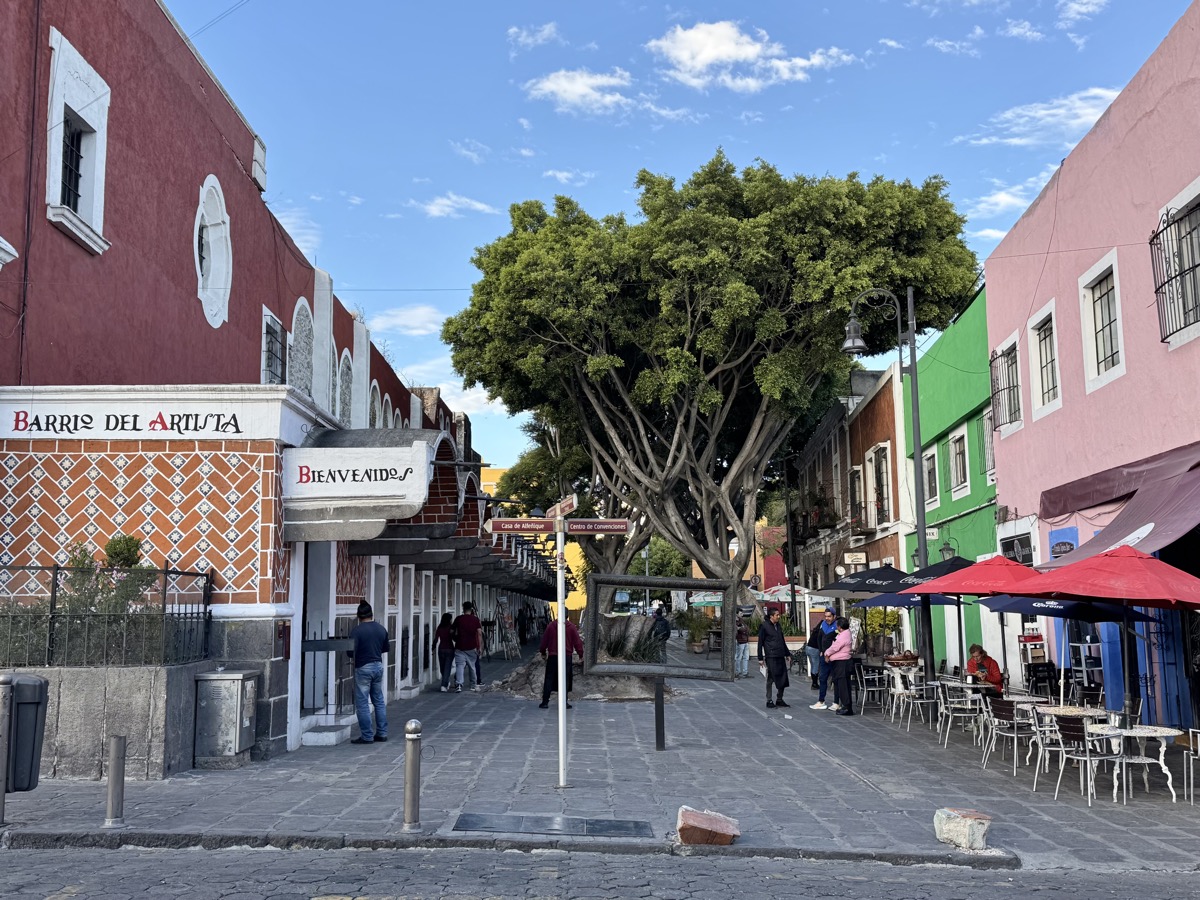
Barrio del Artista
Callejón de los Sapos
Calle 16 de Septiembre
Day 3.
Cholula. It is just 12-km ride (we considered a bus but took inexpensive Uber) from Puebla to Cholula – city with long pre-Hispanic history hidden underneath later structures. Cholula, some claim, is the oldest continuously inhabited city in Americas. Cortez destroyed its 400 temples and replaced them with 365 churches (legend not quite true, but there are many).
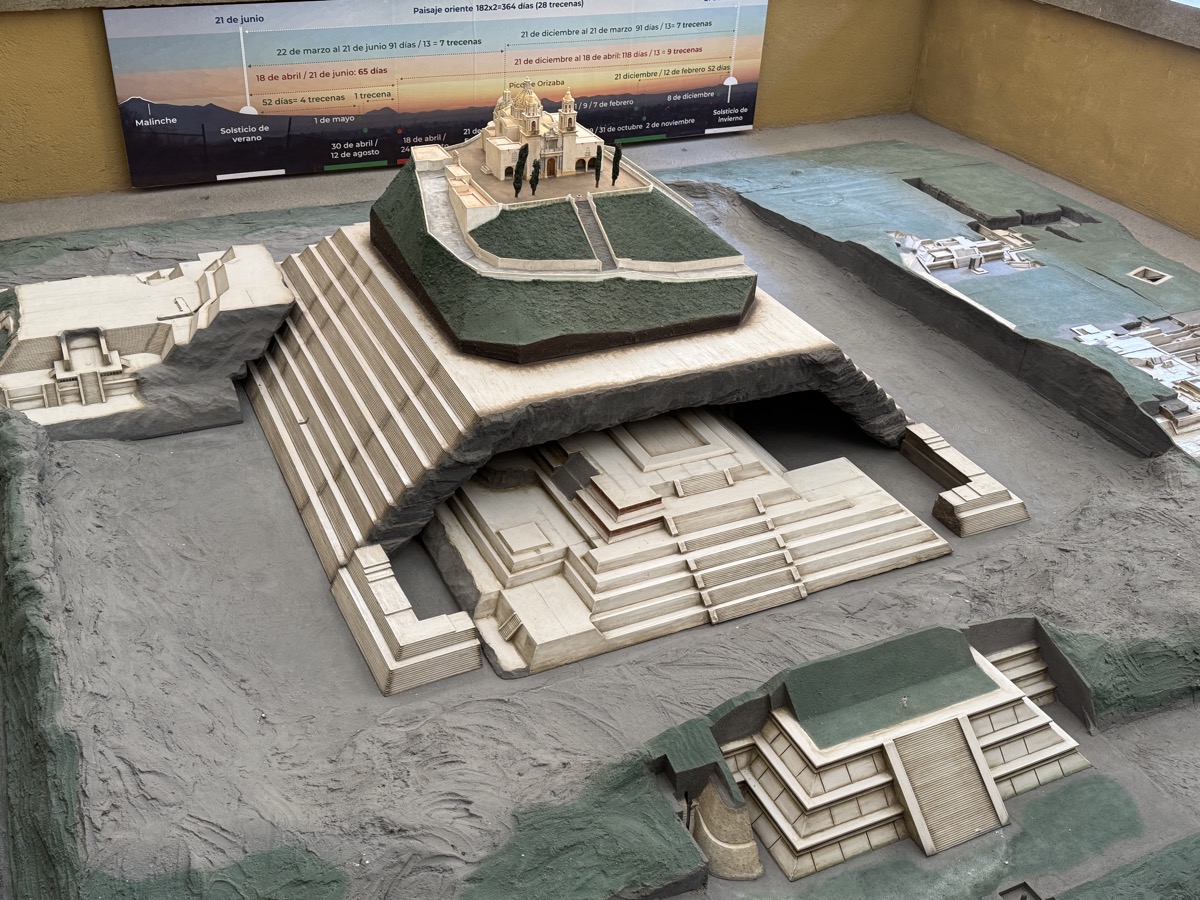
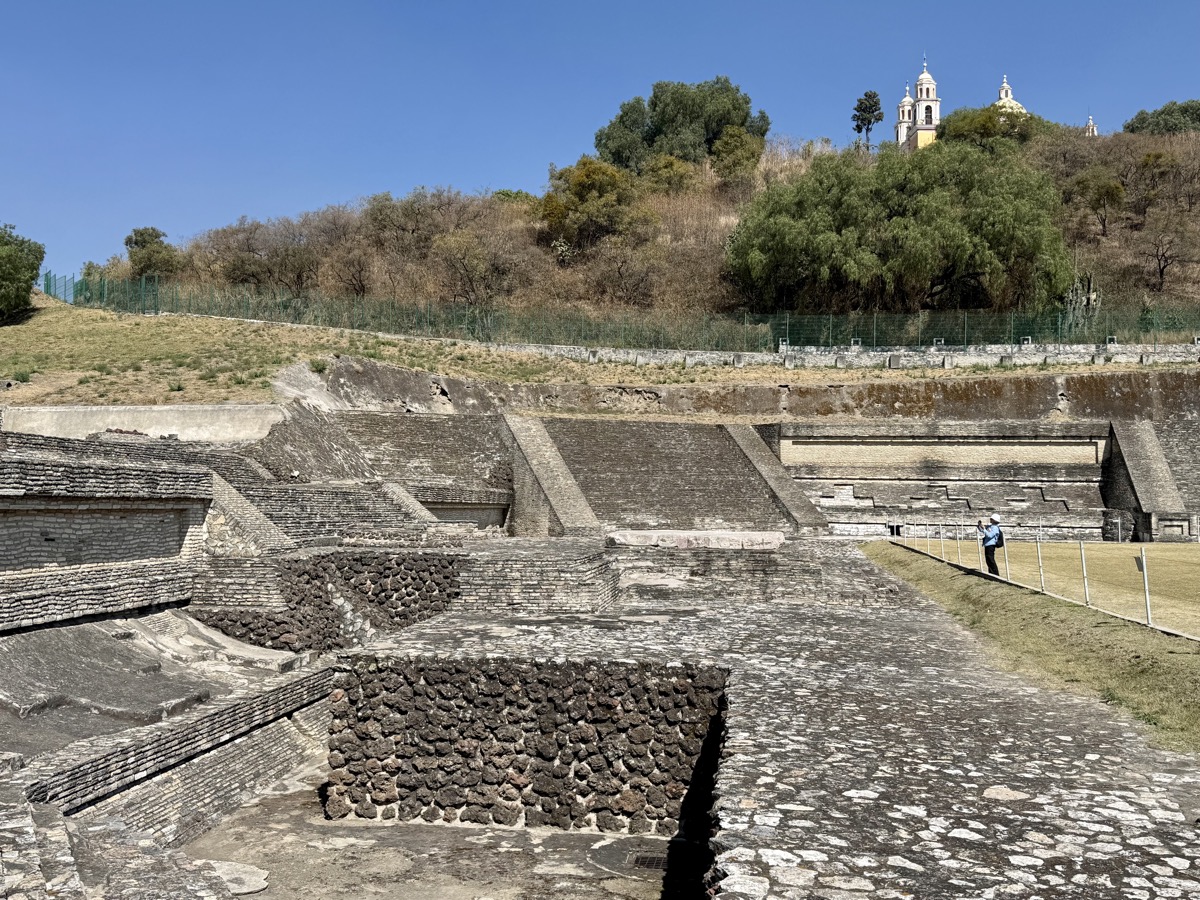
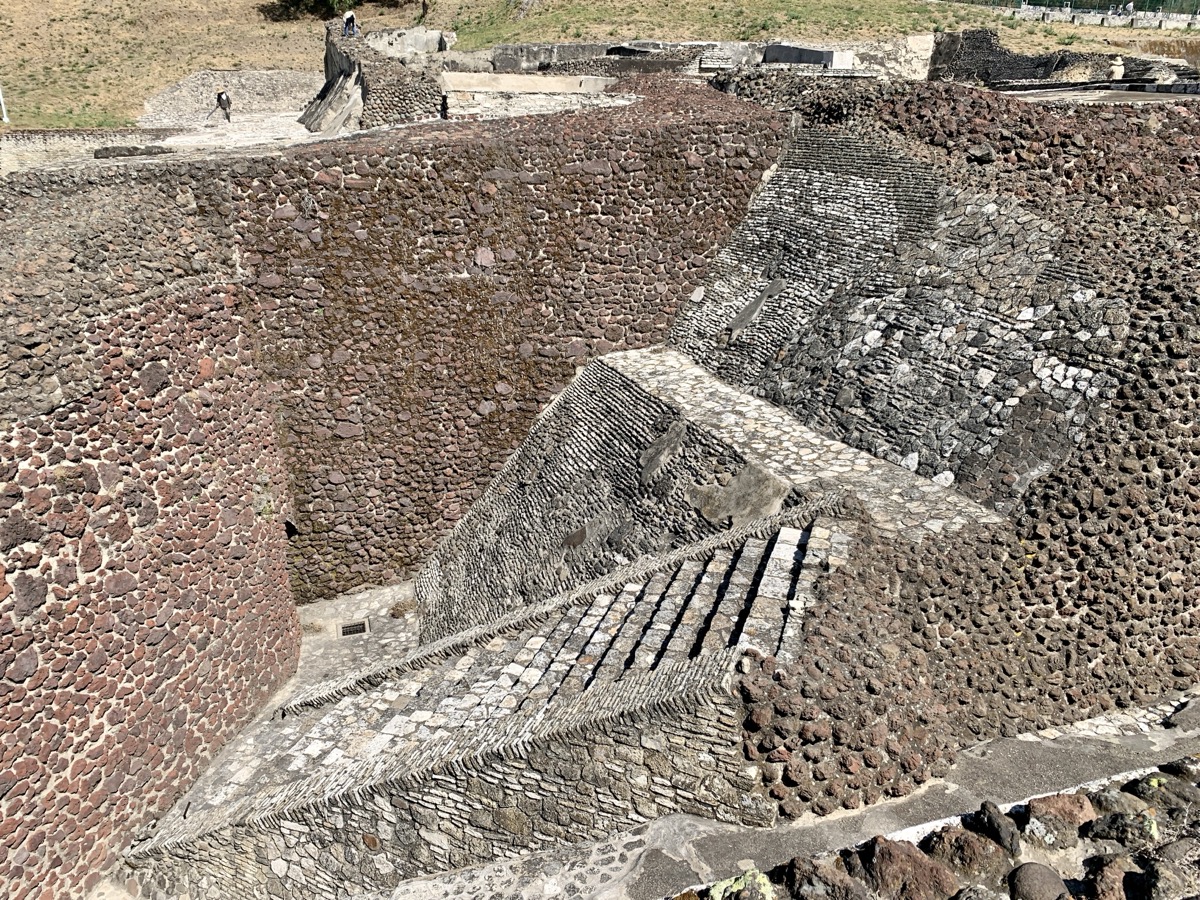
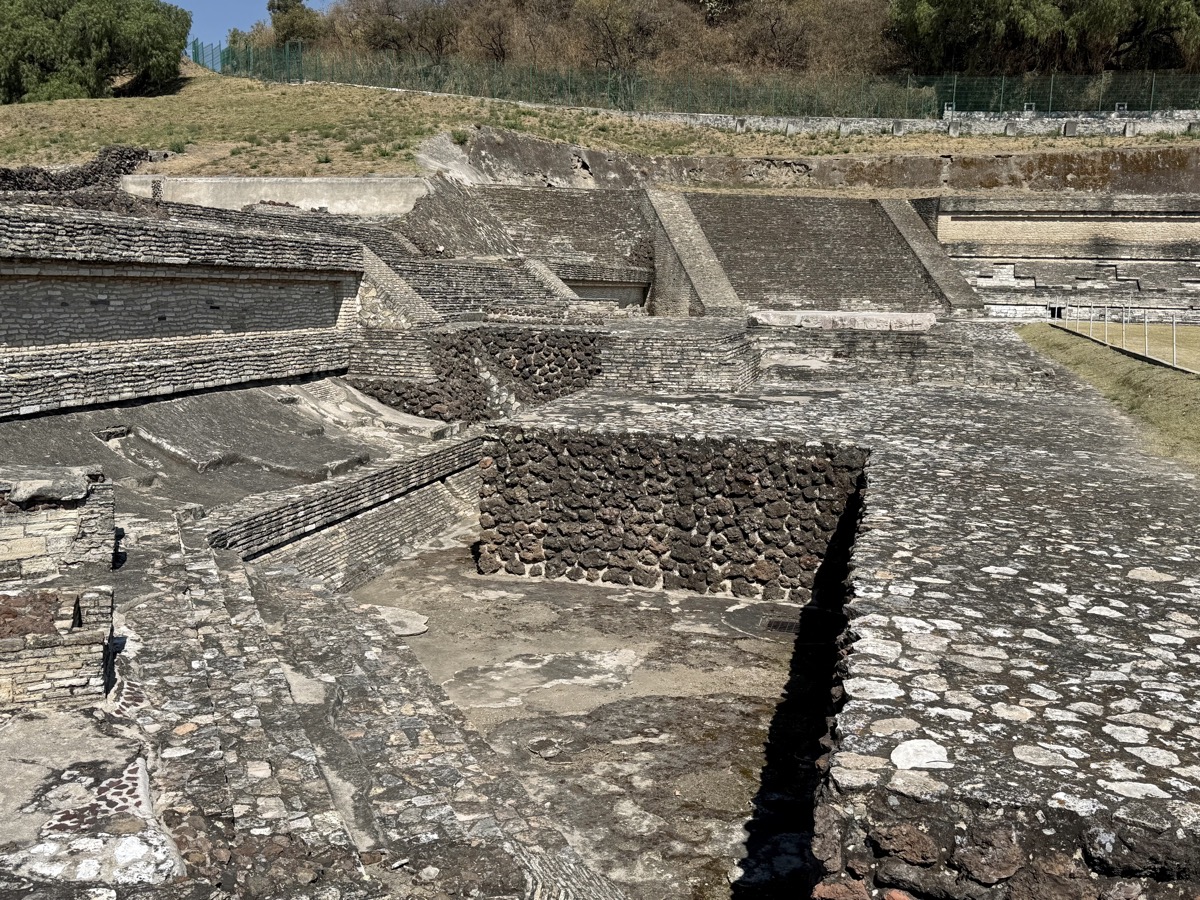
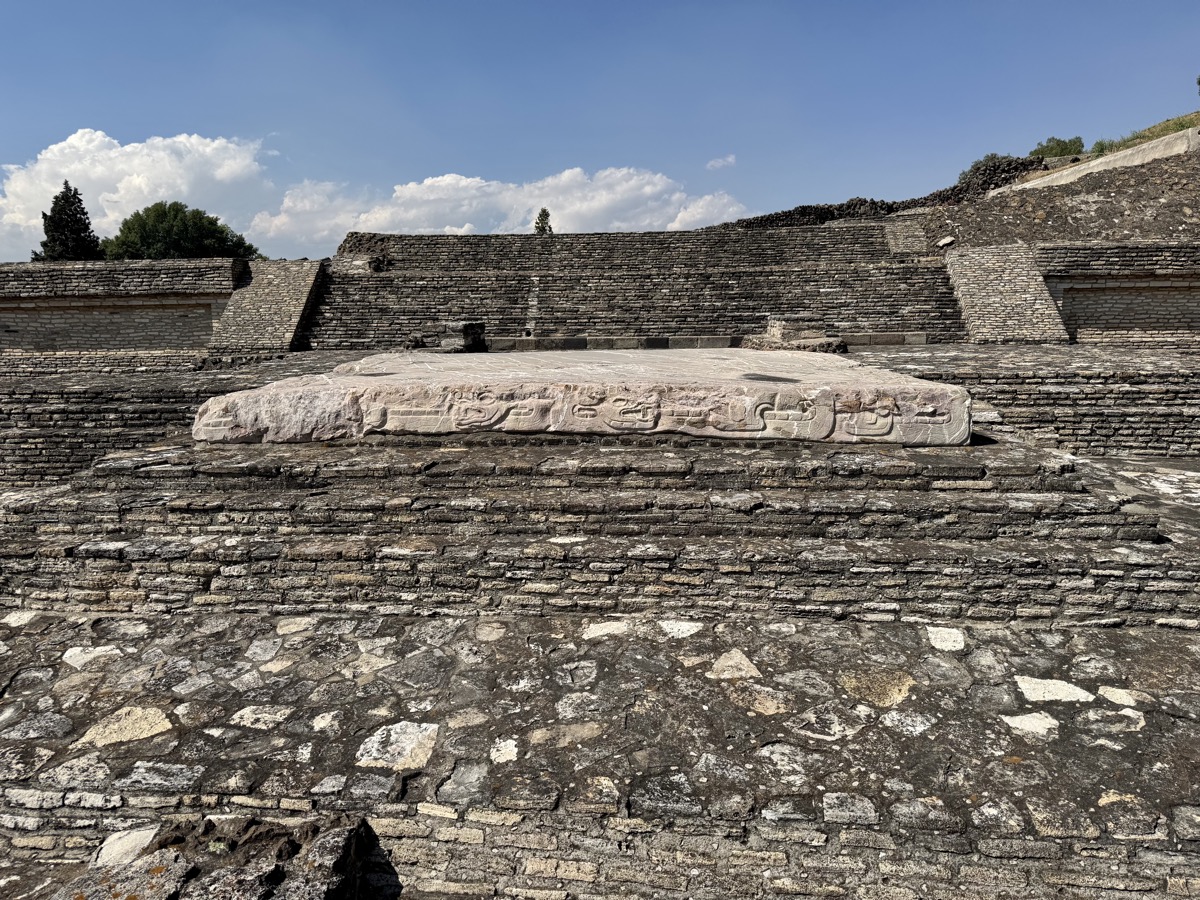
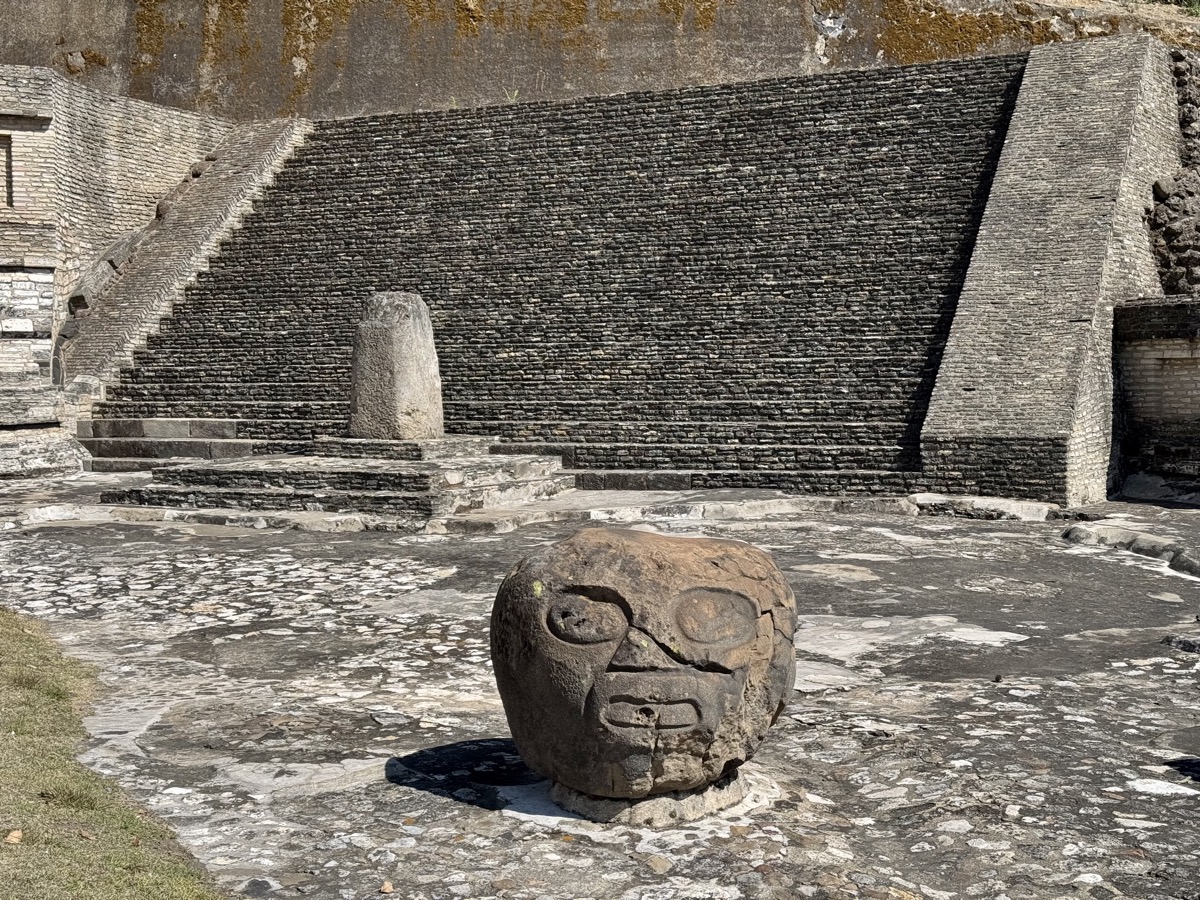
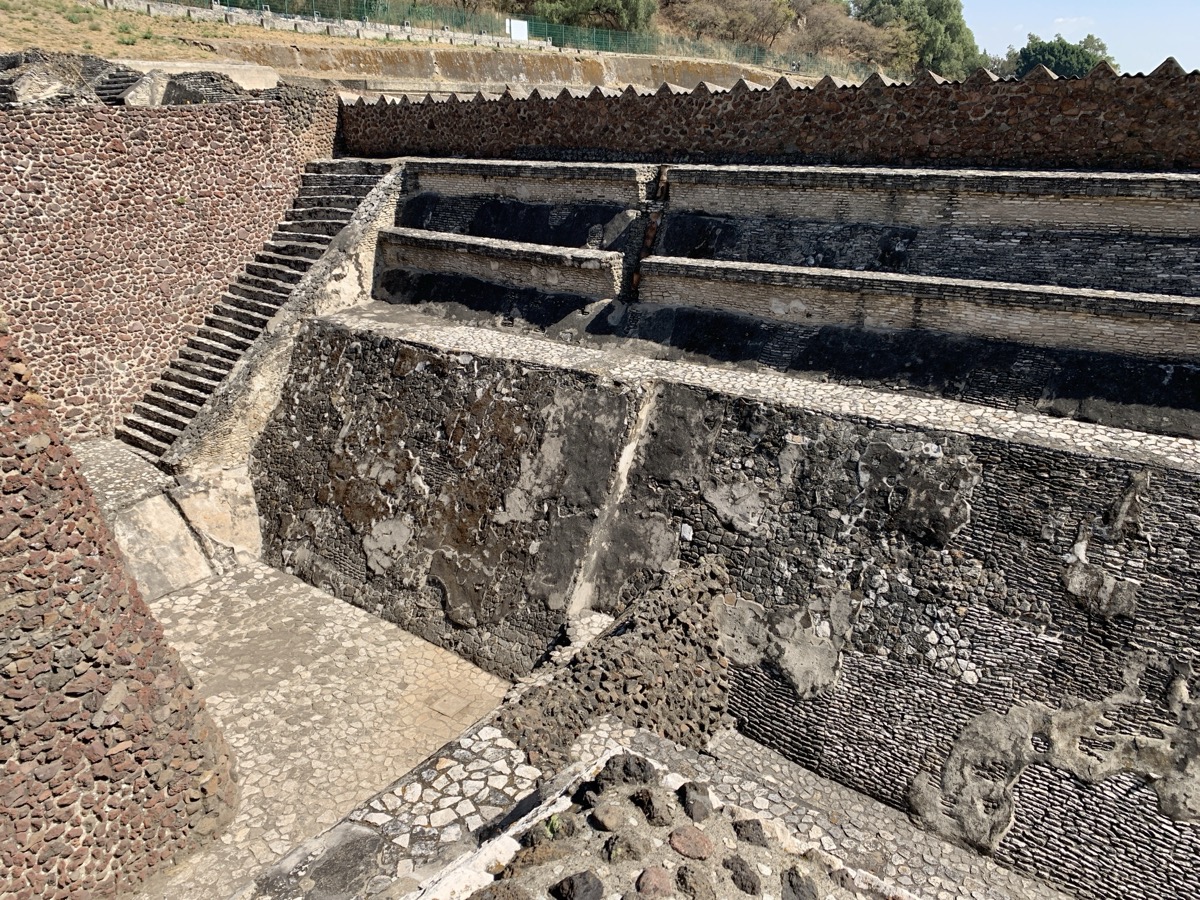
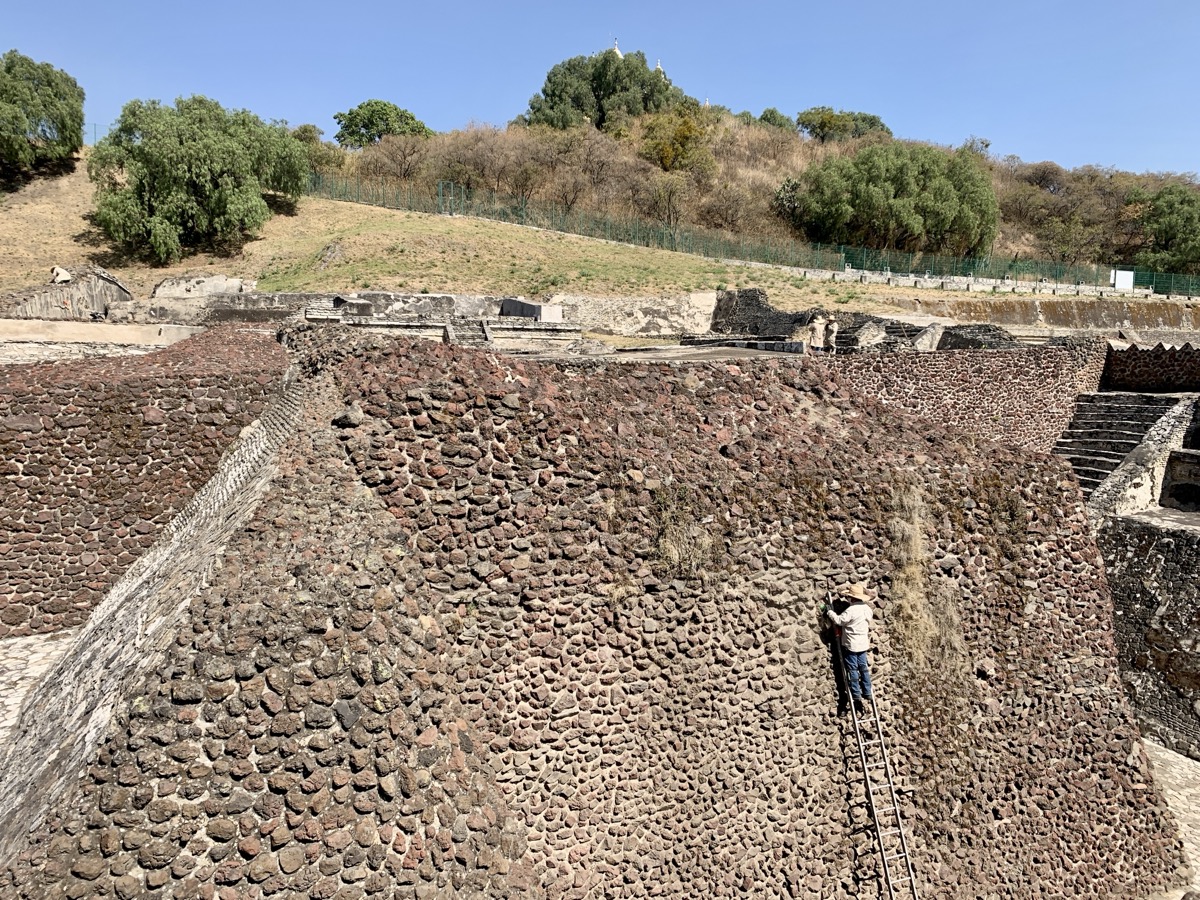
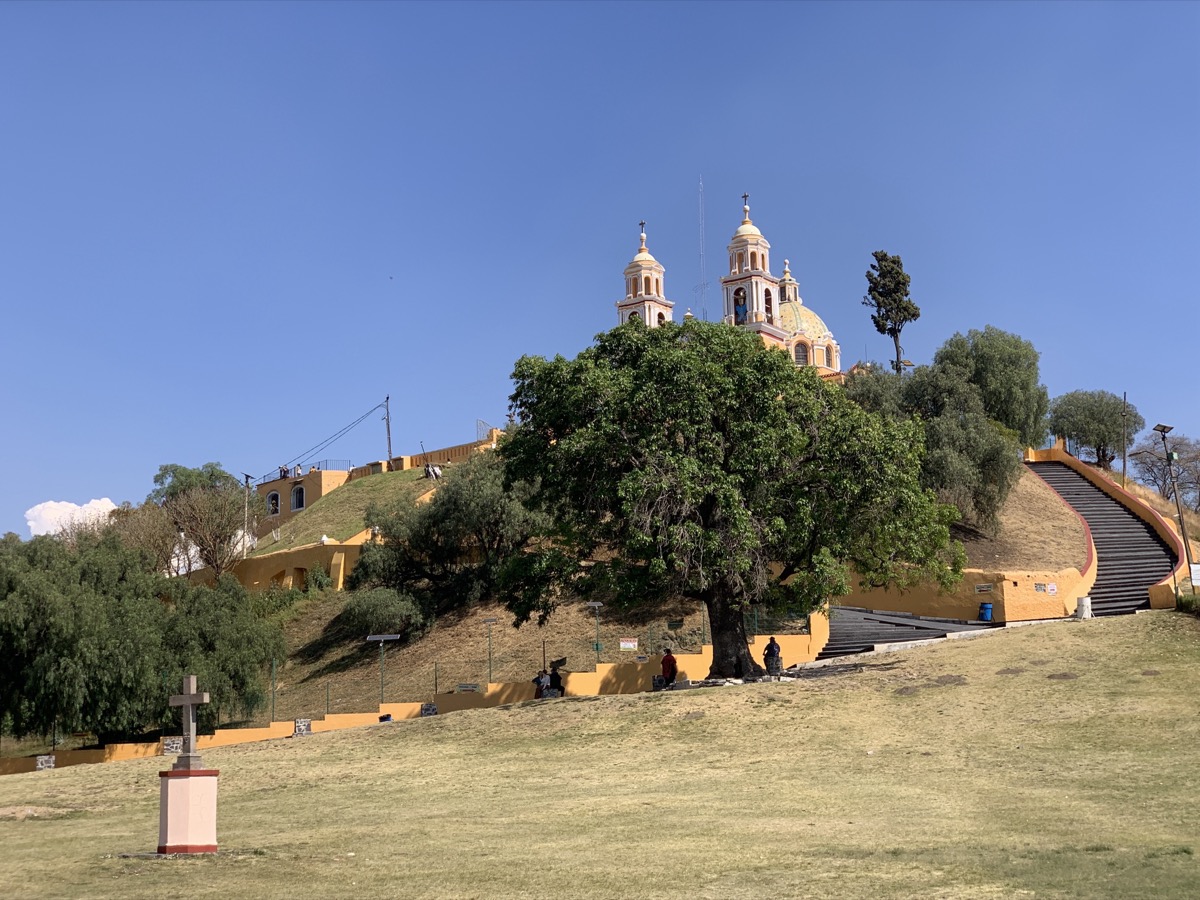
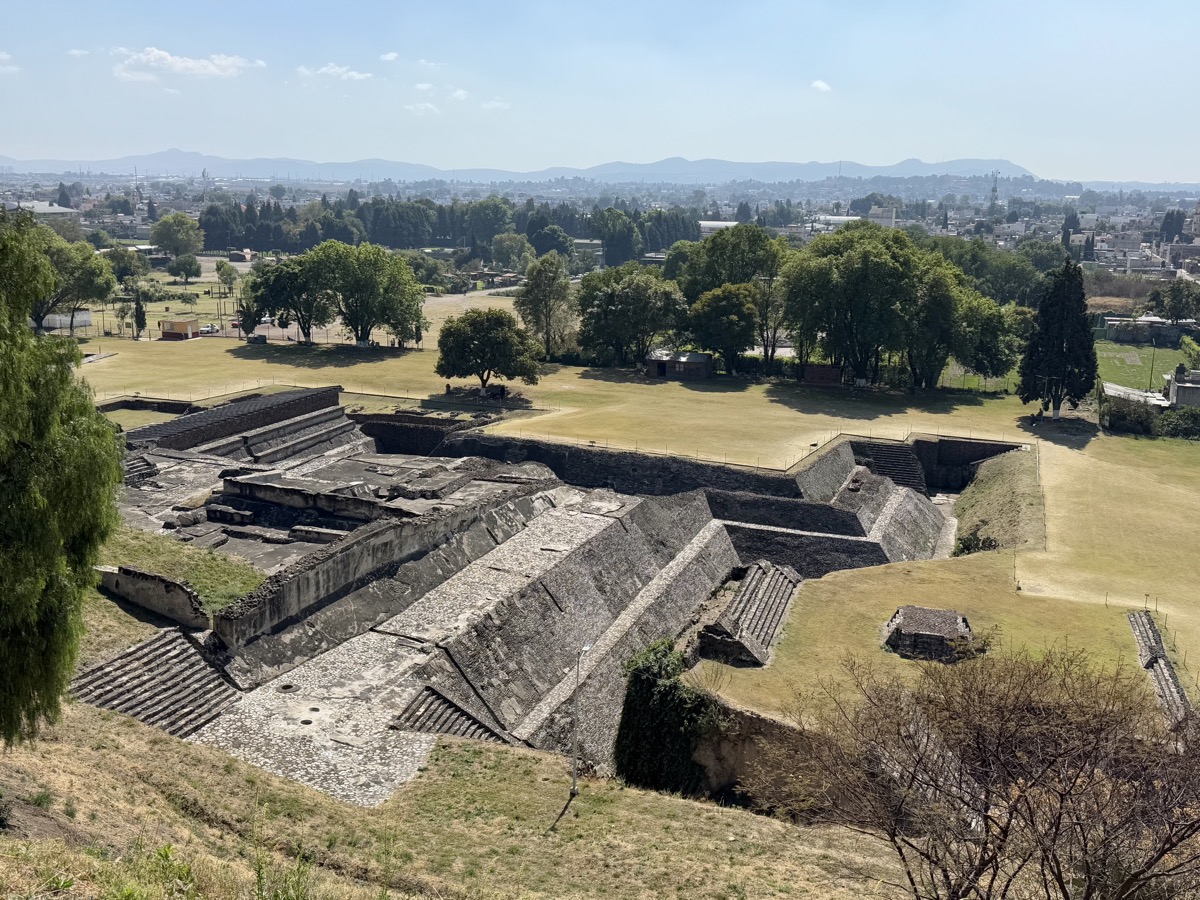
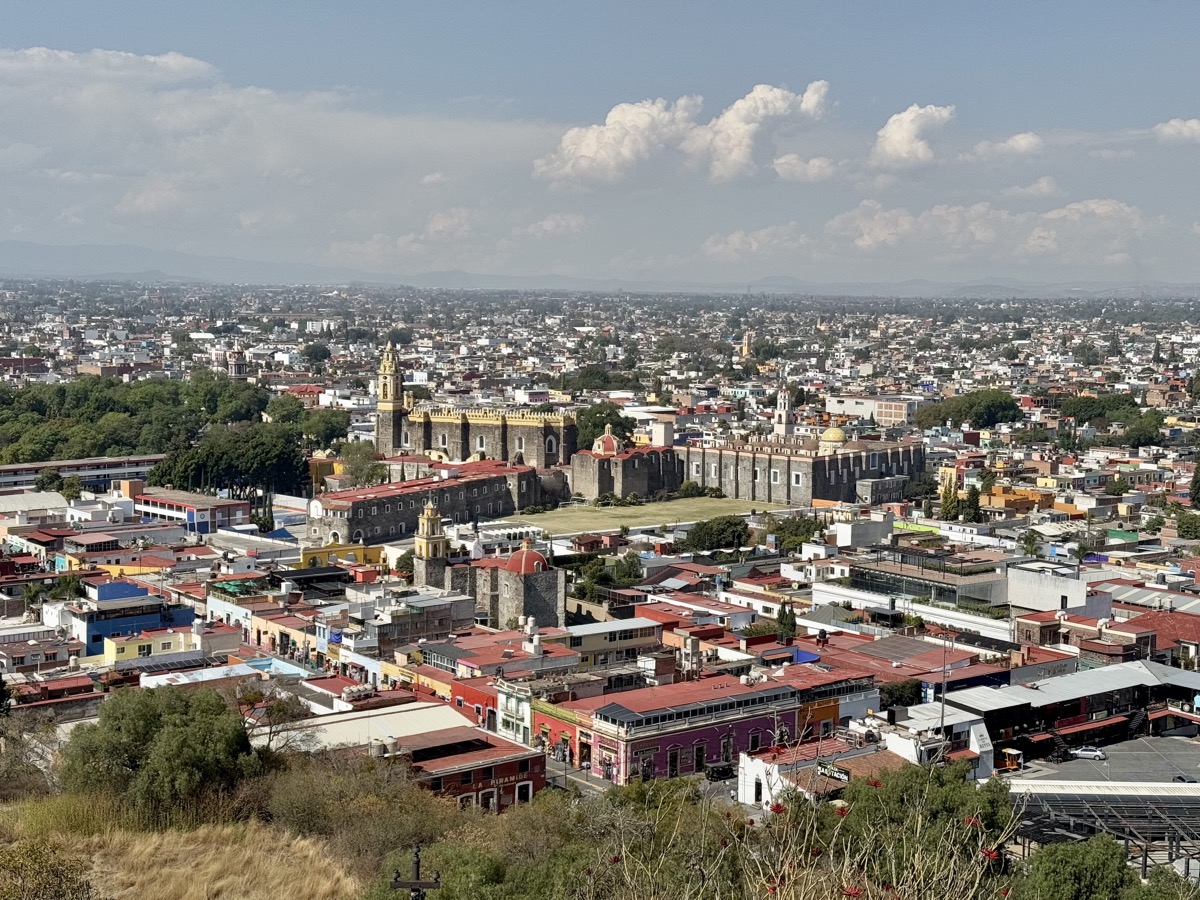
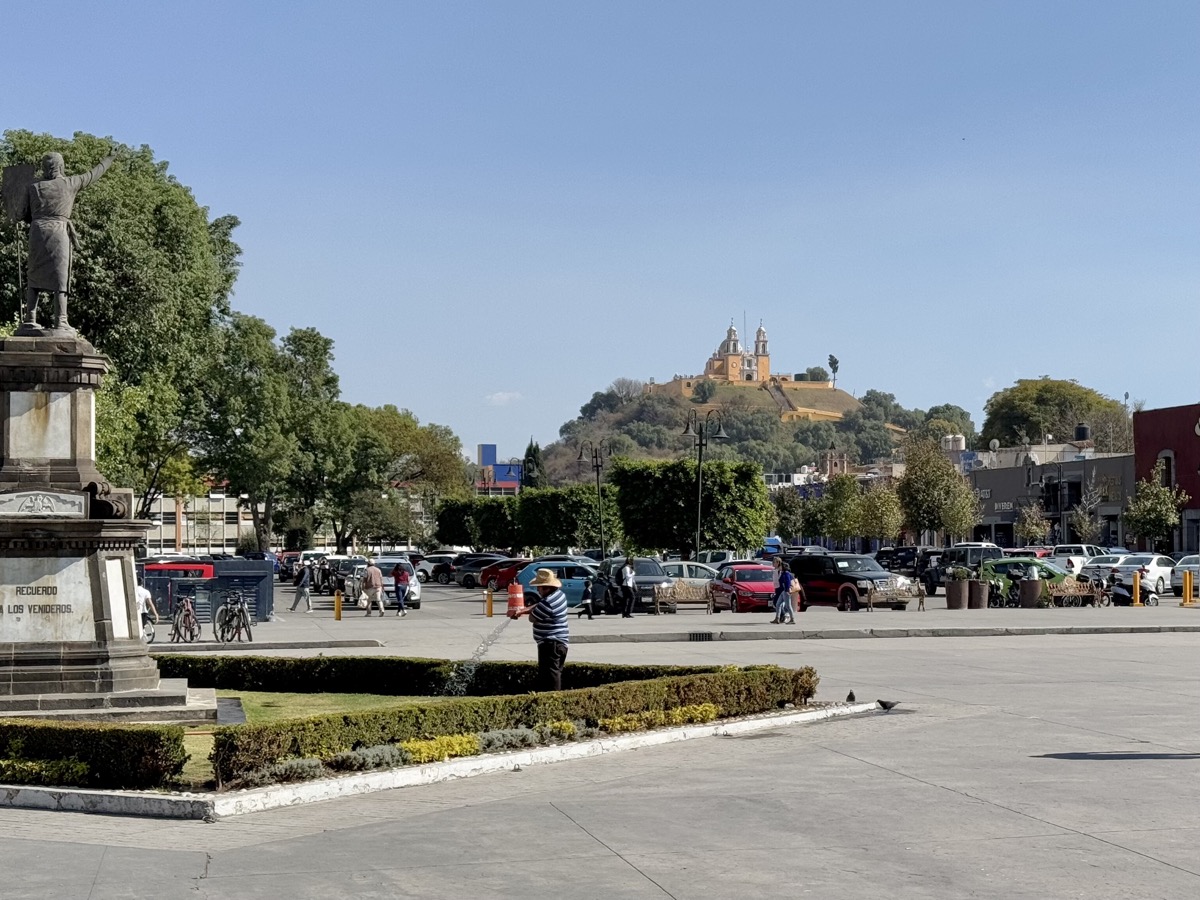
We stopped briefly at Museo Regional to get introductory info and soon entered Zona Arqueológica of Tlachihualtepetl (Great Pyramid). It is the largest pyramid by volume ever built, but you cannot really see it, as it is mostly unexcavated. Typical for Mexican pre-Hispanic temples, it has several nested layers built over time. We spent some time investigating exposed/rebuilt parts of the pyramid (unfortunately archeological tunnels have been closed since Covid) and then walked to Iglesia de Nuestra Señora de los Remedios on top of the “hill”, with great views of the city. As the history goes the Great Pyramid was abandoned for a while by the time of the Spanish conquest, as the old city moved to the area where the main plaza is today. Nothing (visible) survived there from pre-Hispanic times.
Tlachihualtepetl (Great Pyramid)
Cholula is one of Pueblos Magicos, which we imagined as small towns, but they are large cities. As we walked over the hill to the other side we were in different world.
Tlachihualtepetl (Great Pyramid)
…
…
…
…
…
…
…
Iglesia de Nuestra Señora de los Remedios
View from top on excavated base of the pyramid
View towards Zócalo
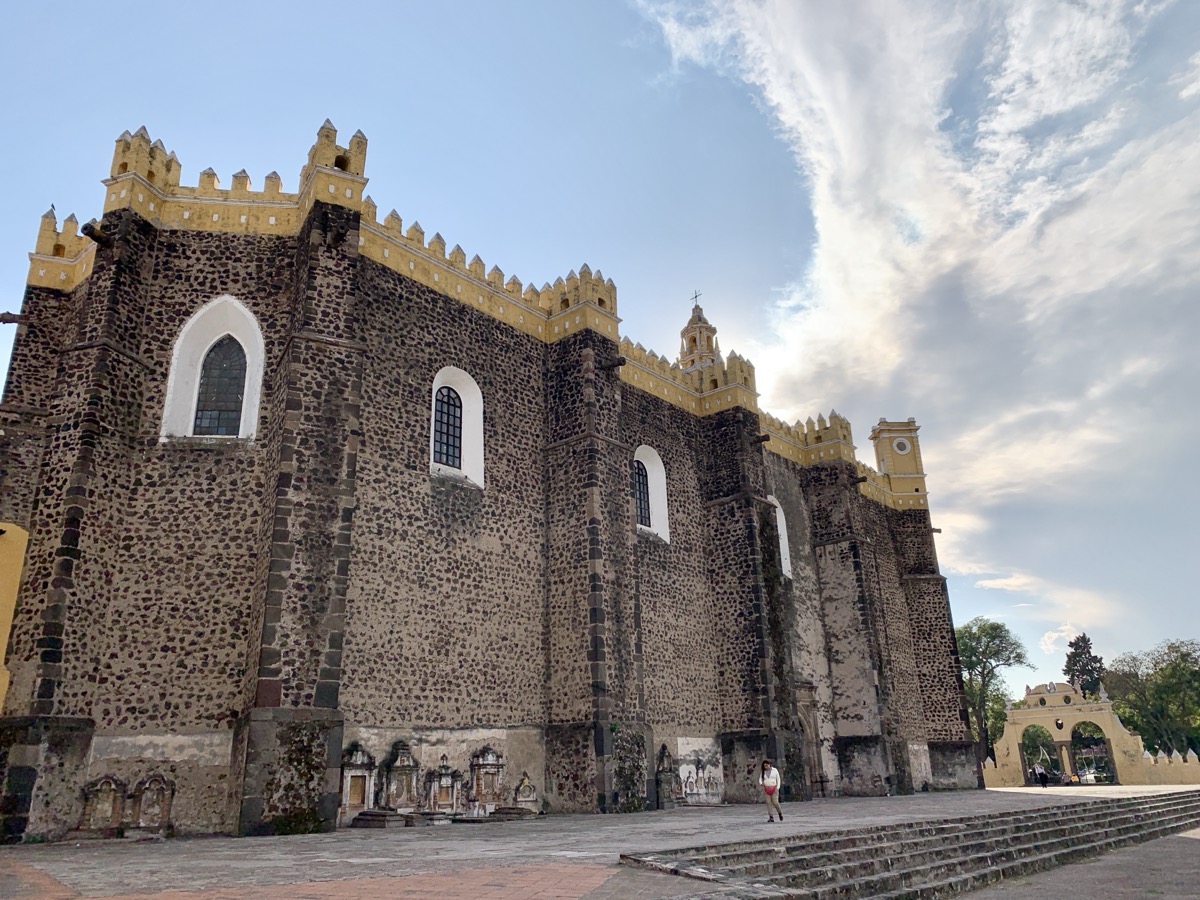
Convento de San Gabriel Arcángel
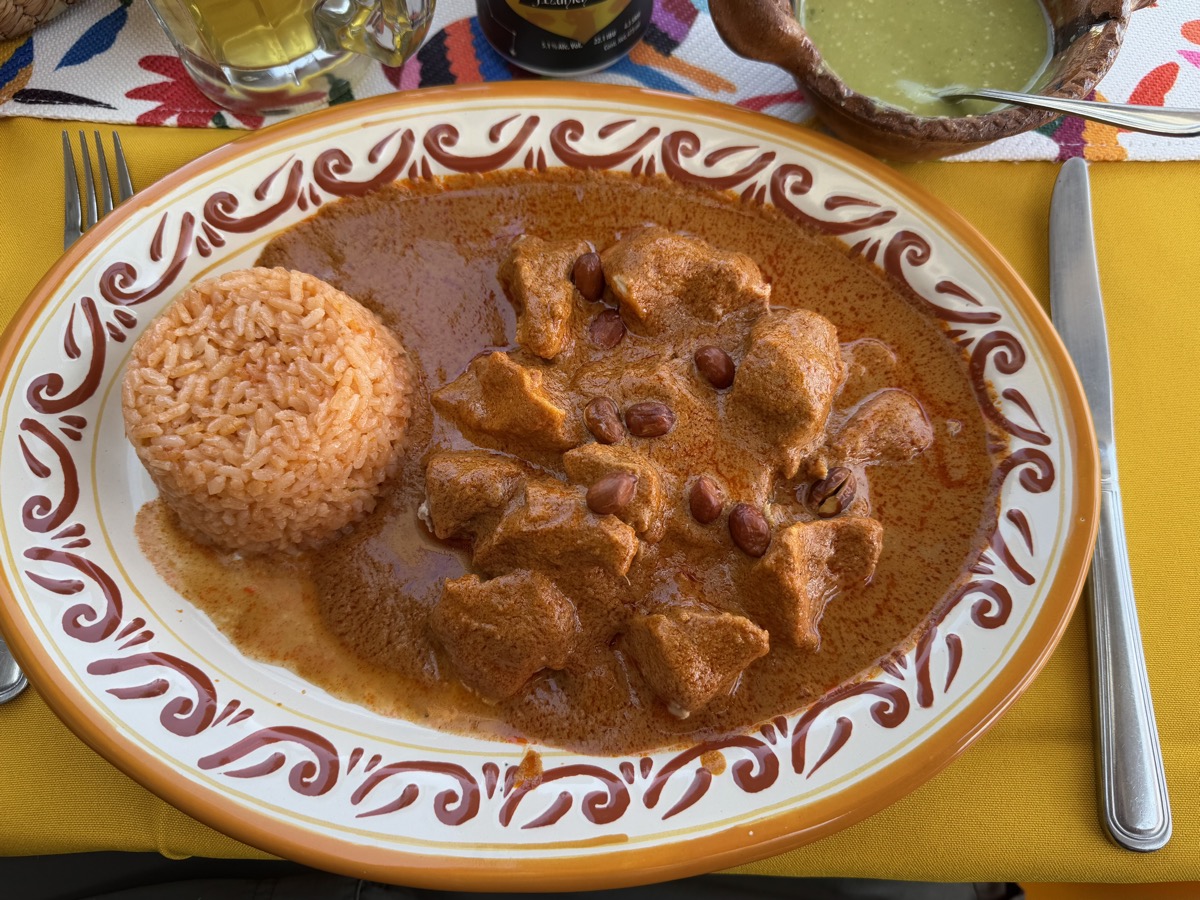
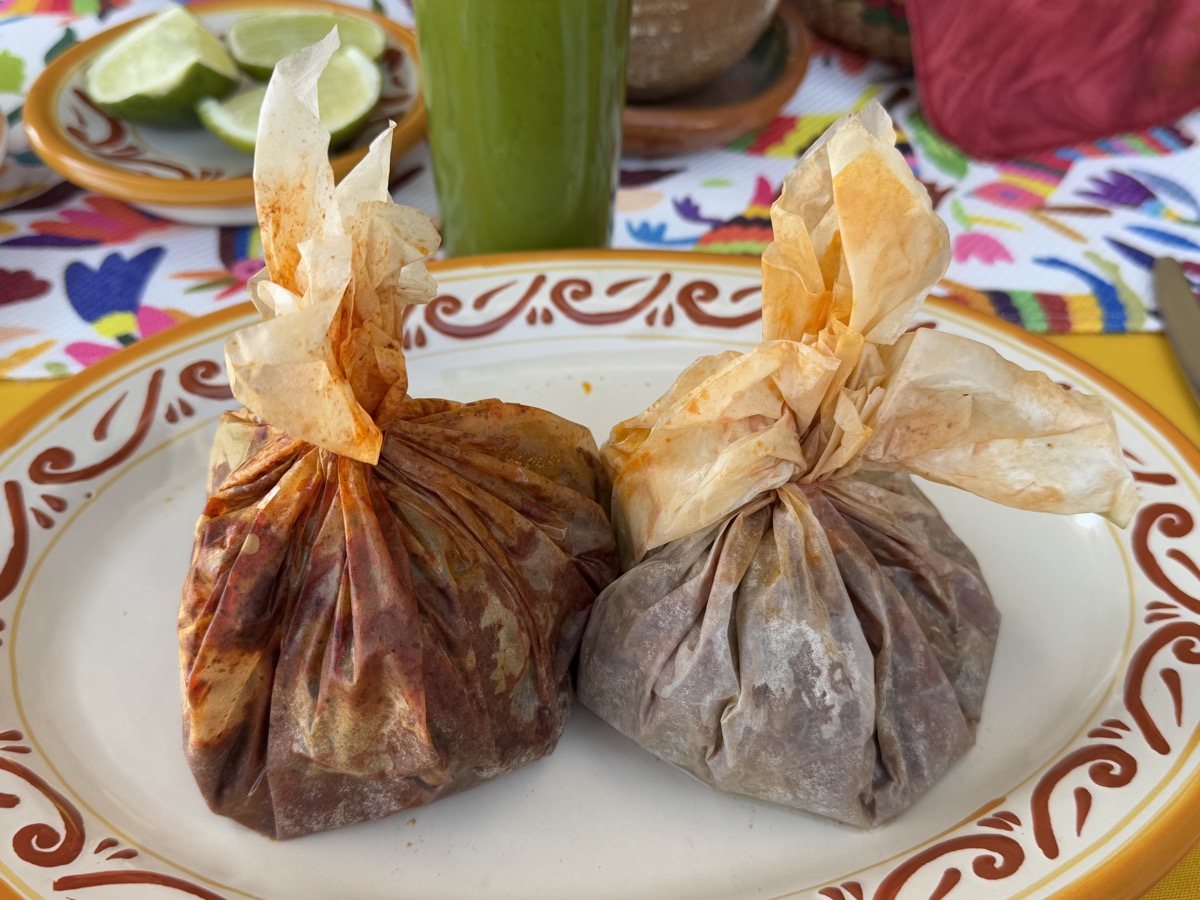
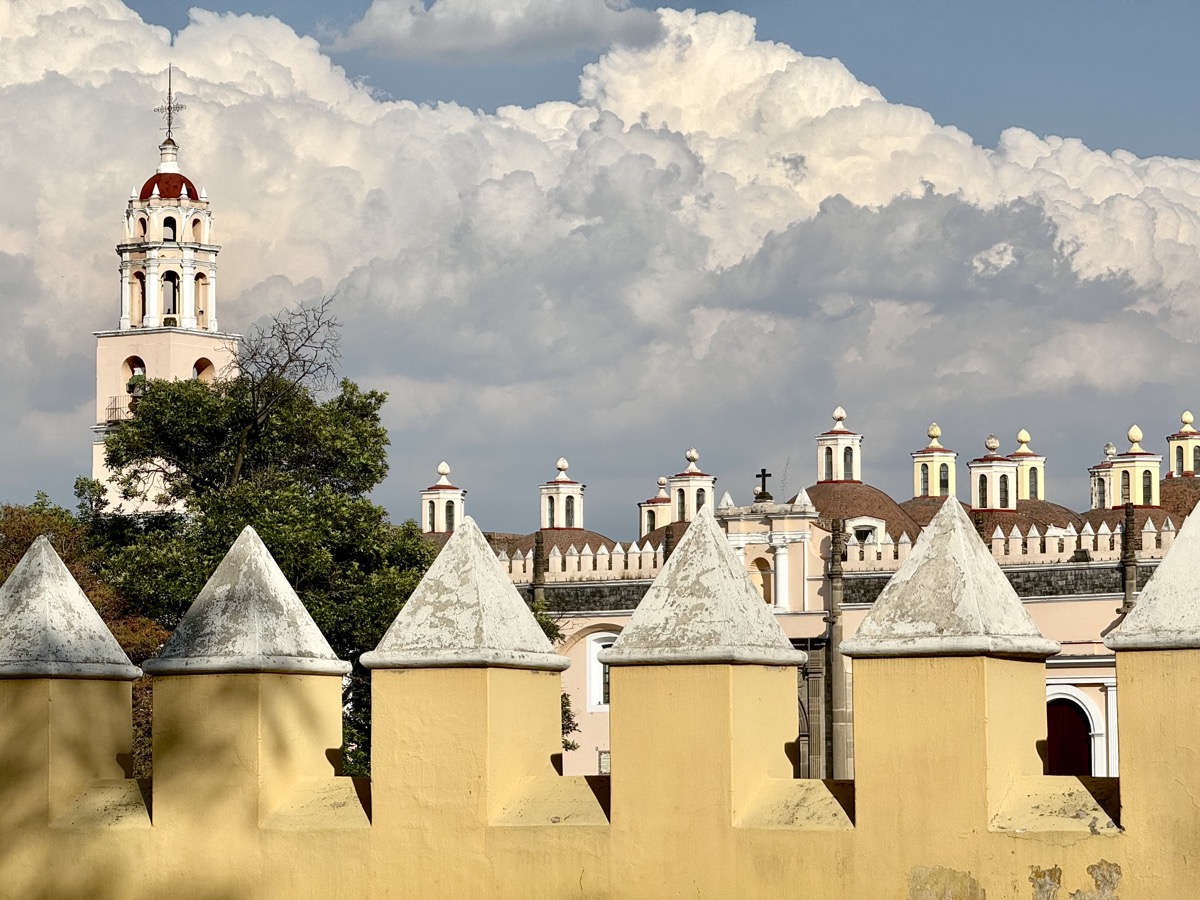
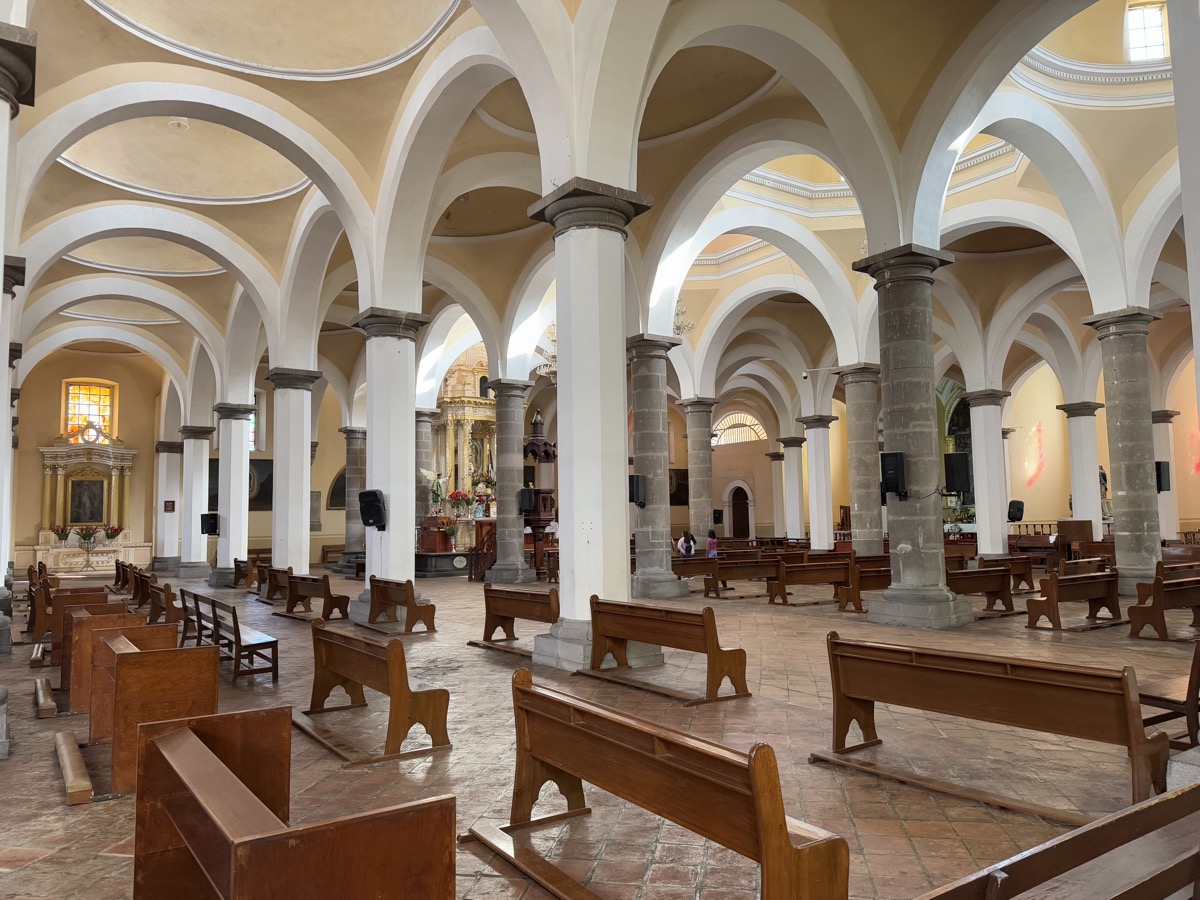
We parked at Restaurante Santa Clara (recommended) on Plaza de la Concordia (Zócalo de San Pedro) for traditional Mexican dishes (Pipián Rojo con Carne de Cerdo and Mixiotes de Res – very tasty). Relaxing and waiting for the gates to interesting Capilla Real de Naturales next to Convento de San Gabriel Arcángel to open. We then walked the streets around town center stoping at Panaderia La Herencia (rolls and sweets for breakfast), Molienda de Cacao to get cacao tostado grains and Caffé Excelto to try Mexican (Veracruz) coffee. We returned to Zócalo and took Uber back to Puebla.
View from Plaza de la Concordia
Pipián Rojo con Carne de Cerdo
Mixiotes de Res
Capilla Real de Naturales
Convento de San Gabriel Arcángel
Capilla Real de Naturales
Day 4.
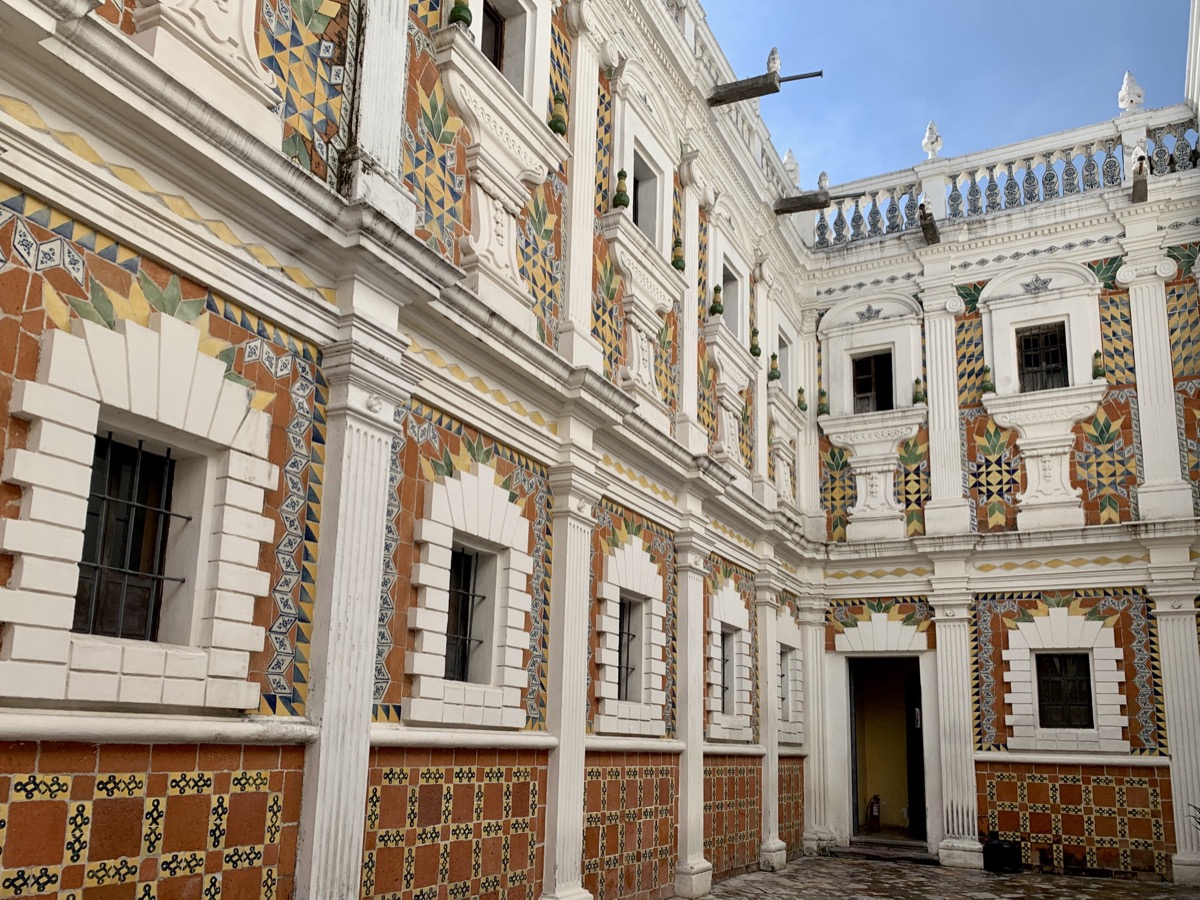
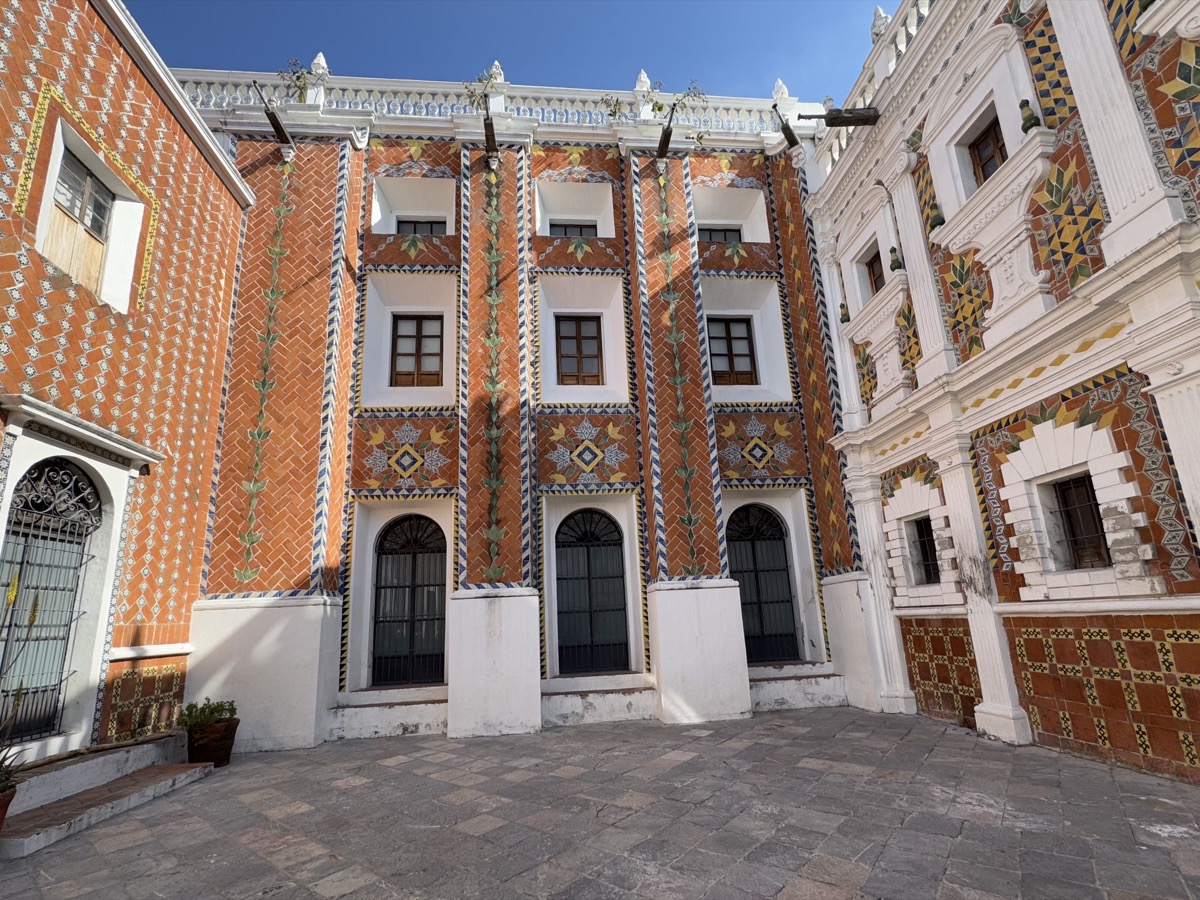
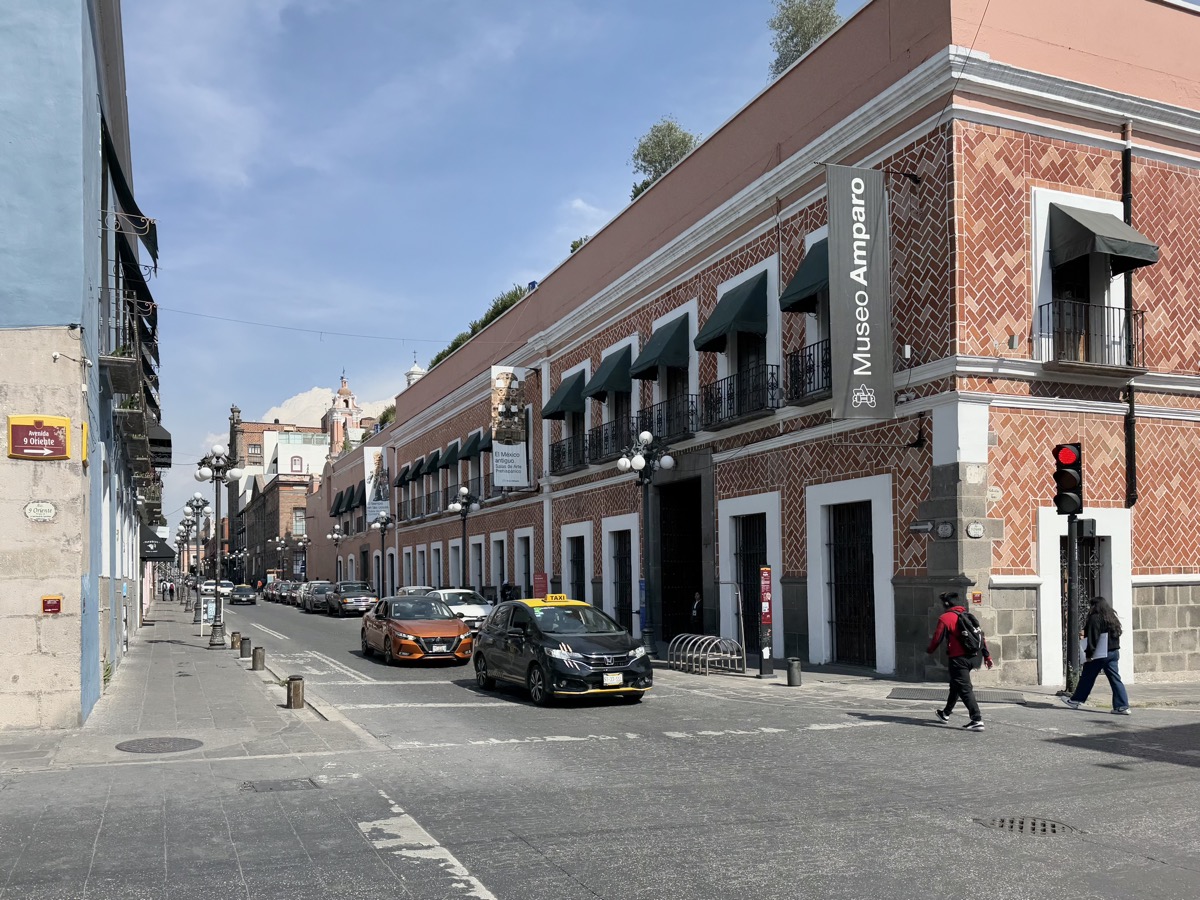
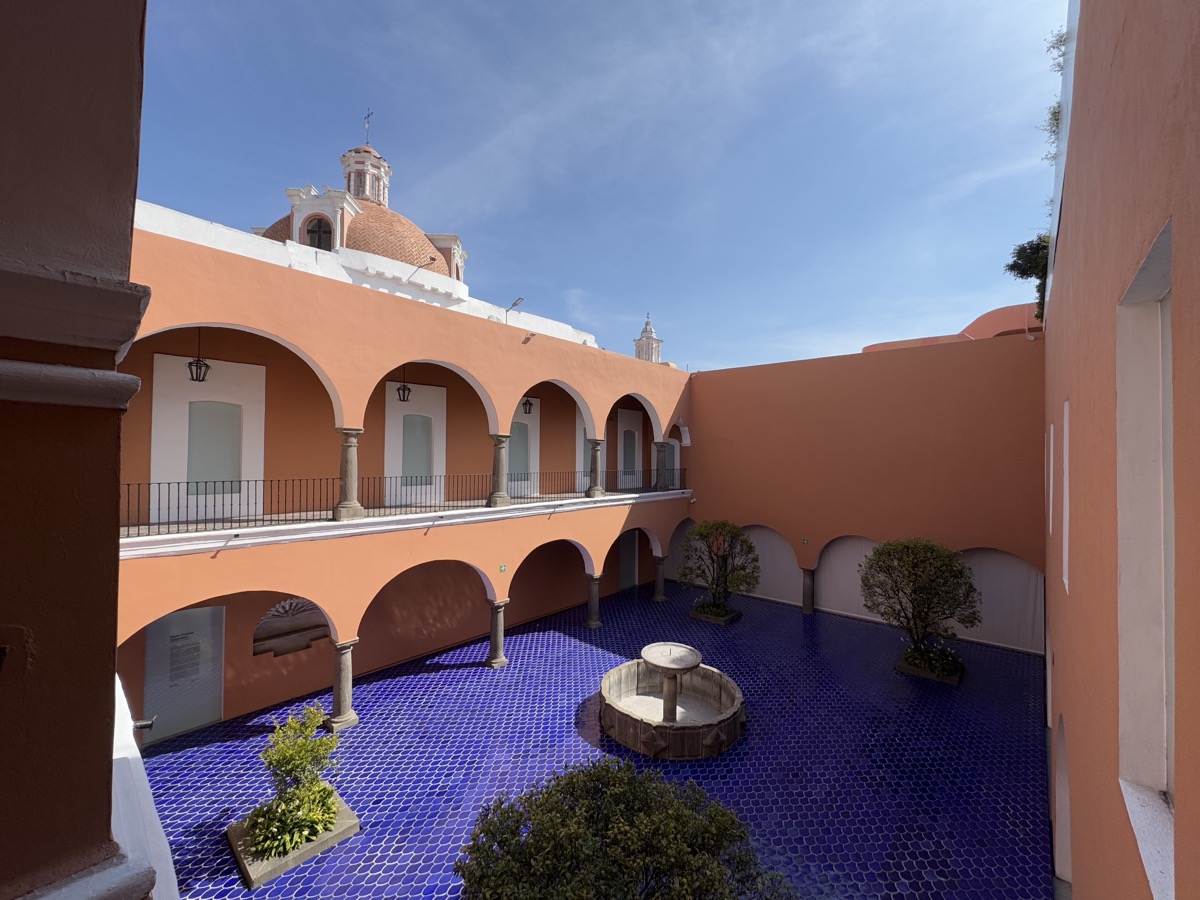
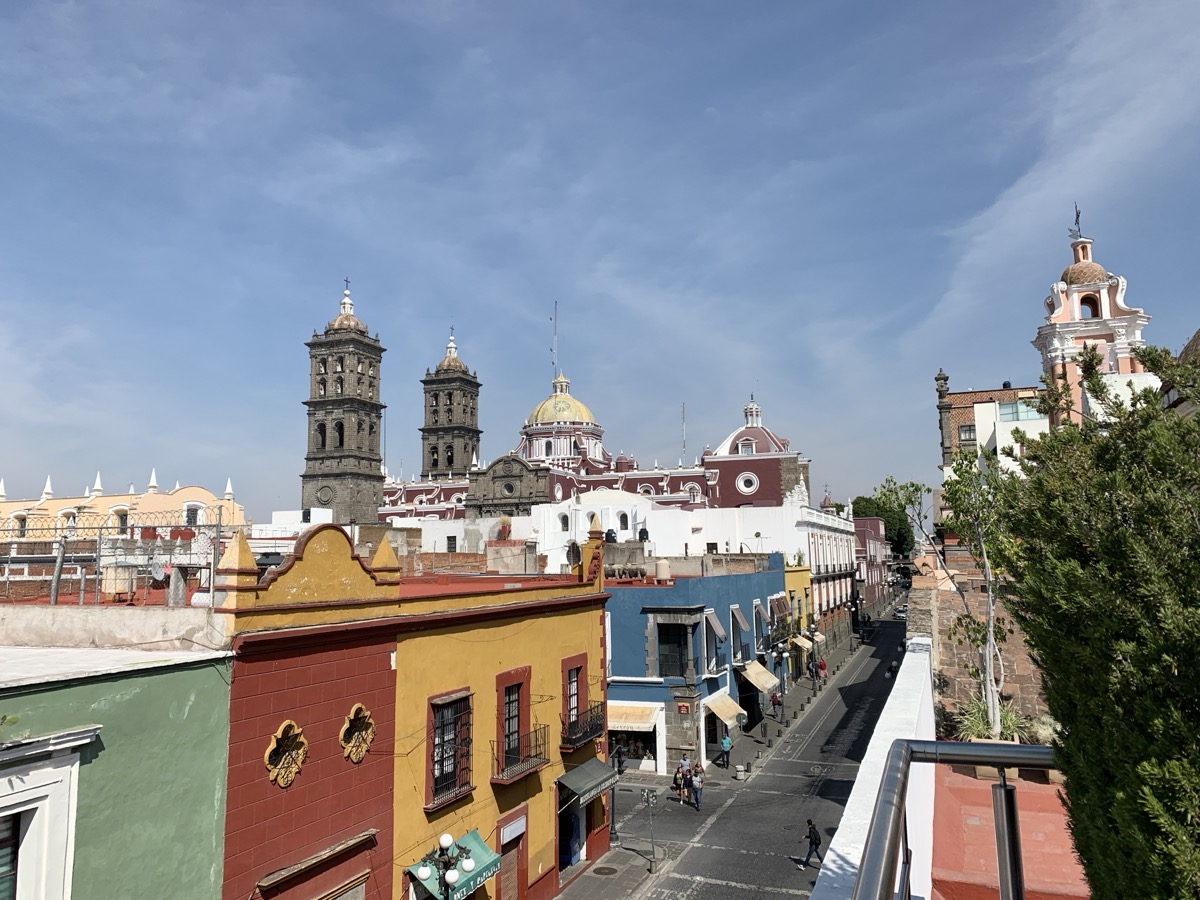
Puebla. We had only half a day left for Puebla – we walked over to very nice El Patio de los Azulejos which used to be a part of religious school (now small museum) and then spent the rest of the time at (private) Museo Amparo (recommended) with well organized collections from pre-Hispanic cultures through colonial to modern exhibits in a beautiful palace, and more good coffee and hot chocolate at museum roof-terrace. Puebla (Centro Histórico) has real feel of an old town. It was easy and pleasant walking around in good weather, some crowded streets, but everybody looked relaxed, not much car traffic. Piotr started to learn Spanish words. Is this a sign of things to come?
El Patio de los Azulejos
…
Museo Amparo
Courtyard
Puebla from museum’s roof terrace
…
Museo Amparo
«« Scroll to view more photos »»
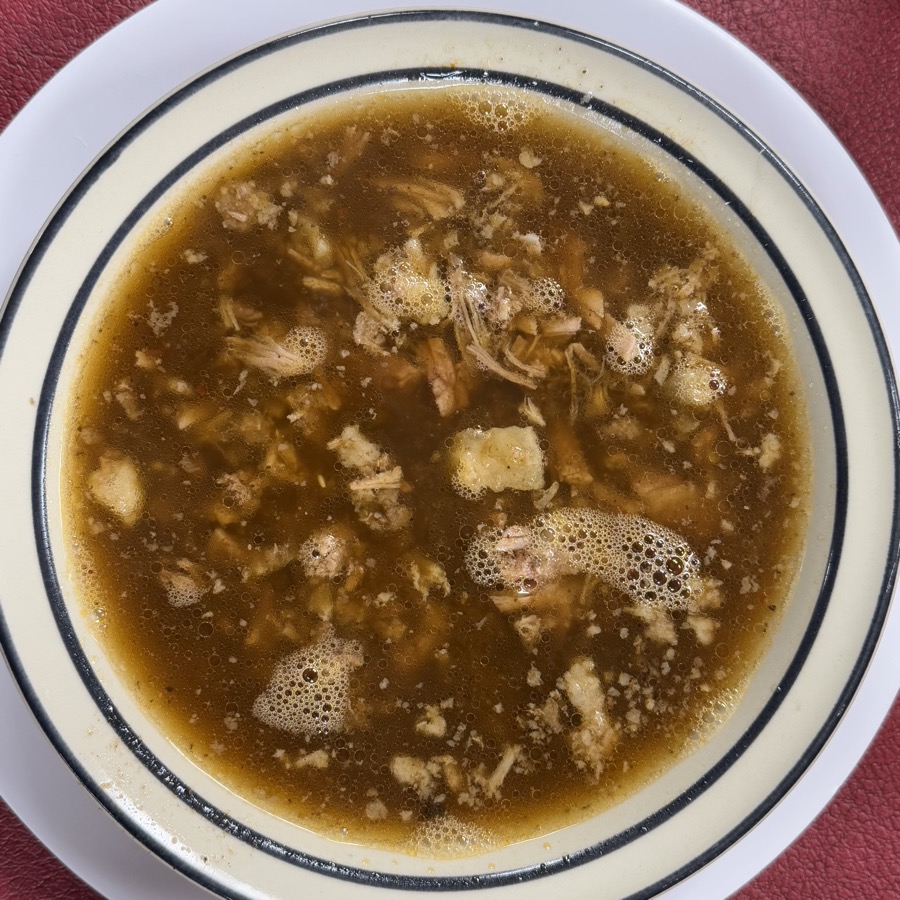
Picked-up our backpacks from hostel, took Uber to Paseo Destino and bus to Mexico City El Ángele (3 hrs). The travel was not too interesting, watching villages and neighborhoods along busy highway. We got a few distant views of Popocatépetl and Iztaccihuatl between clouds. Then short Uber ride to our apartment on Calle Guaymas. It was already evening, so we picked up some bread rolls for breakfast from street vendor and run around the block looking for a place to eat. Piotr chose El Rancho Birrieria for traditional birria (stew soup) and beer.