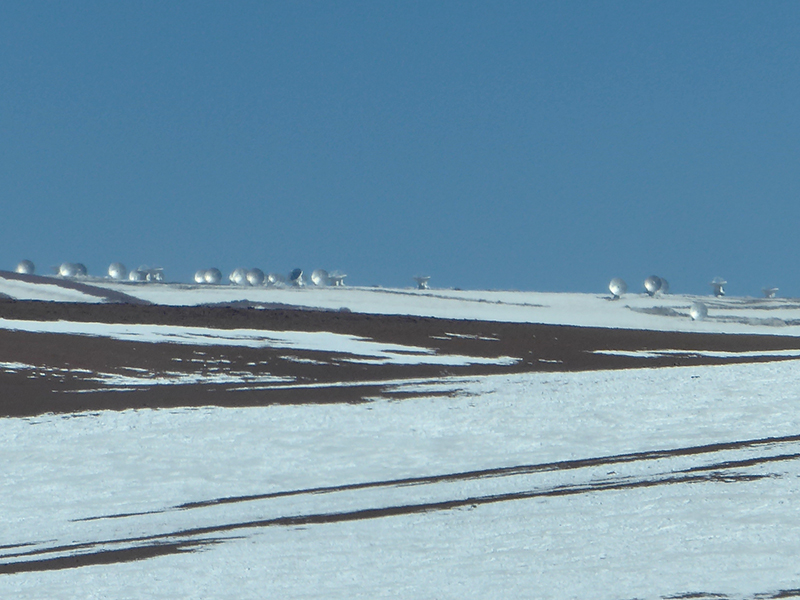
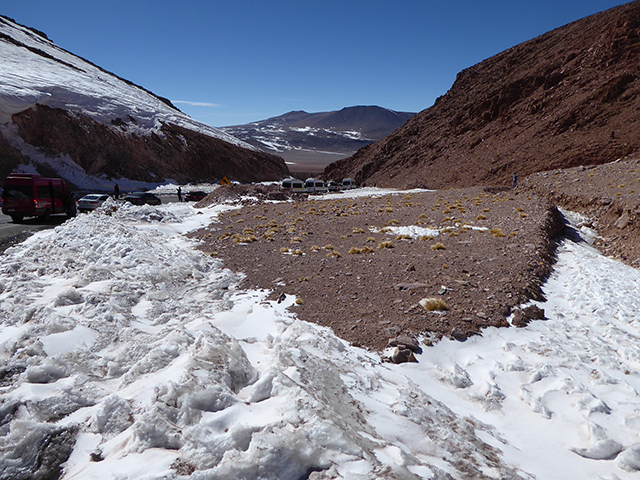
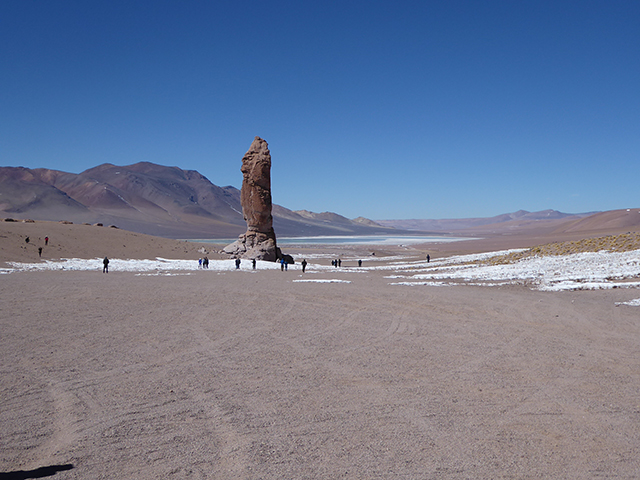
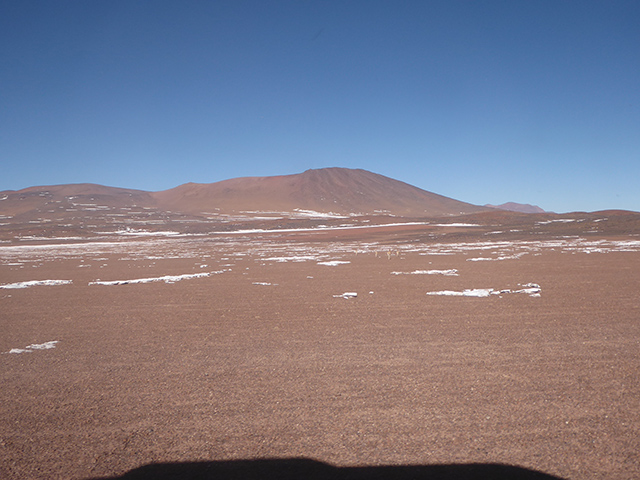
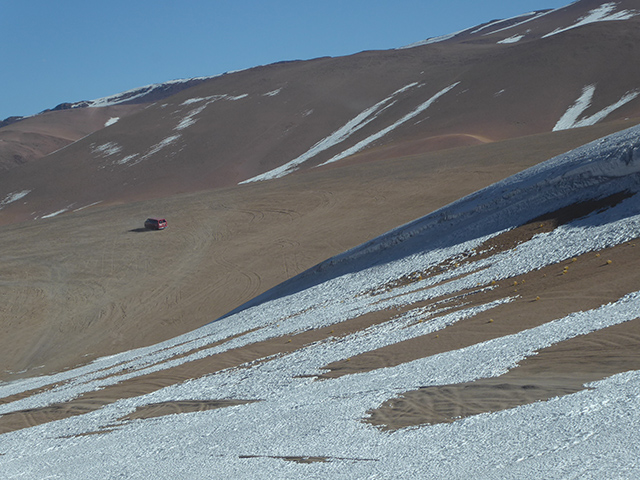
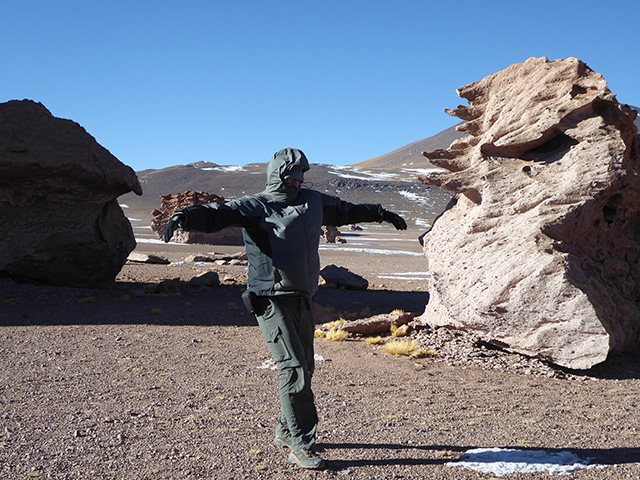
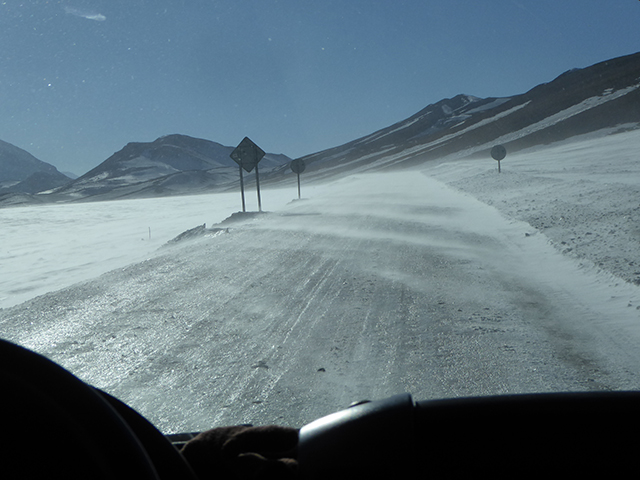
On the last full-day in San Pedro, we went to the highest and most beautiful Salar de Tara. We went with Flamingo again and this is the tour that didn’t work out. The road through the mountains was closed in the morning due to ice and many huge trucks transporting cars from the Pacific harbors were queuing up. We had breakfast in the desert and finally the road opened. We passed ALMA radio telescopes located at ~ 5,000 masl and had to wait a little more for plows to clear icy roads. We first climbed to 4,820 masl (in about an hour, 45 km) and then started descending towards Salar de Tara at 4,320 masl. We left main road near Salar de Aguas Calientes (fed by hot water springs). First stop was Monjes de la Pacana, rocks shaped by high winds (and the winds are really strong there).
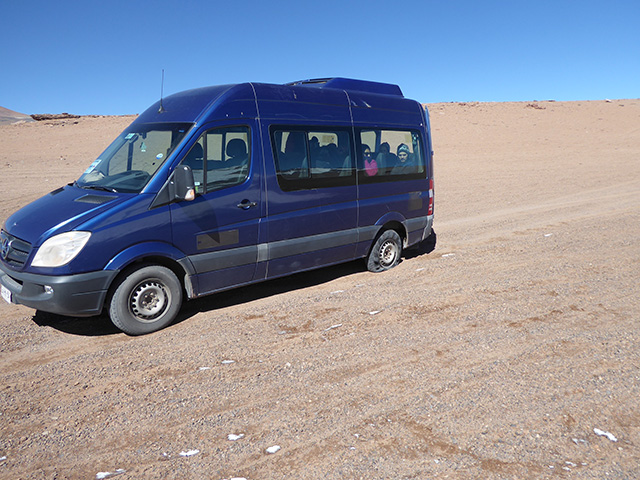
Only few agencies go to Tara and that day there were 3 vans from Flamingo, 3 Latchir and 1 Ayllu. Our 3 vans were supposed to stay together and 2 much newer ones did, but they were loosing us frequently. Our van was older, unlike all other Flamingo tours that had a driver and guide this day our guide was also driving, and there were 11 tourists in spite of limit of 10. In the middle of nowhere we got a flat tire, not unexpected in a rocky desert. The other 2 vans were just in front of us at this moment and could see us, but they chose to drive off, leaving us alone. Something that should be a quick fix turned to be (almost) the end of our trip. There were no adequate tools in our van and the guide, Piotr and another guy tried for 2 hours to remove the wheel screws. Of course there was no phone signal there and the guide didn’t have a satellite phone. We were stuck at 4,400 masl. After more than 2.5 hours one of the other vans came empty to check what happened. The driver had right tools and changed the tire quickly, but our spare had a hole! Fortunately their spare was the right size. All other people from our van decided to return to San Pedro, but we wanted at least to get a glimpse of Tara and decided to go on the other van to pick up its passengers (there were only 6 or 7 ). We were very unlucky that we were in the old van, as the others had a wonderful tour, new cars and both drivers and guides! But the real problem was the extreme unprofessionalism and neglect by Flamingo, since we were supposed to ride in a convoy for this very reason (not to mention sending a van with no proper tools and broken spare tire for such a remote trip) and the problem could had been solved very quickly and everybody could have had a great tour. They left us on purpose because of some kind of conflict, and decided to act on that at our expens. We were very disappointed with Flamingo and, based on this experience, cannot recommend it. We met remaining van with 2 groups in it not far from the Salar and their guide agreed to go back for a quick visit, for which we were grateful. Our persistence paid off.
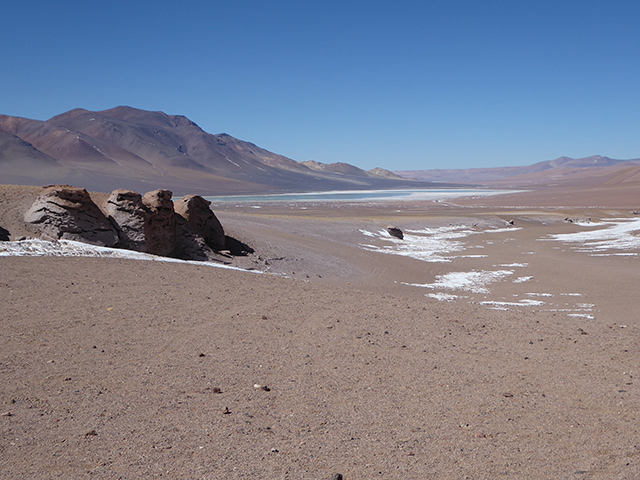
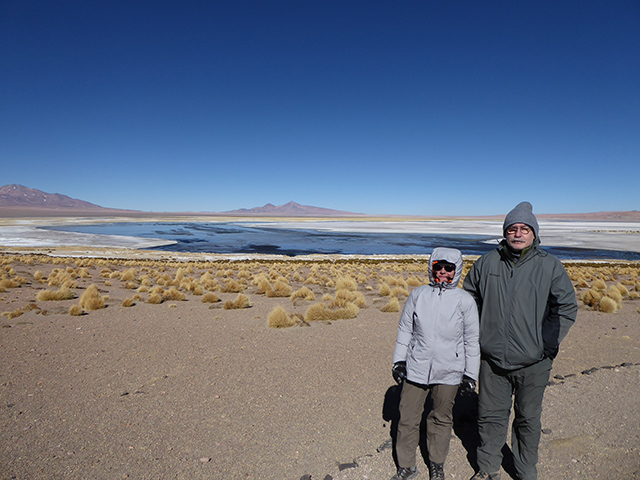
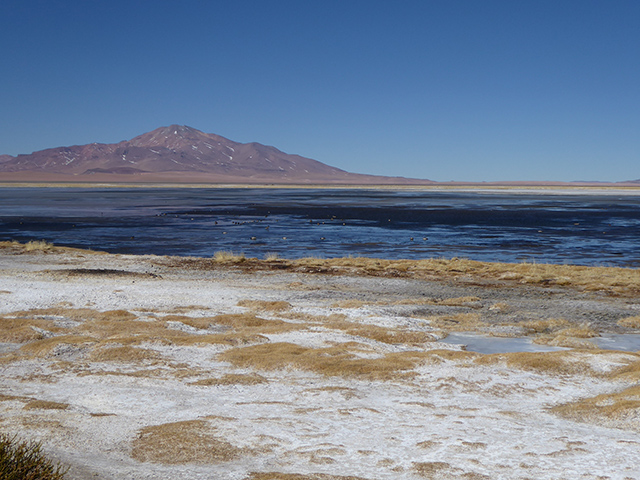
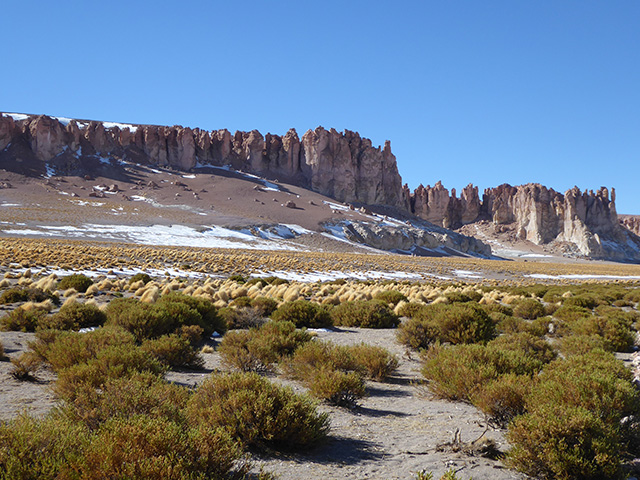
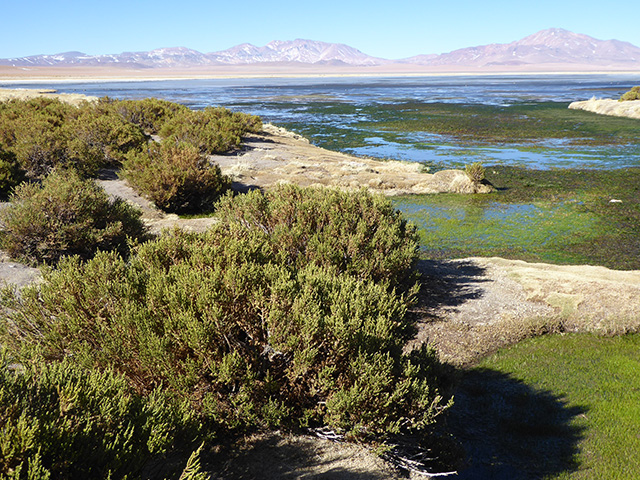
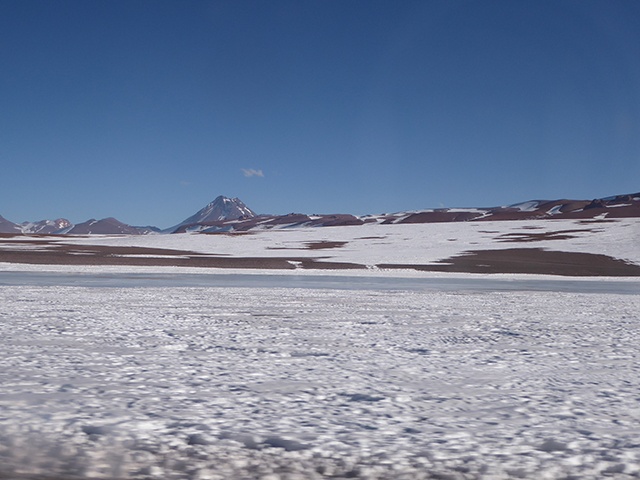
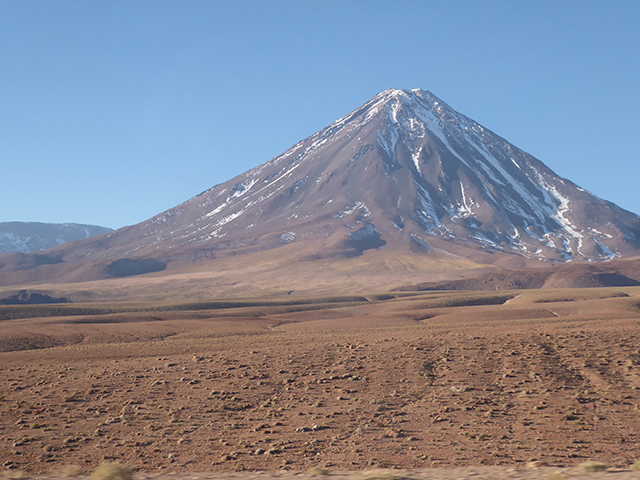
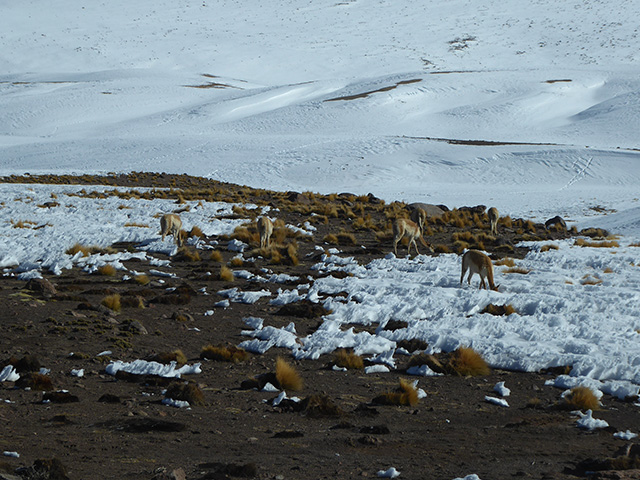
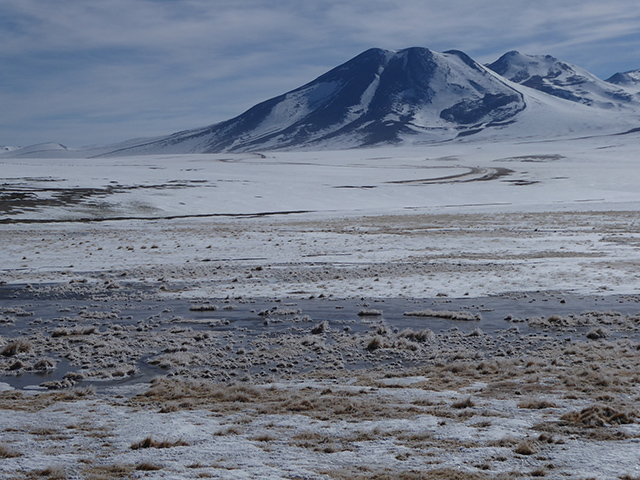
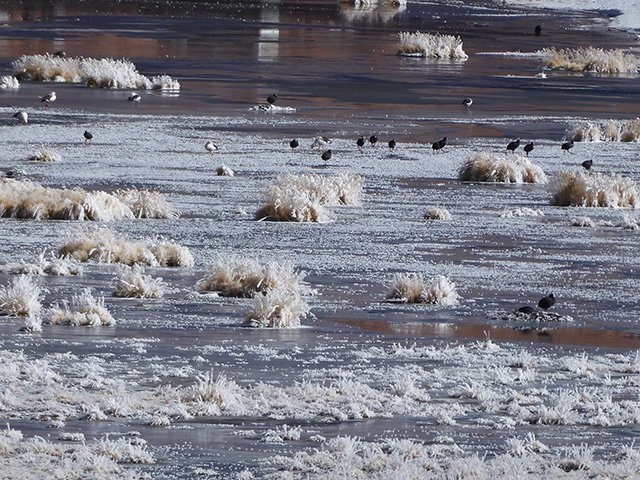
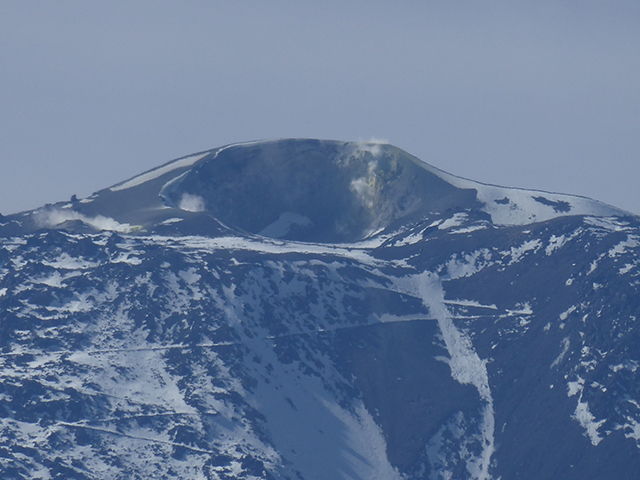
Salar de Tara is very beautiful, partially covered by salt crust, with the rest of water ice free, green algae, grass and bushes, yellow puna grass, surrounded by interesting rock formations (Cathedral rocks) and colorful volcanic mountains. There were many species of rare ducks including Pato puna (Puna teal) with a blue beak, as well as Andean geese (Guayata) and Andean coot (Tagua). We are glad we had a glimpse of the Salar as it at least partially saved the day. On the way back the mountain passes were icy again, we passed frozen Laguna Kepiaco (normally a wetland with waterfowl) and got very close to Volcano Licancabur.
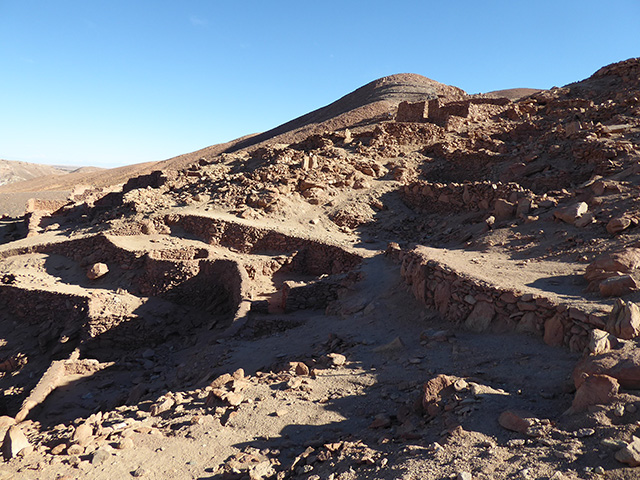
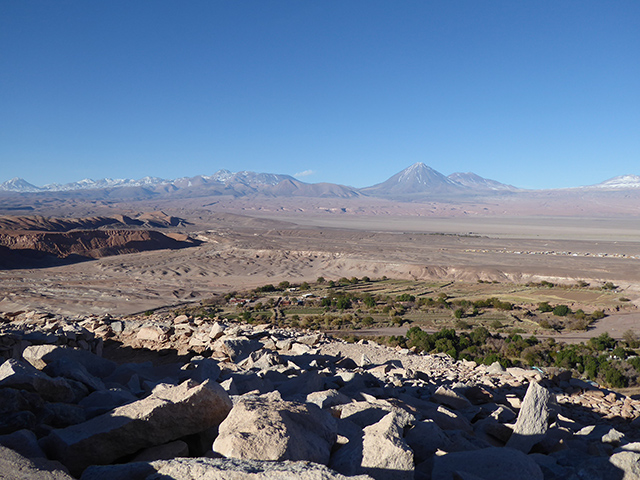
 Walk to Pukara de Quitor